


The frame isn’t the whole comfort story. Choosing wood vs metal bar stool frames comes down to the look and feel you want, how the stools will be used, and whether a softer seat would make them more inviting. Wood brings natural warmth and a grounded presence; metal often feels lighter and easier to move.
It’s reasonable to expect one material to feel more comfortable, but seat shape and padding can matter just as much as the frame. A contoured wooden seat or an upholstered seat can soften the experience, whether the base is wood or metal. This guide compares comfort, appearance, upkeep, and everyday practicality, then explains how to pair each frame with a softer seat. You’ll have a clearer way to choose stools that suit your room and the way you gather there.
Key Takeaways
- Choose a metal frame for easier repositioning, and consider its finish when judging durability and care.
- Wood brings natural warmth, but its shape and gentle cleaning routine affect comfort and upkeep.
- Match the frame to how the stools will be used, including how often they need to move and where they’ll sit.
- For a softer seat, look beyond the frame material: padding and upholstery can make either option more inviting.
Wood vs Metal Bar Stools: Which Material Is Right for You?
For a kitchen island, frame material affects durability, appearance, cleaning, and everyday use. A wood vs metal bar stool frames comparison is most useful when you consider construction and finish together. Either material can be a lasting choice, but each suits different routines and room styles.
Wood Bar Stool Frames
Solid wood frames bring natural grain and warmth to a kitchen, while their weight can create a grounded feel beside an island. Hardwoods such as beech can make durable stools, but wood is more vulnerable to dents and scratches over time. A contoured or saddle-shaped seat can also feel more supportive than a flat wooden seat.
For upkeep, wipe wood with a soft cloth and mild cleaner, and avoid excessive moisture. Wood used outdoors needs a suitable treatment, such as a weather-resistant finish or sealant. Wood frames vary in style according to their shape, grain, and finish. In the United States, prices depend on the wood, construction, and finish, so no single price applies to every stool.
Metal Bar Stool Frames
Galvanized metal and heavy-gauge tubular steel are durable choices for high-traffic kitchens and homes with children or pets. Metal can create a clean, modern look, and powder-coated finishes resist scratches better than raw or painted finishes. Metal handles sun, moisture, and temperature swings better than wood, though outdoor stools should be powder-coated or designed to resist rust.
Metal isn’t immune to damage: a hard impact can leave a dent, while an unsuitable finish can leave the frame vulnerable to rust. Clean the frame with a soft cloth, and avoid abrasive tools that could mark its finish. Metal stool prices in the United States vary with construction and finish, so a single price comparison would be misleading.
| Frame | Durability | Appearance | Care |
|---|---|---|---|
| Wood | Can dent or scratch | Warm, visible grain | Soft cloth; limit moisture |
| Metal | Finish and construction matter | Modern, powder-coated options | Protect the finish; consider rust resistance |
For resistance to scratches, dents, moisture, and rust, powder-coated metal generally resists scratches better than raw or painted metal and handles moisture better than wood. Wood can dent or scratch; metal can dent on impact, and rust resistance depends on its finish or design. Choose between wood vs metal bar stool frames based on your kitchen’s traffic, preferred look, and cleaning routine.
Wood bar stool comfort, appearance, and maintenance
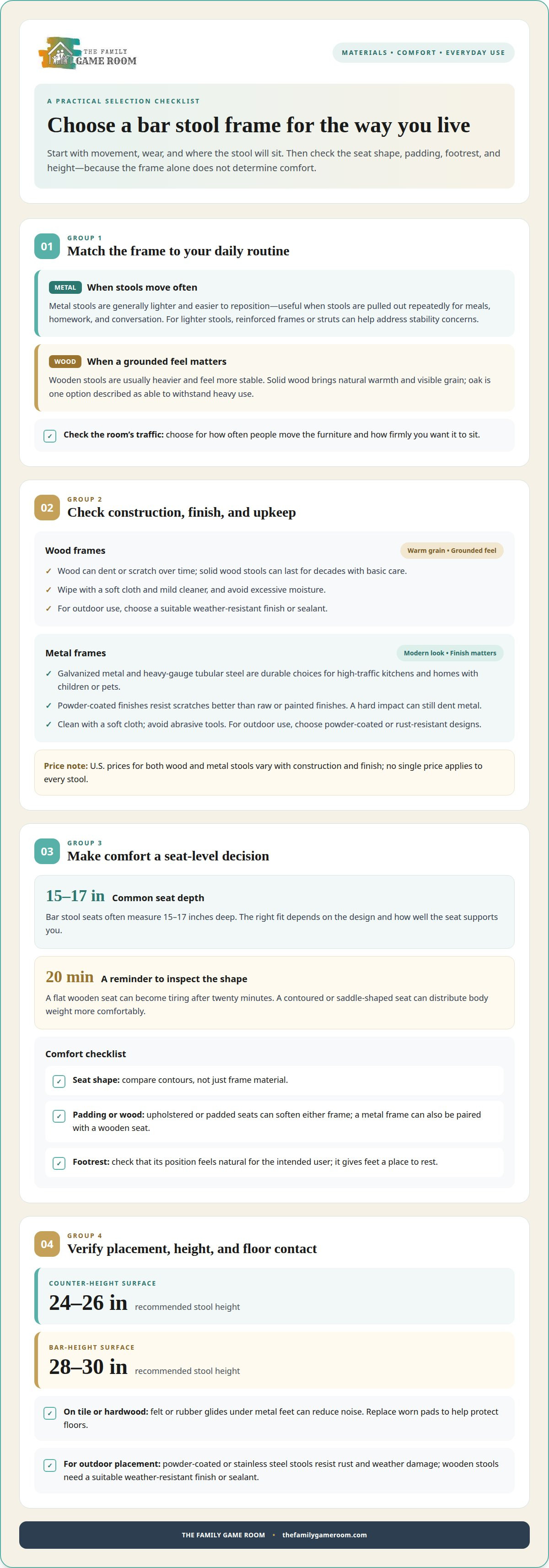
Wood and metal differ in stability and feel, but neither frame guarantees a quiet seat. Wooden stools are usually heavier and more stable, while metal stools are generally lighter and easier to reposition. On tile or hardwood, felt or rubber glides under metal feet can reduce noise. Replace worn pads to help protect floors.
Seat shape matters during a long meal or game. A flat wooden seat can become tiring after twenty minutes, while a contoured or saddle-shaped seat distributes body weight more comfortably. Bar stool seats often measure 15-17 inches deep, though the right fit depends on the stool’s design and how it supports you.
Solid wood, including oak, walnut, and ash, can withstand heavy use in bar stool seats. With basic care, solid wood stools can last for decades, although dents and scratches may accumulate over time. When weighing comfort against everyday wear, inspect the seat’s contours and finish, not just the type of wood.
A footrest gives your feet a place to rest while seated, which can make a stool more comfortable during breakfast or a game. Check that its position feels natural for the intended user. A contoured wooden seat adds support through its shape, while a padded seat changes the feel without relying on the frame.
Wood brings visible grain and warmth to a room, and its natural detail suits both traditional and modern interiors. For cleaning, use a soft cloth and mild cleaner, then avoid excessive moisture. In humid or damp areas, wood may need gentler care; outdoor stools need a suitable weather-resistant finish or sealant.
Metal seats can feel different from wood, especially during longer sitting. A metal frame paired with a padded or wooden seat offers a softer contact surface than an all-metal stool. Powder coating protects the frame’s finish, but it doesn’t cushion the seat. For comfort, compare seat shape, padding, and footrest placement alongside frame material.
Choosing stool materials based on everyday use
Start with the room’s routine, not just its style. At a busy kitchen counter, stools may be pulled out repeatedly for meals, homework, and conversation. Metal is generally easier to reposition, while wooden stools are usually heavier and feel more stable. Choose a frame that suits how often people move the furniture and how firmly you want it to sit.
For a household with children or pets, consider how much activity takes place around the counter. Durable galvanized metal or heavy-gauge tubular steel can suit high-use spaces; reinforced frames or struts can help address stability concerns with lighter stools. Oak is another solid-wood option that can withstand heavy use. Compare construction and finish, since material alone doesn’t tell the whole story.
Oak and steel create different impressions. Oak adds visible grain and character to a room, while steel can support a more modern look. If other furniture already has prominent wood detail, an oak stool can echo it. A steel frame can add contrast beside a wood counter. Match finishes for continuity, or use contrast deliberately.
Placement matters, too. Powder-coated or stainless steel stools are described as suitable outdoors because they resist rust and weather damage. Wooden stools used outdoors need a suitable treatment, such as a weather-resistant finish or sealant. For indoor use, choose based on your cleaning habits and exposure to dampness, rather than assuming either material suits every setting.
Before choosing, match stool height to the surface: counter-height stools are recommended at around 24-26 inches, while bar-height stools are around 28-30 inches. Then consider who will use each seat. A stool should have a weight capacity of at least 250 lb. For example, a family choosing seats for a counter can prioritize capacity, stable construction, and finishes that fit the room.
Use this guide to decide: choose metal when easy repositioning or outdoor resistance matters; choose wood when a heavier feel and natural character suit the space. If stools serve different purposes, prioritize the surface height, expected traffic, and frame construction for each location.
Mixing wood or metal frames with softer seats
A softer seat can change how a stool feels without changing its frame. Both wood and metal stools can come with upholstery, so comfort doesn’t belong to one material alone. For dining at a kitchen island, compare the seat surface, frame, and room style as a complete combination.
Metal frames pair well with padded or wooden seats, rather than using metal throughout the stool. A padded seat softens the contact point; a wood seat adds a natural detail while keeping the metal base visible. A powder-coated frame can complete a modern look, while a wooden frame brings a warmer, more traditional presence.
Consider the seat shape and footrest together. A contoured seat can distribute body weight more comfortably than a flat wooden seat, and a footrest gives your feet a place to rest. Before choosing, sit in the stool and notice whether your feet reach the footrest naturally. The seat should feel supportive without making you lean or perch.
Height is part of the fit, too. Counter-height stools are recommended at around 24-26 inches, while bar-height stools are around 28-30 inches. Choose the seat height for the counter or bar, then consider how padding and upholstery affect the overall feel. Leave about 6 to 10 inches between stools for elbow room, especially where upholstered seats may occupy more visual space.
Care depends on the materials you use every day. For a wooden seat, wipe with a soft cloth and mild cleaner, avoiding excessive moisture. For upholstery, follow its care instructions and address spills promptly with an appropriate method. Metal frames with felt or rubber glides can help reduce noise on tile or hardwood; replace worn pads to protect floors.
For a dining setup used through long meals, compare upholstered options with shaped wood seats, then match the frame to your room. Explore seating options to find a combination that suits your space.
The Family Game Room: Bar Stools
The Family Game Room offers bar stools for homeowners furnishing a kitchen island, home bar, or game room. Narrow your choice by considering the room’s style and routine, then compare seat shape and upholstery for comfort. A softer seat can complement either a wood or metal frame, while the stool’s height should suit the counter or bar.
Bar stools can also create a dedicated seating area alongside a pool table, shuffleboard table, or air hockey table. If you’re furnishing a game room, consider how the stools will fit around those activities and leave space for people to gather.
For help exploring bar stool options for your home, contact The Family Game Room.
Choose seating that fits the room you’re creating
Before choosing between wood vs metal bar stool frames, picture how the room should feel when friends gather. Think beyond the stool itself: seating can connect a kitchen counter with a home entertainment area or complement a room centered on games. That broader view can make your choice feel intentional rather than simply filling an open spot.
The Family Game Room offers American Heritage Billiards Pool Tables, Nixon Billiards Pool Tables, and Pool Table Dining Tops. These options help shape a room for both play and everyday use. Consider which activities belong in your home, then let that plan guide the furniture and atmosphere you build around them.
When you’re ready to explore options for your space, contact The Family Game Room. A well-considered choice can make the room feel welcoming, personal, and ready for the moments you want to share.
Frequently Asked Questions
Are metal or wooden bar stools more comfortable?
Neither material is automatically more comfortable; seat design matters more. For a family meal or a game that lasts, compare how the seat supports you and whether its surface feels pleasant. A wood frame can have a shaped seat, while a metal frame can pair with upholstery. Choose based on the whole seat, not the frame alone.
Do wooden bar stools scratch floors?
Stools can scratch floors, especially if a foot moves directly across a hard surface. Fit felt pads beneath the legs, then check them occasionally for wear or trapped grit. Replace worn pads so they continue protecting the floor. The same care helps with metal stools, whose feet can also mark hardwood or tile.
What About Hybrid Bar Stools?
Hybrid stools combine materials, such as a metal frame with a wood or upholstered seat. This lets you balance the frame’s visual character with a different seat texture. For example, a wood seat can echo a dining table, while a contrasting metal base gives the arrangement a distinct look. Consider how the materials coordinate with nearby furniture.
Which Bar Stool Should You Choose?
Choose the stool that best fits its main purpose. For a frequently used breakfast counter, prioritize a seat you find comfortable for meals. For flexible seating that moves between spaces, consider how easily the stool can be repositioned. Then check that its finish and overall style suit the room rather than choosing by frame material alone.
Which Material Is More Comfortable?
For longer sitting, prioritize seat shape and cushioning over wood or metal. A padded seat may suit a relaxed game night, while a shaped wooden seat can appeal if you prefer a firm surface. Think about who uses the stool and how long they sit. The best fit is the one that feels supportive in your usual setting.
Which is better for families with children?
For a busy family space, durable metal such as galvanized metal or heavy-gauge tubular steel is one option. Wooden stools can also work, though their surfaces may show dents or scratches over time. Compare frame construction, finish, and how the stools fit your room’s daily activity. The right choice depends on whether durability, a grounded feel, or easy movement matters most.