


You might think a mid-range price tag guarantees a stable game, but that "bargain" table often turns into a wobbling eyesore within months. It's frustrating to invest in home entertainment only to find your new centerpiece feels like a flimsy toy that slides across the floor during every match. Understanding what to avoid when buying a foosball table is the difference between a professional-grade heirloom and a disposable purchase that quickly loses its level.
We've curated this guide to help you bypass the marketing fluff and focus on the technical specs that actually matter for elite play. You'll discover how high-mass cabinets in the 200 to 300-pound range can reduce deflection by up to 30% and eliminate frustrating dead spots. We're going to break down everything from counter-balanced player figures to furniture-grade finishes so you can choose a piece of equipment that complements your home and lasts for decades.
Just as you would prioritize commercial-grade standards from Smart Buy Office Furniture for a professional office, your game room equipment should be selected based on durability and structural integrity.
Key Takeaways
- Spot the structural flaws of mass-produced tables, from thin particle board to "disposable" non-replaceable parts.
- Ensure lateral stability by avoiding lightweight frames and hollow legs that lead to sliding and wobbling during intense matches.
- Learn why professional-grade rods and counter-balanced players are essential for elite performance and long-term durability.
- Master the art of selecting furniture-grade finishes that complement your luxury decor instead of clashing with garish arcade branding.
- Discover exactly what to avoid when buying a foosball table to ensure your investment remains a centerpiece for decades, not just months.
Avoiding the Big-Box Trap: Why Cheap Foosball Tables Fail
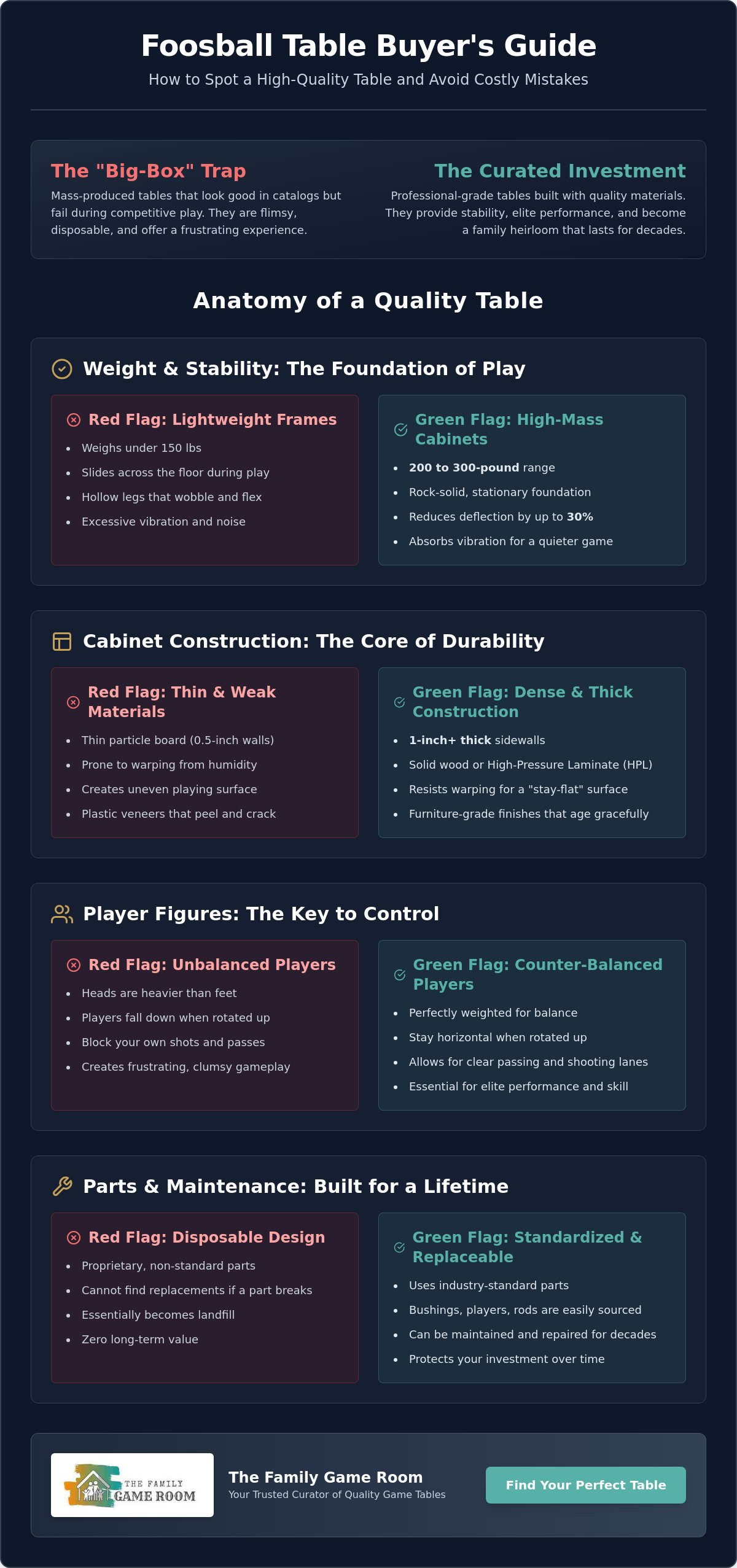
Most foosball tables found in large retail chains look impressive in a glossy catalog but fail the moment a competitive match begins. This is the "Big-Box Trap." These tables are mass-produced using thin particle board and plastic components that lack the structural integrity required for consistent play. When you're researching what to avoid when buying a foosball table, the first red flag is a price point that seems too good to be true. A table that weighs less than 100 pounds won't stay put during aggressive play, and it certainly won't survive the test of time.
The History of Foosball shows a game built on precision, speed, and durability. Entry-level models often reduce this experience to a clunky, frustrating chore. Because these tables use proprietary, non-standard parts, they're essentially disposable. If a rod bends or a player snaps, you can't simply order a replacement from a specialist. You're left with a heavy piece of landfill in your basement. A premium table is an investment in game room furniture; a budget table is just a toy that’s destined for the curb.
The Hidden Cost of 'Budget' Foosball
Thin sidewalls are a major pitfall because they warp over time. When the cabinet loses its shape, the playing surface becomes uneven, causing the ball to roll toward the edges. You'll also deal with the frustration of non-counterbalanced players. On cheap tables, the players' heads are heavier than their feet. When you rotate them up to clear a path for a shot, they fall back down instantly, blocking your own offensive moves. These tables also lose their resale value almost immediately, making them a poor financial choice for the long term.
Identifying Quality Craftsmanship
True quality starts with the materials. Look for solid wood or high-pressure laminate (HPL) cabinet construction. These materials resist humidity and provide the density needed for a fast, predictable game. You should also prioritize brands that offer replaceable bushings and player figures, ensuring you can maintain the table for decades. When evaluating your options, remember that cabinet thickness is the primary indicator of table longevity.
- Density: Heavy cabinets prevent the table from sliding during adult play.
- Standardization: Professional tables use parts that are easily sourced and replaced.
- Finish: Furniture-grade wood finishes age gracefully, unlike plastic veneers that peel and crack.
High-end tables offer a rhythm and "pop" that cheap materials can't replicate. By knowing what to avoid when buying a foosball table, you ensure that every match feels like a professional tournament rather than a struggle with a flimsy toy.
Material Pitfalls: Avoiding the 'Slide' and 'Wobble'
Stability is the foundation of every professional-grade match. If you've ever played on a table that shifts six inches across the floor after a powerful bank shot, you've experienced the "Weight Trap." When considering what to avoid when buying a foosball table, lightweight construction is your primary enemy. Tables weighing less than 150 pounds simply lack the inertia to withstand aggressive adult play. High-end models typically fall into the 200 to 300-pound range, providing a rock-solid foundation that remains stationary regardless of the game's intensity. This mass doesn't just prevent sliding; it also absorbs vibration, ensuring the ball behaves according to Official Table Standards.
Cabinet mass serves a dual purpose by dampening both vibration and noise. A dense cabinet prevents the jarring "clack" of the ball from echoing through your home, replacing it with a satisfying, solid thud. This acoustic difference is a hallmark of premium craftsmanship. When you avoid lightweight, hollow-core cabinets, you're choosing a piece of equipment that feels as substantial as it looks. Research indicates that heavier tables in the 200 to 300-pound range can reduce deflection by up to 30% compared to lighter models, leading to a much more predictable game.
Cabinet Density and Sidewall Thickness
Sidewall thickness is a non-negotiable metric for durability. You should avoid tables with 0.5-inch walls, which are common in big-box retail stores. These thin panels lack the rigidity to keep the playfield perfectly flat over years of use. Instead, prioritize cabinets with 1-inch thick sidewalls made from high-density materials or solid wood. This thickness prevents the "hollow" acoustic profile of cheap tables and ensures the playfield resists warping due to humidity changes. A "stay-flat" surface is essential for consistent ball rolls, especially in basement environments where moisture levels fluctuate.
Leg Construction and Stability
The legs are the most common point of failure for lateral stability. Avoid "L-shaped" or thin hollow legs that rely on small screws for attachment. These designs inevitably develop a wobble that ruins the game's rhythm. Look for solid post or pedestal designs that utilize heavy-duty cross-bolting. To verify stability in a showroom, perform a "hip check" by giving the corner of the cabinet a firm nudge. If the table shudders or moves, it won't survive a real match. You also need large, rubberized leg levellers. These allow you to fine-tune the height on uneven floors, ensuring a perfectly level game every time. If you're ready to upgrade your space with a table that stays put, explore our curated collection of foosball tables designed for professional-level stability.
Rod and Hardware Mistakes: Safety vs. Performance
The rods and handles are your primary connection to the game. If these components feel sluggish or uncomfortable, the entire experience suffers. One critical aspect of what to avoid when buying a foosball table involves the rod finish. You should steer clear of cheap chrome-plated rods. These often look shiny in the box but begin to flake and peel after just a few months of use. This flaking isn't just an aesthetic issue; it creates sharp edges that can cut your hands and increases friction within the bushings. High-end tables use cold-rolled steel or stainless steel rods that remain smooth for decades.
Bushings also play a silent but vital role in the quality of play. Avoid low-friction plastic bushings that result in sticky or slow rod movement. Professional tables utilize high-grade nylon or specialized bearings that allow for effortless rotation and lateral speed. Similarly, look for ergonomic wooden or high-grip rubber handles. Slippery plastic grips are difficult to control during intense matches and can lead to hand fatigue.
- High-grade nylon bushings: Ensure smooth, frictionless rod travel.
- Cold-rolled steel rods: Provide the strength needed to resist bending during aggressive play.
- Counterbalanced players: Allow for advanced offensive strategies by staying out of the way.
- Ergonomic grips: Offer superior control and comfort for long gaming sessions.
Telescopic vs. Solid Rods
Performance often clashes with safety in a home environment. Solid rods are the industry standard for speed and durability, often meeting ITSF official standards for competitive play. However, they slide through the cabinet and can poke players on the opposite side. For families with young children, telescopic rods are a non-negotiable safety feature. These rods stay within the cabinet's footprint, retracting into themselves rather than protruding. While they require slightly more maintenance than solid steel, the peace of mind they provide in a domestic setting is invaluable.
Player Configuration and Counterbalancing
The design of the "men" on the rods determines your tactical options. You should avoid tables with "pinned" players that are permanently fixed to the rod. If one figure breaks, you're forced to replace the entire rod assembly. Instead, choose players that are individually bolted on. The "counterbalanced" feature is an absolute essential for serious play. These players are weighted in the head to stay in a horizontal position when you release the handle. This allows you to clear your defensive line for a clear shot from the back without your own players blocking the path. If you're debating between different types of fast-paced entertainment, our guide on Air Hockey vs. Foosball can help you understand the long-term hardware maintenance requirements for each.
Aesthetic Blunders: Avoiding the 'Arcade Eyesore'
A foosball table is a significant addition to your home, but it shouldn't look like it was plucked from a 1990s bowling alley. When researching what to avoid when buying a foosball table, many people overlook the visual impact. Garish branding, excessive decals, and cheap plastic veneers can instantly cheapen the look of a sophisticated game room. Instead of an arcade eyesore, seek out furniture-style tables that feature clean lines and high-quality materials. A well-chosen table acts as a centerpiece that enhances your home's architecture, much like the iconic designer pieces found at lifestorey.com, rather than clashing with it.
You should also be wary of "multi-game" or 3-in-1 tables. While the idea of switching between foosball, air hockey, and pool sounds appealing, these units are notorious for being "jacks of all trades and masters of none." To accommodate multiple games, manufacturers often sacrifice cabinet mass and rod quality. The result is a flimsy foosball experience with thin rods and a playfield that lacks the necessary rigidity for a professional feel. If you want a high-end experience, stick to a dedicated unit built for a single purpose.
Integrating Play with Premium Decor
Modern game room design favors neutral tones and timeless wood finishes. High-quality options like walnut, oak, or even a sleek matte black allow the table to blend seamlessly with your existing furniture. These finishes offer a domestic warmth that professional arcade units lack. To truly elevate the space, consider how your lighting interacts with the table surface. Proper illumination prevents glare on the playfield and highlights the craftsmanship of the cabinet. For expert advice on setting the mood, read our guide to Billiard Light Fixtures.
Space Planning Mistakes
Even the most beautiful table becomes a nuisance if it's crammed into a tight corner. You need at least 3 feet of clearance on each side of the cabinet to allow players to move freely without hitting walls or other furniture. Before you commit to a purchase, measure your "rod-to-wall" distance carefully. This ensures that even when the rods are fully extended, there’s still ample room for the player to stand comfortably. Proper space planning also involves ensuring the floor is stable. Many people believe "dead spots" on the playfield are a manufacturing defect, but they're often just the result of a table that isn't properly leveled. Using your leg levelers to create a perfectly horizontal surface will solve most ball-stuck issues instantly. If you're ready to find a piece that matches your style and space, browse our premium foosball tables today.
The Trusted Curator’s Choice: Finding a Table That Lasts
Investing in a high-quality game table is about more than just dodging the "disposable" trap; it's about securing a legacy of play for your family. Now that you have a clear understanding of what to avoid when buying a foosball table, the path to a professional-grade purchase is much simpler. At The Family Game Room, we act as your trusted curator, filtering out the noise of big-box retailers to offer only the most durable equipment. We prioritize brands that emphasize high-mass stability and precision engineering, ensuring your investment remains a centerpiece of your home for decades.
Before you make your final selection, run through this definitive quality checklist based on our previous sections:
- Chassis Weight: Aim for the 200 to 300-pound range to eliminate sliding.
- Cabinet Walls: Verify a minimum 1-inch thickness for structural integrity.
- Rod Construction: Choose cold-rolled steel for performance or telescopic rods for child safety.
- Player Balance: Insist on counterbalanced figures for advanced tactical play.
- Aesthetic Harmony: Select wood finishes like walnut or oak that match your luxury decor.
Why Buy New from a Specialist?
The used market is often tempting, but it's one of the biggest risks when considering what to avoid when buying a foosball table. Pre-owned units frequently hide structural warping or internal rod damage that isn't apparent until you begin a match. Even worse, finding replacement parts for discontinued or budget models is nearly impossible. By purchasing new from a specialist, you gain the protection of full manufacturer warranties and the assurance of long-term parts support. Our collection features industry leaders like American Heritage Billiards, known for their furniture-grade craftsmanship. You can learn more about their commitment to quality in our American Heritage Billiards Guide.
Expert Support and Delivery
A 250-pound foosball table isn't a flat-pack toy you can easily toss in the back of an SUV. Professional delivery and assembly are critical for ensuring the cabinet is perfectly leveled and the rods are calibrated for smooth travel. We handle the heavy lifting and technical setup so you can focus on the game itself. Our role as a curator means we've already done the hard work of vetting every rod, bushing, and player figure in our inventory. We don't just sell tables; we provide a gateway to professional-level play in the comfort of your home. Ready to transform your space? Explore our curated collection of premium foosball tables and find the perfect match for your lifestyle.
Secure Your Legacy of Play
Select the right game table to transform your living space into a hub for connection. You've learned how to bypass flimsy particle board and identify the structural integrity of a high-mass cabinet. Knowing exactly what to avoid when buying a foosball table ensures you won't be left with a sliding eyesore. Focus on technical details. Cold-rolled steel rods and counterbalanced players guarantee professional performance every time you play.
The Family Game Room has been family-owned and operated since 2022. We specialize in elite brands like American Heritage Billiards and offer nationwide shipping on all new game room equipment. Our curated collection eliminates the guesswork by offering only furniture-grade pieces. A lifetime of memories awaits your family. It's time to bring home a table that matches the professional excellence of your home and provides endless entertainment.
View Our Professional-Grade Foosball Tables
Your next great match is just a decision away.
Frequently Asked Questions
Is a heavy foosball table always better than a light one?
High mass is nearly always superior for adult play because it ensures the table remains stationary during aggressive matches. A cabinet in the 200 to 300-pound range provides the necessary inertia to dampen vibrations and prevent the "sliding" common in cheaper models. While lighter tables are easier to move, they lack the professional feel and stability required for a serious game room centerpiece.
What is the difference between solid and telescopic rods for home use?
Telescopic rods are the safest choice for families because they retract into themselves rather than protruding through the opposite side of the cabinet. This design protects children from accidental injury during play. Solid rods are the professional standard for speed and durability. If your game room is primarily for adults, solid cold-rolled steel rods offer the most responsive and traditional experience.
Should I avoid foosball tables with 1-man or 3-man goalies?
Neither style is a defect; they simply represent different regional traditions and play styles. The 3-man goalie is standard on American tables and speeds up the game by eliminating dead spots in the corners. The 1-man goalie is common on European tables and emphasizes precision and skill, often utilizing ramped corners to keep the ball moving toward the center of the pitch.
How much space do I really need for a full-size foosball table?
You should allocate a footprint of at least 10 feet by 8 feet for a comfortable gaming environment. While a regulation table is approximately 56 inches long and 30 inches wide, you must account for the rods extending roughly 15 inches from the cabinet on both sides. This clearance ensures players can move freely and use full-range motions without hitting walls or furniture.
Are multi-game tables worth the money for a family room?
Dedicated tables are almost always a better investment for those seeking long-term durability and professional play. When learning what to avoid when buying a foosball table, remember that 3-in-1 units often sacrifice cabinet mass and rod quality to accommodate multiple setups. This results in a flimsy, "toy" feel that fails to provide the consistent rhythm of a high-end, single-purpose table.
How do I know if a foosball table is furniture-grade quality?
Furniture-grade tables feature high-density materials like solid wood or high-pressure laminates rather than thin particle board. Quality indicators include a cabinet thickness of at least 1 inch and solid post or pedestal legs. These tables are designed with premium finishes like walnut or matte black to complement luxury home decor while providing the weight needed for elite gameplay.
Can I replace the players on a foosball table if they break?
You can easily replace individual players if the table uses a bolt-on design rather than "pinned" figures. High-end models are built with maintenance in mind, allowing you to swap out broken men or upgrade to counterbalanced players without replacing the entire rod. This modularity is a hallmark of premium craftsmanship and ensures your table lasts for decades.
Is it worth buying a used foosball table from a local marketplace?
Buying used is a significant risk because hidden damage like warped playfields or microscopic rod bends can be expensive to repair. Understanding what to avoid when buying a foosball table includes recognizing that second-hand units often lack replacement parts and manufacturer warranties. Purchasing new from a specialist ensures you receive a level, high-performance table with the latest hardware standards.