


A solid rod can feel lighter and quicker, but it passes through the table and may protrude from the far side. Telescoping rods slide inside one another, so they do not extend across the table, reducing the risk of accidental bumps and pokes. That is the key distinction in the telescoping vs. solid rods foosball table decision: safety, stiffness, and playing feel all matter.
It is easy to focus on how a rod feels during a fast rally. But if children play nearby, consider how far the rod moves beyond the cabinet, too. Neither style suits every home or playing preference.
Here, you will learn how each design works, what to expect from its feel and stiffness, and how to choose between them. You will also see examples of tables with telescoping rods, including premium European styles, to help you picture how this design could fit your game room.
Key Takeaways
- Learn how each rod design changes the space it occupies during play and what that can mean for a family game room.
- See how rod construction affects maintenance and the way the rods move through the table.
- Match a lighter, faster feel or a more controlled feel to the way you like to play.
- Explore examples of European-style tables that use telescoping rods and consider how they fit your playing goals.
Child safety and protruding rods
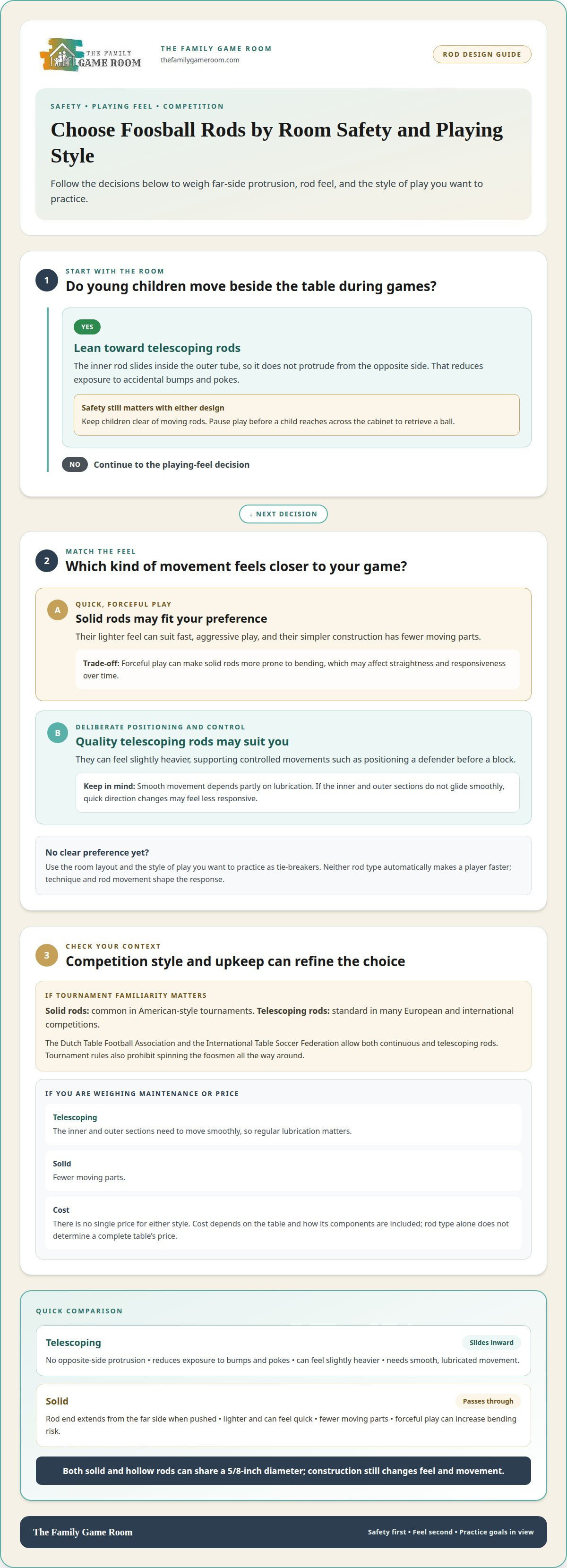
Rod design determines how much metal moves beyond a foosball table’s cabinet. Solid rods pass through the cabinet, so pushing one can make its end extend from the opposite side. Telescoping rods slide inward instead, avoiding that protrusion. This distinction matters in family rooms, where a child might move around the table while players focus on the ball.
The rods sit approximately at the eye level of a six- or seven-year-old child. That makes the exposed end of a solid rod worth considering, especially when children stand or walk beside the table during a game. A quick pass or sudden defensive move can send a rod outward. Telescoping construction reduces the chance of an accidental bump or poke from the far side.
Neither design removes the need for thoughtful play. Keep children clear of moving rods during a game, and make sure players know when someone is standing beside the table. For example, pause play before a child reaches across the cabinet to retrieve a ball. This simple routine helps manage movement around either rod style, while telescoping rods also limit how far the rod extends beyond the opposite side.
Use this comparison to weigh the main safety difference:
| Rod type | Movement through cabinet | Opposite-side protrusion | Family-play consideration |
|---|---|---|---|
| Telescoping | Inner rod slides inside outer rod | Does not protrude | Reduces exposure to bumps and pokes |
| Solid | Single bar passes through table | Extends when pushed | Keep nearby children clear during play |
For a home where young children move around during games, telescoping rods offer a direct safety advantage by avoiding far-side protrusion. Solid rods may still suit a room with clear space around the table and attentive players. Choose based on who uses the room and how close others are likely to stand during play.
What Are Telescopic Rods?
A telescoping rod has a hollow outer tube and a smaller solid inner rod that slides inside it. This construction lets the rod move without extending through the opposite side of the table. Solid rods, by contrast, are single bars that pass through the cabinet. The difference affects more than safety: it can shape how a table suits family games, practice, or competition.
For casual soccer games with family and friends, consider who might move around the table while others play. Telescoping rods keep the far side clear of protruding rod ends. That can be useful in a busy game room where players take turns and younger family members gather nearby. Solid rods may suit a dedicated play area where users expect the rods to extend during play.
Competition goals matter, too. Solid rods are common in American-style tournaments, while telescoping rods are standard in many European and international competitions. The Dutch Table Football Association and the International Table Soccer Federation allow both continuous and telescoping rods. Tournament rules also prohibit spinning the foosmen all the way around, so rod type does not replace the need to learn controlled technique.
How much do telescoping and solid foosball rods cost? There is no single price for either rod style. Cost depends on the table and how its components are included. Rod type alone does not determine the price of a complete foosball table.
What are the pros and cons of telescoping foosball rods? Their main advantage is that they slide inside the table rather than protruding from the far side, which can suit family spaces. Their inner and outer sections need to move smoothly, so regular lubrication matters. Solid rods have fewer moving parts.
Choose telescoping rods if keeping the opposite side clear is a priority or your playing interests include European-style competition. Choose solid rods if you prefer the traditional American tournament setup. For mixed family and competitive use, weigh the room layout alongside the style of play you want to practice.
Differences in stiffness and playing feel
Rod construction changes the feel of a shot, even when solid and hollow rods share a 5/8-inch diameter. Solid rods are lighter, which can suit quick, aggressive playing. Their simpler construction also means fewer moving parts. But forceful play can make them more prone to bending, affecting how straight and responsive a rod feels over time.
High-quality telescoping rods can feel slightly heavier. Their weight can help players make controlled movements, such as positioning a defender before blocking a shot. The inner rod slides inside the outer rod, so smooth movement depends partly on lubrication. If those parts do not glide smoothly, quick changes of direction may feel less responsive.
Stiffness becomes noticeable when a player applies force or changes direction quickly. A fast pull to send a foosman across the field may make a lighter solid rod feel lively. A carefully placed pass may suit the smoother, more controlled feel of a quality telescoping rod. Neither design automatically makes a player faster; technique and the rod’s movement shape the response.
The telescoping vs. solid rods foosball table decision often comes down to the movements you enjoy. Consider these differences:
- Fast, forceful play: A lighter solid rod can feel quick, though aggressive use may increase bending risk.
- Tactical control: A quality telescopic rod offers a smoother, slightly heavier feel for deliberate positioning.
- Consistent response: Lubricate telescopic rod sections so the inner and outer parts glide smoothly.
For tournament practice, match the rod feel to the style you want to develop. A player working on fast attacks may prefer the lighter response of solid rods. Someone practicing controlled passes may favor the smooth action of telescoping rods. This telescoping vs. solid rods foosball table comparison can help narrow your preference, especially when several players share the table. Consider which movements feel natural, then weigh that preference against stiffness and routine maintenance.
Examples of tables with telescopic rods
Bonzini is a useful example of a premium European table associated with telescoping rods. In this design, the inner rod slides inside the outer tube instead of passing through the cabinet. It shows how telescoping construction features in a complete table, not just as a separate component. A telescoping vs. solid rods foosball table comparison can start with this visible difference, then consider the table’s intended playing style.
France has a foosball tradition associated with telescoping rods. René Pierre, Stella Baby-foot et Billards, and Sulpie are also names connected with that tradition. These brands provide context for the European style, while Bonzini is a clear example of a table associated with telescoping construction. A maker’s reputation alone does not tell you the rod design of every table, so focus on the specific model.
Look at how the rod moves where it meets the cabinet. On a telescoping table, an inner rod slides inside an outer tube. On a solid-rod table, the bar travels through the cabinet. Watching the mechanism in motion can make the distinction clearer than a label or product description. This is a practical point to include in a telescoping vs. solid rods foosball table comparison.
Then connect construction to purpose. A premium European table such as a Bonzini may appeal to players looking for telescoping rods and their distinct playing feel. For home play, consider who will use the table and how it fits the room. For competition practice, also think about whether the table’s style aligns with the format you want to learn.
- Bonzini: A named example of a premium European table associated with telescopic rods.
- French tradition: René Pierre, Stella Baby-foot et Billards, and Sulpie offer useful cultural context.
- Table inspection: Observe whether the inner rod slides inside an outer tube or the bar passes through the cabinet.
The takeaway is simple: use Bonzini as a concrete example and the French tradition as context. Compare the actual rod movement and the table’s intended use to find a style that fits your game room.
The Family Game Room: Foosball Tables
The Family Game Room offers foosball tables for creating a dedicated place to play at home. Use the differences in rod safety and feel to decide what matters most in your room, then consider those priorities as you explore table options. Rod construction can influence your choice, but the right fit also depends on who will play and how the table will be used.
If you are shaping a broader entertainment space, pool table dining tops, indoor shuffleboard tables, and air hockey tables offer other ways to bring people together. Focus on the games your household will enjoy and the space you want to create.
For help choosing a foosball table for your game room, contact The Family Game Room.
Make Your Game Room Choice
Let the way you want to play guide your decision. Think beyond the rod itself: consider how the table will fit your room, who will gather around it, and whether your game space should support one favorite activity or several. The telescoping-versus-solid-rod choice is one part of selecting a foosball table that feels right for your household and your style of play.
The Family Game Room offers foosball tables, alongside American Heritage Billiards and Nixon Billiards pool tables. Pool table dining tops can also help create a room where game time and everyday use share the same space. Consider which combination suits the way you want your home to bring people together, then take the next step at your own pace.
Contact The Family Game Room to discuss your game room plans. Here’s to choosing a table that makes the next match feel right at home.
Frequently Asked Questions
And what about maintenance?
Lubricate rod bearings weekly with very frequent play, or every one to two months with occasional play. Telescoping rods also need to move smoothly where their inner and outer sections slide together. Wipe the table and rods with a soft cloth during routine care. Consistent upkeep helps rods move freely and prevents dust and residue from building up around moving parts.
Are Both Rod Styles Used in Tournaments?
Yes, both continuous solid rods and telescoping rods are used in tournament play. The Dutch Table Football Association and the International Table Soccer Federation allow both styles. Tournament formats and table traditions can differ, so aspiring competitors benefit from practicing on the rod style used in their intended competition. That helps make familiar rod movement part of their preparation, alongside ball control and positioning.
Can you switch bar types later?
Sometimes, but changing rod styles is not automatically a simple swap. Compatibility depends on the table’s cabinet openings, bearings, rod dimensions, and how its players and handles fit together. A conversion may require matching components, not just rods. Treat it as a table-specific modification rather than a universal upgrade. Considering your preferred rod style before choosing a table can help avoid a complicated change later.
What Are Solid Rods?
Solid rods are single steel bars that pass through the table cabinet, with each bar carrying its attached foosmen. Push one toward the opposite side and its end extends beyond the cabinet. This continuous construction has fewer moving parts than a telescoping assembly. To identify one, watch whether the rod’s far end advances as it is pushed.
What's Better for Aspiring Players?
The better choice is the rod style that matches the competition format you want to learn. American-style tournaments commonly use solid rods, while telescoping rods are standard in many European and international competitions. If you are developing a particular playing style, practice on a table with the relevant setup. Rod choice helps you become comfortable with the equipment, but controlled technique still takes practice.
What is the difference between telescoping and solid foosball rods?
The key difference is how each rod moves through the cabinet. A solid rod travels as one continuous bar; a telescoping rod uses an inner rod that slides within an outer tube. That changes whether the far end extends during play and influences the rod’s feel. Choose with your room layout, player safety needs, and preferred style of play in mind.