


A slate bed gives a pool table a flat, stable playing surface, helping balls roll consistently and shots feel more precise. That’s why slate has been used in pool and snooker tables for centuries. The trade-offs are practical: slate is heavy, so delivery, installation, and moving the table require planning.
Choosing a table for your home means balancing play quality with room, lifestyle, and budget. The benefits of a slate bed pool table are most relevant when consistent ball roll and a durable playing surface matter to you. MDF and composite beds may suit casual play or spaces where lighter weight and easier handling are priorities.
Here’s how slate affects play, installation and moving, and how it compares with MDF and composite. You’ll get a clear way to weigh the trade-offs and choose a table that suits both the games you want to play and the space you have at home.
Key Takeaways
- Prioritize slate when consistent ball roll and precise play matter most; consider how your household will use the table.
- Plan the table’s route into the room and its final placement before choosing a bed material, since slate makes moving and installation more demanding.
- Compare slate, MDF, and composite by balancing playing performance and durability against weight and practical needs at home.
- Slate’s long history in pool and snooker offers useful context for deciding whether a traditional playing surface suits your game room.
Ball-roll precision and surface flatness
A slate bed is a slab of polished stone valued for its flat playing surface. That consistency supports precise shots because the cue ball travels over a stable plane instead of encountering dips or uneven spots. The benefits of a slate bed pool table are especially noticeable during controlled shots, when a small change in the ball’s path can affect position for the next shot.
Slate’s role in billiards has a long history: John Thurston made the first slate pool table in 1826. A typical pool table slate is three-quarters of an inch to one inch thick. Its mass and rigid surface help maintain a level bed, while non-slate playing surfaces are generally less precise and more prone to damage.
Construction details matter, too. On a quality table, slate extends beneath the rails, adding resilience around the playing area. It should also sit inside a wooden frame, so the felt attaches to the frame rather than directly to the stone. This arrangement supports the cloth and helps keep the playing surface properly finished. Maintaining felt on slate is easier than on other table types.
| Playing-bed option | Surface | Roll precision | Practical consideration |
|---|---|---|---|
| Slate | Polished stone | Flatter surface supports precise shots | Rigid, substantial construction |
| MDF | Non-slate material | Generally less precise than slate | Can be more vulnerable to damage |
| Composite | Non-slate material | Generally less precise than slate | Material and construction affect performance |
Slate origin may be one detail in a table’s specifications. Italian slate from the Ligurian region is traditionally regarded as high quality and may carry the “OIS” mark, meaning Original Italian Slate. Brazilian slate is described as harder than Italian slate and more resistant to bending or breaking. Compare the manufacturer’s stated materials rather than relying on origin alone.
Choose slate when consistent ball roll and shot control are priorities. When comparing tables, look at the bed’s material and construction alongside the rest of the table.
Installation and moving considerations
Three-piece slate is generally more practical to transport because its sections are easier to move than one complete slab.
One-Piece Slate
One-piece slate uses a single slab rather than separate sections. The full piece must be handled together during a move, which can make it harder to carry through doorways or around tight turns. Although there are no separate slate sections to align, the slab’s weight still makes careful handling and professional installation important.
Three-Piece Slate
Three-piece slate divides the playing bed into three sections. That can make transportation more manageable than moving a complete slab, but the pieces still need careful handling. During installation, they must be aligned to create a level playing surface, which is why professional setup is recommended.
Before delivery, plan the route from the entrance to the game room. Measure narrow doorways, turns, and stair access, then clear the path. This helps identify obstacles before the heavy table arrives. Planning won’t reduce the weight, but it can help prevent avoidable handling problems.
Check the room and floor, too. Slate tables are heavy, so consider whether the floor can support the table and whether the route inside is clear. If you may move the table later, plan for careful handling of its slate sections and other components rather than trying to shift it casually across the room.
For a home with tight access or future room changes, three-piece slate is usually the more practical transport choice. A one-piece bed may suit a setup where the full slab can be moved directly into place. Browse slate pool table options with room access and installation needs in mind.
Slate compared with MDF and composite tables
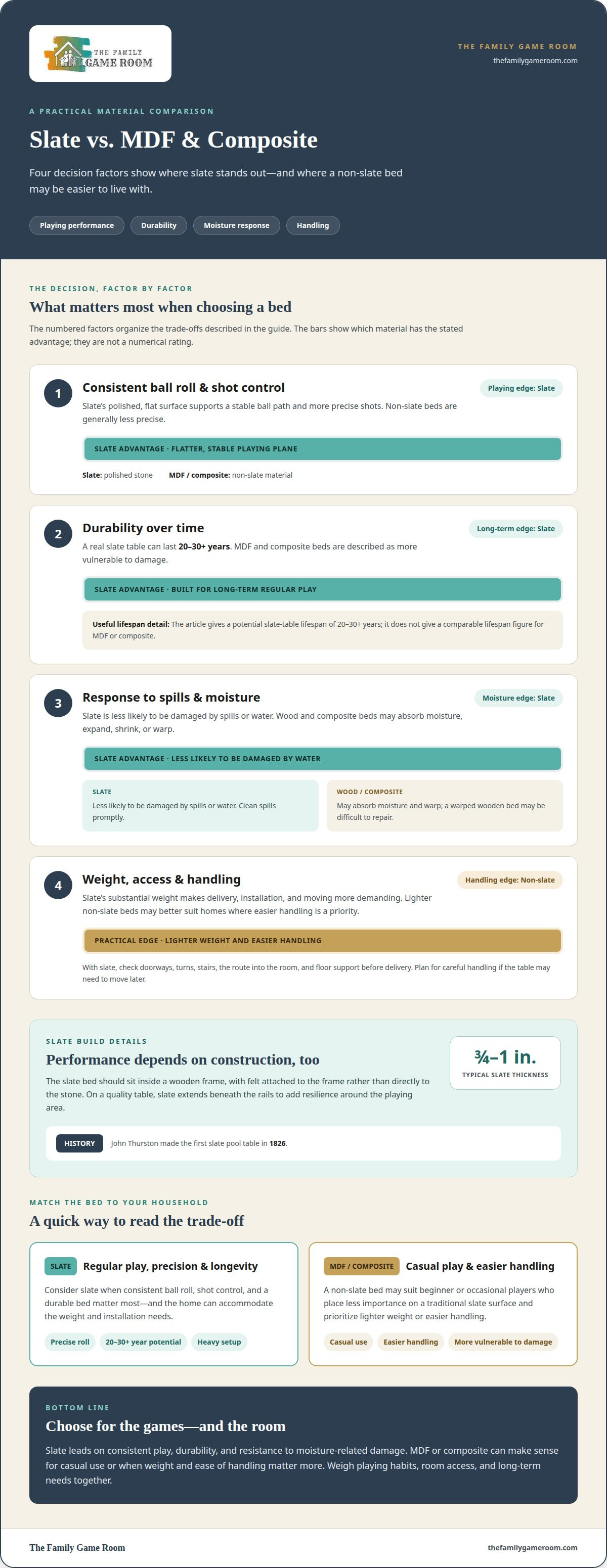
Slate, MDF, and composite beds differ in durability, moisture response, and everyday use. Slate is a polished stone playing surface, while non-slate tables use particleboard or another non-slate material. A real slate pool table can last 20-30+ years, making it a long-term option for households that expect frequent play. MDF and composite beds can suit beginner or casual players who place less importance on a traditional slate playing surface.
Moisture is another consideration. Wood and composite beds can absorb moisture and may expand, shrink, or warp as conditions change. A warped wooden bed may be difficult to repair. Slate is less likely to be damaged by spills or water than beds made from other materials, but clean up spills promptly. If drinks are served in the game room, consider how each bed material may respond to accidental splashes.
| Criterion | Slate | MDF or composite |
|---|---|---|
| Playing bed | Polished stone | Particleboard or other non-slate material |
| Durability | More durable; can last 20-30+ years | More vulnerable to damage |
| Moisture response | Less likely to be damaged by spills or water | Wood or composite may absorb moisture and warp |
| Typical use | Long-term, regular play | Beginner or casual play |
Think about how the table will be used over time. For a dedicated game room with regular play, slate’s durability may be a priority. For occasional games or beginner players, a non-slate table may better suit the household’s needs. Compare durability, weight, and long-term value together instead of treating material as the only deciding factor.
Use your playing habits to narrow the choice: slate suits regular play when a durable bed and consistent ball roll matter, while MDF or composite may suit more casual use. The benefits of a slate bed pool table are most meaningful when you value long-term play enough to accommodate the table’s weight and installation needs.
Slate use in professional pool and snooker tables
Slate-bed pool tables in the United States vary in price by model and construction. Compare the bed material, build, and intended use to understand what each table offers, rather than assuming one price represents them all.
Slate has been used in pool and snooker tables for centuries, reflecting the value of a stable playing surface in games where consistent ball movement matters. For home players, that history is a useful reference, not a requirement to recreate a tournament room.
Consider practicing cue-ball position. A predictable bed makes it easier to notice how changes in speed and aim affect the result from shot to shot. You can repeat a shot, observe where the cue ball finishes, and adjust your stroke. Slate won’t improve technique on its own, but a consistent surface means the table is less likely to add another variable.
Snooker and pool also show why surface consistency matters across different games. Both rely on controlled shots and planned routes around the table, though they use different rules and playing styles. A slate bed connects a home table with a longstanding tradition in both sports. It’s a practical choice for players who value that style of play and expect regular games.
Professional play doesn’t mean every household needs slate. For casual family games, room use, budget, or ease of moving may matter more. Ask what the table needs to support: focused practice, regular games with friends, or occasional recreation. That makes it easier to apply slate’s sporting heritage to a decision that fits your home.
Use professional pool and snooker as a reference for the role of a consistent bed, then match that priority to your play. Explore slate pool tables for a home setup built around regular play.
The Family Game Room
The Family Game Room offers pool tables for different playing priorities and home spaces. If slate’s consistent play appeals but installation, room use, or everyday practicality also matter, compare those needs alongside table design before choosing.
The Family Game Room’s American Heritage Billiards and Nixon Billiards pool tables give you options to compare by construction and style. If you want your table to serve another purpose, consider a pool table with a dining top. The right choice depends on how you plan to play and use the room, not on slate alone.
Bring your priorities into the decision, from focused games to flexible family entertainment. Contact The Family Game Room to discuss your pool table choice.
Choose a table that fits the way you play
Make your next step personal: picture who will gather around the table, how often you’ll play, and what you want the room to feel like. A table can become part of your home’s rhythm, from relaxed family games to focused practice. The benefits of a slate bed pool table matter most when they match the experience you want, not simply because slate has a reputation for serious play.
Before deciding, write down your priorities in order. Are you focused on a rewarding playing experience, a flexible room, or a table that complements your home? A clear shortlist makes trade-offs easier to assess. There’s no need to choose the heaviest option if another setup better suits your household.
For a considered next step, ask The Family Game Room for advice. Bring your priorities and the way you hope to use your game room. Then choose the table that feels right for your home, and get ready to make room for good games.
Frequently Asked Questions
How Can You Choose the Right Pool Table for Your Home?
Match the playing surface, table size, and installation needs to your room and intended use. Start with your priorities: regular practice, relaxed family games, or occasional play. Then consider available space, access for delivery, and the floor’s ability to support the table. This keeps the decision grounded in how your household will actually use it.
What Are the Pros and Cons of Slate Pool Tables?
Slate offers a consistent playing surface and a durable bed, but its weight makes delivery, installation, and later moves more involved. That trade-off matters if the table must pass through narrow access points or the room may change use. Slate can suit a dedicated game room, while a lighter non-slate table may better fit casual play and a flexible space.
What should I avoid when buying a pool table?
Don’t choose by appearance alone or overlook delivery and installation. A table may not suit the room if access is difficult or the floor cannot support its weight. Consider how often you’ll play before choosing a bed material, too: occasional recreation and regular practice can call for different priorities in durability and consistency.
What are the benefits of a slate bed?
The benefits of a slate bed pool table include a flat, stable surface for consistent play and a durable bed suited to long-term use. This matters when players want practice shots to feel repeatable, without the playing surface adding another variable. Slate is also less vulnerable to spills or water than beds made from other materials, though prompt cleanup is still sensible.
How does slate affect pool table accuracy and ball roll?
Slate’s flat playing surface helps balls travel consistently, supporting accurate shots. That’s useful when practicing position play: if the cue ball stops somewhere unexpected, you can focus on your aim and stroke rather than wondering whether an uneven bed changed its path. Slate doesn’t make a player more skilled, but it provides a steadier basis for learning and repeatable shots.
How durable is a slate pool table compared with MDF or wood?
Slate is generally more durable than non-slate beds, while wood and composite materials can absorb moisture and warp. That distinction matters in a busy game room where spills are possible or a table will see frequent play. Since a warped wooden bed cannot be corrected, consider how the room is used and how much long-term resilience matters when comparing slate, MDF, and wood.