


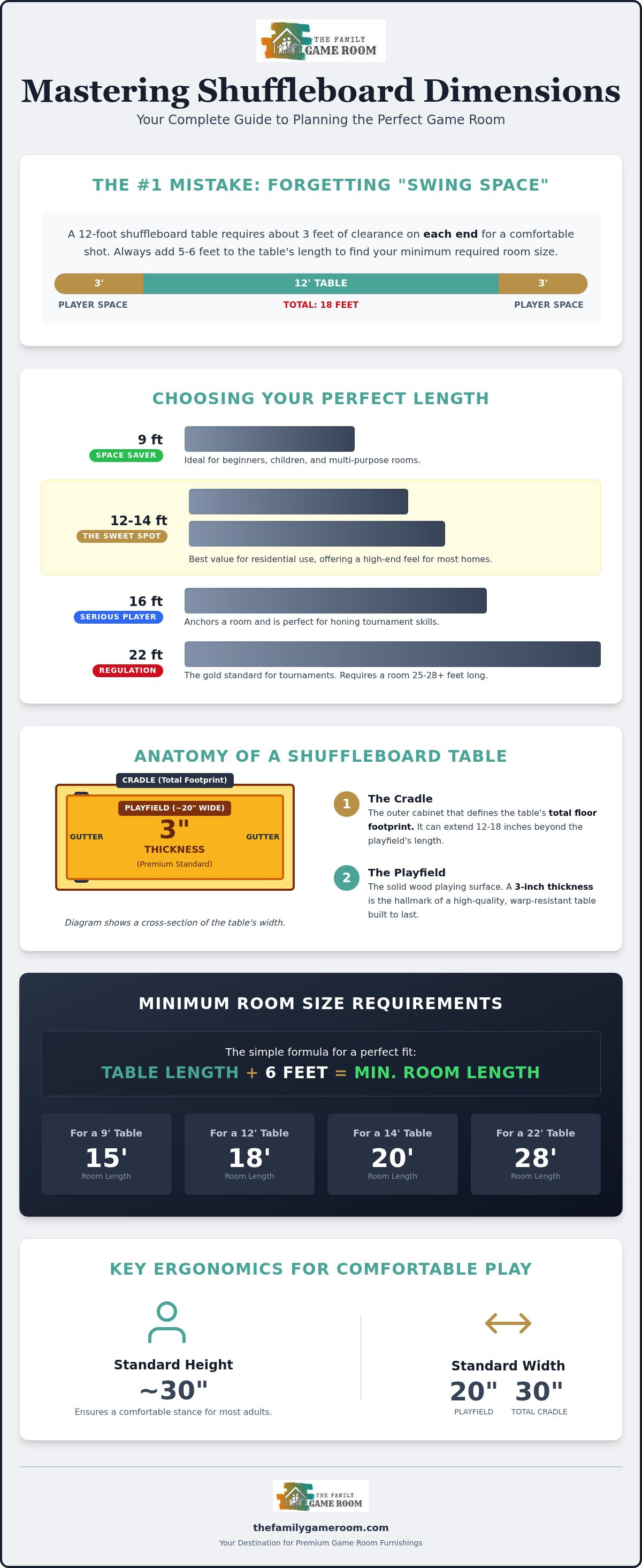
A 12-foot shuffleboard table doesn't actually need 12 feet of space; it needs closer to 18 if you want to play without hitting a wall. It's a common mistake to focus solely on the length of the cabinet while forgetting the "swing" space required for a natural, comfortable delivery. You've likely spent hours dreaming of the perfect game room layout, only to realize that understanding shuffleboard table dimensions is more complex than just measuring a flat surface. It's frustrating to realize a premium piece of furniture might not fit the way you envisioned.
We're here to ensure your investment becomes a source of joy rather than a spatial headache. This guide provides the precise measurements you need to master your floor plan, from compact 9-foot home models to full 22-foot regulation tables. You'll learn how to distinguish between playfield width and total cabinet footprint while accounting for essential ergonomic clearance. We'll break down standard heights and widths so you can select your next Nixon Billiards or American Heritage model with absolute confidence. By the end of this guide, you will have the clarity needed to transform your home into the ultimate entertainment hub.
Key Takeaways
- Discover why 12-foot and 14-foot models represent the "sweet spot" for most luxury residential game rooms.
- Learn the critical difference between playfield width and total cradle footprint to ensure your table fits perfectly.
- Master your room layout by calculating the essential "swing" space needed at both ends of the cabinet.
- Review standard shuffleboard table dimensions for height and width to guarantee a professional, ergonomic playing experience.
- Gain the confidence to select the right length based on your room’s specific architectural constraints and your skill level.
Standard Shuffleboard Table Lengths: From 9ft to 22ft
Selecting the right length is the first step in creating your dream game room. While Table shuffleboard has deep roots in competitive play, the modern market offers a diverse range of sizes to fit any home. Understanding shuffleboard table dimensions starts with recognizing that length isn't just about space; it's about the physics of the puck. A longer table requires more finesse as the weight travels further. Shorter models offer a faster, more aggressive game perfect for casual family gatherings. Brands like American Heritage Billiards curate their collections to bridge this gap between professional feel and domestic practicality.
The length of the playfield directly dictates the speed of your game. On a 9-foot table, the puck reaches the scoring zone almost instantly. This requires a light touch and quick reflexes. As you move toward 16-foot or 22-foot models, you gain the ability to play "the long game." This involves more strategic puck placement and the use of the table's natural "climb" or "drop." Expert players prefer the longer distances because they allow for more nuanced shots and defensive maneuvering.
Regulation 22-Foot Tables
Serious enthusiasts often eye the 22-foot regulation table. This is the gold standard for tournaments and professional leagues. It offers the most authentic experience, but it demands respect for its footprint. You'll need a room at least 25 to 28 feet long to accommodate the table and the necessary player clearance. For most homeowners, this is a statement piece for a dedicated wing or a massive basement. It's the ultimate choice if you have the square footage to spare.
Residential Sizes: 9ft to 16ft
Most residential spaces find their match between 9 and 16 feet. Nixon Billiards and American Heritage Billiards specialize in these versatile sizes. They ensure that luxury fits into standard floor plans without compromising on the quality of play.
- 9-foot tables: These are the ultimate space-savers. They tuck into multi-purpose rooms or sit alongside a pool table without dominating the floor. They're excellent for beginners or children.
- 12-foot and 14-foot tables: These are the sweet spot. They provide enough length to develop a professional-style drift but remain manageable for most US homes. A 12-foot table is often the best value, offering a high-end feel while fitting comfortably in a standard basement.
- 16-foot tables: These provide the closest feeling to a professional match for home use. It's a significant piece of furniture that anchors a room with presence and authority. Choose this if you're a serious player looking to hone your skills for the tournament circuit.
Playfield vs. Cradle: Understanding the Total Footprint
Don't let the external length of a table fool you. When calculating shuffleboard table dimensions, you must account for two distinct components: the playfield and the cradle. The playfield is the solid wood slab where the action happens. The cradle is the outer cabinet that provides structural support and houses the gutters. Usually, the cradle extends 12 to 18 inches beyond the playfield. This extra length allows room for the pucks to drop into the gutters and provides a resting place for the weights at each end. If you only measure the playfield, you'll find yourself with a table that's over a foot longer than you expected.
A luxury standard for high-end tables is a 3-inch thick playfield. This thickness isn't just for show; it provides the mass necessary for a stable, warp-resistant surface. Thinner surfaces might save money upfront, but they lack the professional "thud" and long-term durability of a solid 3-inch block. Premium manufacturers prioritize this thickness to ensure the wood can be sanded and refinished multiple times over decades of use. It's the hallmark of a table built to last for generations.
The Anatomy of the Cradle
The cradle defines your total floor footprint. It's the part you measure when deciding if a table fits against your wall. Gutters run along the sides of the playfield within the cradle, adding several inches to the total width. These gutters are typically lined with carpet or felt to dampen the sound of falling pucks. Nixon Billiards models often use premium hardwoods for their cradles, ensuring the cabinet remains as beautiful as it is functional. If you're ready to upgrade your space, you can explore our collection of premium indoor shuffleboards to find a cradle style that matches your decor. Choosing a sturdy cradle prevents the table from shifting during intense matches.
Playfield Dimensions and Quality
Width varies significantly between residential and professional models. Professional surfaces are typically 20 inches wide, while many home models utilize a 16-inch width to save space. While 16 inches is perfectly playable, the Official Tournament Rules specify a 20-inch playfield for competitive standards. Climate adjusters are another vital part of this assembly. These metal brackets sit beneath the playfield and allow you to maintain a slight "concave" shape, ensuring the puck doesn't slide off the edges. Proper adjustment is the difference between a frustrating game and a perfect slide. The playfield serves as the heart of the table's performance and dictates every shot you take.
Room Size Requirements: Planning for Player Clearance
Measuring your room is just as vital as measuring the furniture itself. While you now understand the difference between the playfield and the cradle, the total shuffleboard table dimensions only tell half the story. You must account for the "playing zone" that surrounds the cabinet. Without this buffer, your luxury game room will feel cramped and difficult to navigate. The goal is to create a space where the game flows naturally without players bumping into walls or furniture.
The Golden Rule for a professional setup is to leave at least 2 to 3 feet of clearance at each end of the table. This space is non-negotiable. Unlike pool, where you need clearance all the way around for a cue stick, shuffleboard is more forgiving on the sides. You only need about 2 feet of clearance on one side of the table to allow for walking and retrieving pucks. This unique requirement makes shuffleboards an excellent choice for long, narrow hallways or basement "dead zones" that wouldn't accommodate other large games.
Before you commit to a specific model, consider the existing obstacles in your room. Bar stools, low-hanging billiard lighting, and structural pillars can all interfere with the player's experience. We recommend using painter's tape to outline the full footprint of the table on your floor. This simple step helps you visualize how much space is left for walkways and other entertainment features. It's the best way to ensure your new investment fits your lifestyle as well as it fits your floor plan.
End Clearance for Throwing
Players don't stand still during a match. They lean, lunge, and follow through on their toss to ensure the puck has the right amount of "climb." A minimum of 2 feet of end clearance is necessary for basic play, but 3 feet is the ideal standard for a truly comfortable game night. If you plan on hosting large gatherings, you should also factor in space for spectator seating behind the active players. This ensures your guests can enjoy the action without being in the way of the next shot.
Side Clearance and Multi-Game Layouts
One of the best ways to save space is to place your shuffleboard against a wall. Since players primarily stand at the ends, the table doesn't need to be centered in the room. This makes it easy to integrate a shuffleboard alongside American Heritage Billiards Pool Tables in a larger open-concept basement. Maintaining a clear flow between different gaming stations prevents the room from feeling cluttered. By prioritizing these clearance zones, you ensure that every guest has the room they need to compete and relax simultaneously.
Standard Width and Height: Ergonomics of Play
While length often dominates the initial conversation, the vertical and horizontal shuffleboard table dimensions are what dictate your physical comfort during a long match. A table that sits too low leads to unnecessary back strain, while one that is too narrow limits your strategic options. The industry standard for table height is 30 to 31 inches. This specific height is chosen to accommodate the average adult's natural leaning posture. It allows you to stabilize your body against the cradle while maintaining a clear line of sight down the playfield for maximum accuracy.
Consistency is the soul of a great game. If your floor has even the slightest slope, the puck will drift, ruining your carefully planned shots. High-end models feature heavy-duty adjustable leg levelers. These allow you to fine-tune each corner, ensuring a perfectly flat surface even on uneven basement concrete or older hardwood floors. This level of precision separates a professional-grade table from a simple toy. It ensures that every shot you miss is a result of your technique, not a flaw in the floor.
The 20-Inch Professional Standard
Serious players almost always gravitate toward a 20-inch wide playfield. This width provides the necessary real estate for complex strategy, such as "banking" shots or navigating around an opponent's weights. A wider surface allows for more nuanced angles and defensive positioning. When you browse the Nixon Billiards collection, you'll notice that their premium models prioritize this 20-inch standard to provide a true tournament-style experience. Choosing a wider playfield ensures your skills can grow without being limited by the table's physical boundaries. It offers a more forgiving environment for beginners while rewarding the precision of experts.
Ergonomic Height Considerations
Height isn't just about the table; it's about the room's overall flow and accessibility. A 30-inch table height aligns perfectly with standard bar stools, making it easy for guests to transition from spectating to playing. For family-friendly setups, this height remains accessible for older children while maintaining the professional feel adults expect. If you want to see how these specifications look in a real-world setting, browse our full inventory of high-end shuffleboard tables today. Matching your table's height with nearby furniture creates a cohesive look that elevates the entire game room. Proper ergonomics reduce player fatigue, allowing the competition to continue late into the evening without discomfort.
Choosing Your Perfect Shuffleboard Dimension
Finalizing your decision requires balancing your competitive ambitions with the physical reality of your floor plan. While we've explored the technical nuances of shuffleboard table dimensions, the "right" choice is the one that invites frequent play. A table that dominates a room so completely that guests can't walk past it won't get used. Conversely, a table that's too short for your skill level might lose its challenge after a few months. Aim for a length that pushes your limits but respects your home's architecture. It's about finding that perfect equilibrium between a professional feel and domestic comfort.
High-end brands like Nixon Billiards and American Heritage Billiards build equipment meant to last for decades. When you invest in a premium model, you're buying more than just wood and metal; you're securing a legacy piece for your family. These manufacturers ensure that even their smaller residential models adhere to professional standards of playfield thickness and cradle stability. This commitment to quality means your table will remain a centerpiece of your home entertainment for years to come. We take pride in acting as a trusted curator for these exceptional pieces.
The Case for the 12-Foot Table
The 12-foot model is widely considered the gold standard for American homes. It offers enough length to practice weight control and strategic drifting without requiring a dedicated ballroom. It fits comfortably in most 15 to 18-foot rooms while leaving ample space for a bar or seating area. This size strikes a brilliant balance between a challenging game and a manageable footprint. You can explore our Indoor Shuffleboard Tables to find a variety of 12ft options that blend high-end performance with practical home sizing.
Premium Brands for Every Size
Your choice of brand should reflect your home's unique aesthetic. American Heritage Billiards excels in traditional, timeless designs that anchor a classic basement setup with warmth and authority. Nixon Billiards offers a more contemporary silhouette, perfect for modern lofts or sleek entertainment wings. To complete the professional look, don't forget to coordinate your shuffleboard with Billiard Light Fixtures that provide shadow-free illumination across the entire playfield. Proper lighting is the final touch that transforms a game table into a professional arena.
Before you click 'purchase,' run through this final spatial audit to ensure total confidence in your selection:
- Confirm the total cradle length: Always plan based on the outer cabinet size, not just the playfield length.
- Verify your clearance: Ensure you have at least 24 to 36 inches of open space at both ends for comfortable throwing.
- Check table height: Standard shuffleboard table dimensions for height (30-31 inches) should align with your seating.
- Assess the floor: Verify the surface is sturdy enough to support the weight of a 3-inch solid wood playfield without shifting.
Design Your Ultimate Home Arena
Mastering your space is the final hurdle before the first puck slides. You now have the expertise to distinguish between playfield width and total cabinet footprint while respecting the essential clearance zones for player movement. Whether you've chosen the versatile 12-foot model or a grand 22-foot regulation piece, understanding shuffleboard table dimensions ensures your game room remains functional and sophisticated. Don't forget that the best layouts prioritize both the physics of the game and the flow of your home life.
As a family-owned and operated business since 2022, we understand that quality matters. We are proud to be an authorized dealer for American Heritage Billiards, offering new premium equipment that stands the test of time. Take advantage of our free shipping on new premium game tables to bring professional play straight to your door. Browse Our Premium Indoor Shuffleboard Collection to find the perfect centerpiece for your next social gathering. Your dream game room is closer than you think, and we're here to help you get every measurement exactly right.
Frequently Asked Questions
What is the most popular size for a home shuffleboard table?
The 12-foot and 14-foot models represent the most popular choices for residential game rooms. These sizes provide a brilliant balance between a challenging playing experience and a manageable footprint for standard US homes. While 9-foot tables work for tight corners, the 12-foot length allows for the strategic drift and weight control that enthusiasts crave. It's the ideal entry point for families who want a professional feel without requiring a massive dedicated wing.
Can I fit a 14-foot shuffleboard table in a 16-foot room?
No, a 14-foot table won't fit comfortably in a 16-foot room. You must account for the swing space players need at each end of the cabinet to throw effectively. Standard recommendations suggest at least 2 feet of clearance on both ends. In a 16-foot room, a 14-foot table leaves only 1 foot at each end. This makes the game nearly impossible to play. Stick to a 12-foot table for that specific room size.
What is the standard height of a shuffleboard table?
The standard height for a shuffleboard table is between 30 and 31 inches from the floor to the top of the playfield. This industry norm ensures an ergonomic posture for adults while remaining accessible for younger players. It also aligns perfectly with standard bar stool heights, allowing spectators to watch comfortably. When calculating your shuffleboard table dimensions, ensure your chosen model includes leg levelers to maintain this height on uneven surfaces.
Is there a difference between playfield width and table width?
Yes, there's a significant difference between playfield width and total table width. The playfield is the wooden surface where the pucks slide, usually 16 or 20 inches wide. The total table width includes the cradle and the gutters, which typically adds another 4 to 6 inches to the footprint. Always use the outer cradle measurements for your shuffleboard table dimensions planning to avoid overcrowding your game room and blocking essential walkways.
How much space do I need around a shuffleboard table for players?
You need at least 2 to 3 feet of clearance at each end of the table for players to stand and follow through on their tosses. For the sides, you only need about 2 feet of space on one side to allow for puck retrieval and walking. Unlike pool tables that require clearance on all sides, shuffleboards are space efficient. This layout allows you to tuck the table against a wall to maximize your room's flow.
Does the thickness of the shuffleboard playfield matter for dimensions?
Playfield thickness primarily affects the table's weight and durability rather than its external length or width. A 3-inch thick playfield is the luxury standard, providing the mass needed for a stable, professional playing surface. While it doesn't change the footprint, it does impact the overall height and the structural requirements of the cradle. Thicker playfields are less prone to warping and can be refinished multiple times over the table's long lifespan.
Can a shuffleboard table be placed against a wall?
Yes, placing a shuffleboard table against a wall is a smart way to save space in narrow rooms. Since the primary action happens at the ends of the table, you don't need access to both long sides. Leaving one side flush against a wall allows you to keep walkways clear for other activities. Just ensure you still have the required 2 to 3 feet of clearance at both ends for the players to move freely.
What are the dimensions of a regulation tournament shuffleboard table?
A regulation tournament shuffleboard table measures 22 feet in length and 20 inches in playfield width. These massive tables are the gold standard for professional leagues and serious enthusiasts with ample space. To house a regulation model, you'll need a room at least 26 to 28 feet long to accommodate the cabinet and player zones. This size offers the most authentic experience for those looking to master the game's complex physics and strategy.