


The most powerful blower isn’t automatically the right replacement for an air hockey table. Choose a motor comparable in size to the original so it can provide suitable pressure beneath the puck. A powerful blower motor for an air hockey table is useful when its airflow matches the playfield, not simply because its rating sounds higher.
That match is why an OEM motor can be the sensible option when you want a replacement aligned with the table’s original setup. The right choice also depends on the motor’s fit and the condition of the blower and filter, since dirt or blocked airflow can affect play. This guide explains how the blower moves air through the table, what separates one motor from another, and which factors shape replacement costs. You’ll also learn when an OEM motor makes sense and what to consider before choosing a replacement, so you can make a clear, informed decision for your game room.
Key Takeaways
- Learn how airflow reaches the playfield and why blocked holes or a dirty filter can create weak spots.
- See what can affect replacement costs, from the type of table to the blower required.
- Understand why motor power alone doesn’t determine performance, and which airflow factors matter.
- Find out when an OEM replacement is a practical choice and why matching the original motor’s size matters.
How air hockey blower motors create airflow
An air hockey blower draws room air into its housing and pushes it beneath the playfield. The table’s internal plenum distributes the air, which escapes through small holes across the surface. This cushion reduces contact between the puck and tabletop, helping the puck glide. A powerful motor can’t compensate for blocked holes or a dirty filter.
Airflow capacity depends on more than a motor’s advertised power. The blower must move enough air through the table’s filter, internal passages, and perforations while maintaining pressure beneath the puck. A weak spot may come from clogged holes rather than an undersized motor. Clear debris carefully: a fine probe can open blocked holes without enlarging them. A funnel-like nozzle can direct cleaning air across about 2-3 inches of the surface at a time.
Electrical requirements depend on the table and its original blower. A 12V blower and a 100V/120V fan have different voltage requirements, so match the replacement to the table’s electrical rating. Disconnect the table from power before accessing the motor, and don’t handle wiring while it’s connected.
To make a blower quieter, first check for dirt, obstructions, or vibration before changing motors. Shop-vac motors can be noisy, so replacing a blower with a shop-vac assembly may not solve the problem. Make sure the blower is seated securely and the airflow paths are clear. Don’t restrict the outlet to reduce noise, since that can impair airflow.
For routine care, switch off and unplug the table before cleaning the blower and filter. Use compressed air to clear dirt from the blower and filter, or wipe dust from the motor with a microfiber cloth. If the filter remains grey after cleaning, match its dimensions when replacing it. Clean holes and a clear filter help air reach the playfield without unnecessary obstruction.
Blower replacement costs
Replacement prices depend on the blower type, airflow needs, and table design. These figures describe different equipment, not interchangeable options.
Before comparing prices, identify the table’s original blower and what it does. A compact fan may suit one design, while a high-performance table may need a larger blower to maintain puck movement across the playfield. The motor’s dimensions, electrical rating, mounting points, and airflow requirements all affect fit. A lower-priced fan isn’t a bargain if it can’t match the original setup.
To replace a blower, unplug the table and follow the manufacturer’s instructions to access the motor. Remove the old assembly, check that the replacement matches its dimensions and electrical connection, and secure it in the original position. Restore power only after reassembly, then test airflow across the playfield. If the wiring or mounting differs, use a qualified technician rather than forcing a fit.
Installation can add to the expense if the replacement needs extra fitting or electrical work. A direct match to the existing assembly differs from adapting a fan with incompatible dimensions or connections. Keep the old blower’s label and mounting details handy when identifying a replacement. They help narrow the options and avoid buying a motor that costs less upfront but can’t provide the needed airflow.
Differences in blower power
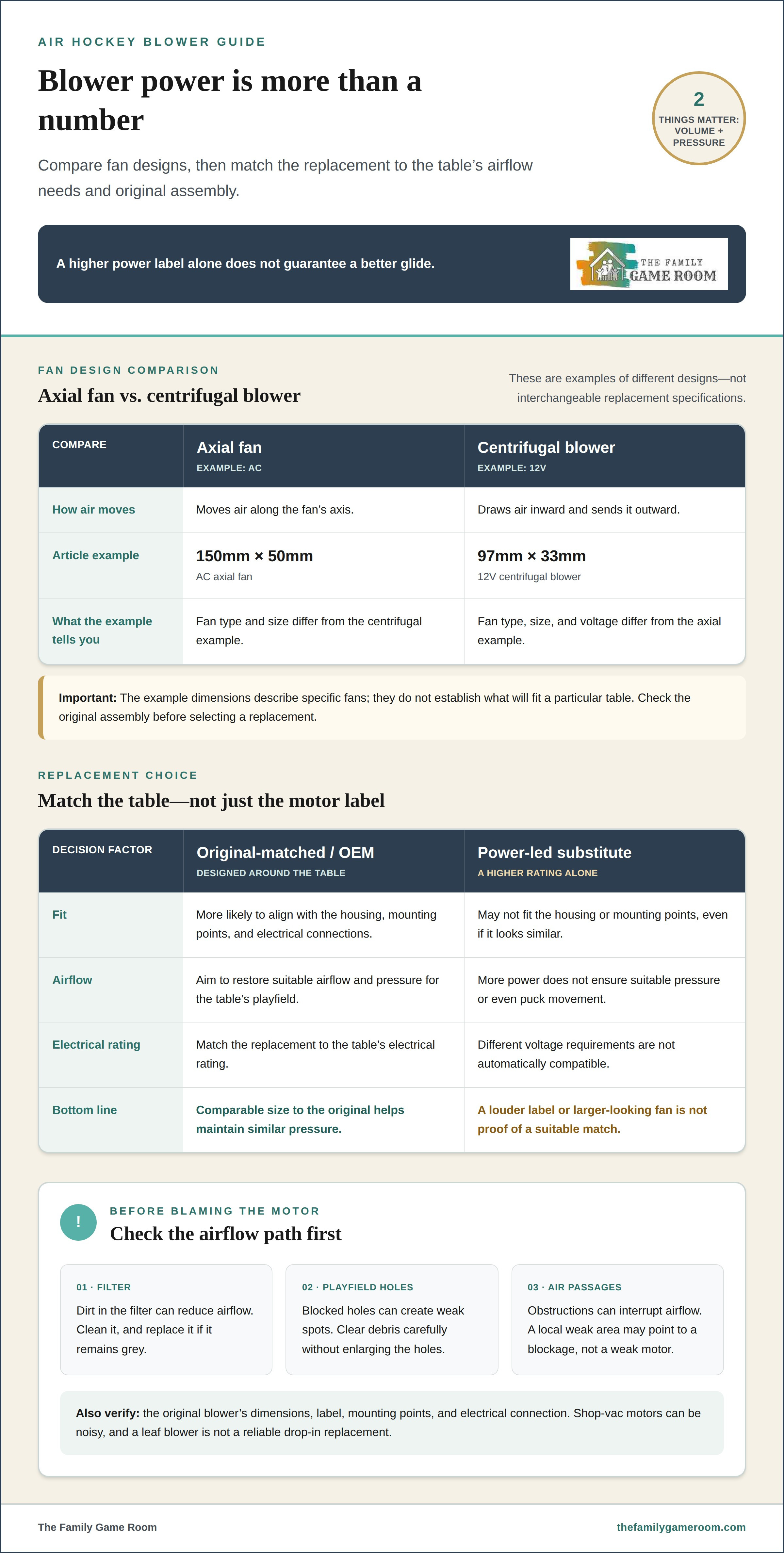
Blower power involves more than how forcefully a motor spins. Air volume and pressure both matter: the fan must move air through the table and maintain enough pressure for a consistent puck glide. A powerful blower motor for an air hockey table can still perform poorly if its airflow doesn’t suit the playfield.
Fan designs illustrate why the label alone doesn’t decide performance. An axial fan moves air along its axis, while a centrifugal blower draws air inward and sends it outward. A 150mm x 50mm AC axial fan and a 97mm x 33mm 12V centrifugal blower differ in size and design. Those figures describe examples, not interchangeable replacement specifications.
Can you use a shop vac or leaf blower as an air hockey table blower? Neither is a reliable drop-in replacement. Shop-vac motors can be noisy, and a leaf blower’s airflow and form aren’t matched to the table’s original assembly. A replacement must fit the housing and provide suitable pressure, not merely move air at high speed.
Weak airflow can have causes other than an underpowered motor. A dirty filter, blocked playfield holes, or an obstructed air path can reduce airflow at the surface. Check across the table: if one area feels weaker, inspect its holes and nearby passages before blaming the motor. Uneven airflow can signal a local blockage rather than insufficient power throughout the table.
- Compare design: Axial and centrifugal fans move air differently.
- Match the assembly: Size, voltage, and fit matter alongside airflow.
- Trace weak spots: Check the filter, holes, and passages before replacing the blower.
Choose a motor for the table’s needs, not a louder label or larger-looking fan. A motor that won’t fit or maintain pressure can’t deliver even airflow. Start with the original assembly’s dimensions and electrical rating, then check whether dirt or an obstruction explains the change in puck movement. This helps distinguish a cleaning issue from a genuine blower mismatch.
OEM air hockey blower motor
An OEM blower motor is made for the original equipment or supplied to match its design. For an air hockey table, its key benefit is fit: a motor intended for that table is more likely to align with the housing, mounting points, and electrical connections. The goal isn’t maximum power. It’s restoring the airflow the table was designed to deliver.
Size matters because the blower must create suitable pressure beneath the puck. Choose a replacement comparable in size to the original motor to maintain similar pressure. A physically smaller or larger unit may not sit correctly or move air through the table as intended. Similar appearance alone doesn’t confirm a match.
Before choosing an OEM replacement, identify the table model and examine the original blower’s label and assembly. Compare these details:
- Dimensions: Check the motor and housing measurements against the original.
- Electrical details: Match the voltage and connection type shown on the existing unit.
- Mounting: Confirm that the replacement’s attachment points suit the table.
- Air delivery: Choose a motor comparable in size to preserve pressure beneath the puck.
These checks help distinguish an OEM match from a generic fan that happens to fit one measurement. A motor with different connections or mounting may need adaptation, and a similar-sized unit still has to suit the table’s airflow path. Use the original part’s label and mounting arrangement as reference points.
An OEM replacement is especially suitable when the original blower is damaged, you can identify the table model, and the correct motor is available for that design. If airflow is weak, first rule out a dirty filter or blocked holes; a new motor won’t clear those obstructions. If a replacement is needed, prioritize the original design and comparable dimensions over a higher power rating. This is the clearest way to preserve the table’s intended puck glide.
The Family Game Room: Air Hockey Tables
The Family Game Room offers Air Hockey Tables for creating a lively, dedicated play space at home. If you’re weighing a replacement motor against choosing a table, consider the complete setup: the table’s size, room layout, and the kind of game-room experience you want. A well-matched table gives you a clear starting point for planning airflow and future upkeep.
For a multipurpose room, Pool Table Dining Tops let a pool table serve another role, while Indoor Shuffleboard Tables and Foosball Tables offer different kinds of play. Start with the games that suit your household and available space, then choose the setup that fits.
If you’re ready to explore Air Hockey Tables for your home, contact The Family Game Room.
Plan your next game-room upgrade
Choose your next move based on the kind of play you want to bring home. If your table needs attention, let the original setup guide your replacement decision. A powerful blower motor for an air hockey table should suit the table, not just sound impressive on its label.
Then consider how the room can serve different kinds of gatherings. The Family Game Room offers American Heritage Billiards Pool Tables and Nixon Billiards Pool Tables, along with Pool Table Dining Tops for a flexible setup. These options help you shape a game room for both play and everyday use.
Start with the experience you want, then choose equipment that fits your home and how you plan to use it. For a friendly next step, contact The Family Game Room to explore the right game-room direction for your household.
Frequently Asked Questions
What CFM and static pressure does an air hockey table blower motor need?
Use the airflow and pressure requirements specified for the table’s original blower instead of choosing a universal CFM or static-pressure target. CFM measures air volume; static pressure describes the blower’s ability to move air against resistance through the table. A replacement must suit both the blower assembly and the table’s air passages. Compare its specifications with the original part or the table’s manufacturer documentation.
How do I choose the right horsepower and RPM for an air hockey blower motor?
Choose horsepower and RPM by matching the replacement motor’s performance to the original blower and table design. Neither rating alone tells you how much useful air reaches the playfield: fan design and resistance within the table matter too. Use the original motor’s label or manufacturer documentation as a reference. Higher horsepower or RPM doesn’t automatically mean a better match if the assembly differs.
How can I find the correct blower motor for my air hockey table model?
Start with the table’s model and the part number on the existing blower. Use those details to find the matching motor in the manufacturer’s parts information, then compare its dimensions, voltage, connector, and mounting arrangement. For example, a motor with the same housing size but a different connection may not be a direct replacement. Keep a clear photo of the label for reference.
What are typical prices for air hockey table blower motors?
These figures describe different blower categories, not a universal price or the cost of a complete table. The right part depends on the table’s blower requirements, so compare like-for-like assemblies.