


What if your dream of a professional game room turns into a nightmare because you're two inches short of a full stroke? It's a common concern for homeowners investing in premium pieces from brands like American Heritage Billiards or Nixon Billiards. Mastering the pool table room size requirements is about more than just fitting the furniture; it's about protecting your walls and ensuring every shot feels natural. If you don't account for the standard 58 inch cue clearance, you risk damaging your home or leaving the table unplayable.
You want a space that feels like a high-end lounge, not a cramped basement. It's natural to worry about whether your flooring can support a heavy slate bed or if your lighting will create distracting shadows. This guide provides the technical specifications and structural needs required to transform your space into a professional-grade billiards room. We'll cover precise dimensions for 7, 8, and 9-foot tables, floor load considerations, and a clear checklist for a successful installation day. You'll gain the confidence to ensure your room is perfectly leveled and ready for decades of entertainment.
Key Takeaways
- Calculate your ideal playing area using the 58-inch cue rule to ensure unobstructed movement for every shot.
- Master the specific pool table room size requirements for various table lengths to prevent architectural constraints from ruining your game.
- Assess your flooring’s structural integrity to safely accommodate the 700 to 1,000-pound weight of a premium slate bed.
- Learn why professional precision leveling is the only way to guarantee a perfectly flat, tournament-grade playing surface.
- Explore space-saving accessory layouts and high-end table options from American Heritage and Nixon Billiards to suit your home’s aesthetic.
Mastering Room Dimensions and Cue Clearance
Selecting a premium table is a significant investment in your home's social life. However, the physical footprint of the furniture is only half the equation. You must account for the "stroke zone," which is the area surrounding the table where players stand and swing their cues. To meet professional pool table room size requirements, measure your space from the nose of the cushion rather than the outer rail. This ensures your measurements reflect the actual field of play.
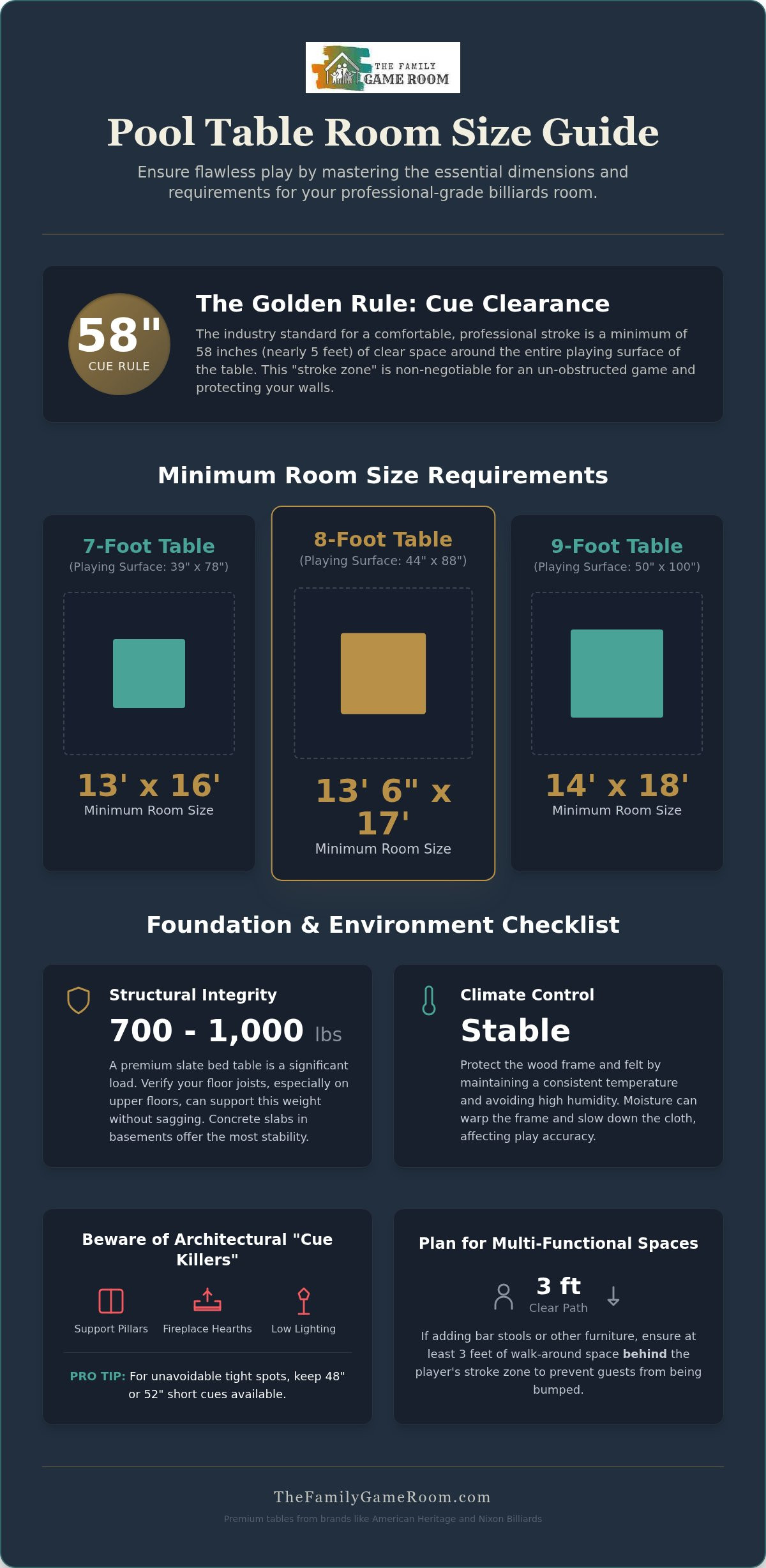
The industry benchmark for a comfortable game is the 58 inch standard cue rule. If you don't provide at least 5 feet of clearance on all sides, you'll find yourself "poking" at the ball rather than following through with a smooth, professional stroke. It's helpful to consult the official pool table dimensions to see how different table classes impact your floor plan. Use these minimum room dimensions as your starting point:
- 7-Foot Table: 13' x 16' minimum room size.
- 8-Foot Table: 13' 6" x 17' minimum room size.
- 9-Foot Table: 14' x 18' minimum room size.
Watch out for architectural "cue killers" that can ruin a perfectly good layout. Support pillars, protruding fireplace hearths, and low-hanging chandeliers are common offenders. It's better to center your table away from these obstacles, even if it means shifting the table slightly off-center in the room. A curated environment prioritizes the game's flow over strict symmetry.
Calculating the Stroke Zone for Optimal Play
A five-foot perimeter allows for a full backswing without scuffing your walls. If your room has one narrow spot or a structural pillar, don't panic. You can keep a few 48 or 52 inch short cues on your rack specifically for those occasional tight corner shots. This flexibility is essential when integrating Pool Table Dining Tops. These convertible models often sit in rooms with mixed furniture layouts, requiring you to balance playing space with everyday utility. Understanding these pool table room size requirements ensures your investment provides a lifetime of frustration-free play.
Managing Multi-Functional Spaces
Modern game rooms often pull double duty as entertainment hubs. If you plan to add bar stools or poker tables, ensure there's at least 3 feet of walk-around space behind the player's stroke zone. This prevents guests from being bumped during a critical shot. When your table is in dining mode, you'll need extra clearance for chairs to slide out comfortably without hitting the walls. Choose low-profile seating to keep the room feeling open and professional while maintaining the domestic warmth of your home.
Structural Integrity and Environmental Requirements
A professional table isn't just a piece of furniture; it's a significant structural load. Most premium 8-foot slate models weigh between 700 and 1,000 pounds. This concentration of weight requires a floor that can handle the static pressure without sagging or shifting over time. For second-story installations, verify that your floor joists are positioned to support this heavy centerpiece. If your home's blueprints don't specify load capacities, consult a professional to ensure your architecture is as robust as your equipment.
Humidity and temperature control are vital for the longevity of your investment. Excessive moisture can warp a solid wood frame or cause the felt to lose its tension, directly affecting the speed and accuracy of your shots. Keep your game room at a consistent temperature to protect the integrity of the materials. When designing a classic billiard room, these environmental factors are just as important as the physical pool table room size requirements.
Is Your Floor Ready for Premium Slate?
Professional tables typically feature 3-piece slate beds. This design allows for easier transport and more precise leveling, but it also distributes weight across the legs differently than a single-piece slate. On hardwood floors, the sheer pressure can leave permanent indentations. Use a high-quality area rug to cushion the weight and prevent the table from shifting during aggressive play. Understanding how these heavy materials affect your pool table room size requirements is key to a long-lasting setup. Basement installations on concrete slabs offer the most stability, while upper-floor rooms require a quick check of the structural supports.
The Science of Lighting: Height and Placement
Proper illumination is what separates an amateur setup from a professional gallery. Centering your light source perfectly over the center of the slate is non-negotiable for accurate play. Mount your Billiard Light Fixtures exactly 30 to 32 inches above the playing surface. This specific height provides maximum visibility without causing glare or obstructing the players' view during a shot. Multi-bulb fixtures are superior to single pendants because they eliminate the "shadow pockets" that can hide the edge of a ball or distort your perspective on the rail.
If you're unsure about your floor's capacity or lighting layout, explore our high-end inventory and consult with our experts on the best fit for your home's architecture.
Professional Installation and Precision Leveling
Moving a 1,000-pound table into your home is a feat of logistics and geometry. Meeting the pool table room size requirements is only the first step; you also need a clear path from the delivery truck to the final destination. Professional installers must navigate tight hallways and standard 32-inch doorways with heavy slate sections. They don't just drop off a box. They carefully transport each component to ensure the frame and slate arrive without a single chip or hairline fracture.
Once the components are in the room, the assembly process begins. This isn't a simple weekend project. It involves constructing the heavy wood frame, precisely placing the slate, and stretching the high-grade cloth. Every bolt must be tightened to specific standards to ensure the table remains a solid, singular unit during play. If the frame isn't perfectly square, the slate won't sit correctly, leading to permanent structural issues.
Why Premium Tables Require Expert Assembly
High-end models from brands like American Heritage Billiards typically feature a three-piece slate system. To create a seamless playing surface, installers join these sections and seal the seams with melted beeswax. Once the wax cools and hardens, it's scraped flush to the slate. This specialized technique ensures that your ball won't "hop" or deviate when crossing a joint. Proper felt tensioning is equally vital. If the cloth is too loose, you'll see bunches; if it's too tight, the fibers may tear. Experts also torque the rails to specific levels so the bounce remains consistent across the entire table perimeter.
Achieving a True Roll: The Leveling Process
A standard carpenter's level isn't sensitive enough for a professional-grade table. Installers use a machinist level, which can detect minute variances that the human eye misses. They place thin wood shims under the legs and slate to correct for slight floor slopes or carpet compression. This meticulous process eliminates "drift," which is that frustrating moment when a slow-rolling ball curves off its intended path. Attempting a DIY level often leads to uneven weight distribution, which can cause long-term frame stress or even cracked slate.
Keep in mind that your table will settle. Because of the immense weight, the wood, carpet, and even the floor joists will compress slightly over the first few weeks. It's perfectly normal to schedule a quick re-level after the first 30 days to account for this initial adjustment. This ensures your playing surface remains tournament-flat for years to come.
Essential Accessories and Storage Layout
Accessories are the final step in curating a professional environment. Your choice of storage directly impacts your pool table room size requirements by either freeing up floor space or adding to the room's total footprint. While the table is the centerpiece, the way you organize your cues and balls determines how effortlessly the room functions during a high-stakes match. A cluttered perimeter is the fastest way to ruin the high-end feel of a custom game room.
Wall-mounted cue racks are the gold standard for homeowners looking to maximize their playing area. By moving the equipment off the floor, you eliminate potential trip hazards and keep the perimeter clear for a full 58 inch stroke. If you prefer a more traditional look, floor-standing racks offer a substantial, furniture-like presence. However, these require their own dedicated space, usually a corner that sits already outside the active play zone. Don't forget to include a bridge cue in your rack. It's an essential tool for those rare moments when a shot requires a reach that the room's dimensions don't easily allow.
Longevity is also a factor of the accessories you choose. Investing in high-quality phenolic resin ball sets reduces the heat and friction generated during impact, which preserves your felt. To protect that felt when the table isn't in use, a heavy-duty table cover is mandatory. It shields the cloth from dust, sunlight, and spills, ensuring the surface remains fast and true for years. Professional-grade covers also prevent the felt from fading, maintaining that crisp, luxury look.
Organizing with Premium Pool Cue Racks
Position your racks where they are within easy reach but safely outside the stroke zone. A good rule of thumb is to mount wall racks at least 5 feet away from the table's edge. This prevents the rack itself from becoming an obstruction during a backswing. To maintain the "luxury for the home" aesthetic, match your rack's wood finish to your American Heritage or Nixon table. Corner racks are particularly effective in smaller rooms, as they utilize often-wasted space while keeping your floor plan open and professional.
Racking and Ball Placement Standards
Precision starts with the rack. When setting up for a game, identify the Foot Spot on your cloth; this is where the apex ball of the rack must sit. Using a solid wood rack is preferable to plastic alternatives. Wood is gentler on the felt and reduces the risk of creating "burn marks" or pilling over time. Whether you're racking for a standard 8-ball game or a fast-paced 9-ball match, a tight rack is essential for a consistent break. This level of detail ensures your home setup rivals the experience of a professional tournament hall.
Ready to finish your space? Shop our collection of professional cue racks and accessories to complete your game room transformation.
Selecting Equipment: American Heritage and Nixon
Choosing between American Heritage and Nixon Billiards isn't just an aesthetic decision. It's a choice about how your table will integrate with your home's architecture and your family's lifestyle. While you've already mastered the technical pool table room size requirements, the physical design of these two industry leaders dictates the final atmosphere of your space. American Heritage offers a timeless, heavy-set presence that anchors a room, while Nixon provides a streamlined silhouette perfect for contemporary, open-concept living.
Investing in new equipment is the only way to guarantee the integrity of your playing surface. When you purchase new, you're getting a factory-honed slate bed and a frame that hasn't been stressed by multiple moves or improper storage. This ensures your warranty remains intact and your table stays perfectly level for decades. Coordinating your centerpiece with matching bar stools, dartboard cabinets, or shuffleboard tables creates a cohesive, professional-grade entertainment hub that feels like a curated gallery rather than a cluttered basement.
American Heritage Billiards: The Gold Standard
American Heritage tables are engineered for homeowners who value traditional craftsmanship and heirloom quality. These tables feature robust cross-beamed frames that provide a rock-solid foundation, ensuring the oversized slate bed remains stable even during aggressive play. Their design versatility is unmatched, ranging from rustic oak finishes that suit a mountain lodge to polished mahogany styles for a formal study. Because of their substantial build and intricate leg carvings, these pieces are the preferred choice for dedicated luxury game rooms where the table is the undisputed focal point. They require a room that can handle their visual weight as much as their physical load.
Nixon Billiards: Modern Sophistication
If your home features minimalist architecture or an open-concept floor plan, Nixon Billiards offers a sophisticated alternative. Their industrial and mid-century modern designs redefine the billiards aesthetic with sleek lines and powder-coated metal accents. Nixon is particularly famous for its multi-functional dining-conversion models. These tables allow you to meet pool table room size requirements in a shared dining area without sacrificing elegance. The setup for these models is highly specialized, as the frame must be perfectly calibrated to ensure the dining top sits flush over the rails. This versatility makes them ideal for modern homeowners who want high-end entertainment that adapts to their daily needs.
Design Your Legacy Game Room Today
You now possess the technical blueprint to navigate pool table room size requirements with absolute precision. By balancing the 58 inch cue rule with structural load-bearing checks, you've ensured your home is ready for a professional-grade setup. A perfectly leveled table and organized storage are the final touches that separate a casual hobby room from a high-end billiards lounge. It's these details that guarantee a lifetime of smooth play and domestic warmth.
As a family-owned and operated business since 2022, we take pride in acting as an authorized dealer for top-tier luxury brands. We provide expert national shipping and support to ensure your new investment arrives in pristine condition and performs flawlessly. Whether you choose the traditional craftsmanship of American Heritage or the modern lines of Nixon, your game room will become the heart of your home entertainment. We're here to help you curate a space that reflects your taste and commitment to quality.
Browse Our Collection of Premium American Heritage Pool Tables and start your transformation. Your home deserves a centerpiece that brings family and friends together for generations.
Frequently Asked Questions
What is the minimum room size for an 8-foot pool table?
The minimum room size for a standard 8-foot pool table is 13 feet 6 inches by 17 feet when using a 58-inch cue. This provides the necessary clearance to execute a full stroke from any angle without hitting the walls. If your space is slightly smaller, you might consider using 48-inch or 52-inch cues for specific shots. However, staying within these pool table room size requirements ensures a professional playing experience.
Can a pool table be installed on a second floor?
You can install a pool table on a second floor, provided your home's structural integrity is verified. Most professional slate tables weigh between 700 and 1,000 pounds, which requires sturdy floor joists to prevent sagging. Consult a structural engineer or a professional installer to confirm your floor can handle the static load. Positioning the table over load-bearing walls or reinforced joists often provides the necessary support for high-end equipment like American Heritage models.
How much space is needed around a pool table for a 58-inch cue?
You need at least 5 feet of clear space on all sides of the table to accommodate a standard 58-inch cue. This measurement accounts for the length of the cue plus the room needed for a comfortable backswing. Failing to meet these pool table room size requirements often results in players scuffing the walls. Always measure from the nose of the cushion to the nearest obstruction to ensure a smooth, professional game.
Do I need a professional to set up my pool table?
Professional installation is highly recommended to protect the integrity of the slate and ensure a perfectly level playing surface. Expert installers use machinist levels and specialized techniques, such as sealing 3-piece slate seams with beeswax, which is difficult for DIYers to replicate. Attempting a self-setup can lead to uneven rolls or frame stress. Investing in professional assembly guarantees your warranty remains valid and your table performs at a tournament-grade level for years.
How high should a billiard light be hung above the table?
Mount your billiard light fixture exactly 30 to 32 inches above the playing surface. This height is the professional standard because it provides even illumination across the entire cloth without creating harsh shadows or obstructing the players' view. Centering the light source over the middle of the slate is essential for visibility. Multi-bulb fixtures are often preferred over single pendants because they eliminate dark spots in the corners, ensuring you never miss a shot.
Is a 3-piece slate better than a 1-piece slate for home setup?
A 3-piece slate is superior for home setups because it allows for more precise leveling and easier transport through doorways. Each section can be adjusted individually with shims to correct for minor floor variances. Once the sections are aligned, the seams are sealed with wax to create a singular, seamless surface. While 1-piece slates exist, they are incredibly heavy and difficult to level perfectly, making 3-piece slates the standard for premium brands like Nixon Billiards.
How do I know if my floor can support the weight of a pool table?
Check your home's blueprints for floor load capacity or consult a structural professional to verify support. A standard 8-foot slate table exerts significant pressure, often concentrated on four legs. If you're installing on a concrete slab in a basement, weight is rarely an issue. For upper floors, ensure the table sits perpendicular to the floor joists for better weight distribution. Using a thick area rug can also help distribute the pressure and protect your flooring.
What is the best type of flooring for a game room?
Low-pile carpet is often considered the best choice for a game room because it provides excellent traction and absorbs sound. If you prefer hardwood or tile, it's essential to place a high-quality area rug under the table. The rug prevents the heavy legs from denting the wood and keeps the table from shifting during play. Avoid thick, shaggy carpets, as they can compress unevenly over time, making it difficult to maintain a perfectly level surface.