


What if your standard cleaning routine is actually shortening the lifespan of your game room's centerpiece? It's a common worry for new owners who fear that a single wrong chemical or an aggressive vacuum nozzle could ruin their premium investment. You've brought home a piece of exceptional craftsmanship, and you want to ensure it remains the heart of your home entertainment for decades to come.
It's natural to feel protective of your table's slate and felt. We know that pool table maintenance for beginners can feel overwhelming when you're balancing conflicting advice about brushing techniques or worrying about how humidity might warp the wood. This guide simplifies everything into a curated care routine that protects both the luxury aesthetic and the professional performance of your table. You'll learn how to maintain a pristine playing surface, manage environmental risks, and keep every ball rolling with absolute consistency. Let's transform that maintenance anxiety into the lasting pride of owning a showroom-quality game room.
Key Takeaways
- Master the three core pillars of pool table maintenance for beginners, focusing on surface care, mechanical stability, and environmental protection.
- Protect your premium felt from abrasive debris by using a specialized horsehair brush and clearing the table before every cleaning session.
- Prevent cue warping and felt wear by maintaining your accessories and utilizing dedicated cue racks to store equipment properly.
- Defend your table against UV damage and humidity with a high-quality cover and stable climate control settings.
- Implement a simple, action-oriented schedule to keep your game room's centerpiece in showroom condition for years of play.
What is Professional Pool Table Maintenance?
Professional pool table maintenance isn't just about a quick dust-off before a game. It's the strategic intersection of surface cleaning, mechanical checking, and environmental control. When you treat your table as a high-performance instrument rather than just a piece of furniture, you ensure it plays as well in a decade as it does today. For those diving into pool table maintenance for beginners, the first step is recognizing that your table is a complex assembly of slate, cloth, and precision-engineered wood.
High-end investments like American Heritage Billiards Pool Tables require specific care protocols because they use premium materials that react to their surroundings. Maintaining these tables involves more than just aesthetics. You must distinguish between cosmetic cleaning, like wiping down the cabinetry, and structural preservation, such as monitoring the leveling and cloth tension. Understanding Your Pool Table and its fundamental construction helps you identify which parts need the most attention to keep the game fair and the roll true.
The golden rule for every new owner is consistency over intensity. You don't need to spend hours scrubbing your game room every weekend. Instead, focus on small, disciplined habits. A few minutes of proper care after each session prevents the buildup of chalk dust and skin oils that eventually degrade the playability of the felt. This proactive approach turns maintenance from a chore into a simple ritual of ownership.
The ROI of Regular Table Care
Investing time in your table pays direct dividends in longevity and performance. Proper care preserves the heirloom value of solid wood cabinetry, ensuring your investment remains a centerpiece for future generations. Consistent maintenance also guarantees professional-grade ball response and bank accuracy. By following a regular schedule, you avoid the high cost of premature professional re-felting, which can often exceed $500 for premium cloth and labor. A well-kept table simply lasts longer and plays better.
Approachable Excellence in the Game Room
A pristine table sets a sophisticated tone for your entire home entertainment space. It signals to guests that you value quality and craftsmanship. There's a psychological benefit too; a clean, ready-to-play surface naturally invites more frequent family fun. We recommend building a routine that takes less than 10 minutes a week. This brief commitment keeps your luxury game room looking like a showroom while ensuring every shot you take is backed by a perfectly maintained surface.
This commitment to excellence often extends to other areas of the home where quality matters most; for those looking to enhance their outdoor living experience, Tropicraft Patio offers premium furniture that matches the high standards of a well-curated game room.
How to Clean Pool Table Felt and Cabinetry
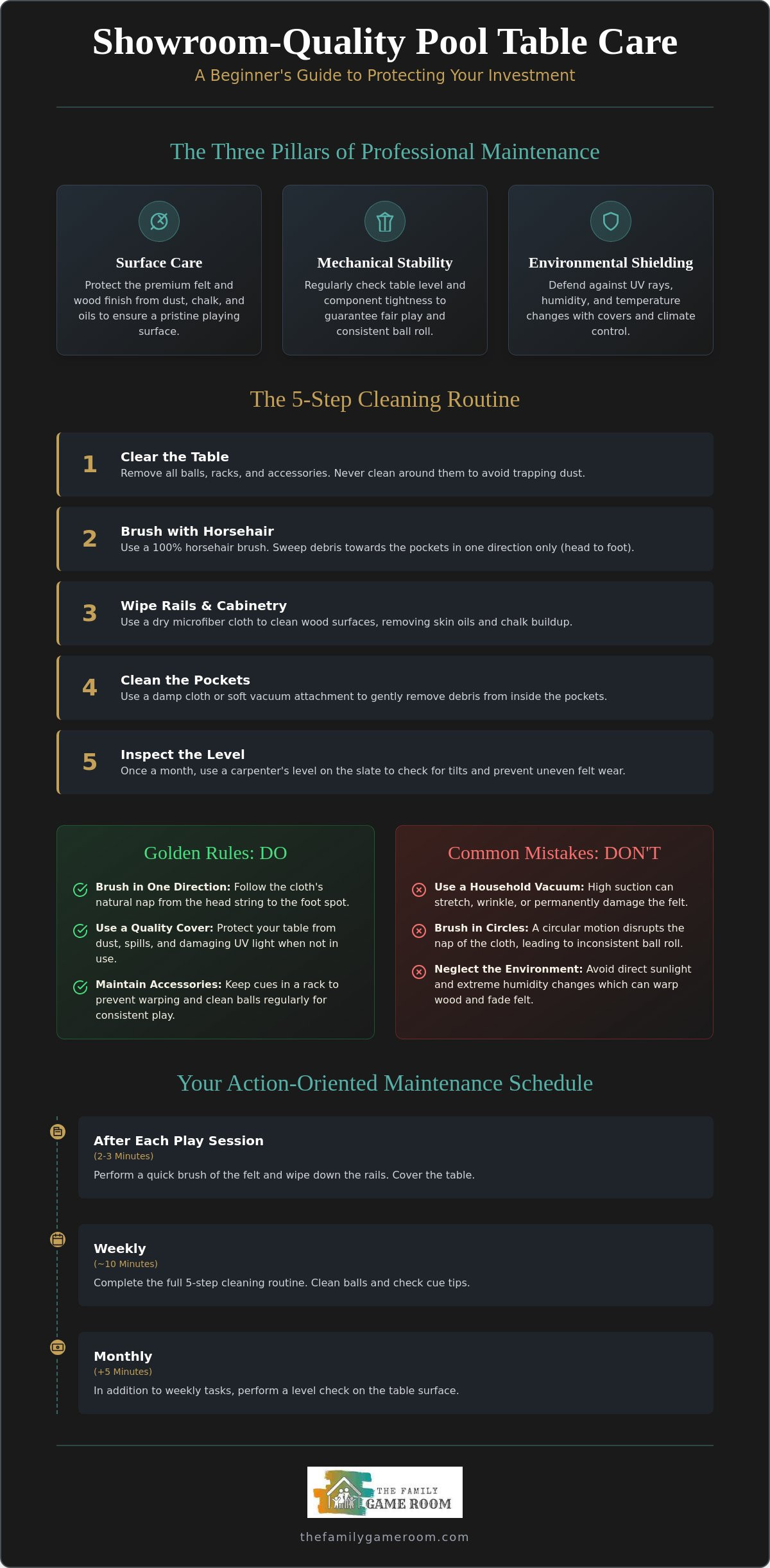
Keeping your table in peak condition starts with a disciplined cleaning process. While it might be tempting to treat your pool table like any other piece of furniture, the specialized materials require a focused touch. Effective pool table maintenance for beginners relies on these five essential steps to protect your investment.
- Step 1: Clear the table. Remove all balls, racks, and accessories. Never clean around them, as this leaves patches of dust and chalk that can eventually grind into the fibers.
- Step 2: Use a horsehair brush. Sweep dust and chalk toward the pockets. Only use a brush with 100 percent horsehair bristles, as synthetic fibers can be too abrasive for premium cloth.
- Step 3: Wipe the rails. Use a dry microfiber cloth to clean the wooden rails and cabinetry. This prevents skin oils and chalk from building up on the finish.
- Step 4: Clear the pockets. Use a damp cloth or a soft vacuum attachment to remove trapped debris from the bottom of leather or plastic pockets.
- Step 5: Inspect the level. Use a carpenter's level to check the slate's accuracy once a month. Catching a slight tilt early prevents uneven wear on the felt.
Following this routine ensures your table remains the centerpiece of your home. If you are looking to upgrade your space with high-end equipment, explore our collection of professional-grade game room furniture to find your next heirloom piece.
The Golden Rule of Brushing
Always brush in one direction, moving from the head string toward the foot spot. This technique follows the natural "nap" of the cloth, which is the direction the fibers lay. Never use a circular motion; doing so disrupts the nap and creates inconsistent ball roll. You should also avoid typical household vacuums on premium felt. The high suction can stretch the cloth or pull it away from the slate, leading to permanent wrinkles. For deeper insights into preserving your playing surface, many enthusiasts look to expert advice on equipment care found in classic billiards literature.
Caring for Premium Wood Finishes
Identify the specific finish of your table before applying any cleaning agents. Nixon Billiards tables, for example, often feature modern matte finishes that require different care than traditional high-gloss styles. Avoid silicone-based polishes at all costs. While they provide a temporary shine, they can seep into the wood and make future refinishing impossible. Instead, use a slightly damp microfiber cloth to lift dust. This provides a clean look without saturating the wood or damaging the professional-grade sealants used by top manufacturers.
Maintaining Your Cues, Balls, and Accessories
While the table itself is the centerpiece, the accessories are the silent partners that determine how long your felt lasts. Dirty billiard balls act like high-speed sandpaper. As they roll across the surface, they grind chalk dust, skin oils, and microscopic debris into the cloth fibers. This friction accelerates wear and ruins the consistent roll you expect from a premium table.
A simple rule for pool table maintenance for beginners is to never apply cue chalk directly over the table. This habit prevents a rain of abrasive blue dust from settling into the nap. Always chalk your cue while standing away from the playing surface. Similarly, keep your bridge and other game-specific tools clean. A dusty bridge head can leave unsightly streaks on the felt that are difficult to brush away; a quick wipe with a microfiber cloth after use is all it takes.
Proper storage is equally critical for your equipment's longevity. Utilizing dedicated Pool Cue Racks is the most effective way to prevent your cues from warping. When cues lean against a wall, gravity exerts constant pressure on the wood, eventually leading to a permanent bow. Vertical storage ensures your cues remain straight and ready for a professional-grade shot every time you pick them up.
Polishing Your Billiard Balls
Clean your balls regularly to maintain their luster and protect the table. You can use a specialized ball cleaner or a simple mixture of mild soap and water. Dry them thoroughly with a microfiber cloth immediately after washing. This routine prevents "burn spots," which are small white marks on the felt caused by the intense friction heat generated during a high-speed break. Make a 30-second habit of wiping down the set after every session to remove the day's chalk and oils before they transfer to your cloth.
Cue Stewardship for Beginners
Take care of your cues by wiping the shafts with a dry, lint-free cloth after play. This removes the moisture and hand oils that can make a cue feel sticky or cause the wood to swell over time. Check your cue tips frequently for "mushrooming" or excessive wear. A hard, misshapen tip or an exposed ferrule can easily snag and tear the felt, leading to an expensive repair that simple stewardship could've avoided. Keeping your equipment in top shape ensures every game feels like an opening night in a luxury hall.
Environmental Shielding: Covers and Climate Control
Your pool table is a masterpiece of organic materials and precision engineering. While the previous sections focused on active care, environmental shielding is about the silent threats that exist when you aren't playing. For anyone learning pool table maintenance for beginners, understanding that your room's atmosphere is constantly interacting with your table is vital. A table cover is your first line of defense, acting as a primary shield against dust, accidental spills, and the curious claws of household pets.
The "Sunlight Trap" is a common mistake for new owners. Direct UV rays are incredibly destructive; they fade the vibrant dyes in your premium felt and can cause the fine wood finishes on your rails to crack or "check" over time. Position your table away from large windows, or ensure heavy curtains are closed during peak daylight hours. Similarly, airflow management is critical. Never place your table directly under or next to an HVAC vent. The constant cycle of hot or cold air blowing across the surface causes localized temperature swings that can lead to slate expansion or wood contraction, eventually ruining the table's level.
Protecting your investment starts with the right equipment. You can browse our full selection of premium game room furniture to find the protective accessories your table deserves.
Choosing the Right Table Cover
Fitted covers offer a sleek, tailored look that stays secure, while drape styles are often easier to remove for quick sessions. If you prioritize durability, Naugahyde is the industry standard for its heavy-duty protection and classic aesthetic. Clear plastic is a budget-friendly alternative, though it lacks the sophisticated feel of high-end materials. Beyond dust, a sturdy cover prevents pets from turning your expensive felt into a preferred napping spot, keeping hair and dander out of the cloth's nap.
The Perfect Game Room Climate
Consistency is the secret to a long-lasting table. Aim to keep your room between 65 and 75 degrees Fahrenheit with a humidity level between 40 and 60 percent. These ranges prevent the wood from warping and keep the slate seams stable. We recommend using a digital hygrometer placed near the table to monitor these conditions accurately. Rapid temperature swings during seasonal changes are particularly dangerous; adjust your climate control gradually to let the table's natural materials acclimate without stress.
Your Beginner Maintenance Schedule
Consistency is the heartbeat of a showroom-quality game room. Building a habit loop ensures your investment remains in peak condition without requiring hours of your weekend. For successful pool table maintenance for beginners, we recommend breaking tasks into manageable segments. By following this structured timeline, you'll protect the craftsmanship of your American Heritage or Nixon Billiards table for decades of family fun.
- Daily: Wipe your billiard balls with a clean microfiber cloth after your final game. Cover the table immediately to block dust and pet hair.
- Weekly: Brush the felt from head to foot to remove chalk buildup. Wipe the wooden rails and cabinetry with a dry cloth to prevent skin oils from dulling the finish.
- Monthly: Deep clean the pockets using a soft vacuum attachment. Apply a specialized, silicone-free polish to the wooden legs and cabinet to maintain that premium luster.
- Yearly: Schedule a professional mechanical inspection. A technician can verify the slate's level and ensure all frame bolts remain tightened to factory specifications.
Adhering to this rhythm prevents minor issues from becoming expensive repairs. A clean table is a fast table; when you remove the friction of dust and oils, you ensure every bank shot is predictable and every roll is true.
When to Call a Professional
While DIY care handles 90 percent of your table's needs, certain signs require an expert's touch. Perform a "bounce test" on your cushions; if a ball hits the rail and dies rather than rebounding with vigor, the rubber has likely hardened and needs replacement. You should also watch for slate shifts. If balls consistently drift to one side despite your monthly leveling checks, the floor may have settled, requiring a professional re-leveling. Finally, remember that even with perfect care, most home tables require professional re-felting every 3 to 5 years to maintain a tournament-grade surface. To see what this standard looks like in practice, visiting a premier venue like Club9 can provide an excellent benchmark for your own maintenance efforts.
Upgrade Your Experience
Proper maintenance is easier when you can actually see the work that needs to be done. Installing high-quality Billiard Light Fixtures does more than just enhance the luxury aesthetic of your room. Superior illumination helps you spot chalk dust and cloth wear much earlier than standard room lighting allows. As you grow more comfortable with your maintenance routine, consider replacing worn accessories like old cues or chipped balls. Fresh equipment reduces the "sandpaper effect" on your felt and keeps the game feeling crisp.
Maintaining a premium game room is a journey of approachable excellence. To support your new care routine, we invite you to browse our collection of high-end accessories and protective gear. Invest in the tools that keep your table looking and playing like the day it was delivered.
Master the Art of the Long-Term Game
A well-maintained pool table is more than just a piece of furniture; it's a legacy of domestic warmth and competitive joy. By mastering pool table maintenance for beginners, you've taken the first step toward ensuring your game room remains a sanctuary for quality play. Remember that professional-grade performance relies on simple, disciplined habits like consistent brushing and strict environmental control. Protecting your slate from humidity and your felt from UV damage ensures every session feels as precise as the day you first leveled the table.
Expert care is simpler when you have the right partners. We've been family-owned experts in home entertainment since 2022. As an authorized retailer for American Heritage Billiards, we offer national shipping on all luxury game room furniture to ensure your home receives only the finest equipment. Protect your investment with premium accessories from The Family Game Room and enjoy the peace of mind that comes with superior craftsmanship. Your journey toward approachable excellence starts with the right tools. Keep your table pristine, your cues straight, and your family fun lasting for decades.
Frequently Asked Questions
Can I use a regular vacuum to clean my pool table felt?
No. Standard household vacuums have high suction that can pull the cloth away from the slate or stretch the fibers, leading to permanent wrinkles. If you must use a vacuum, only use a specialized handheld model with a soft brush attachment and low suction. Brushing remains the safest method for pool table maintenance for beginners to avoid accidental damage.
How often should I brush my pool table if I play every day?
Daily. You should brush the felt after your final session of the day to prevent chalk dust from settling deep into the nap. This consistent habit keeps the playing surface smooth and prevents the abrasive "sandpaper effect" caused by trapped debris. It only takes a few minutes to ensure your table is ready for the next day's play.
Is it okay to eat or drink near the pool table?
No. Keep all food and beverages on side tables or bar stools away from the playing surface. Crumbs act as abrasives under the balls, and even a small spill can lead to expensive professional re-felting. Establishing a strict "no-food zone" is one of the easiest ways to protect your luxury game room investment from avoidable accidents.
What is the best way to remove a spill from pool table felt?
Blot immediately. Use a clean, dry microfiber cloth to soak up as much liquid as possible without rubbing the surface. Rubbing pushes the liquid deeper into the fibers and permanently damages the nap. If a stain remains, use a specialized billiard cloth cleaner rather than household detergents, which can leave sticky residues or bleach the cloth color.
Do I really need to cover my pool table if it's in a basement?
Yes. Basements are often prone to higher humidity and concrete dust, both of which are enemies of premium slate and wood. A fitted cover stabilizes the micro-climate directly above the felt and prevents airborne particles from settling into the cloth. It's a simple, essential step in pool table maintenance for beginners that provides vital environmental protection.
How do I know if my pool table is no longer level?
Watch for ball drift. If slow-rolling balls consistently curve toward one side or a specific pocket, your slate has likely shifted. You can verify this by placing a carpenter's level on the rails and across the center of the slate. Even a slight tilt can ruin the accuracy of your bank shots and lead to uneven cloth wear over time.
Can sunlight really damage my pool table?
Yes. Intense UV rays act as a bleaching agent that quickly fades the felt's color and dries out the natural oils in the wood cabinetry. This can lead to unsightly "checking" or small cracks in the professional finish. Keep your curtains closed during peak hours or use a heavy-duty Naugahyde cover to block direct light and preserve the table's showroom aesthetic.