


Bumpers and cushions are usually two names for the cloth-covered rubber lining the inside of a pool table’s rails. Understanding pool table cushion rubber types means comparing natural rubber with synthetic or urethane materials, while also matching the cushion profile to the table and its balls. Natural rubber typically lasts 5-10 years with regular use, while synthetic and urethane cushions can last 10-15 years or longer in homes with moderate play.
That distinction matters because cushion rubber controls how balls rebound, while heat, humidity, and direct sunlight can speed up wear. The rail shapes each shot, but the cushion’s material and fit help determine how consistently the ball comes back. This guide explains how cushions relate to rails and bumpers, what distinguishes common rubber types, and how climate can affect cushion life. You’ll have a clearer idea of what to consider when choosing a pool table for your home.
Key Takeaways
- Know why “cushion” and “bumper” often refer to the same rubber component, and how it works with the rail to shape rebound.
- Compare natural rubber with synthetic and urethane options by their typical lifespan and playing conditions.
- Recognize how heat, humidity, and direct sunlight can affect cushion condition over time.
- Learn why matching the cushion profile to the table and ball size matters for consistent play.
Effects of climate on cushion life
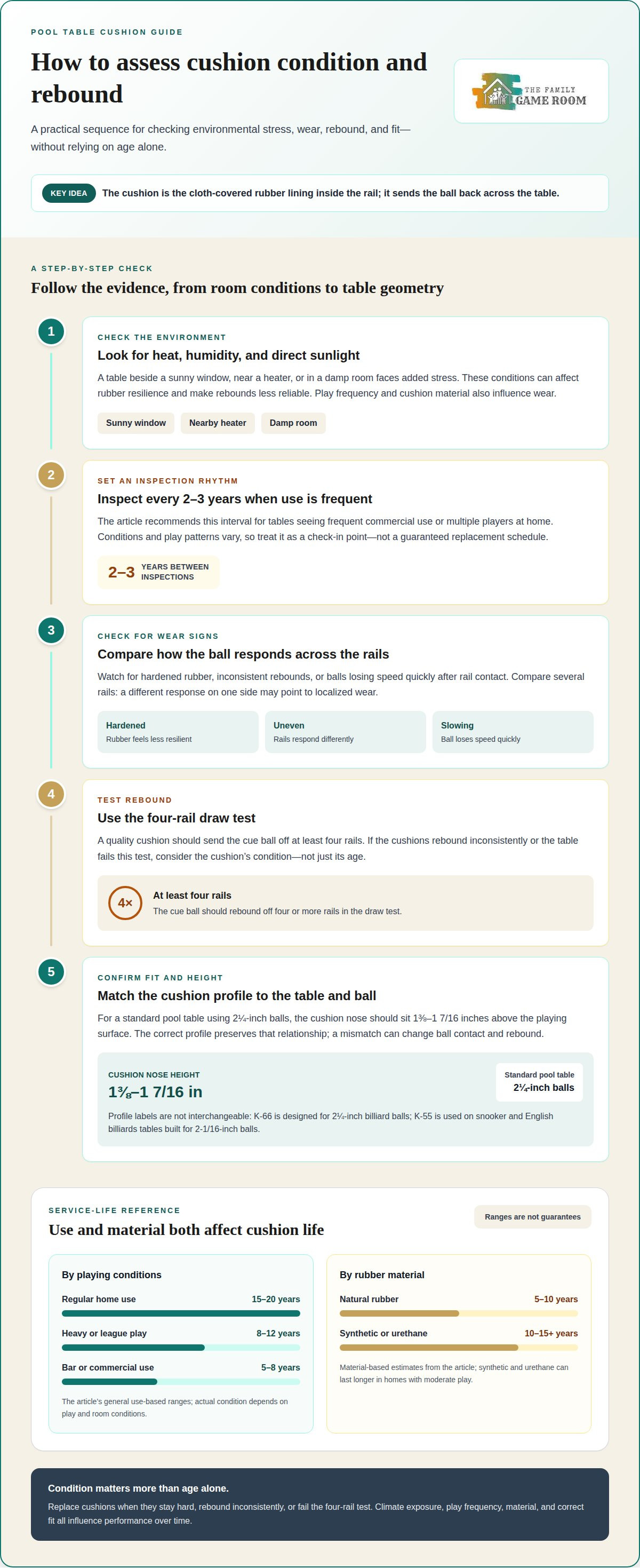
Heat, humidity, and direct sunlight can accelerate pool table cushion wear. A table beside a sunny window, near a heater, or in a damp room faces different stresses from one kept in a stable indoor environment. These conditions can affect rubber resilience and how reliably cushions send balls back across the surface. Climate is only one factor: play frequency and cushion material also influence wear.
Inspect cushions every 2-3 years if the table sees frequent commercial use or has multiple players at home. Look for hardened rubber, inconsistent rebounds, or balls that lose speed quickly after contacting a rail. Compare several rails, since uneven response can point to localized wear. A four-rail draw test can also help assess rebound: a quality cushion should send the cue ball off at least four rails.
Tournament play depends on consistent table geometry, including cushion height. On a standard pool table using 2 ¼-inch balls, the cushion nose should sit 1 3/8 to 1 7/16 inches above the playing surface. The correct profile helps maintain that relationship. A mismatched profile can change ball contact and rebound. Poorly chosen adhesive can weaken the bond or leave the cushion unevenly secured, affecting play.
With regular home use, cushions typically last 15-20 years; heavy or league play can reduce that span to 8-12 years, while bar or commercial use may mean 5-8 years. Natural rubber can harden and lose responsiveness, and climate exposure may speed deterioration. Replace cushions when they stay hard, rebound inconsistently, or fail the four-rail test. These signs matter more than age alone, especially when the table’s playing conditions have changed.
Pool table cushion and bumper terminology
In billiards, “cushion” and “bumper” often refer to the same component: cloth-covered rubber lining the inside edge of each rail. The rubber absorbs energy from a moving ball and sends it back across the playing surface. These terms describe the rebound material, not two separate parts. Knowing the distinction makes product descriptions and discussions about ball response easier to follow.
A rail is the structure that holds the cushion. Pool table rails are usually made of solid wood, while the cushion is a rubber strip secured along the rail’s inner edge. Cloth covers the rubber, so the ball contacts the covered cushion rather than bare rubber. In casual conversation, people may call the table’s sides “rails” or “cushions,” but the terms refer to different parts of the assembly.
“Profile” describes the cushion’s shape, and labels such as K-55 and K-66 identify different profiles. The intended ball size and table type help distinguish their use: K-66 cushions are designed for 2¼-inch billiard balls. K-55 cushions are used on snooker and English billiards tables built for 2-1/16-inch balls. These names aren’t interchangeable labels for one universal bumper.
That vocabulary helps make a useful comparison: identify the rail, the rubber cushion, its profile, and the cloth covering. Each describes a different element, even though people may use “rail cushion” as shorthand for the complete side assembly. If you’re planning a home setup, compare pool table options with the room’s intended games and playing needs. Clear terminology helps you understand what a table description means before you assess its fit.
Pool table cushions and rails
A pool table’s rail holds its cushion in position. Rails are usually made of solid wood, while the cushion is rubber secured along the inner edge and covered with cloth. During play, the ball meets this covered rubber at the rail, so alignment and fit work together. A loose or uneven attachment can make contact inconsistent, even if the rubber itself remains resilient.
Replacing cushions involves more than swapping out a rubber strip. The rails must be removed, the old bumpers taken off, and the rail prepared before new cushions are aligned and secured. Careful alignment matters because the cushion’s position determines where the ball meets the rail. Protecting the rail during the work also helps reduce the risk of chipping or peeling its finish.
Profile names describe cushion shape, and their dimensions help distinguish one design from another. A K-55 profile measures 1 ¼ inches across the top and 1 5/16 inches high at the back. A K-66 profile measures 1 1/18 inches across the top and 1 3/16 inches high at the back. Those measurements show why profile labels aren’t interchangeable. A replacement must suit the table’s rail geometry and intended ball contact.
Think of the rail and cushion as a connected playing assembly, not separate choices. The rail supports the rubber, the rubber’s profile shapes ball contact, and the cloth covers the contact surface. For example, a cushion that sits unevenly along a wooden rail can produce inconsistent rebounds across the table. Understanding these relationships explains why correct fitting matters as much as choosing a suitable rubber type.
What are the differences between natural and synthetic pool table cushion rubber?
Natural rubber cushions typically last 5-10 years with regular use before hardening and losing responsiveness. Synthetic and urethane cushions can last 10-15 years or longer, especially in homes with moderate play. These ranges offer a practical starting point, not a guarantee for every table. Use, room conditions, and the cushion’s condition all affect how long it remains responsive.
The main comparison is material and expected service life. Natural rubber may suit a table with modest playing demands, while synthetic or urethane rubber may appeal to households seeking a longer-lasting cushion. A home table used regularly by several players, for example, may wear differently from one used occasionally. Consider the setting and play pattern alongside the material name.
Don’t judge a cushion by age alone. Check its response to ball contact: hardened rubber and reduced responsiveness can indicate that natural rubber is nearing replacement. Compare rebounds across the rails, too. If one side returns the ball differently, uneven wear or a fitting issue may be affecting play. Typical lifespan provides context, but actual performance offers useful evidence about the cushion’s condition.
Understanding the difference means weighing longevity against the table’s use, then considering the cushion profile and ball size. A longer stated lifespan doesn’t make an incompatible cushion the right choice. For a standard pool table using 2 ¼-inch balls, the cushion nose height should be between 1 3/8 inches and 1 7/16 inches above the playing surface. Fit and material both contribute to consistent contact, so compare those factors rather than choosing by rubber type alone.
Ready to choose a table for your home? Explore pool table options and consider which playing environment and use pattern suit your space.
The Family Game Room: American Heritage Billiards Pool Tables
The Family Game Room can help you move from cushion research to choosing a pool table that fits your home and how you play. Explore American Heritage Billiards Pool Tables and Nixon Billiards Pool Tables to compare styles and find what suits your game room. If you want the table to serve another purpose between games, consider a Pool Table Dining Top.
Use what you’ve learned about cushion materials, profiles, and climate to consider your playing environment and long-term use. These factors can inform your table choice, along with your room and personal preferences. For a different kind of friendly competition, explore Indoor Shuffleboard Tables.
For help exploring pool table options, contact The Family Game Room or visit thefamilygameroom.com.
Choose a table that fits your home
Picture how a pool table will fit your room, routines, and playing preferences. Understanding pool table cushion rubber types can help clarify what matters to you, but the table should also suit your space and how you plan to use it. Consider whether it will be dedicated to play or serve another purpose when guests gather.
The Family Game Room offers American Heritage Billiards Pool Tables and Nixon Billiards Pool Tables, along with Pool Table Dining Tops. These options give you a starting point for comparing styles and considering how a table could work in your home. Think about the role you want it to play in your game room.
Ready to explore possibilities for your space? Contact The Family Game Room and take the next step toward a game room that feels right at home.
Frequently Asked Questions
What Are Pool Table Bumpers and Cushions?
Pool table bumpers and cushions are the rubber strips beneath the cloth along the playing edges. Attached to the rails, they shape how balls rebound after contact. If a ball returns unevenly from one side, for example, the cushion’s condition or fit may be worth examining. “Rail” usually describes the supporting structure, while “cushion” refers to the rubber component.
What Is the Difference Between K55 and K66 Cushions?
K-55 and K-66 identify different cushion profiles, not different names for one interchangeable part. K-66 is designed for 2¼-inch billiard balls, while K-55 is used on snooker and English billiards tables built for 2-1/16-inch balls. For a replacement decision, compare the table’s ball size and existing cushion shape rather than choosing by profile name alone.
What are the main types of pool table cushion rubber?
Cushion materials can vary, and their durability may depend on the material and how the table is used. Their expected lifespans differ, but a material label alone won’t tell you whether a cushion suits your table. Understanding pool table cushion rubber types means distinguishing material from profile: rubber type describes what the cushion is made from, while profile describes its shape and fit against the rail.
How do K-66, K-55, U-23, and other cushion profiles differ?
Profiles differ in shape and dimensions, which affect how the rubber fits the rail and meets the ball. K-66 suits 2¼-inch balls; K-55 is used with 2-1/16-inch balls on snooker and English billiards tables. For U-23 or another profile, compare the cushion’s cross-section with the rail and match it to the table’s ball size. Similar labels don’t establish compatibility.
Which cushion rubber type is used on standard American pool tables?
For a standard pool table using 2¼-inch balls, K-66 is the profile designed for that ball size. That identifies the profile, not the rubber material: a table may use natural, synthetic, or urethane rubber. If you’re assessing a table already in your home, distinguish its profile from its material before comparing replacement options.
How can I identify the correct cushion profile for my pool table?
Start with the ball size and table type, then compare the existing cushion’s cross-section and dimensions. A standard pool table with 2¼-inch balls points to K-66; snooker or English billiards tables using 2-1/16-inch balls use K-55. For an unfamiliar profile, such as U-23, match the physical shape to the rail rather than relying on its label alone.