


Yes, some multi game table sets combine pool and air hockey, with 3-in-1 models adding table tennis. The table-tennis surface is a separate top, not a flip side, so the setup changes by adding or removing a playing surface. That gives you three familiar games in one home entertainment setup.
It’s easy to focus on how many games a multi game table sets include, but table size, room layout, and assembly matter just as much. This guide covers common pool, air hockey, and table-tennis configurations, plus practical points to consider before choosing a set. You’ll also learn how to prepare for assembly and level a table for a steady playing surface. A little planning helps game night run smoothly, with each surface ready when it’s time to play.
Key Takeaways
- Measure the room for both the table and comfortable cue and paddle movement before choosing a size.
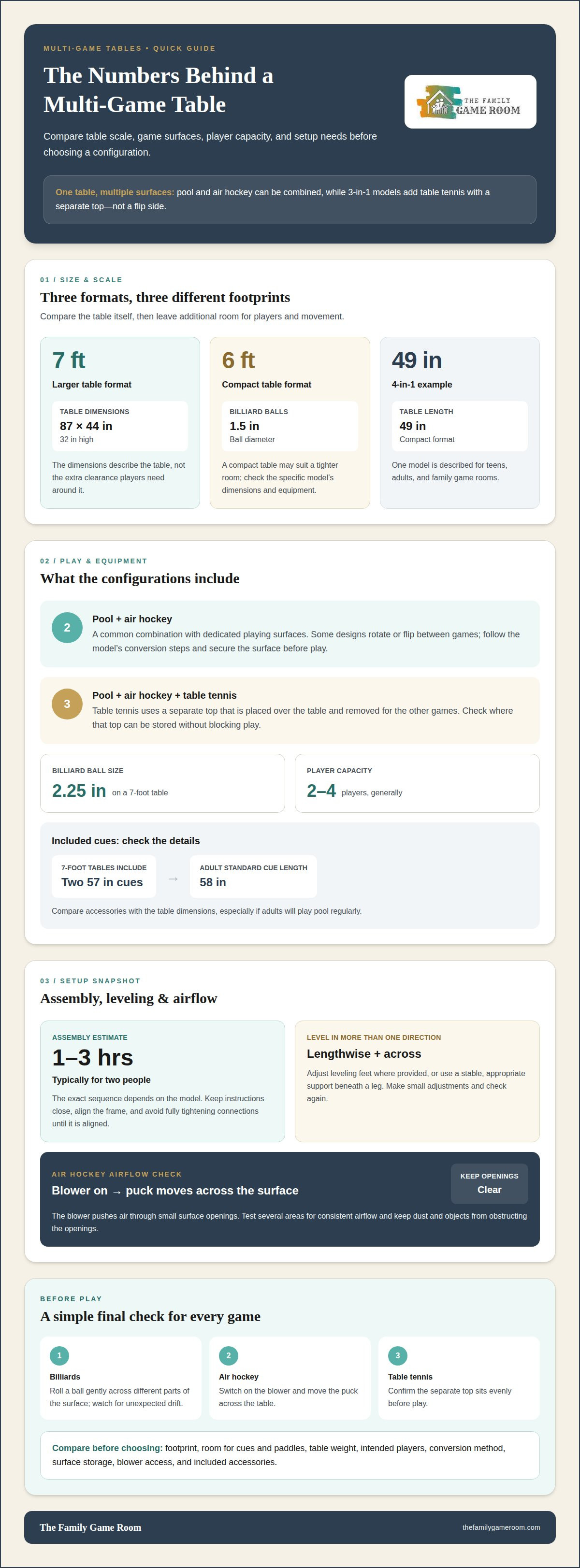
- Plan assembly with a helper; most multi-game tables typically take 1-3 hours for two people to assemble.
- Level the table carefully after assembly to support a steady playing surface across game modes.
- Compare each configuration’s included surfaces and accessories so the set suits the games your household will play most.
Pool, air hockey, and table tennis combinations
Yes, some 3-in-1 tables pair billiards, air hockey, and table tennis. The table-tennis surface is a separate top, not a flip side. Set it over the table when switching to table tennis, then remove it for billiards or hockey. This arrangement gives each game a dedicated playing surface while using one table footprint. Check how each surface stores when it’s not in use. The top needs a stable place nearby, not a spot that blocks play.
Size changes the billiards equipment, too. A 7-foot multi-game table uses 2.25-inch billiard balls. A 6-foot model uses 1.5-inch balls. These differences affect the feel of a pool game, so consider who will play most often. A compact table may suit a tighter room, while the larger format calls for more playing space. Compare the dimensions and included equipment for the specific configuration, rather than assuming all combo tables use standard-size billiard gear.
Air hockey tables use a blower to push air through small openings in the playing surface, creating a cushion that lets the puck glide. After setup, switch on the blower and move the puck across several areas to check for consistent airflow. Keep the openings clear of dust and objects that could obstruct them. Weak or uneven airflow can affect how the puck travels, so check the blower and surface if movement varies from one area to another.
Rotating or flip-style designs handle game changes differently from separate-top models. If a table rotates between pool and air hockey, follow its intended conversion steps and secure the playing surface before starting. Don’t assume table tennis uses that same rotating mechanism: on the 3-in-1 tables described here, it uses a separate top. Compare the conversion method, surface storage, and blower access before choosing. Those details determine how smoothly a household can move from a pool rack to a hockey match.
Assembly and leveling
Most multi-game tables typically take 1-3 hours for two people to assemble. The exact sequence depends on the model, so keep its instructions close and identify each part before attaching anything. A second person can steady the frame while you fasten supports. Avoid tightening every connection fully until the frame is aligned. This makes small adjustments easier before the table carries its full weight.
Prepare the room before assembly. Clear the floor and choose the table’s final position first, since moving a fully assembled table can be difficult. Lay out the hardware and tools specified in the instructions. Assemble the frame on a clean, protected surface, then install the playing surface as directed. Keep removable tops and accessories separate until the base is stable.
- Build and align the frame using the model’s supplied instructions.
- Attach the legs and supports, then tighten connections in the stated order.
- Install each playing surface and accessory only after the base is secure.
Level the table after assembly, once it is in its intended position. Place a level across the playing surface in more than one direction. If the bubble shifts, adjust the leveling feet where provided, or use a stable, appropriate support beneath a leg. Make small adjustments and check again, both lengthwise and across the width. A table can appear level from one angle while still sloping from another.
Test the setup before play. Roll a billiard ball gently across different parts of the surface and watch for unexpected drift. For air hockey, switch on the blower and move the puck across the table. For table tennis, confirm the separate top sits evenly. To plan a complete game-room arrangement, explore ideas for your game room.
Multi-game table types and configurations
Choose a configuration by comparing its footprint, weight, and intended players. A 7-foot model measures 87 by 44 inches and stands 32 inches high. These dimensions describe the table itself, not the extra room needed for players to move around it. Its smaller footprint may suit a tighter game room, though players still need space around its edges.
Player capacity offers another useful comparison. The multi-game tables described here are generally rated for 2 to 4 players. That range suits head-to-head play and small groups, but the active game changes how people share the space. Pool requires room to handle cues, while table tennis calls for space to move and swing paddles. Consider the usual group size and which games will see the most play before settling on a table size.
Compact formats can make sense for casual family use. One 4-in-1 model intended for teens, adults, and family game rooms measures 49 inches long. Compare that figure with the 6-foot and 7-foot formats to understand the scale difference. A shorter table takes up less floor area, while larger dimensions offer a different playing experience. Measure the available floor space, then account for movement around the table before deciding which format fits.
Included equipment can also distinguish configurations. The 7-foot tables include two 57-inch cues, close to the 58-inch standard cue length for most adult players. Check the listed accessories alongside the table dimensions, especially if adults will play pool regularly. A practical comparison should cover:
- Footprint: Match the table’s length and width to the room.
- Weight: Plan placement with the listed table weight in mind.
- Players: Choose a setup suited to typical groups of 2 to 4.
- Accessories: Compare included cues and game equipment.
These details help you decide whether a compact family setup or a larger table with more room to play is the better fit.
What games are included in multi-game table sets?
A combination’s game count describes its playing options, but the included surfaces and accessories matter too. The combinations covered here pair billiards with air hockey, while 3-in-1 models add table tennis. That third game uses a separate top, so it’s useful to understand what comes with it and where the top will go between games. Look for a clear inventory of playing surfaces and accessories before comparing configurations.
For table tennis, a 3-in-1 set includes two paddles, balls, and a net with posts. Those pieces provide the basics for table-tennis play, but check whether the included equipment suits the group. Keep the paddles and balls together after play, and store the net and posts where they won’t be bent or misplaced. The separate top is the main changeover piece: place it as directed for table tennis, then remove it before switching to another surface.
Pool accessories differ between table sizes. A 7-foot model includes two 57-inch cues, while the 7-foot tables use 2.25-inch billiard balls. A 6-foot model uses 1.5-inch billiard balls. Those details show why an accessory list should match the exact table size, rather than simply saying “pool equipment included.” If several people will play, also consider whether the included equipment suits the players who’ll use the table most.
- Game surfaces: Identify each included game and how its surface is accessed.
- Table tennis: Look for the separate top, two paddles, balls, and net with posts.
- Pool: Match the listed ball size and cue details to the table format.
- Storage: Plan a safe place for removable tops and loose accessories.
A game count alone doesn’t show how convenient a set will be in everyday use. Compare the changeover process, accessory list, and storage needs together. Then explore game table options to find a setup that fits the games your household wants to play.
The Family Game Room: Game Table Sets
The Family Game Room offers Game Table Sets for households looking for a shared entertainment centerpiece. If a multi-game setup suits your room and playing habits, explore the available sets alongside standalone Air Hockey Tables. Indoor Shuffleboard Tables and Pool Table Dining Tops are other options when a different game-room arrangement better fits your space and routine.
Think about which games your household will play most, how much room you can dedicate, and whether one versatile table or separate pieces makes sense. Those priorities help narrow the direction before selecting a setup. For a closer look at options for your home, explore Game Table Sets.
Contact The Family Game Room to discuss the right game-room direction for your household.
Make Room for the Games You’ll Enjoy
Choose a game-room setup around the moments you want to create, from lively family play to a more polished gathering space. Before deciding, consider how the room should feel when it isn’t game time, and whether one flexible centerpiece or dedicated tables better suits your home. The right choice should complement both your space and the way you play.
The Family Game Room offers American Heritage Billiards Pool Tables, Nixon Billiards Pool Tables, and Pool Table Dining Tops. A dining top gives a pool table another use, making it a practical option when you want to combine play and dining. If you’re weighing multi game table sets against a dedicated pool setup, focus on the experience you want the room to support every day.
Ready to explore a game-room direction that fits your home? Contact The Family Game Room and take the next step toward a space made for good company and great games.
Frequently Asked Questions
Are there combo tables that include both air hockey and pool table features?
Combo tables can pair billiards and air hockey, and some configurations also include table tennis. The key difference is how you switch games: rotating designs move between surfaces, while some table-tennis setups use a separate top. Before choosing, consider how often you’ll change games and where you can store removable pieces without obstructing the room.
Can kids and adults both enjoy these tables?
Children and adults can share a table when its games suit different ages and experience levels. A family might alternate between a relaxed pool game and faster air hockey rounds, letting players choose what feels comfortable. Consider reach, cue handling, and playing-surface height for the people who will use it most. Clear shared rules and turn-taking can help make mixed-age play welcoming.
Do combos come with accessories?
Accessories vary by model and game combination. One set may include equipment for table tennis or pool, while another has different pieces. Read the itemized product details before deciding, and note which accessories belong to each game. This helps you plan storage and identify any equipment needed for the games you intend to play.
How do convertible game tables actually work?
Convertible designs change the active game by rotating the table or switching its playing surface. Separate-top models use a removable panel for another game, while rotating tables move between surfaces built into the design. Clear loose equipment from the active surface first. Follow the model’s conversion instructions, secure the next playing surface, and keep removed pieces together to make the next changeover easier.
How much space do I need?
Allow at least 4 feet of clearance on every side of a 7-foot table. Room recommendations vary: about 15.5 by 12 feet is one guideline, while 13' x 16' allows comfortable cue and paddle movement. Think about doors, furniture, and walking paths as well as the playing area. A room that fits the table alone may still feel cramped during a game.
What are the pros and cons of a multi game table?
The main advantage is variety: one setup supports multiple kinds of games, which can suit households with different interests. The tradeoffs include conversion steps, storage for removable tops, and the space needed around the table. A dedicated table may be a better fit if you focus on one game. Choose according to the games you’ll play regularly and the room you can devote to them.