


A comfortable-feeling room can still hold too much moisture for games and electronics. A practical target for protecting your game room from humidity is 45-50% relative humidity, while keeping levels below 60% helps protect consoles and stored games. Use a hygrometer to track conditions rather than relying on feel alone.
Moisture absorbers can help manage dampness, but where you place them and how you store belongings matter too. Protect board games, consoles, and furnishings with a setup that’s practical to maintain.
This guide explains how to choose between silica gel, moisture-trap products, and dehumidifiers, where to position them, and how to store belongings away from damp floors and moisture-prone spots. You’ll also learn how to monitor humidity and keep it within a useful range, so your game room stays ready for play.
Key Takeaways
- Choose a moisture absorber to suit the space: replace saturated dehumidifier bags, and empty calcium chloride traps as they collect liquid.
- Place silica gel packs or moisture traps near entertainment cabinets, and protect sensitive items in airtight containers.
- Store games off the floor in a ventilated, insulated spot, away from windows and everyday sources of moisture.
- Use a hygrometer to spot changing conditions early, then adjust room airflow or moisture control as needed.
Dehumidifier bags and calcium chloride tablets
Start with a hygrometer, then choose moisture control to suit the room. Consistent readings help you take practical steps instead of guessing from how the air feels.
- Choose a dehumidifier by room size and dampness. Check its stated room coverage, then consider how persistently humidity stays elevated. A larger space or recurring damp conditions may need greater moisture-removal capacity. Use hygrometer readings to judge whether your setup is keeping pace.
- Place dehumidifier bags in enclosed or smaller areas, such as a cabinet near game equipment. Replace each bag when it becomes saturated. Calcium chloride tablets capture water and turn it into liquid, so place their container securely and empty it regularly. Keep either option where it cannot spill onto electronics or game pieces.
- Use a portable or larger dehumidifier to remove moisture from room air. Air conditioning can also regulate humidity while cooling the gaming area. Avoid opening windows while the dehumidifier runs; moist outdoor air can undermine its work. One practical approach is running the unit for an hour or so before play.
- Prevent mold and mildew by monitoring humidity, addressing dampness, and keeping air moving. Take rapid action when a storage space rises above 60% relative humidity. Check for condensation or water intrusion, and dry affected surfaces. Moisture absorbers help manage damp air, but they don't fix the source of a leak.
- Protect consoles, computers, arcade machines, and board games from prolonged moisture. Condensation inside electronics can cause short circuits or malfunctions, while moisture can corrode metal components. Humid dust can cling to fans and circuit boards, contributing to overheating and glitches. Persistent dampness above about 60% can invite mold and soft board-game corners.
- Use a humidifier only when readings are too low, and monitor its effect with the hygrometer. Humidity below about 35% can dry printed layers and card edges. Don't run a humidifier and dehumidifier against each other. Call a building or moisture-control professional when dampness persists despite control measures, or water intrusion keeps returning.
Using silica gel and other moisture absorbers
Silica gel and other absorbers can help protect belongings in enclosed storage. Use them alongside room-wide humidity control, not as a replacement for it.
-
Place Silica Gel in Cabinets and Bins
Place silica gel packs inside closed cabinets and bins holding board games, cards, or electronics. They work in enclosed spaces, near the items you want to protect, rather than controlling humidity across the room. Keep sachets intact and away from game pieces and electronics in case they leak. Distribute packs among cabinet shelves, then inspect and replace or regenerate them according to the product instructions.
-
Choose Between Silica Gel and Zeolite
Use silica gel or zeolite desiccants in enclosed storage. Both require high heat to regenerate, so follow the product instructions and use an appropriate heating method. Never heat a sachet beside game components or inside a cabinet. If regeneration isn’t practical, replace the desiccant or use a ready-to-use moisture trap.
-
Position Absorbers Near Entertainment Equipment
Place silica gel packs or moisture traps near the TV cabinet or entertainment center, where equipment and accessories are stored. These absorbers can help manage moisture in that area, but they won’t control humidity throughout the room like a dehumidifier. Keep traps stable to prevent spills near electronics, and store items such as cards or cables in sealed bins.
-
Seal Sensitive Items Between Game Nights
Store paper, textiles, and electronics in airtight containers when they’re not in use. Add silica gel to a lidded bin and close it fully. This works well for spare game cards, fabric accessories, and controllers between sessions. Open containers only when needed, then reseal them to limit exposure to room air.
- Include storage furniture in your moisture-control routine. If a dartboard cabinet is part of your game room, keep its stored accessories protected with an appropriately placed absorber.
Choosing a well-insulated, ventilated storage location
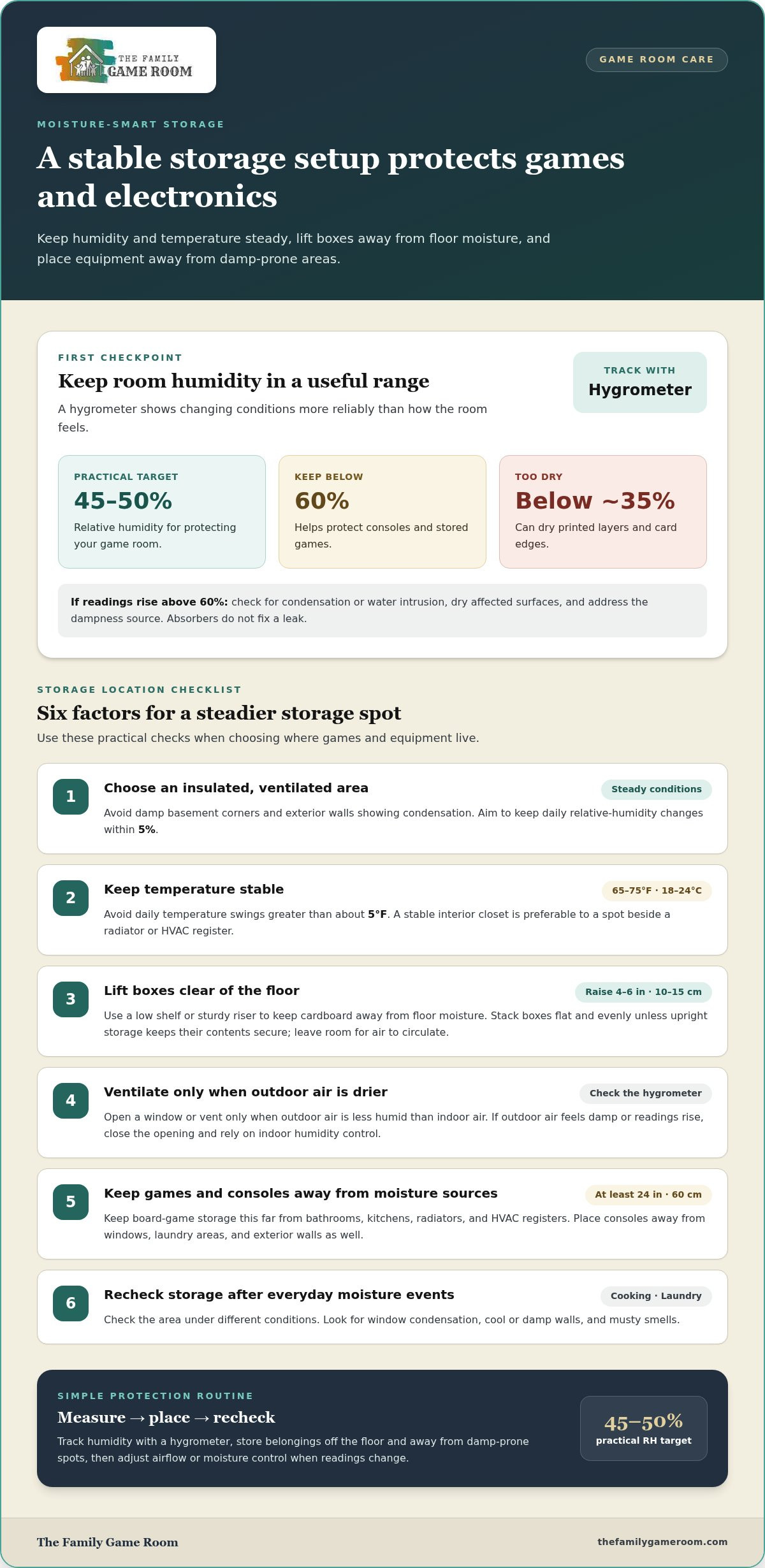
- Choose a storage area with insulation, ventilation, and no water infiltration. Avoid a damp basement corner or an exterior wall showing condensation. Board games store best in conditions that stay steady, rather than swinging sharply through the day. Aim to keep daily relative humidity changes within 5%.
- Keep the storage area between 65-75°F (18-24°C) to help limit glue fatigue and warping. Avoid daily temperature swings greater than about 5°F. Don’t place boxes near a radiator or HVAC register, where changing temperatures can affect the storage environment. A stable interior closet is a better option than a spot beside a heat source.
- Raise game boxes at least 4-6 inches (10-15 cm) above the ground. A low shelf or sturdy riser keeps cardboard away from floor moisture. If you are upgrading the entire space, selecting resilient surfaces from Frankly Flooring can also help create a durable foundation against room dampness. Store boxes upright only if their contents remain secure; otherwise, stack them flat and evenly. Leave space around the stack for air to circulate.
- Ventilate storage spaces to reduce moisture from condensation, but open a window or vent only when outdoor air is less humid than the air inside. Check the hygrometer before airing out the room. If outdoor air feels damp or readings rise, close the opening and rely on indoor humidity control.
- Place consoles away from windows, bathrooms, kitchens, laundry areas, and exterior walls. These locations can expose equipment to moisture or condensation. Keep board game storage at least 24 inches (60 cm) from bathrooms, kitchens, radiators, and HVAC registers. For example, move a game shelf away from the kitchen wall before arranging boxes.
- Check the storage area under different conditions, including after cooking or doing laundry. Look for condensation on windows, cool, damp walls, or musty smells near stored items. If a closet is repeatedly damp, move games to a better-ventilated interior location. Recheck humidity after moving shelves or changing airflow.
Recommended indoor humidity levels
A reliable routine for protecting your game room from humidity starts with accurate readings. Place a hygrometer on the same shelf as stored games, then check it weekly to track the conditions around your belongings.
- Aim for 45-50% relative humidity for board-game storage. This target helps keep paper components from sitting in persistently damp air. A reading elsewhere in the room may not reflect a closed shelf, so position the instrument beside the boxes you want to protect.
- Keep console areas between 40% and 50% relative humidity, and below 60%. Persistent readings above about 60% in board-game storage can invite mold and soft corners. If readings rise beyond that point, adjust moisture control and measure again at the storage shelf.
- Take readings at a consistent time each week and compare them with previous results. One reading captures conditions in the moment; a series can show whether humidity is trending upward. Note changes after using the room or adjusting ventilation, then adapt your approach to the pattern.
- Pay attention to dry readings, too. Below about 35% relative humidity, printed layers and card edges can dry out. If the room falls below that level, reduce moisture removal and keep checking the instrument. The goal is a suitable range, not the lowest possible reading.
- Use readings from the shelf to guide practical decisions. If humidity is comfortable in the center of the room but higher on the game shelf, focus on airflow and storage near that shelf. This turns protecting your game room from humidity into a measured routine instead of guesswork based on how the room feels.
Once you’ve set a target, use consistent readings to keep your game room ready for play. Explore game room options as you plan the space.
The Family Game Room: Pool Table Dining Tops
The Family Game Room offers Pool Table Dining Tops for spaces that need to serve both play and everyday use. Once you’ve planned humidity control and storage, consider how each furnishing fits your room’s layout and activities. A dining top gives a pool table another function, while Indoor Shuffleboard Tables, Air Hockey Tables, and Foosball Tables offer more ways to bring play into the room.
Choose furnishings based on your available space, how you’ll use it, and the atmosphere you want to create. Keep moisture-control measures in place whatever games you choose. Explore game room options at The Family Game Room.
Make Your Game Room Ready for What’s Next
Protecting your game room from humidity helps keep the space enjoyable over time. As you plan what belongs in the room, consider how each furnishing supports the way you gather, play, and share the space. A thoughtful setup combines practical storage with entertainment that suits your home.
The Family Game Room offers American Heritage Billiards Pool Tables, Nixon Billiards Pool Tables, and Pool Table Dining Tops. Explore these options to create a room that balances game time with everyday living. Choose furnishings that fit your layout and the experiences you want to create, and keep your moisture-control routine in place.
Ready to explore game room options? Contact The Family Game Room and take the next step toward a space designed for memorable play.
Frequently Asked Questions
How to protect your belongings in a humid place?
Seal moisture-sensitive belongings in airtight containers, especially paper, textiles, and electronics. For example, store spare cards and game components in a lidded container between sessions instead of leaving them exposed on an open shelf. Keep containers closed when not in use, and avoid placing them beside damp walls or floors. This gives vulnerable items a more protected place to stay.
What humidity level is best for a game room?
Aim for 45-50% relative humidity for board games, and 40-50% for consoles. Keep console areas below 60%, and avoid letting storage conditions swing sharply from day to day. A shelf-level hygrometer can reveal whether a cupboard differs from the room’s general reading. Use that measurement to guide adjustments, rather than judging humidity by comfort alone.
How can you reduce humidity in a game room without a dehumidifier?
Run air conditioning to regulate room humidity, and ventilate only when outdoor air is less humid than indoors. A small fan can circulate air around board-game shelves for 10-15 minutes twice daily, helping reduce stagnant pockets. Avoid airing the room during damp outdoor conditions, since that can bring additional moisture inside. Use a hygrometer to see whether these steps improve readings.
How can you protect game room equipment from condensation and moisture?
After bringing a console in from a hot car or garage, let it reach room temperature before switching it on. Condensation inside electronics can cause malfunctions, and moisture can corrode metal components. Keep dust from accumulating on equipment, and clean console dust once per month. A surge protector can help protect against electrical hiccups, but it doesn’t remove moisture.
What ventilation and insulation improvements help control game room humidity?
Choose a storage area that’s insulated, ventilated, and free from water infiltration. Leave airflow paths open around shelves instead of crowding boxes against walls or blocking vents. Ventilate when outdoor air is less humid than the air inside, and close windows when it’s damp outside. If a wall repeatedly feels wet or shows condensation, move stored belongings while addressing the moisture source.
What are the best dehumidifiers for a game room, and how much do they cost?
Choose a portable or larger dehumidifier based on the room’s size, stated coverage, and how persistently humidity stays elevated. The material gives no cost figures.