


A wobbly foosball table usually needs steadier footing, not a complicated repair. Fixing a wobble on a foosball table starts with checking that it stands on a firm, level floor. Then adjust its leveling feet or place a stable shim beneath a short leg. Tighten loose leg fasteners before testing the table again.
Even a slight wobble can make fast-paced games less comfortable, especially when players lean on the cabinet. Often, a few careful checks and simple adjustments can improve stability.
Learn to identify the cause, level the legs safely, and recognize when the problem may involve more than the floor or table footing. These steps can help restore a steadier playing surface so you can enjoy the game with confidence.
Key Takeaways
- Identify whether the instability comes from the legs, frame, or playing field before choosing a repair.
- Check for a bowed or separating playing surface, since leg adjustments alone may not correct an uneven field.
- Compare repair costs with replacement value: repair is recommended below 25%, while costs above 50% may favor upgrading.
- When repair costs fall between 25% and 50% of replacement cost, weigh the table’s quality and personal value before deciding.
Causes of uneven or wobbly table legs
First, distinguish leg problems from floor, frame, and playing-field issues. A table can rock even when its legs look intact.
-
Identify Causes of Uneven Legs
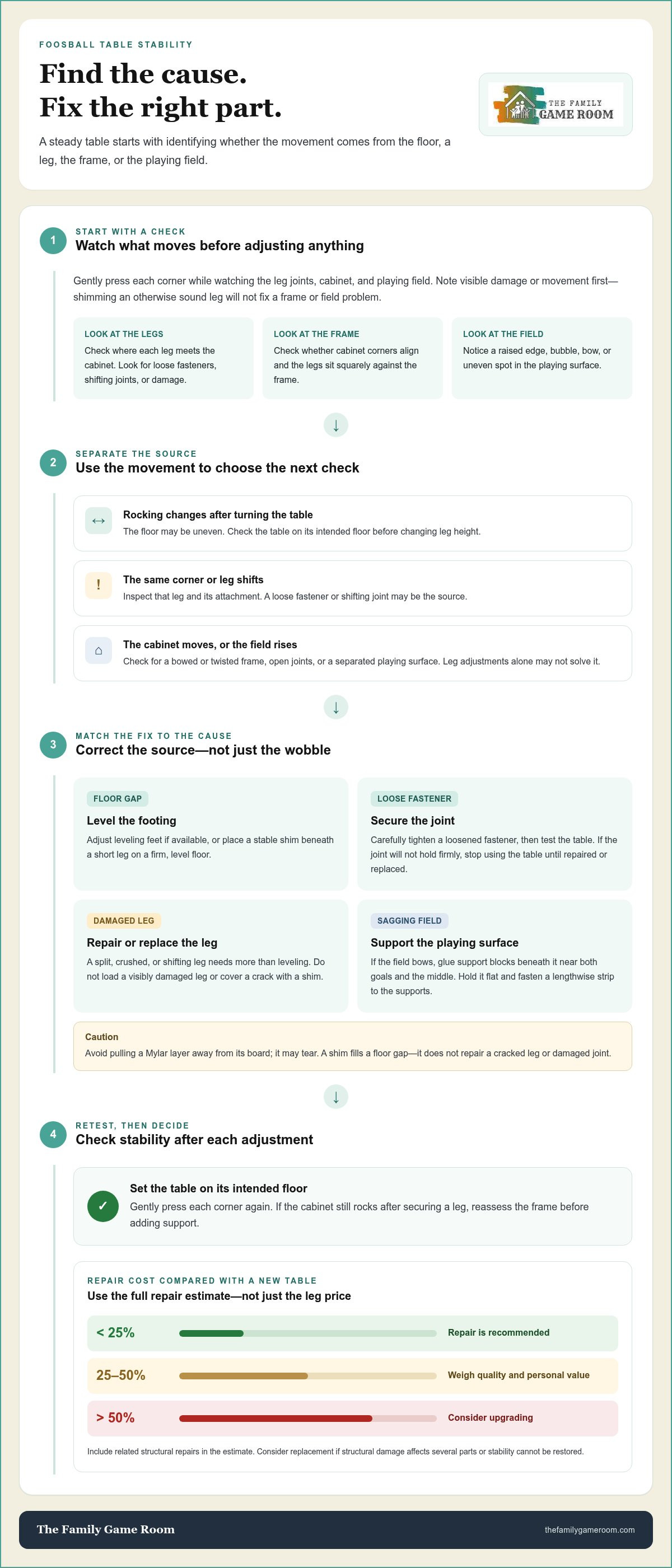
Inspect each leg where it meets the cabinet, then gently press on opposite corners. A loose fastener, shifting joint, or damaged leg may let a corner move under pressure. Turn the table slightly on the floor and check whether it rocks in the same direction. If the rocking changes, the floor may be uneven. If it stays at one corner, inspect that leg and its attachment.
-
Check for a Warped or Uneven Frame
Look along the cabinet edges and compare the legs’ positions with the frame. A twisted or bowed frame can prevent a leg from sitting squarely, so tightening the leg alone may not solve the problem. Check whether the cabinet corners look aligned and whether the playing field sits evenly inside the frame. A raised or bowed field can feel like a leveling problem even when the legs are sound.
- Inspect wooden parts for moisture-related changes. Look for swelling, separation, or a leg that no longer meets the cabinet flush. The U.S. Environmental Protection Agency recommends keeping indoor humidity under 60% to help protect wooden surfaces. Changes in wood can affect how joints meet and how securely the table stands. Note any visible change before attempting an adjustment.
- Check the playing field for separation. Look for lifting edges, bubbles, or uneven spots. A delaminated field may stay raised despite weight and time, then pop back up. This distortion can make play feel uneven even when the cabinet and legs seem stable. Avoid pulling a Mylar layer away from its board, as it may tear.
- Note what moves before choosing a repair. Ask someone to gently press each corner while you watch the leg joints, cabinet, and field. If only one leg shifts, focus on its fasteners or condition. If the frame moves or the field rises, address that source instead of shimming an otherwise sound leg.
Fixes for table instability
Repair a damaged joint if it can be secured safely. Replace the table when its condition or repair cost makes that the better choice. Before deciding, compare the estimated repair cost with the price of a new table.
-
Repair Cracked or Damaged Legs
Inspect the damaged leg and its attachment before tightening anything. If a fastener has loosened, secure it carefully and retest the table. A split, crushed, or shifting leg needs more than leveling. Don’t load a visibly damaged leg or cover a crack with a shim. If the joint won’t hold firmly, stop using the table until the leg is repaired or replaced.
-
Decide Between Professional Repair and Replacement
Assess the frame, legs, and playing surface together. Choose repair when the damage is limited and the rest of the table remains sound. Consider replacement when structural damage affects several parts or stability cannot be restored. Repair is recommended when its cost is less than 25% of a new table’s price. Between 25% and 50%, weigh the table’s quality and personal value. If repairs exceed 50%, consider upgrading.
-
Compare Leg Repair and Replacement Costs
List the work the table needs, then compare its full repair estimate with replacement cost. Include related structural repairs, not just the visibly damaged leg; one weak joint can reveal broader wear. When repairs cost 25-50% of replacement, the table’s quality and personal value should guide the decision. Above 50%, an upgrade is worth considering. Don’t base the choice on a leg’s price alone.
- Test stability after each adjustment. Set the table on its intended floor, then gently press each corner. If the cabinet still rocks after you secure a leg, reassess the frame before adding support. A shim can fill a floor gap, but it won’t repair a cracked leg or damaged joint.
- Secure the playing field only if it’s the source. If the field bows, glue support blocks beneath it near both goals and the middle. Hold the field flat, then fasten a lengthwise strip to the supports. This repair addresses field sag, not loose legs, so confirm the cause first.
How to check whether a foosball table frame is warped or uneven
Use a level, straightedge, and tape measure to distinguish frame distortion from a sloping floor. Check the cabinet before changing leg height or adding supports.
- Clear the cabinet and inspect its shape. Remove balls and accessories, then view the table from each end. Look for a cabinet rail that bows, corners that sit out of line, or joints that have opened. Note visible changes before adjusting the legs.
- Check level across the cabinet. Place a spirit level across one end, then repeat at the opposite end. Turn it lengthwise and check both sides. If the bubble shifts in different directions, the cabinet may be uneven; record each reading before moving the table.
- Test the playing surface with a straightedge. Lay a straightedge across the field and along its length. Watch for gaps beneath the edge or visible rocking. A straightedge that sits evenly in one direction but not another can reveal a localized bow rather than a simple floor slope.
- Compare the cabinet diagonals. Measure between opposite corners, using the same points on each measurement. A noticeable difference suggests the frame may be out of square. Recheck the endpoints carefully, since measuring from different edges can create a false comparison.
- Inspect the frame joints and fasteners. Follow each corner seam and rail connection. Look for separation, shifted panels, or fasteners that move as you apply gentle hand pressure. A cabinet that flexes at a joint needs structural attention, not just adjustment beneath a leg.
- Repeat the checks after rotating the table. Move it to another part of the room, then check the level and cabinet corners again. If the readings change, the floor may be influencing the result. If the same cabinet area remains uneven, the frame or field may be distorted.
- Record each finding before choosing a fix. Note which side reads differently, where the straightedge shows a gap, and whether a joint shifts. These details help distinguish a warped frame from uneven footing and prevent an adjustment from masking the actual problem.
How much does it cost to repair or replace foosball table legs
Compare the full repair estimate with the cost of a new table. Consider the damage, required parts, and the table’s overall condition.
- Describe the repair before estimating it. Record whether the issue is a loose joint, cracked leg, or damaged mounting point. A fastener adjustment differs from replacing a structural part. Include related frame damage, since repairing one leg won’t solve instability caused elsewhere. A clear description helps make estimates comparable.
- Ask what the estimate includes. Separate parts, labor, and any additional work, such as securing a damaged joint. Check whether the proposed repair addresses the cause of the wobble, not just its visible symptom. A leg replacement may leave the table unstable if the cabinet connection also needs attention.
- Compare repair cost with replacement cost. Repair is recommended when the work costs less than 25% of a new table’s price. If repairs reach 25-50%, weigh the table’s quality and personal value. When repairs exceed 50%, consider upgrading. Use the same comparison for a leg repair, including connected structural work.
- Factor in the table’s overall condition. A sturdy cabinet with one damaged leg may justify a focused repair. Multiple loose joints, a warped frame, or a separating playing field can make the estimate climb. List each known issue before deciding, rather than comparing one leg’s repair with the price of an entire replacement.
- Choose the option that restores reliable play. If the repair is below 25% of replacement cost and the remaining structure is sound, repair is the recommended choice. At 25-50%, personal value and table quality matter. Above 50%, consider an upgrade. If replacement fits your decision, explore foosball tables for your game room.
The Family Game Room: Pool Table Dining Tops
The Family Game Room offers foosball tables for players considering replacement after assessing a table’s condition and repair needs. If a damaged frame or costly repairs make replacement sensible, explore a table that suits your home game room.
To use your space differently, Pool Table Dining Tops can turn a pool table into a dining surface when it’s not in play. Indoor Shuffleboard Tables and Air Hockey Tables offer other ways to bring game-night fun home.
Compare the options that best fit your room and how you like to play. For help exploring The Family Game Room’s offerings, visit thefamilygameroom.com.
Make Your Next Game-Room Move
A foosball table that still rocks after careful adjustment may be ready for a different role in your game room. Consider how you want the space to feel, how often friends and family gather, and which games will keep everyone playing. A methodical approach to fixing a wobble on a foosball table helps you assess the table’s condition and decide what to do next.
The Family Game Room offers American Heritage Billiards Pool Tables and Nixon Billiards Pool Tables as classic centerpieces. Pool Table Dining Tops give a pool table another purpose between games. Choose what suits your home and the way you entertain, without rushing the decision.
Contact The Family Game Room to explore options for your game room. Your next great game night can start with a space that feels right for you.
Frequently Asked Questions
How do I identify what is causing a foosball table to wobble?
Gently press each corner and watch which part moves. If a leg shifts independently, inspect its connection. If the cabinet moves as one piece, check the floor and frame. A wobble that changes when you reposition the table points to uneven floor contact. Also check whether the playing field or a cabinet joint moves, as either can mimic unstable legs.
How do I level a foosball table with adjustable leg levelers?
Turn the built-in levelers gradually, testing the table after each adjustment. Place a level across the cabinet, then check in the opposite direction. Adjust feet that don’t contact the floor evenly instead of raising every leg at once. Once the cabinet sits steadily, gently press each corner and make a final small correction if it still rocks.
How do I stabilize a foosball table with fixed legs?
First, make sure the legs are firmly attached and the floor beneath them is clean. If there’s a small floor gap, place a firm, non-compressible shim beneath the short leg and test for rocking. Choose one that sits flat and stays in place. Avoid stacking loose scraps, which may shift during play and leave the table unstable.
How do I tighten loose foosball table bolts and hardware?
Use a screwdriver or wrench that fits the fastener head, and tighten each loose connection gradually. Support the cabinet as you work to keep the joint aligned. Stop if a bolt spins without tightening, the wood starts to split, or the connection still moves. These signs may point to damaged threads or a weakened mounting point, not simply loose hardware.
Can shims or rubber feet fix a wobbly foosball table?
Yes, shims or rubber feet can help when an uneven floor leaves a leg without firm contact. Use a stable, level support that won’t slide or compress easily. Rubber feet can add grip on a smooth floor, while a shim fills a specific gap. Neither can fix a cracked leg, loose joint, or distorted cabinet.
What tools and replacement parts do I need to fix a wobbly foosball table?
Start with a level, a suitable screwdriver or wrench, and a flashlight to inspect the joints. A straightedge can help you check the cabinet or playing surface. Keep stable shims on hand for a floor gap. You may need replacement fasteners or a leg if existing parts are damaged. Match replacement hardware to the table’s original fittings rather than forcing an ill-fitting part.