


Your premium pool table's greatest enemy isn't a spilled drink or a wayward cue; it's the invisible layer of skin oils and abrasive chalk dust coating your billiard balls. When these contaminants build up, they don't just dull the shine of your set. They act like sandpaper on your cloth, leading to premature wear and frustratingly inconsistent rolls. Understanding the best way to clean billiard balls is the secret to maintaining that high-end, professional feel in your home game room.
It's natural to worry about damaging your investment with the wrong cleaning solution. You want a game that feels as sharp as it looks, but you need results that last. This 2026 guide provides the expert clarity required to restore your equipment safely without risking the finish. We'll cover the latest World Pool-Billiard Association standards, compare manual techniques with modern automatic cleaners, and reveal how to keep your table's felt in championship condition for years to come. Whether you're maintaining a heirloom American Heritage table or a modern Nixon Billiards piece, these professional techniques ensure your game stays as precise as the day you started.
Key Takeaways
- Understand how "cling" and friction-burn affect your game's accuracy and the longevity of your pool table cloth.
- Discover the best way to clean billiard balls using professional-grade techniques that balance speed with surface protection.
- Identify why pH-neutral solutions like Aramith are essential for maintaining the high-gloss finish of premium phenolic resin sets.
- Learn the daily post-game rituals and proper storage habits that prevent flat spots and keep your equipment in championship form.
Why Clean Billiard Balls are Essential for Game Performance
Dirty billiard balls don't just look neglected; they actively sabotage your accuracy. When skin oils and chalk dust accumulate, they create a microscopic adhesive layer that causes the "cling" or "skid" effect. This phenomenon occurs when two balls collide and momentarily stick together rather than glancing off cleanly. The result is a shot that misses its mark because the physics of the collision were altered by surface grime. Finding the best way to clean billiard balls is about more than aesthetics; it's about restoring the predictable physics of the game.
Friction is the silent enemy of your pool table's felt. As a ball travels across the cloth, any debris on its surface generates intense localized heat. Dirty balls create significantly more friction than polished ones, which leads to those unsightly white marks known as "burn spots" on your table. Friction burn is the micro-damage caused to your pool table cloth by the heat generated from debris-laden balls during high-speed impact or spin. A shiny, clean ball rolls truer and travels further because it encounters less resistance from the air and the cloth.
Phenolic Resin vs. Polyester: Know Your Material
Before determining the best way to clean billiard balls, you must identify what they're made of. The composition of billiard balls has evolved from ivory to modern polymers, with most professional sets now utilizing phenolic resin. Premium brands like Aramith use this dense, non-porous material because it resists heat and impact better than cheaper alternatives. In contrast, polyester balls are more porous and prone to absorbing stains or yellowing over time. You can usually identify phenolic resin by its weight and the deep, glass-like luster that polyester simply can't replicate. Phenolic resin requires pH-neutral cleaners to avoid stripping the protective finish, while polyester may need deeper stain removal techniques.
The Hidden Cost of Dirty Equipment
Maintaining your equipment protects your long-term investment. If you own a premium American Heritage Billiards Pool Table, keeping your balls pristine is the easiest way to preserve the high-end felt. Chalk dust is essentially abrasive grit; when it's trapped between a heavy ball and the table, it acts like sandpaper. Consistent ball care can extend the life of your table's cloth by as much as 25%, saving you from the cost and hassle of premature replacement. A clean set ensures your home game room remains a place of professional-grade entertainment where every roll is as smooth as intended.
The Daily Routine: Quick-Clean Methods After Every Session
Consistency is the hallmark of a professional-grade home game room. While deep cleaning is necessary periodically, a two-minute post-game ritual is the best way to clean billiard balls for daily maintenance. This habit prevents chalk dust from settling into the surface and hardening into stubborn stains. Focus your attention on the "Chalk Zone," which consists of the primary contact points where the cue tip meets the ball and where balls collide during a break. Removing this residue immediately ensures your next game starts with the same precision as the first, keeping the physics of every shot predictable and clean.
Microfiber Mastery: The Best Tool for the Job
High-GSM (Grams per Square Meter) microfiber cloths are the industry standard for 2026. Unlike cotton towels, which often have large, abrasive loops that can trap grit, microfiber lifts particles away from the phenolic surface. Ensure you use a cloth with a GSM of at least 300 for optimal buffing. When it's time to wash your cloths, avoid fabric softeners at all costs. These products leave a waxy residue that transfers directly to your balls, causing the very "cling" you're trying to prevent.
Organization is key to a pristine environment. Color-code your cleaning supplies to prevent cross-contamination. Use a dedicated blue cloth for your billiard balls and a separate yellow one for dusting your Billiard Light Fixtures. This prevents grease or heavy dust from your furniture from ever touching your playing equipment.
The 'Water-Only' Rule for Light Soiling
For daily maintenance, chemical cleaners are rarely necessary. Use distilled water to avoid the mineral buildup often found in tap water, which can leave a cloudy haze on your set. When researching how to clean phenolic resin, industrial experts suggest minimal moisture to preserve material stability. Use the "two-hand" technique: hold a slightly damp cloth in one hand to lift oils and a dry microfiber in the other to buff the surface immediately to a high shine.
Never submerge your balls in a bucket of water or leave them to soak. Excessive moisture can seep into microscopic fissures, potentially affecting the ball's balance or causing internal structural degradation over years of use. A quick, controlled wipe with a damp cloth followed by a vigorous dry buff is all that's required to maintain that factory-new luster. Once your equipment is polished and dry, storing it properly in a high-quality pool cue rack helps maintain a dust-free playing area. This simple routine keeps your equipment ready for the next break without the need for aggressive chemicals or time-consuming deep cleans.
The Best Way to Deep Clean Billiard Balls: Hand Washing vs. Machines
Deep cleaning is a restorative process that goes far beyond the daily removal of chalk dust. Over time, friction and skin oils create a microscopic film that standard wiping cannot penetrate. This buildup increases the heat generated during impact, which accelerates the wear on your premium pool table cloth. The best way to clean billiard balls for a deep restoration is to use a pH-neutral polish applied with a high-speed buffer, ensuring a uniform finish that reduces friction on your table. By restoring the original luster, you're not just making the balls look new; you're ensuring they roll with the precision required for a high-stakes game on a Nixon Billiards or American Heritage table.
The Professional Hand-Polishing Method
If you prefer a hands-on approach to maintenance, the manual method allows for total control over the pressure and focus applied to each ball. Follow these steps to achieve a professional result:
- Step 1: Pre-wash. Use a specialized billiard ball cleaner to remove the surface layer of grime. This prevents you from grinding old chalk into the resin during the polishing phase.
- Step 2: Apply polish. Use a clean microfiber cloth to apply a small amount of professional polish. Work in a steady, circular motion. This technique prevents streaks and ensures the compound fills any microscopic abrasions in the phenolic resin.
- Step 3: The final buff. Swap to a fresh, dry microfiber cloth. Buff the ball vigorously until you achieve a glass-like finish that feels slick to the touch.
Motorized Ball Cleaners: Are They Worth It?
For owners of large game rooms or those who play daily, a motorized ball cleaner is a significant time-saver. In 2026, consumer-grade machines have become increasingly sophisticated, offering a level of consistency that hand-polishing struggles to match. Machines like the Aramith Power Cleaner utilize rotating pads to clean an entire set of 16 balls in under ten minutes. The primary advantage is the uniform application of force, which ensures every ball in the set has the exact same friction coefficient.
While the initial investment in a professional-grade machine can be higher than manual supplies, the benefits to your table's longevity are measurable. Consistent machine cleaning prevents the "flat spots" that occur when balls aren't polished evenly. To maintain this performance, you must clean or replace the machine's buffing pads regularly. Dirty pads can trap abrasive grit, which will scratch the resin and eventually damage your table's felt. Keeping your cleaning equipment as pristine as your pool table ensures that every break remains crisp and every roll remains true.
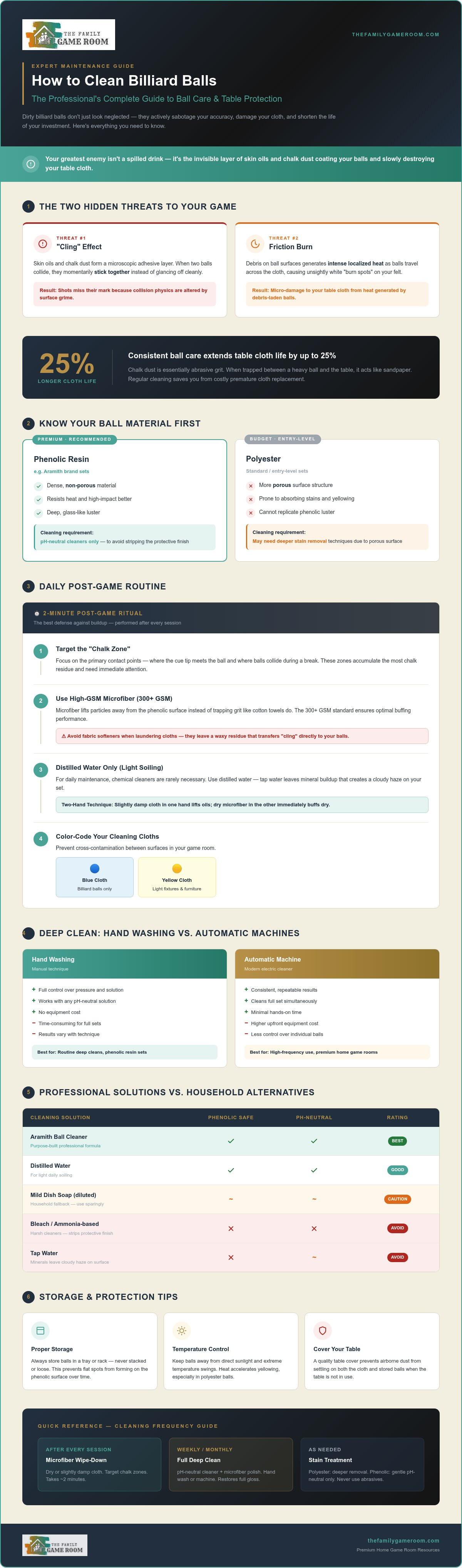
Professional Cleaning Solutions vs. Household Alternatives
Choosing the right chemical agent is the most critical decision in your maintenance routine. Phenolic resin is a high-performance material, but it's sensitive to pH levels. The best way to clean billiard balls is to use a pH-neutral solution specifically engineered for resin surfaces. Manufacturers like Aramith, who produce over 85% of the world's billiard balls, recommend their own proprietary cleaners for a reason. These solutions are designed to lift oils without stripping the plasticizers that give the balls their impact resistance. Using generic industrial degreasers or acidic cleaners can lead to "yellowing," a chemical reaction where the resin becomes brittle and loses its vibrant color due to accelerated aging.
Top-tier brands like Aramith, Tiger, and McDermott offer specialized fluids that serve different purposes. While a standard cleaner is for routine use, "restorer" fluids are designed for older, heavily oxidized sets that have lost their shine. These products use mild, non-acidic abrasives to remove the top layer of oxidation without compromising the ball's perfect sphere. If a ball shows deep cracks or has lost significant weight from years of aggressive cleaning, it's likely beyond repair and should be replaced to protect your table's surface.
Safe Household Substitutes (And What to Avoid)
Emergency situations occasionally call for household items, but you must proceed with caution. Mild, clear dish soap is the only acceptable household alternative for a quick wash. Mix a few drops with warm water and use a soft cloth. You must avoid the "Danger Zone" of cleaning products: bleach, ammonia, and abrasive scouring pads. These will create micro-scratches that trap chalk and ruin the ball's roll.
One persistent myth is that the dishwasher is a safe shortcut. It isn't. The high-heat drying cycle in a dishwasher can cause internal stress in the resin, leading to warping or even hairline fractures. This heat damage is irreversible and will immediately affect the accuracy of your game. Stick to hand-cleaning to ensure the structural integrity of your set remains intact.
Polishing Compounds: Wax vs. Resin Cleaners
Many players mistakenly reach for car wax to achieve a high-gloss finish. This is a significant error. Car wax leaves a greasy residue that transfers directly to your table's cloth, attracting dust and creating "skid" spots. Official World Pool-Billiard Association (WPA) regulations explicitly state that balls should remain unwaxed to maintain consistent friction levels.
Professional resin cleaners provide that "like-new" luster without the waxy buildup. They offer a clean, dry shine that respects the physics of the game. If your current set is past the point of no return despite your best cleaning efforts, it might be time to invest in a professional-grade replacement. Explore the premium selection of accessories and tables at The Family Game Room to ensure your equipment matches your skill level.
Protecting Your Investment: Storage and Maintenance Tips
Cleaning your equipment is only half the battle; how you store it determines its ultimate lifespan. Environmental factors like temperature and humidity play a significant role in the stability of phenolic resin. High humidity can create a microscopic moisture film that attracts dust, while extreme heat can cause internal stress. To maintain the integrity of your set, keep your game room at a consistent temperature between 65 and 75 degrees Fahrenheit. This prevents the resin from expanding or contracting, which can lead to microscopic surface cracks over time.
Leaving balls on the table for extended periods is a common mistake that harms both the balls and the cloth. The weight of a standard 6-ounce billiard ball creates constant pressure on the felt, leading to permanent indentations or "divots" that affect ball travel. Over time, the ball itself can develop subtle flat spots where it rests against the slate. Removing the balls after every session is the best way to clean billiard balls and ensure they maintain their perfectly spherical shape for years of precise play.
Proper Storage Techniques
Integrated storage is the gold standard for high-end home setups. Utilizing Pool Cue Racks with dedicated ball shelves keeps your equipment organized and safe from accidental drops. For long-term protection, especially if you own a secondary professional set, consider felt-lined ball cases. These cases provide a cushioned environment that prevents balls from knocking against each other during storage. Additionally, keep your storage area away from direct sunlight. UV exposure is a primary cause of resin yellowing and can make the surface brittle, stripping away that premium glass-like finish.
The Complete Game Room Ecosystem
A professional-looking setup has a powerful psychological impact on your guests. When your billiard balls are polished and properly racked, it signals a commitment to quality that extends to the rest of your entertainment space. This level of care ensures that clean balls complement a well-maintained Air Hockey Table or foosball set, creating a cohesive, luxury environment.
Create a maintenance schedule to stay ahead of wear and keep your equipment in championship condition. Following these steps ensures your game room remains a premier destination for family and friends:
- Daily: Wipe balls with a dry microfiber cloth after the final game and store them in a rack.
- Monthly: Perform a deep clean using a professional pH-neutral solution to remove deep-seated oils.
- Yearly: Inspect balls for chips or significant weight loss and evaluate if a replacement set is needed to protect your table's felt.
Elevate Your Play with Professional Care
Maintaining a professional-grade environment requires attention to detail that goes beyond the break. By sticking to a pH-neutral cleaning routine and utilizing high-GSM microfiber, you protect the structural integrity of your phenolic resin sets. This dedication doesn't just keep your equipment looking pristine; it ensures every roll remains true and every collision is predictable. Mastering the best way to clean billiard balls is the simplest path to extending the life of your table's cloth and preserving your home entertainment investment for years to come.
At The Family Game Room, we're more than just a retailer; we're your partners in creating lasting home memories. As a family-owned authority in luxury home entertainment, we take pride in being an authorized dealer for industry leaders like American Heritage Billiards. Whether you're looking for professional-grade maintenance tools or a stunning new centerpiece for your home, we provide the expert curation you deserve. Upgrade your game room with premium pool tables and accessories at The Family Game Room today and take advantage of free shipping on premium game table orders. Keep your equipment polished, your rolls accurate, and your competition friendly.
Frequently Asked Questions
Can I put my pool balls in the dishwasher?
No, you should never put your pool balls in a dishwasher. The extreme heat generated during the drying cycle causes internal stress in the phenolic resin, leading to permanent warping or hairline fractures. This damage destroys the ball's balance and accuracy immediately. Stick to hand washing with warm water or specialized solutions to ensure your set remains in professional condition for your next home game.
How often should I clean my billiard balls?
You should perform a quick wipe after every session and a deep clean once a month. A daily 2-minute ritual with a dry microfiber cloth removes fresh chalk and skin oils before they settle into the surface. If you play frequently, a monthly deep polish is the best way to clean billiard balls and maintain their glass-like finish. Consistent care prevents the abrasive buildup that leads to premature cloth wear.
What is the best household cleaner for pool balls if I'm in a hurry?
Mild, clear dish soap diluted in warm water is the safest household option for an emergency clean. Avoid any soaps with heavy perfumes or dyes, as these leave a waxy residue that causes the balls to "cling" during collisions. Simply dampen a cloth, wipe each ball, and buff them dry immediately. Never use bleach or glass cleaners, as these harsh chemicals can permanently damage the high-end resin surface.
Why do my pool balls look yellow and can I fix it?
Yellowing is typically caused by prolonged UV exposure or the natural oxidation of the resin over time. While a professional restorer fluid can often lift surface stains and restore some luster, deep yellowing usually indicates the material has become brittle. If the discoloration is accompanied by a dull, tacky feel, it is time to replace the set to protect your table's felt from increased friction and heat damage.
Do dirty pool balls actually damage the table felt?
Dirty billiard balls are a primary cause of burn spots and accelerated wear on your table's felt. When a ball coated in chalk dust and oils travels at high speeds, it generates intense localized friction. This heat literally singes the fibers of the cloth, leaving white marks and permanent indentations. Keeping your balls pristine is the most effective way to protect your American Heritage or Nixon Billiards table investment.
Is it okay to use car wax to make pool balls shine?
You should never use car wax on your billiard balls. While it provides a temporary shine, the wax transfers directly to your table's cloth, attracting dust and creating slippery skid spots. This residue is nearly impossible to remove from the felt without a full replacement. Stick to pH-neutral polishes designed specifically for phenolic resin to achieve a safe, professional glow that won't ruin your expensive playing surface during a match.
What is the difference between a ball cleaner and a ball restorer?
A ball cleaner is designed for routine maintenance to remove oils and chalk, while a restorer is a more aggressive compound for older sets. Restorers contain mild abrasives that strip away the oxidized top layer of the resin to reveal the original color underneath. Use a cleaner for your monthly deep polish and reserve the restorer for balls that have lost their shine or developed a matte finish from years of heavy use.
How do professional pool halls clean their balls so quickly?
Professional pool halls use automatic ball cleaning machines to process entire sets in under ten minutes. These motorized units utilize rotating buffing pads and specialized cleaning agents to provide a level of consistency that is hard to achieve by hand. For home owners with frequent guests, investing in a consumer-grade automatic cleaner ensures your equipment is always ready for play without the manual labor of hand-polishing each ball individually.