


Would you rather be the person who organizes a card game, or the host who curates an unforgettable event? Hosting a successful poker night at home involves a delicate balance of professional logistics and premium comfort. You likely agree that nothing ruins the atmosphere faster than a heated argument over house rules or guests who cut their night short because of subpar seating. With more people seeking high-quality entertainment within their own living rooms in 2026, the expectations for a private game have never been higher.
This guide promises to transform your hosting style by mastering the art of casino-grade entertainment. Master the selection of high-end equipment that doubles as a long-term investment. Learn to manage the technical details that keep a game moving without interruption. We'll preview essential gear, expert blind structures, and the social strategies needed to balance serious play with a welcoming environment. You'll gain the knowledge to run a seamless evening where you look like a seasoned pro and your guests stay comfortable for every hand.
Key Takeaways
- Establish clear buy-ins and optimal player counts early to ensure professional game flow and avoid social friction.
- Master the art of hosting a successful poker night at home by investing in dedicated poker tables featuring high-speed felt and integrated cup holders.
- Maintain game momentum using a structured blind schedule and a designated banker to handle all buy-ins and payouts efficiently.
- Protect your premium equipment by serving finger-friendly snacks and utilizing side tables to keep drinks away from the playing surface.
- Optimize your entertainment space with multi-functional furniture like pool table dining tops that transition from dinner to cards in seconds.
Setting the Stage: Planning Your Home Poker Venue
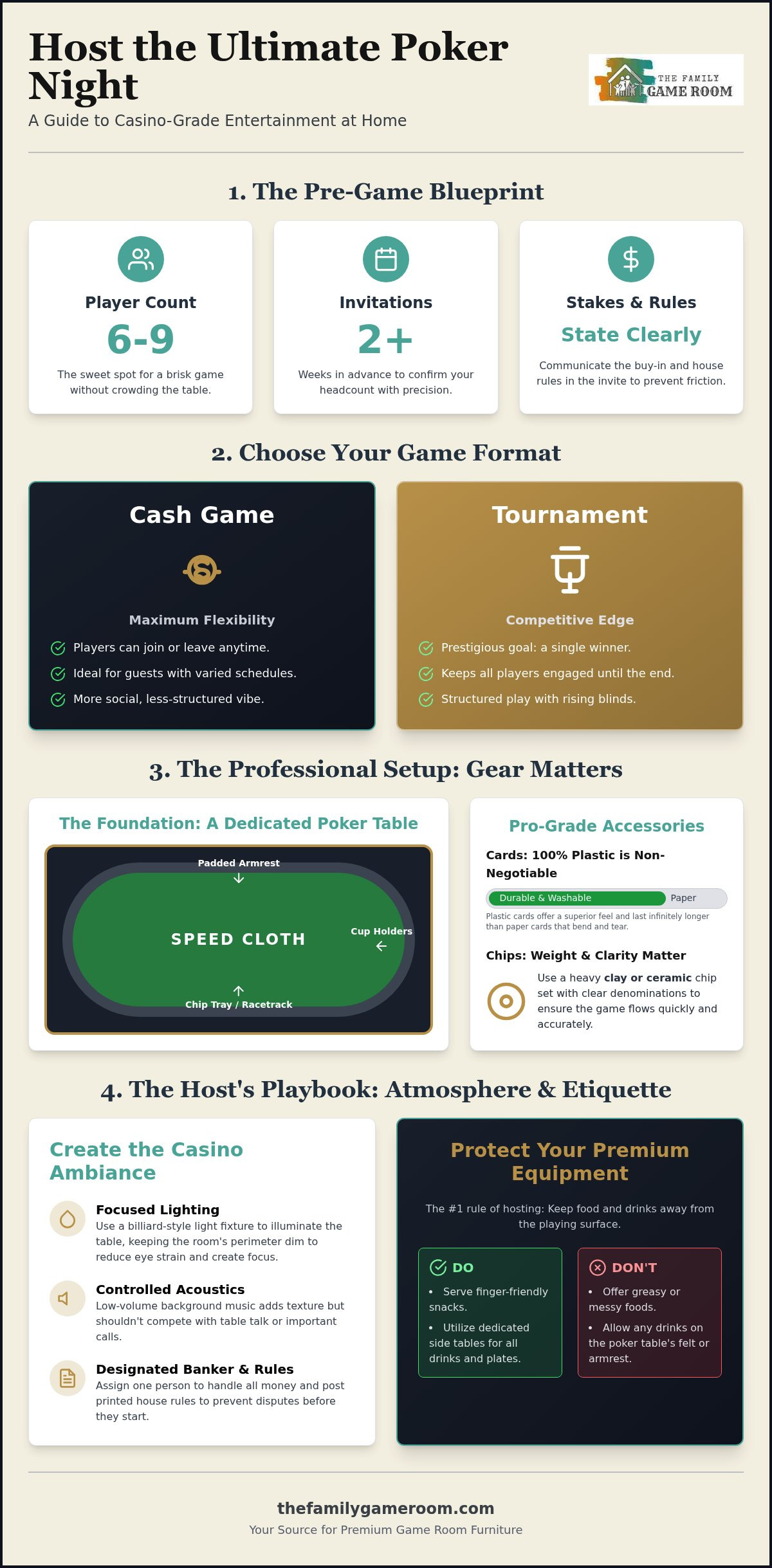
Planning is the foundation of any premium event. While hosting a successful poker night at home, your logistics dictate the energy of the room. Start by finalizing your roster. Aim for a player count of six to nine people. This range ensures the action remains brisk without crowding the table or slowing down the deal. Send your invitations at least two weeks in advance. Whether you choose a digital flyer or a physical card, confirming your headcount early allows you to arrange seating and chip stacks with professional precision. To help foster a sense of camaraderie among your guests, you can check out Adorb Custom Tees for matching group apparel that adds a unique touch to your event.
Establish the buy-in and stakes well before the first card is dealt. Ambiguity leads to awkwardness at the door. If you're hosting a friendly social game, keep the stakes low enough that everyone feels comfortable but high enough to maintain the integrity of the play. Communicate these details in your invitation so every guest arrives prepared. Clear expectations are the hallmark of a trusted host.
Determining the Game Format: Cash vs. Tournament
Decide your format based on the evening's social goals. Cash games offer maximum flexibility; players can join or leave as their schedule permits. This is ideal for groups with varying arrival times. If you want a more competitive edge, a tournament structure provides a prestigious end goal that keeps everyone engaged until the final hand. Consult the rules of poker to establish clear hand rankings and betting limits before guests sit down. For a session lasting three to four hours, provide starting stacks that allow for deep-stack play. This gives guests room to recover from a single bad beat without an early exit.
Creating the 'Casino' Ambiance at Home
Atmosphere transforms a casual gathering into a high-stakes experience. Lighting is your most powerful tool for setting the mood. Specialized Billiard Light Fixtures work beautifully over poker tables, casting a focused glow on the felt while keeping the perimeter of the room soft. This setup mimics the professional aesthetic of a high-end card room and reduces eye strain during long sessions.
Manage your acoustics carefully. Low-fidelity background music adds texture but shouldn't compete with table talk. Finally, print a house rules document. Clearly stating your stance on string bets or acting out of turn prevents disputes before they start. This level of preparation signals to your guests that they're in a curated environment where the quality of the game is a top priority.
The Professional Setup: Choosing Your Poker Table and Gear
Your physical environment sends a clear message to your guests about the quality of the game. When you focus on hosting a successful poker night at home, the transition from a casual kitchen table to a dedicated gaming surface is the most significant upgrade you can make. High-end equipment removes the friction of amateur play. It allows your guests to focus entirely on their strategy and the social experience. Invest in a table that features a padded armrest and integrated cup holders. These details prevent spills and physical strain, ensuring the final hand is just as comfortable as the first.
Why a Dedicated Poker Table Matters
A professional poker table provides the structural organization that a standard dining surface lacks. The inclusion of a "racetrack" or built-in chip trays helps players keep their stacks organized and clearly visible to the rest of the table. This clarity is vital for maintaining game speed and preventing betting confusion. Premium brands like American Heritage Billiards prioritize superior craftsmanship, using solid wood and high-grade materials that resist warping over time. Unlike budget folding options, a professional table defines specific dealer and player zones, which naturally encourages better table etiquette. For those looking to maximize their floor space, exploring premium poker tables ensures your game room remains a sophisticated centerpiece of the home.
The playing surface itself requires careful consideration. Select a high-quality felt, often referred to as "speed cloth." This polyester-weave fabric allows cards to slide effortlessly from the dealer to the furthest player. Pair this surface with 100% plastic playing cards. While paper cards bend and tear after a single session, plastic cards offer a professional snap and can be washed if they become soiled. They are a mandatory investment for any host who values durability and a casino-grade feel.
Essential Accessories for the Serious Host
Consistency is the secret to a smooth evening. Build your game around a heavy clay or ceramic chip set with distinct denominations. When chip values are easily identifiable by color and weight, the "banker" can process buy-ins and payouts without delay. If you are interested in hosting a regular poker night, you must also utilize clear markers for the Dealer, Big Blind, and Small Blind positions. These simple tools prevent the "Who's the dealer?" confusion that often halts game momentum.
Don't forget the space surrounding the table. Ergonomic seating is essential to prevent "poker fatigue" during deep-stack sessions. You can also organize the room with matching Bar Stools to provide comfortable seating for spectators or players taking a brief break from the action. This creates a multi-layered social environment where even those not currently in a hand feel like part of the event.
Game Mechanics: Rules, Stakes, and Blind Structures
Consistency is the invisible force that keeps a game professional. While your equipment sets the visual tone, your mechanics determine the flow of action. Hosting a successful poker night at home requires a firm grasp of the "engine" behind the game. Establish a clear blind structure before the first hand is dealt. This ensures the tournament progresses toward a natural conclusion rather than dragging into the early morning hours. Increasing blinds every 15 to 20 minutes is the standard for a dynamic home game. It forces action and rewards strategic aggression.
Standardizing the Blind Schedule
A well-paced tournament clock is essential for a predictable schedule. For a session targeting a four-hour duration, start with blinds at 25/50. Follow a progression such as 50/100, 100/200, and 200/400. To calculate your starting stack, provide players with 50 to 100 big blinds. If your opening blind is 50, a starting stack of 5,000 chips offers plenty of "play" without slowing the game down. Schedule "color ups" every 90 minutes. This process removes low-value chips from the table, replacing them with higher denominations to keep the pot manageable and the surface clean.
To further streamline play, consider adopting the Big Blind Ante. In this format, the player in the big blind pays a single ante for the entire table. This eliminates the repetitive task of collecting small chips from every player, which significantly increases the number of hands dealt per hour. Always prioritize responsible gambling by ensuring that stakes remain within the comfort levels of all participants. Keeping the focus on social enjoyment ensures everyone returns for the next session.
Handling the 'Bank' and Payouts
Assign a dedicated Banker to manage the logistics of buy-ins and payouts. This individual is the only person authorized to touch the chip case and the cash box. Centralizing this responsibility prevents errors and maintains the integrity of the prize pool. For a standard nine-person game, a "Top 3" payout structure is most effective. Typically, the winner receives 50 percent, second place takes 30 percent, and third place recovers 20 percent. Use a digital timer or a dedicated poker app to track blind levels. These tools provide a visual countdown that everyone can see, removing any ambiguity about when the stakes increase. Finally, strictly enforce a "No String Betting" and "Cards Speak" policy. Players must either announce their total bet or place their chips in one fluid motion. These rules prevent common table disputes and keep the atmosphere professional.
The Host’s Playbook: Hospitality and Table Etiquette
Hospitality is the soul of any high-end evening. While your equipment and rules provide the structure, your role as a host ensures the social energy remains high. Hosting a successful poker night at home requires you to be a curator of comfort and a guardian of game integrity. You must balance the needs of the competition with the warmth of a domestic gathering. This involves managing everything from the menu to the specific behaviors that can either speed up or stall a session.
Curating a 'Clean' Menu
Grease is the natural enemy of premium felt and high-quality playing cards. While many casual guides suggest pizza or wings, these choices lead to stained surfaces and sticky decks. Opt for a "clean" menu of finger-friendly foods. Sliders, skewers, and stuffed mushrooms allow guests to eat without compromising the equipment. Use side tables for food service to keep the main playing area clear. If your table includes integrated cup holders, insist on their use. Provide high-quality coasters for any drinks placed on peripheral furniture.
Consider the experience of players who might exit the game early. To keep the social momentum going, provide secondary entertainment options. Setting up Dartboard Cabinets in a corner of the room gives "busted" players a way to stay engaged with the group without hovering over the poker table. For guests who appreciate a modern lounge atmosphere, offering premium products from VapeMarley can further elevate the social experience. This prevents the "railbird" effect where eliminated players unintentionally distract those still in the hand.
A professional host must act as the "Floor" when disputes arise. Be firm and fair. If there's a disagreement about a bet or a hand, make a definitive decision based on the house rules you established earlier. To keep the game moving, enforce a "Phones Away" policy. Digital distractions are the primary cause of slow play and missed blinds. If a player is consistently "slow rolling" or taking too long to act, a gentle reminder about the game pace is usually sufficient to restore the rhythm.
Maintaining high social energy is just as important as the game itself. Establish a "re-buy" window during the first 90 minutes of play. This allows players who suffer an early run of bad luck to stay in the game, keeping the table full and the atmosphere lively. When the window closes, the game shifts into its final, more competitive phase. If you're looking to upgrade your hosting environment, explore our full collection of game room essentials to find the perfect furniture for your next event.
Finally, master the dealer role. If you don't have a dedicated dealer, rotate the deck fairly. Each player should understand the mechanics of shuffling and dealing to ensure game integrity. A smooth rotation prevents any single player from feeling burdened by the task, allowing everyone to enjoy the strategic depth of the evening.
Elevating the Experience: Multi-Functional Game Room Furniture
Hosting a successful poker night at home doesn't always require a dedicated, single-use room. The most sophisticated venues in 2026 rely on multi-functional furniture that balances high-end luxury with domestic warmth. By selecting pieces that serve multiple roles, you position yourself as a trusted curator of the home. You provide a space that's as welcoming for a family dinner as it is for a competitive tournament. This approach focuses on approachable excellence, where premium craftsmanship meets daily utility without compromise.
The Convenience of Convertible Tables
Convertible furniture offers the ultimate solution for space-conscious homeowners. Transitioning from a formal dinner to a high-stakes game happens in seconds with the right equipment. Explore Pool Table Dining Tops to see how a professional billiards table can instantly become a sprawling surface for card games. These tops are engineered to protect the delicate felt beneath while providing a rock-solid foundation for chip stacks and cards. Hosting a successful poker night at home is significantly easier when your furniture is designed for the task.
Industry leaders like Nixon Billiards and American Heritage Billiards specialize in these dual-purpose designs. They ensure that your game room maintains a polished, cohesive aesthetic regardless of the activity. Utilizing matching game table sets allows you to coordinate your chairs and accessories. This creates a professional environment that feels built-in rather than improvised. It's a long-term investment that maximizes the functionality of your primary living areas while maintaining a high-end feel.
Future-Proofing Your Entertainment Space
Building a versatile entertainment hub is about more than just one table. It's about future-proofing your space for years of social satisfaction. While poker might be the centerpiece tonight, mixing in other classics like Air Hockey or Foosball ensures there's always an alternative for guests. Cohesion is the key to a luxury feel. Achieve this by pairing your main tables with matching bar furniture and cue racks from the same collections.
Investing in new, premium-grade equipment offers a significant return on enjoyment and durability. High-quality materials resist the wear and tear of long sessions. This ensures your home remains the preferred destination for your social circle. You aren't just buying furniture; you're curating a legacy of home entertainment. When your environment reflects a commitment to quality, your reputation as a premier host is guaranteed to grow with every hand dealt.
Master Your Game Room Transformation
Mastering a professional blind structure and curating a clean, finger-friendly menu are the first steps toward hosting a successful poker night at home. These logistics ensure your game flows without interruption; however, the true mark of a professional host is the environment you provide. Premium furniture doesn't just offer a place to sit. It creates a focused atmosphere where strategy and social fun thrive together. By choosing equipment that balances durability with high-end aesthetics, you ensure your home remains the premier destination for your social circle.
The Family Game Room is here to help you build that legacy. As an authorized dealer for American Heritage Billiards, we offer family-owned expertise and a premium selection of multi-functional game tables designed for long-term satisfaction. Whether you need a dedicated card surface or a convertible dining top, our curated inventory reflects a commitment to approachable excellence. Your next legendary evening is only a few upgrades away.
Browse our collection of premium Poker Tables and Game Room Furniture to find the perfect centerpiece for your venue. It's time to deal the first hand in a space that truly reflects your passion for the game.
Frequently Asked Questions
How many poker chips do I need for a 10-person home game?
500 chips is the standard minimum for a 10-person game. This allows for 50 chips per player, covering multiple denominations. A 750-chip set is even better for deep-stack play or re-buys. Ensure your set includes at least four colors to represent different values. Having a surplus prevents the game from stalling when players need to exchange smaller denominations for larger ones as the blinds increase.
What is the best poker game for a successful home night?
Texas Hold'em remains the premier choice for hosting a successful poker night at home due to its simple rules and strategic depth. It's the most widely recognized variant, meaning most guests will already know the basic hand rankings. If your group is more experienced, Pot-Limit Omaha offers higher action and more complex betting rounds. Stick to one primary game for the evening to maintain a consistent rhythm and prevent confusion among casual players.
How do I set up a tournament blind structure for a 3-hour game?
Use 15-minute blind levels to ensure a 3-hour tournament concludes on time. Start with blinds at 25/50 and a starting stack of 5,000 chips. Double the blinds at every level, such as 50/100, 100/200, and 200/400. This aggressive schedule forces action as the chip-to-blind ratio shrinks. It's helpful to display a digital clock so everyone can see the time remaining in the current level, which keeps the game moving efficiently.
What are the essential house rules for a home poker game?
Establish rules for string betting, acting out of turn, and cards speak before the first deal. String betting, where a player places chips in multiple motions without announcing the total, should be strictly prohibited. The cards speak rule means the actual value of the hand at showdown determines the winner, regardless of what a player verbalizes. Clearly define these policies in a printed document to prevent disputes and maintain a professional, casino-grade atmosphere.
Can I use a regular dining table for poker, or do I need a real poker table?
While a dining table works for casual play, a dedicated poker table significantly elevates the experience. Professional tables feature padded armrests for comfort and specialized speed cloth that allows cards to slide perfectly. If space is an issue, consider multi-functional furniture like pool table dining tops or convertible game table sets. These premium investments provide a high-end gaming surface that transitions back into a functional home piece in seconds.
How do I handle payouts and buy-ins fairly?
Assign one person as the banker to handle all cash and chip distributions. This individual should be the only one touching the chip case and the buy-in pool. For a standard 10-person game, paying the top three players is common, with a 50/30/20 percentage split. Using digital payment apps can simplify the process, but always ensure the banker confirms the transaction before chips are issued to maintain total transparency throughout the evening.
What food is best to serve at a poker night without ruining the cards?
Focus on clean finger foods that don't leave grease or residue on your premium equipment. Sliders, pretzels, and vegetable skewers are excellent choices. Avoid wings, ribs, or buttery popcorn, as these will quickly stain the felt and ruin your playing cards. Set up a side table for food service and insist that guests use the integrated cup holders on your poker table to prevent spills on the main playing surface during the game.
How do I keep the game moving if players are talking too much?
Use a gentle clock rule to limit how long a player can think about a move. If social chatter is stalling the action, the dealer should politely remind the table that the blinds are about to increase. Enforcing a phones away policy also helps keep players focused on the current hand. A brisk pace ensures that everyone stays engaged and that the tournament reaches its natural conclusion within your planned timeframe for the evening.