


What if your game room walls could make the space feel finished without getting in the way of game night? The right game room wall decor ideas frame the action, reflect what your household enjoys, and tie the room together. Start with the furniture and colors you already have, then add a few thoughtful details instead of filling every open stretch of wall.
Artwork, lighting, and themed pieces can feel cluttered if they compete with play or crowd useful surfaces. A simple plan helps: choose a focal point, repeat a small number of colors or finishes, and keep active play areas and walkways clear.
Explore 15 adaptable approaches, from personal memorabilia and textured accents to useful features such as cue racks, dartboard cabinets, and billiard lighting. You’ll also find practical ways to plan a display, balance light and color, and make the walls work with the games and furniture in your space.
Key Takeaways
- Choose game room wall decor ideas that set the mood and suit the games and gatherings the room is designed for.
- Use artwork and meaningful memorabilia to add personality, while leaving enough open wall to keep the room from feeling crowded.
- Compare wall treatments by their visual impact and flexibility, and account for play space, walkways, doors, and sightlines.
- Measure the usable wall, select a focal point, and test your layout before hanging anything.
- Repeat colors or materials through lighting, storage, and functional accessories to create a cohesive finish.
Game Room Wall Decor Ideas Start with the Feel You Want
Bare walls can make even a well-furnished game room feel unfinished, but covering every blank spot rarely improves it. The strongest game room wall decor ideas start with the atmosphere you want, then use art, color, and practical details to support play and time together. A recreation room brings games and entertainment into one shared space, as the history and purpose of recreation rooms illustrates.
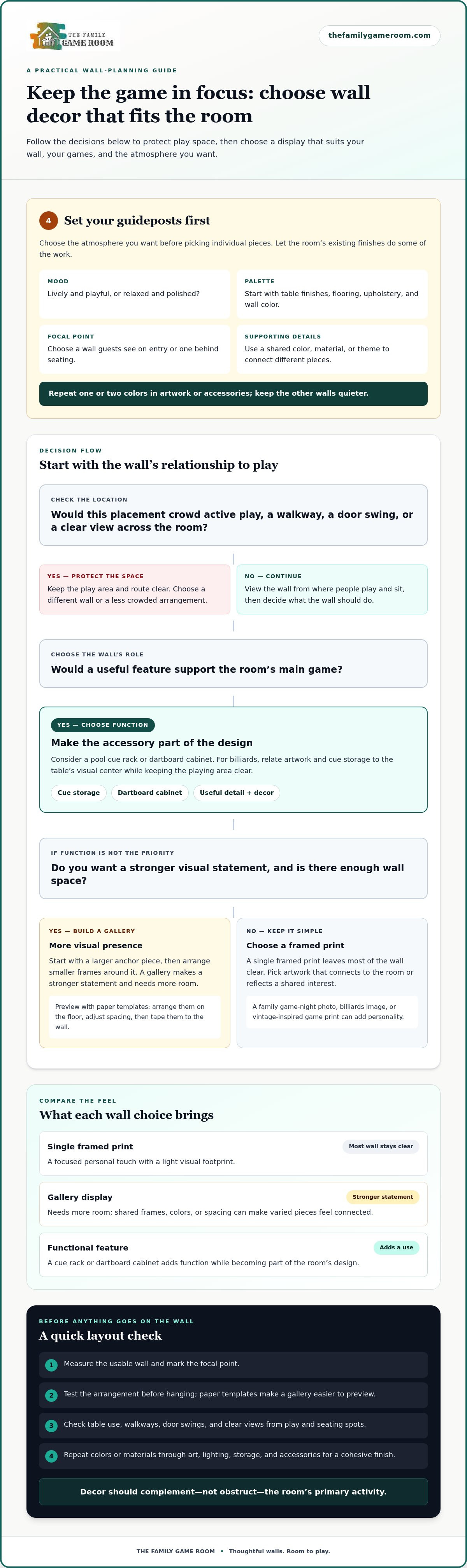
Before choosing individual pieces, set four guideposts: mood, palette, focal point, and supporting details. A lively family room might suit bright accents and playful prints; a relaxed lounge may call for deeper colors and polished finishes. Personal art can sit alongside useful accessories, such as a dartboard cabinet or pool cue rack. These pieces don’t need to match exactly. A shared color, material, or theme can connect them.
Choose a game room style before choosing individual pieces
Use these styles as starting points, not rules. Borrow one or two elements that suit your home rather than copying a showroom from floor to ceiling.
- Classic billiards: Set a composed, club-inspired tone with deep greens, warm wood, and framed billiards photography or traditional sporting prints.
- Modern lounge: Create a sleek, relaxed look with charcoal, cream, or other restrained neutrals, then add metal accents and graphic abstract art.
- Family-friendly: Keep the space welcoming with a lighter palette, practical finishes, and cheerful art connected to games or shared interests.
- Sports-inspired: Build around team colors or a favorite sport, using memorabilia and action photography as accents rather than covering every wall with competing displays.
Let the games guide the details. A billiards room may suit rich wood tones and classic prints, while a space with several activities may call for a flexible palette and art that reflects everyone who plays.
Build a simple color and focal-point plan
Begin with the room’s existing features: table finishes, flooring, upholstery, and wall color. Treat them as palette anchors. Choose one or two colors to repeat in artwork or accessories, then select a focal wall, such as the wall guests see when they enter or the one behind a seating area. Keep the other walls quieter so the room doesn’t feel visually crowded.
A clear focal point and a restrained palette help varied game room details feel cohesive. The result can still be personal. Pair a favorite print with useful storage or lighting, and let a few considered choices do the work.
Game Room Wall Decor Ideas for Art, Memorabilia, and Personal Touches
Art and keepsakes can make a game room feel personal. Look beyond generic game imagery: frame a close-up of a billiard rack, a favorite family game-night photo, or a vintage-inspired print that suits the room. Tournament snapshots and meaningful objects add a sense of history, while careful editing keeps the walls from feeling crowded. These game room wall decor ideas work best when each item has a reason to be there.
Create a gallery wall that feels collected, not cluttered
Combine photographs, prints, and small keepsakes, but give the arrangement a visual thread. Start with a larger anchor piece, then build around it with smaller frames in varied sizes. Before hanging anything, cut paper templates to match the frames and arrange them on the floor. Adjust the spacing and balance there, then tape the templates to the wall to preview the display.
Unify different subjects with a shared frame finish, a connected color palette, or consistent spacing. For example, black-and-white game photography can sit beside a colorful family snapshot when similar frames or repeated tones bring them together. Leave enough space between pieces to let each one stand out.
Use signs, sports memories, and personal collections thoughtfully
Choose a few meaningful items instead of filling every open patch of wall. A framed tournament memory, a vintage-style game print, and a simple decorative sign can tell a story without making the room feel like a themed display. For sports-inspired decor, use colors, action photography, or personal memorabilia rather than relying on trademarked team logos.
Repeated colors help different memorabilia feel like one considered collection. Echo a color from a photograph in nearby artwork or a frame, then let the subjects vary. Pairing a bold sign with softer photography can also balance the display and make it feel at home.
Let the room’s furnishings inform your choices. Wood finishes, upholstery, and game-table details can guide your selection of frame tones and artwork colors. If you’re still shaping the room, browse game tables and furnishings for pieces that can help you build a cohesive look.
How to Balance Game Room Wall Decor with Play and Lighting
A wall treatment can look striking but still be a poor fit if it crowds a game area or competes with useful light. Compare options by their visual impact, flexibility, and space requirements. A single framed print leaves most of the wall clear; a gallery display makes a stronger statement and needs more room; a dartboard cabinet or pool cue rack adds function while becoming part of the design.
Before hanging anything, view the room from the places people play and sit. Account for table use, walkways, door swings, and clear views across the room. Decor should complement, not obstruct, the room’s primary activity. This practical check helps you choose game room wall decor ideas that look intentional from more than one angle.
Choose wall features that suit the room’s main game
For billiards, relate artwork and cue storage to the table’s visual center while keeping the playing area comfortable to use. A pool cue rack can organize equipment on a suitable wall and add a clean, purposeful line to the room. For darts, keep framed art and other displays separate from the active throwing area so they don’t compete with the target or players.
In a multi-game space, create separate visual zones rather than giving every wall equal emphasis. A framed print might define a seating area, while a functional accessory belongs near the game it serves. This connects different activities without making the room feel busy.
Coordinate wall art with billiard lighting and accessories
Lighting is both practical and decorative. A billiard light fixture can become an anchor above the table, helping define the playing area as the room’s focal zone. Consider how its placement and brightness work with other light sources, and avoid placing decorative features where they create distracting shadows or reflections. For more guidance on choosing and arranging a fixture, explore this billiard lighting guide.
Use functional accessories to complete the wall composition. A dartboard cabinet gives its game a defined place, while a pool cue rack keeps cues organized and visually tidy. Connect these pieces to nearby art through shared finishes or colors, but leave enough open space for comfortable movement and use. The room should look polished and work well once play begins.
Plan a Game Room Wall Display Before You Hang Anything
A little planning can prevent extra holes, awkward spacing, and a display that looks different from what you pictured. Before hanging your game room wall decor ideas, follow a simple sequence: measure the wall, choose the focal point, test the arrangement, then install the pieces. Take a photo of the room from the main entrance. On a copy, mark furniture, game equipment, doors, switches, and storage so you can plan around them.
Map the wall around furniture and movement
Measure the usable wall, not just its full width. Note where it meets a doorway, furniture, or equipment, and identify the spot where the display will be most visible. That might be the first wall guests see as they enter or the wall viewed from the seating area.
Keep the arrangement clear of door swings, storage access, and the spaces players use to move or line up shots. If the room has a pool table or dartboard, sketch its position and active play area on your plan before placing decor. Then check the layout from the places people actually stand and sit.
Don’t force symmetry if a doorway, switch, or piece of furniture makes the wall uneven. Instead, balance the visual weight. A larger framed piece on one side might be offset by a smaller group of prints on the other. The overall composition can feel settled without being perfectly mirrored.
Test the arrangement and refine it
Lay out the artwork and accessories together before committing. Use paper templates cut to the size of each piece, or removable templates, to preview scale and spacing on the wall. Step back and view the arrangement from seated and standing positions. Check it under the room’s usual lighting, since shadows or glare can change how art appears.
- Measure: Record the wall’s usable dimensions and mark obstacles.
- Choose: Select the focal point and arrange pieces around it.
- Preview: Use templates to assess spacing, balance, and sightlines.
- Install: Match hanging hardware to the wall material and the item, and follow the hardware instructions.
Before drilling, review the wall type and the requirements for each item. Wall materials and hanging hardware call for different installation methods, so don’t assume one fastener suits every display. Make a final edit, too. Remove anything that competes with the focal point or makes the wall feel crowded.
Planning around the room’s key furnishings? Explore game room tables and furnishings for ideas as you map your display.
Finish Game Room Walls with Details That Bring the Space Together
A room feels finished when its walls relate to the furniture and games below them. Repeat a table’s wood tone in a frame or storage piece, or echo an upholstery color in artwork and small accents. Lighting can reinforce the palette while serving a practical purpose. These connections make different items feel considered without requiring every surface to match.
Connect the walls to the room’s furniture and game tables
Let the table help set the visual direction. Its finish, shape, and presence can guide choices for wall art, frames, and lighting. Keep accents proportionate: a substantial wall feature may suit a large game table, while a smaller wall or compact furnishing often benefits from simpler pieces. For ideas on how a table can influence the room’s overall look, read the American Heritage Billiards buyer’s guide.
Lighting and storage can contribute to the design without becoming decoration for its own sake. A billiard light fixture adds a considered element above the table while illuminating the play area. Repeat its finish in a frame or nearby hardware to make the connection feel deliberate.
Choose a few finishing pieces with purpose
Functional accessories can complete a wall by giving equipment a proper place. A pool cue rack keeps cues organized and can give a billiards-focused wall a clean, purposeful composition. A dartboard cabinet defines a zone for the game and gives the wall a more finished look when the game isn’t in use. Neither needs to be surrounded by extra ornament. Let the piece, its placement, and a few complementary details carry the design.
Step back and assess the balance between the walls, table, and seating. If one area already draws the eye, keep nearby accents restrained. If a wall feels bare, a useful furnishing or a small piece of art in a repeated color may be enough. The best finishing touches serve the room first, then bring its style together.
Once you have a design direction, explore game room furnishings that complement the look and feel you’ve created.
Bring Your Game Room Design Together
The best game room wall decor ideas balance personality with purpose. Choose a mood and a few colors to guide your art and memorabilia, then plan the display around how people move, play, and gather. Measuring the wall and mocking up the layout with paper templates can help you refine the arrangement before hanging anything.
Finish with details that look at home and earn their place. Billiard light fixtures, dartboard cabinets, and pool cue racks support the room’s games while adding useful visual structure. They don’t need to match every frame or finish; a considered connection in color or material is enough to make the room feel cohesive.
The Family Game Room offers game room furnishings and accessories for home entertainment, including billiard lighting, dartboard cabinets, and pool cue racks. Explore game room furnishings and accessories to find pieces that complement your design direction. Start with one thoughtful change, then build a welcoming space made for play.
Frequently Asked Questions
What should I put on the walls in a game room?
Choose a mix of personal artwork, game-related photography, memorabilia, framed prints, and useful pieces such as cue storage. The best game room wall decor ideas depend on the room’s main activity, existing colors, and the mood you want to create. Start with one focal point, such as a framed print or meaningful display, then add a few supporting pieces. This keeps the walls intentional and personal without making the room feel crowded.
How do you decorate a game room wall without making it look cluttered?
Keep the display focused around one clear focal area, repeat a color or frame finish, and leave some open wall visible. Before hanging anything, arrange paper templates on the wall to test spacing and overall scale. A few meaningful pieces usually create a more cohesive effect than filling every available space with unrelated signs, pictures, and accessories. Step back and remove anything that competes with the main feature.
What are some good game room wall themes?
Good themes include classic billiards, family game night, sports memories, a modern lounge, or a relaxed collection of personal photographs. Suggest the theme through a color palette, materials, and a handful of selected objects rather than matching every item. For example, billiards-inspired art and warm wood details can create a classic feel without dominating the room. Choose a direction that suits your home and the people who gather there.
How do I arrange pictures on a game room wall?
Identify the wall’s focal point, lay the frames out on the floor, then use paper templates to preview the arrangement. Mixed frame sizes can feel unified through consistent spacing, a shared finish, or repeated colors in the artwork. Check the layout from common seating and standing positions before hanging it. Keep doors, furniture movement, and active play areas clear so the display looks balanced without interfering with the room’s use.
How can I decorate a small game room wall?
Make the most of vertical space with one strong focal display and a few coordinated pieces instead of lots of small decorations. Functional wall-mounted storage, such as a pool cue rack, can help reduce clutter when it suits the room’s games. Keep the arrangement clear of doors, moving furniture, and active play areas. Preview the scale and placement with paper templates before installing hardware so the display feels balanced.
Should game room wall decor match the pool table?
No, wall decor doesn’t need to match the pool table exactly. Repeating a finish, color, or material can connect the room while allowing artwork and accessories to add personality. Treat the table as one visual anchor, then choose complementary details that suit the surrounding furniture and palette. Consider practical billiard lighting as part of the overall composition, and preserve enough open space around the table for comfortable play.
How do I decorate the wall above a pool table?
Plan the wall around the billiard light fixture and the table’s position, since lighting needs to remain practical and decor shouldn’t interfere with play. Instead of crowding the area above the table, coordinate artwork, wall color, and storage with the room’s finishes. Check how the arrangement looks from playing and seating positions. For more ideas on positioning and choosing a fixture, consult the billiard lighting guide.