


Comfort should shape the design, not take a back seat to the games. Designing a game room she will love too means balancing play with welcoming details: art that feels at home, a convenient drink station, and comfortable furniture for lingering. The room can be ready for game night without feeling like it serves only one purpose.
The right table can bring people together, but the surrounding choices help determine how welcoming the room feels. A thoughtful mix of seating, personal touches, and practical comforts makes it a place to play, relax, and enjoy time together.
Explore ideas for using art as decor, creating a drink corner, and choosing furniture for long game nights. Flexible zones and storage can also help the room work for gamers and non-gamers alike.
Key Takeaways
- Use art and thoughtfully displayed games to give the play area character and help it feel connected to the rest of your home.
- Create a drink corner that makes refreshments easy to enjoy without interrupting the room’s flow.
- Choose comfortable seating and arrange it to support relaxed, longer game nights.
- Use flexible zones and practical storage to make the room welcoming for guests who would rather read or unwind.
1. Using art and games as decor
Give the game area its own visual identity while keeping it connected to the rest of the home. A framed board game, vintage playing-card print, or colorful abstract piece can bring personality to the walls. Hang art above a game table to define the play zone, especially in a multipurpose room. For a cohesive look, repeat a color from the artwork in a cushion, rug, or chair. A tailored game table and comfortable upholstered seating balance playful details with polished furnishings.
Layer soft ambient light with focused illumination over the table. A dimmable fixture can shift the mood from active play to relaxed conversation, while careful positioning helps prevent glare on the playing surface. Choose a fixture that suits the table and room style; a billiard light fixture can become a decorative focal point above a pool table. For a shared palette, agree on one neutral base and two accent colors, then carry them through art, textiles, and small accessories. Navy, warm wood, and cream, for example, can feel welcoming without leaning too heavily into one person’s taste.
Give equipment a home before choosing decorative accessories. Store cues on a rack, put cards and board-game pieces in labeled boxes, and use a cabinet or closed baskets for items that might otherwise pile up on surfaces. Leave the table clear between sessions, with just a tray or small centerpiece in view. This simple reset keeps the room ready for play and easy to relax in.
When couples have different hobbies, combine shared gaming details with decor that reflects each person. Pair framed playing cards with a favorite landscape print, or place a reading chair beside the game table. Choose a broad theme that can accommodate both interests, such as travel, classic games, or a favorite color palette. Designing a game room she will love too means making room for personal touches as well as play, so the space feels considered even when nobody is gaming.
2. Adding a bar, kitchenette, or cocktail corner
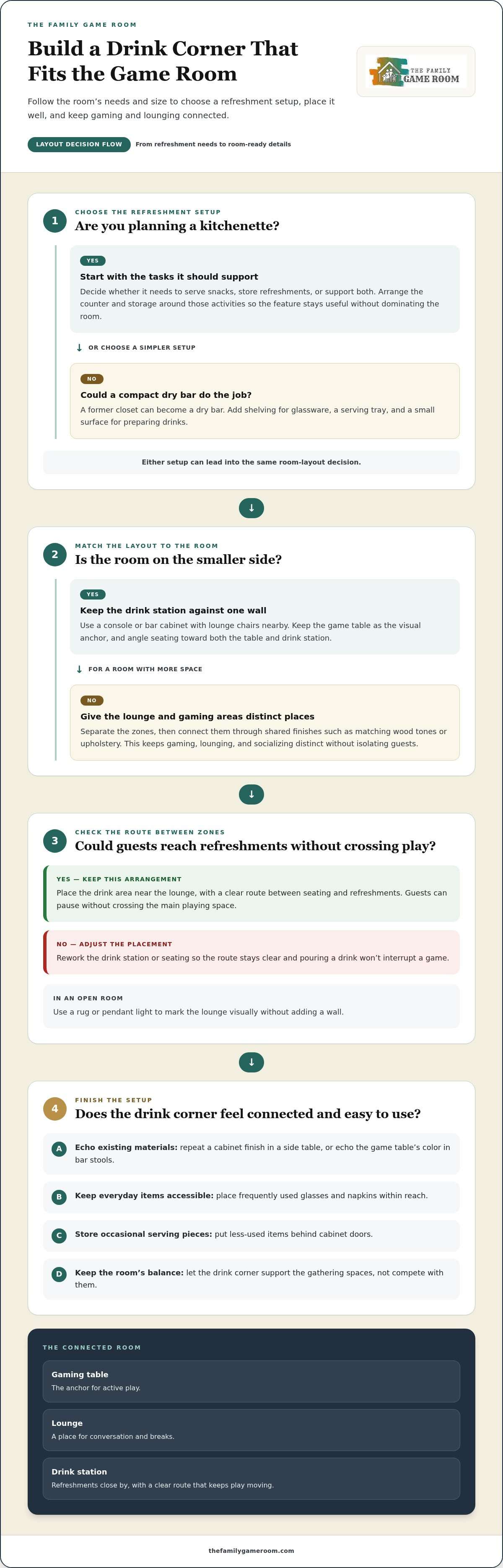
Plan three connected zones: a gaming table, a lounge, and a drink station. This creates a versatile retreat for active play and relaxed conversation. Place the drink area near the lounge, where guests can pause without crossing the main playing space. Keep the route between seating and refreshments clear, so pouring a drink won’t interrupt a game. In an open room, a rug or pendant light can mark the lounge visually without adding a wall.
A former closet can become a compact dry bar. Add shelving for glassware, a serving tray, and a small surface for preparing drinks. Adding a custom board or drink menu from Image Square Printing can give the corner a fun, personalized lounge feel. If you’re planning a kitchenette, decide first which tasks it needs to support, such as serving snacks or storing refreshments. Then arrange the counter and storage around those activities. A focused setup keeps the feature useful without letting it dominate the room.
In a smaller space, place a console or bar cabinet against one wall, with lounge chairs nearby. Keep the game table as the visual anchor and angle seating toward both the table and drink station. In a larger room, separate the lounge and gaming areas while connecting them through shared finishes, such as matching wood tones or upholstery. These layouts give gaming, lounging, and socializing distinct places without isolating guests.
Choose materials that complement the room instead of making the bar feel like a separate venue. For example, repeat a cabinet finish in a side table, or echo the game table’s color in bar stools. Keep frequently used glasses and napkins accessible, while storing less-used serving pieces behind cabinet doors. If the gaming area needs a focal point, explore game room table options as part of the overall layout. A drink corner works best when it supports the room’s gathering spaces, not when it competes with them.
3. Choosing comfortable furniture for long game nights
Games can last for hours, so comfort deserves as much attention as the table. Choose chairs with supportive backs and seats suited to the activity. Card players need room to sit close and reach the tabletop; spectators may prefer a cushioned lounge chair with a clear view. Test the layout by sitting in each spot and checking whether people can move naturally without bumping into furniture.
Match seating to the room’s main games. A poker table calls for chairs that tuck in neatly, while a lounge area benefits from sofas or armchairs for breaks between rounds. Bar stools can add perching spots near a counter, but they shouldn’t replace supportive seating for extended play. Offer a mix of seats so guests can choose where they feel most comfortable.
How much does it cost to design and furnish a game room? The total depends on the room’s size, furniture choices, game equipment, and whether you’re adapting an existing space or starting from scratch. Set priorities first, then budget for essentials such as the main table and seating before adding secondary pieces.
Soften sound in a lively room with rugs, curtains, and upholstered seating. Place felt pads beneath movable chairs and avoid positioning speakers directly beside a shared wall. A rug can also define the seating area, as long as its edges stay clear of walking paths.
Common mistakes include prioritizing style over comfort, crowding the route around a table, and leaving cables across walkways. Keep paths clear, secure loose cords, and choose stable furniture that won’t wobble during play. Before buying, map out the furniture footprint with paper or painter’s tape. Then check doorways, chair movement, and access to storage. These simple steps help the room feel composed and practical, not packed.
4. What features make a game room comfortable and welcoming for non-gamers
Give the room more than one purpose with zones for games, reading, and relaxing. Place a reading chair beside a floor lamp, and keep the gaming table clear for play. A small side table can hold a book or a cup without taking over the game surface. Flexible furniture also helps the room shift between quiet evenings and lively gatherings. According to the U.S. Government Publishing Office, flexible rather than fixed design can make a room easier to adapt for multiple uses.
Choose furniture that can change roles as the room’s needs shift. A convertible game table, for example, can change from a low coffee table to a seat-height card table. Add a storage ottoman for extra seating, or use lightweight chairs that can move between the reading zone and game table. These pieces make it easier for guests to join in, take a break, or enjoy another activity nearby.
Make arrival and cleanup easier with designated storage. According to the U.S. Environmental Protection Agency, storage should be provided for coats, equipment, and furniture such as chairs and tables. A coat rack near the entrance, baskets for game accessories, and a defined spot for spare chairs help keep floors and pathways clear. Choose storage that suits the room’s style, such as a lidded basket beside a sofa or shelves beneath a console.
Set the mood with choices that support different activities. Use a reading lamp for a quieter corner, then keep the game area well lit for shared play. A soft throw and a side table can make the lounge zone inviting without adding clutter. If you’re planning a flexible setup around a table, explore game table options that can bring play and everyday use together. Leave clear space between zones so conversation can flow without making every guest participate in a game.
The Family Game Room: Pool Table Dining Tops
The Family Game Room offers Pool Table Dining Tops for households balancing game night with everyday use. If you want a pool table in a multipurpose room, a dining top lets it serve another role between games. It’s a practical option when you value play but also want the room to support shared meals or daily routines.
For a different kind of activity, consider how Indoor Shuffleboard Tables, Air Hockey Tables, or Foosball Tables might suit your household’s interests and available space. If your family entertainment also extends outside during warm-weather gatherings, incorporating active group games like 9 Square in the Air provides a lively complement to indoor table play. Choose based on the experiences you want to enjoy together, then build the room’s furniture and decor around them.
Contact The Family Game Room to discuss Pool Table Dining Tops for your game room.
Make the Room Yours Together
Turn your ideas into a space that reflects how you both want to spend time at home. Before choosing a centerpiece, talk about what would make the room enjoyable on an ordinary evening, not just during a gathering. That shared conversation can guide decisions about style, play, and how the room fits everyday life. Designing a game room she will love too starts with pieces that support both of your priorities.
The Family Game Room offers American Heritage Billiards Pool Tables, Nixon Billiards Pool Tables, and Pool Table Dining Tops. Explore these options as you shape a room for play and shared use.
Contact The Family Game Room to take the next step. A welcoming game room can be distinctly yours, and even better when you create it together.
Frequently Asked Questions
How to design a game room that appeals to both partners?
Choose the room’s shared purpose together, then give each partner a say in the games, finishes, and atmosphere. When designing a game room she will love too, balance a favorite activity, such as pool, with details that make the space inviting for relaxing or entertaining. If one partner enjoys hosting, a pool table dining top can help the room serve more than one purpose.
What are the best seating and furniture choices for a couple’s game room?
Choose seating that suits how you’ll use the room, and leave comfortable routes between furniture and game tables. Bar stools work well beside a counter or serving area, while lounge seating creates a place to relax between games. For a room used for both play and meals, consider a pool table dining top. Keep finishes cohesive, while letting each partner choose a favorite accent or furnishing.
How can you create a cozy game room in a small space?
Make one game the room’s focal point, then use wall space for storage and accessories instead of filling the floor with extra furniture. A pool cue rack keeps cues organized, while a dartboard cabinet combines a game with a tidy wall feature. Choose compact, multipurpose furnishings where practical, and check that players have enough room to move around the game before settling on a layout.
How much does it cost to design and furnish a game room
The total depends on the room’s size, furniture choices, game equipment, and whether you’re adapting an existing space or starting from scratch. Set priorities and budget for essentials such as the main table and seating before adding secondary pieces.