


A premium foosball table is a masterpiece of domestic luxury, but it only stays that way if you treat it with professional precision. A sluggish rod or a stained playfield doesn't just ruin the game; it diminishes the aesthetic of your carefully curated home. If you've ever hesitated to wipe down a spill for fear of damaging the wood or felt the frustration of a sticky defender, you're not alone. Mastering the nuances of cleaning and maintaining a foosball table is essential for any owner who values both high-speed performance and furniture-grade style.
It's frustrating when a high-end table doesn't live up to its potential because of simple dust and friction. This 2026 care guide promises to give you the exact blueprint for preserving your investment's heirloom quality and lightning-fast action. We'll walk you through the precise application of 100% silicone lubricants, the correct way to treat solid wood cabinets, and the routine checks that keep your hardware tight. From deep-cleaning the playfield to polishing the chrome rods, you'll discover everything needed to keep your game room looking and playing at its absolute peak.
Key Takeaways
- Discover why friction and dust "sludge" are the primary enemies of professional-grade play and how to prevent them.
- Master the professional process for cleaning and maintaining a foosball table using safe, effective supplies like microfiber and 70% isopropyl alcohol.
- Learn why 100% liquid silicone is the only acceptable lubricant for rods and how to avoid petroleum-based products that damage bearings.
- Protect your investment by treating luxury wood cabinets with furniture-grade care to maintain their luster and resale value.
- Implement simple "house rules" and use high-quality table covers to shield your centerpiece from spills and environmental wear.
Why Regular Maintenance is Vital for High-End Foosball Tables
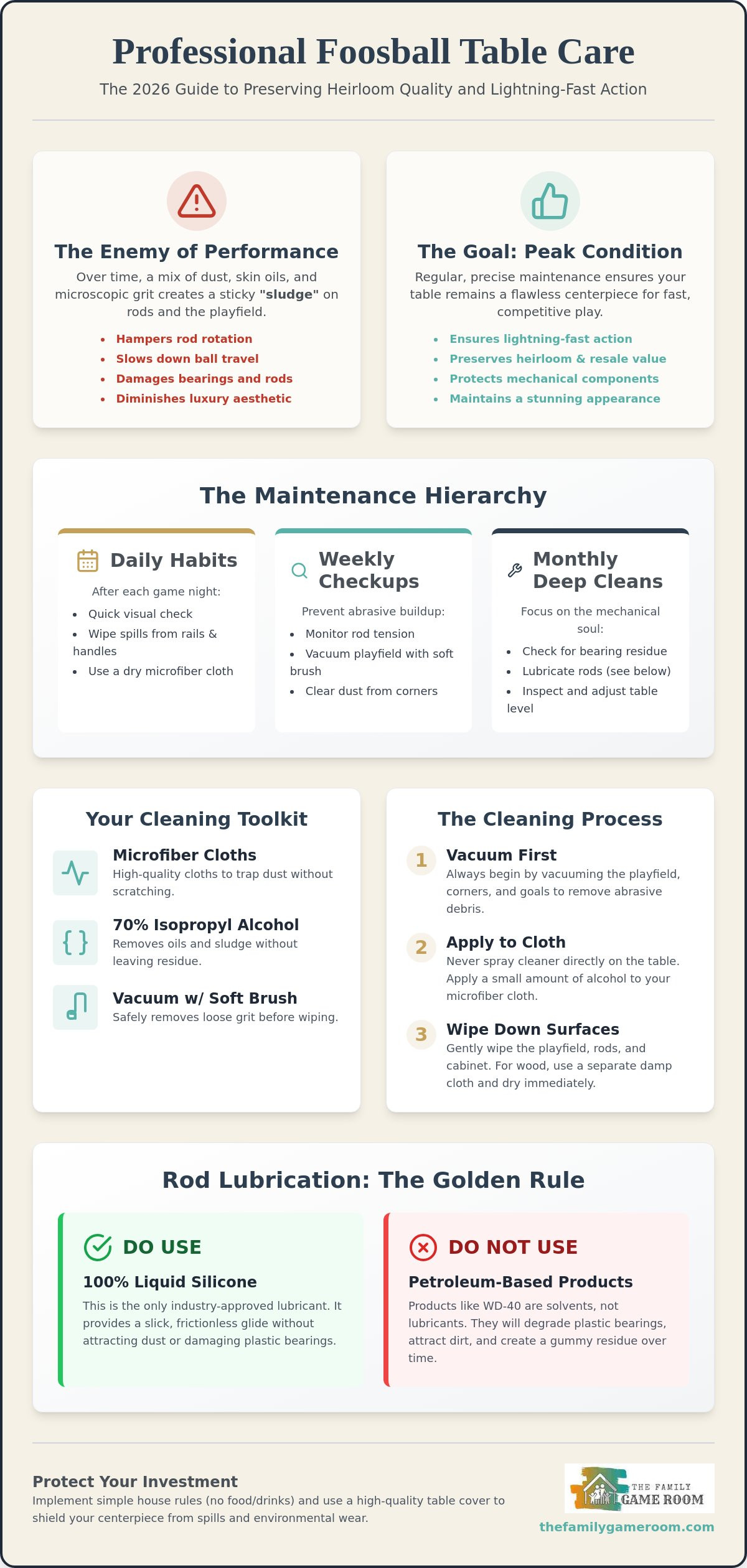
A premium foosball table is a centerpiece of domestic luxury. Unlike entry-level models, high-end tables from brands like American Heritage Billiards are precision-engineered machines designed for speed and longevity. However, even the finest craftsmanship can't overcome the physical toll of regular play. Friction is the silent killer of professional-grade performance. Over time, microscopic dust particles and natural skin oils from players' hands migrate to the rods and playfield. This mixture creates a sticky "sludge" that hampers rod rotation and slows down the ball. Consistent efforts in cleaning and maintaining a foosball table ensure that your matches remain fast and your furniture remains flawless.
Neglecting your table does more than just ruin the game; it puts your investment at risk. High-quality tables are built to last for generations, but allowing grit to accumulate in the bearings can cause permanent scoring on polished chrome rods. Regular upkeep protects your warranty and preserves the heirloom value of the piece. When you maintain the mechanical integrity of the table, you're ensuring it stays as responsive as the day it was assembled. A well-kept table serves as a stunning piece of game room furniture that commands attention and invites play.
The Anatomy of Your Foosball Table
Understanding the mechanical components of your table helps you appreciate why specialized care is necessary. The playfield is the foundation of every match. Its surface smoothness dictates ball control; any buildup of grime leads to unpredictable ball behavior and "dead spots" during intense volleys. The rods and bearings represent the mechanical heart of table football. If these aren't gliding effortlessly, the game loses its competitive edge. Finally, the cabinet should be treated with the same respect as a luxury dining table. High-quality wood finishes require protection from environmental moisture and abrasive cleaning agents to retain their deep luster and structural integrity.
The 2026 Maintenance Hierarchy
To keep your table in peak condition, follow a structured schedule. This prevents small issues from becoming expensive repairs and keeps the process of cleaning and maintaining a foosball table from feeling like a chore. Use this hierarchy to guide your care routine:
- Daily habits: Perform a quick visual check after every game night. Use a dry microfiber cloth to wipe away any obvious sweat or spills from the rails and handles. This simple step prevents oils from hardening into difficult residue.
- Weekly checkups: Monitor rod tension and clear surface dust. A vacuum with a soft brush attachment works wonders for removing abrasive grit from the corners of the playfield before it becomes embedded in the surface.
- Monthly deep cleans: This is when you focus on the mechanical soul of the table. Ensure all moving parts remain friction-free by checking for residue buildup in the bearings. This is also the ideal time to inspect the table level to ensure perfectly straight ball paths.
The Step-by-Step Guide to Cleaning Your Foosball Table
Maintaining a high-end table requires more than a quick wipe with a paper towel. To preserve the precision of a professional-grade playfield, you must use tools that won't compromise the surface or the mechanics. Start by gathering a dedicated cleaning kit. You'll need high-quality microfiber cloths, 70% isopropyl alcohol, and a vacuum with a soft brush attachment. These items ensure that you're removing grime rather than just moving it around.
Always begin the process by vacuuming the playfield. Tiny particles of grit and debris act like sandpaper under the weight of a foosball ball, leading to permanent scratches on the surface. Use the soft brush attachment to reach into the corners and goal returns. When you move to liquid cleaners, remember the golden rule: apply agents to the cloth, never directly to the table. Spraying liquids onto the surface allows moisture to seep into the seams of the laminate or wood, which can cause swelling or warping over time. If your current equipment is showing signs of structural wear that cleaning can't fix, you might explore a new foosball table built with modern, moisture-resistant materials.
Cleaning the Playfield Surface
The "alcohol method" is the industry standard for non-greasy cleaning. Using 70% isopropyl alcohol on a microfiber cloth removes skin oils and "sludge" without leaving a film that affects ball travel. For tougher stains or spills on wood cabinets, act immediately with a damp cloth followed by a dry one. To remove black "skid marks" left by foosball balls, use a bit of extra pressure with an alcohol-dampened cloth. This lifts the rubber residue without scratching the underlying graphics. For more technical details on surface specifications, the official maintenance guide from the International Table Soccer Federation provides excellent benchmarks for professional standards.
Sanitizing Handles and Men
Handles are the highest-contact points on your table. They quickly accumulate bacteria and oils that make them slippery during intense matches. Wipe them down after every session using a sanitizing cloth to maintain a firm, reliable grip. Don't forget the foosball "men" themselves. Dust and oil often settle in the grooves of their feet, which reduces the friction needed for complex bank shots. A quick wipe of each player's feet ensures consistent ball control. As a final pro tip, you can actually clean your foosball balls in the laundry. Place them in a mesh bag on a cold, gentle cycle with a small amount of mild detergent. Air dry them completely to restore the "tacky" feel that allows for expert-level pinning and passing. Consistent attention to these details makes cleaning and maintaining a foosball table a simple part of your home entertainment ritual.
Lubricating Rods and Maintaining Mechanical Components
The soul of a high-performance match lies in the effortless glide of the rods. If you feel resistance or a "grinding" sensation during a flick, your table's mechanical components are crying out for attention. Lubrication is the most critical technical step in cleaning and maintaining a foosball table. However, using the wrong product is worse than using nothing at all. You must strictly adhere to the "No WD-40" rule. Petroleum-based sprays or household oils are designed to displace water or break down grease; on a foosball table, they will chemically degrade your nylon bearings and attract abrasive dust. Only 100% liquid silicone is acceptable for professional-grade equipment.
Identifying when to lubricate is a matter of feel. Most enthusiasts find that a monthly application keeps the action crisp, but high-traffic game rooms might require bi-weekly attention. If the rods don't spin freely for several rotations when flicked, or if you notice a squeaking sound, it's time for a refresh. For a deeper dive into specific part care, this guide on foosball table maintenance offers community-vetted tips for keeping every mechanical part in top shape. Keeping these components slick ensures your table plays with the speed and precision intended by the manufacturer.
Silicone Application for Maximum Speed
Applying silicone with precision prevents the playfield from becoming a slippery mess. Pull the rod all the way out until it hits the bumper. Apply two or three drops of 100% liquid silicone directly to the rod surface near the bearing. Immediately slide the rod back into the cabinet and give it a vigorous spin. This "spin and slide" technique ensures the lubricant coats the entire internal surface of the bearing. Use a clean microfiber cloth to wipe away any excess silicone from the rod. You want the lubricant inside the mechanical housing, not on the exterior where it can drip onto your pristine playfield and ruin ball traction.
Inspecting Bearings and Bumpers
While you're focused on the rods, take a moment to inspect the supporting hardware. Rubber bumpers act as shock absorbers for your table's cabinet. If they're cracked or hardened, they won't provide the necessary "bounce" and can lead to structural stress over time. Check your bearings for any "play" or excessive rattling. If the rod can be wiggled vertically within the bearing housing, it's likely time for a replacement to maintain accuracy. Finally, use a hex key or screwdriver to ensure every player is tightened securely to the rod. A loose man absorbs the energy of your strike, resulting in weak shots and unpredictable ball control. These small mechanical adjustments are the hallmark of a truly curated home entertainment experience.
Preserving the Cabinet and Ensuring a Level Playfield
A premium foosball table is a significant investment in your home’s social atmosphere. When you own a table from a brand like American Heritage Billiards, you aren't just maintaining a game; you're preserving a piece of fine furniture. Cleaning and maintaining a foosball table involves looking beyond the mechanical rods to the structural integrity of the cabinet itself. Because these tables often weigh between 200 and 300 pounds, they exert significant pressure on your flooring, which can lead to subtle shifts in balance over time. Proper cabinet care ensures the piece remains a stunning centerpiece while providing a perfectly fair playing environment.
Furniture-Grade Cabinet Care
Luxury cabinets often feature ornate wood carvings and hand-finished surfaces that require specialized attention. Use a soft, dry microfiber cloth for daily dusting to prevent grit from settling into the grain. For deeper cleaning of the exterior, utilize only wood-safe cleaners that won't strip the protective finish. Avoid placing your table in direct sunlight; UV rays can fade rich wood tones and cause uneven warping. Managing humidity is equally vital. Wood is a natural material that expands and contracts. Keeping your game room in a stable, climate-controlled environment prevents cabinet expansion, which can lead to loose joints or a misaligned playfield.
Precision Leveling Techniques
A table that isn't level ruins competitive integrity. Even a slight tilt creates "dead spots" where the ball stops out of reach or rolls unfairly toward one goal. Use a professional carpenter's level across the playfield in both horizontal and vertical directions. Adjust the leg levelers with small, incremental turns. Small adjustments lead to big results. It’s a common mistake to assume a table stays level forever. Floors settle under the weight of the table, and wood shifts with seasonal temperature changes. If your current equipment has suffered structural warping that makes a flat surface impossible to achieve, it might be time to upgrade to a professional-grade foosball table that features heavy-duty, adjustable leveling systems.
Perform the "slow ball test" to verify your work. Place a foosball at the center of the playfield and let it roll naturally. If the ball drifts consistently toward one corner or side, your leveling needs immediate adjustment. Check your level at least twice a year to ensure every match remains a test of skill rather than a battle against gravity. This dedication to structural precision is what separates a casual game room from a professional home entertainment suite.
Professional Care Habits to Extend Your Table’s Lifespan
Longevity is the hallmark of a truly premium game room. While technical skills like rod lubrication are vital, the daily habits you establish will ultimately determine if your table remains an heirloom or becomes a relic. The single most effective tool in your arsenal is a high-quality table cover. It serves as your primary defense against settling dust, pet hair, and environmental moisture. Covering your table when it isn't in use prevents debris from migrating into the bearings, which significantly reduces the time you'll spend cleaning and maintaining a foosball table over the years.
Establishing "house rules" is another essential step for protecting your investment. High-end wood cabinets are susceptible to moisture damage and heat rings, so a strict "no drinks on the rails" policy is mandatory. Encourage players to use designated side tables or bar stools with cup holders instead. These simple boundaries prevent accidental spills from seeping into the playfield seams or ruining the hand-crafted finish of the cabinet. When everyone treats the equipment with respect, the mechanical and aesthetic integrity of the game remains intact for every match.
Preventative Habits for Families
If your game room is a hub for family activity, teaching children the proper way to handle the equipment is crucial. Young players often lean on the rods or use them to support their weight, which can lead to permanent bends that ruin the rod's alignment. Show them how to use a light touch for faster, more accurate shots. Organization also plays a role in preservation. Instead of leaving extra balls in the goal returns where they can collect dust, consider using Pool Cue Racks or dedicated cabinets to keep accessories organized and clean. A quick five-minute monthly walk-around to check for loose bolts or debris ensures that minor issues never escalate into expensive repairs.
The Path to a Premium Game Room
As you curate your home entertainment space, consider how different pieces complement one another. For instance, understanding how air hockey vs foosball maintenance compares can help you build a more efficient cleaning routine. While air hockey requires fan maintenance, foosball focuses on rod precision. Visibility also impacts how you care for your table. Installing professional Billiard Light Fixtures provides the clarity needed to spot dust buildup or surface imperfections before they become problematic. Ultimately, starting with a high-quality foundation makes everything easier. Investing in a new American Heritage Billiards table ensures you are working with superior materials that respond better to routine care. By combining professional-grade equipment with these disciplined habits, you ensure that cleaning and maintaining a foosball table remains a simple, rewarding part of your luxury lifestyle.
Elevate Your Home Entertainment Experience
Mastering the art of cleaning and maintaining a foosball table is the difference between owning a forgotten relic and a beloved family heirloom. By prioritizing 100% silicone lubrication and treating your cabinet like the fine furniture it is, you've ensured every match is played with professional precision. Proactive habits like using a quality cover and establishing firm house rules protect your investment from the daily wear of a busy home. These simple steps keep your rods fast, your playfield pristine, and your competitive spirit alive.
At The Family Game Room, we've shared our family-owned expertise since 2022 to help you build the ultimate social sanctuary. As an authorized dealer for American Heritage Billiards, we're committed to providing the highest quality equipment for your domestic luxury. If you're ready to add a new centerpiece to your game room, browse our collection of premium foosball tables and enjoy free shipping on all premium game tables. Your path to a faster, more beautiful game starts with the right equipment and the expert care it deserves. Happy playing.
Frequently Asked Questions
How often should I clean my foosball table?
Wipe down the playfield surface weekly and perform a deep mechanical clean every month. High-traffic tables in active family rooms may require more frequent attention to prevent skin oils from hardening into a sticky residue. Consistent habits in cleaning and maintaining a foosball table ensure that dust never has a chance to become abrasive grit that damages your polished rods or playfield graphics.
Can I use WD-40 to lubricate the rods?
Absolutely not. WD-40 is a solvent rather than a long-term lubricant, and its petroleum base will chemically degrade your nylon bearings over time. It also acts as a magnet for household dust, which quickly turns into a thick, black sludge. Only use 100% liquid silicone to ensure your rods glide with the effortless speed expected of a high-end table.
What is the best cleaner for a foosball playfield?
70% isopropyl alcohol is the industry standard for cleaning playfields effectively and safely. It evaporates almost instantly and leaves no greasy film that could interfere with ball traction or control. Always spray the alcohol onto a microfiber cloth rather than directly onto the table to prevent liquid from soaking into the seams of the wood cabinet or laminate.
How do I get the black marks off the foosball playfield?
Use a microfiber cloth dampened with isopropyl alcohol and apply firm, targeted pressure to the area. These black marks are typically rubber or plastic residue transferred from the balls during high-speed matches. If the marks are stubborn, a melamine sponge can be used very gently, but be careful not to scrub away the playfield's protective clear coat or decorative lines.
Why are my foosball rods sticky or hard to move?
Sticky rods are usually caused by "sludge," which is a combination of old lubricant, skin oils, and household dust. If the rods remain difficult to move after a thorough cleaning and re-lubrication, inspect the rods for straightness. Even a minor bend can cause the rod to bind against the bearings, which ruins the smooth rotation needed for precision shots and fast gameplay.
How do I level my foosball table if it doesn’t have adjustable legs?
Use wood shims or non-slip furniture pads to balance the table if it lacks built-in leg levelers. Place a carpenter's level directly on the playfield to check for accuracy in all directions. Ensuring a perfectly flat surface is vital for maintaining the competitive integrity and long-term value of luxury pieces, especially for premium equipment like American Heritage Billiards tables.
Is it okay to wash foosball balls in the washing machine?
Yes, washing your foosball balls is a professional trick for restoring their original grip and tackiness. Place them in a mesh laundry bag and run them through a cold, gentle cycle with a small amount of mild detergent. Ensure they are completely air-dried before returning them to the table. This simple step removes the slick oil buildup that makes complex bank shots difficult.
Do I need to cover my foosball table when not in use?
Covering your table is the most effective way to preserve its condition and heirloom quality. A high-quality cover blocks settling dust and prevents accidental spills from reaching the playfield surface. It also shields the cabinet from direct sunlight, which can warp wood and fade expensive finishes. This one simple habit drastically reduces the time you spend cleaning and maintaining a foosball table.