


Felt color is more than a style choice: it can affect how comfortably you play and how clearly you see the balls. Choosing the right felt color for a pool table means balancing your room’s style with visibility and the lighting above the table. Green is traditionally easy on the eyes, while blue may help balls stand out in a dim room.
It’s natural to focus first on how the felt will look in your game room. But the same color can appear different under bright overhead lights than in softer surroundings, and some shades make certain balls harder to distinguish.
This guide explains how felt color shapes the room’s atmosphere, playing comfort, eye strain, and ball visibility. You’ll also learn why lighting matters, how popular shades compare, and what to consider before choosing a color that looks polished and feels comfortable during a game.
Key Takeaways
- Match the felt to your room’s palette: warmer neutrals can make a space feel brighter, while blue offers a modern look.
- Consider ball contrast as well as appearance, since some shades can make particular balls harder to spot.
- Choose a color that feels comfortable for extended play; vivid shades may be tiring, while green is known for its gentle visual feel.
- Assess the felt under your room’s actual lighting, because overhead brightness can change glare and visibility.
- Explore American Heritage Billiards and Nixon Billiards pool tables when you’re ready to choose a table that suits your home game room.
Color’s role in room design and atmosphere
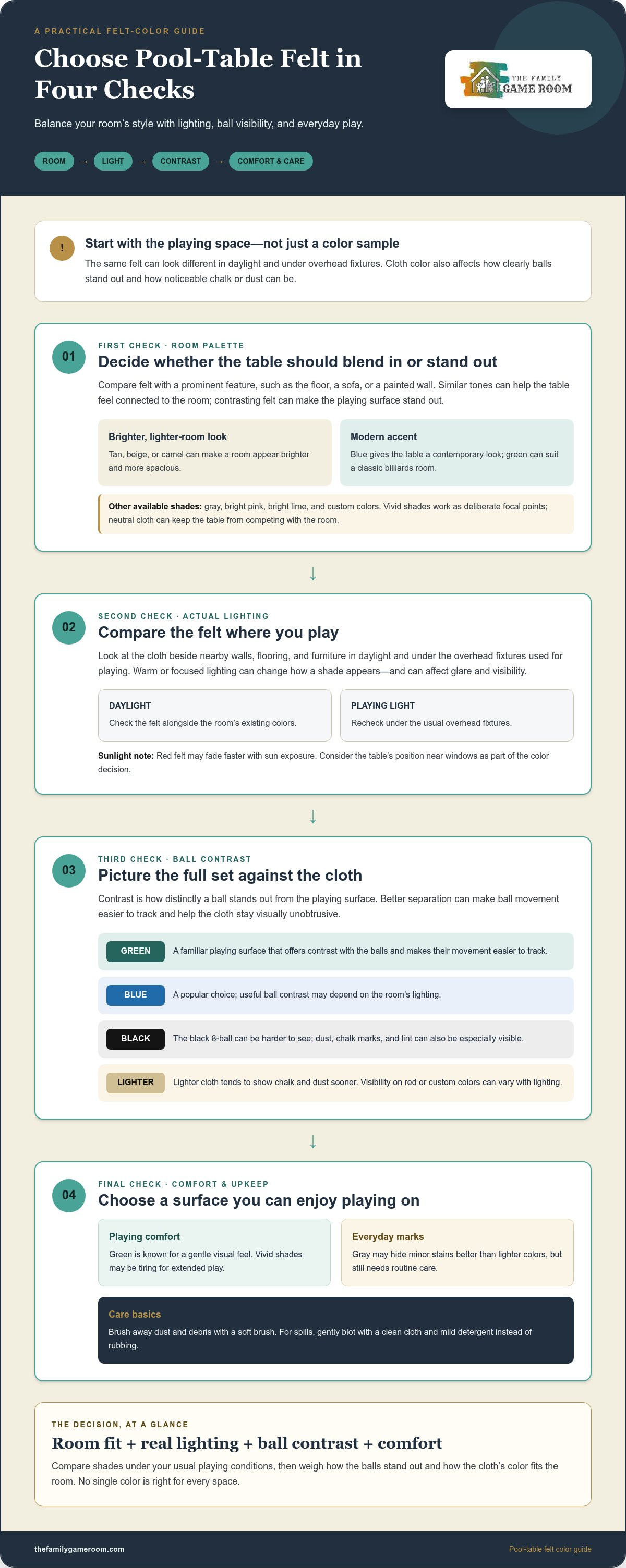
Compare felt with your room’s existing colors and the light above the table. Tan, beige, or camel can make a room appear brighter and more spacious, while blue gives the table a modern look.
Felt Color and Room Appearance
Felt color changes the table’s visual weight and the atmosphere of a game room. Because the cloth covers a broad, central surface, its shade can become a defining design feature. Blue felt, for example, creates a contemporary accent, while beige can blend into a lighter room. Choosing a color that suits your décor helps the table feel like part of the space.
Lighting and Color Scheme
Lighting affects how felt color appears, so assess the table area under the room’s usual conditions. Look at the cloth beside nearby walls, flooring, and furniture, then compare it in daylight and under the overhead fixtures used for playing. A shade that complements a wall in daylight may look different under warm or focused lighting. This comparison helps you judge the complete room, not just the felt sample.
Matching Felt to Room Décor
To coordinate felt with your décor, start with a prominent feature, such as a wood floor, dark sofa, or painted wall. Decide whether the table should blend in or provide contrast. Green can suit a classic billiards room, while blue may complement a modern palette. A thoughtful color relationship helps the table feel connected to the rest of the room.
Try a simple comparison before deciding: identify the room’s dominant colors, then consider whether similar or contrasting felt would look more balanced. In a room with pale walls and light flooring, beige, tan, or camel can reinforce a bright appearance. With darker furnishings, contrasting felt can help the playing surface stand out without changing the surrounding décor.
Felt also comes in gray, bright pink, and bright lime, so you’re not limited to traditional green. Treat a vivid shade as a deliberate focal point, especially if the room already has colorful accents. If the décor is restrained, neutral cloth can keep the table from competing with artwork, lighting, or furniture.
Include sunlight in your design decision. Red felt may fade faster with sun exposure, changing its appearance over time. In a sunlit game room, consider the table’s position near windows as well as the colors already in view. A coordinated choice takes into account both the room’s current look and how natural light reaches the cloth.
Does Pool Table Cloth Color Really Matter?
Yes. Cloth color can affect ball visibility, eye comfort, and how easily you notice chalk or stains during play.
Visibility and Player Experience
Felt color affects how clearly players can distinguish balls from the playing surface. Green and blue are popular partly because they provide useful contrast, while visibility on red or custom colors can vary with the room’s lighting. Clearer separation helps players track ball movement and line up shots without the cloth competing for attention, even during casual games.
Ball Contrast and Black Felt
Contrast describes how distinctly a ball stands out against the cloth beneath it. On black felt, the black 8-ball can be harder to see, making it easier to lose sight of during a shot. Green offers contrast with the balls and makes their movement easier to track. Consider the full set, especially the dark ball, when comparing a dramatic cloth shade with a more traditional playing surface.
Chalk and Stain Visibility
Felt color also affects how noticeable everyday marks are. Lighter cloth tends to show chalk and dust sooner, while black felt can make dust, chalk marks, and lint especially visible. Gray may hide minor stains better than lighter colors, but it still needs routine care. Brush away dust and debris with a soft brush. For spills, gently blot with a clean cloth and mild detergent instead of rubbing.
Available Cloth Colors
Pool table felt comes in green, blue, gray, beige, bright pink, and bright lime, among other shades. Green and blue are popular, while vivid colors create a more distinctive look. Choose based on ball contrast and playing conditions, since red or another custom shade can affect visibility differently under different lighting.
How much does pool table felt cost by color? Color alone doesn’t determine cost. Cloth material, quality, and the amount needed also matter. A shade may affect which cloth styles are available, so compare color and cloth type rather than assuming every style comes in every shade.
Can you change pool table felt color without replacing the table? Yes. You can replace the cloth with a different color and keep the table itself. It’s a way to refresh the playing surface without changing the table’s frame or other components.
For casual players, the practical choice balances visibility with upkeep. A black surface may make the 8-ball and lint stand out less favorably, while lighter cloth can reveal chalk sooner. Compare the shades in the room where you play, then consider how the balls, marks, and lighting appear against each option.
Traditional green felt and its history
Green felt’s classic appeal comes from billiards’ early connection to outdoor lawn games. It remains a familiar choice for players seeking a traditional look and a clear playing surface.
Green Felt’s Classic Appeal
Green felt is the traditional pool-table color, associated with billiards’ early inspiration from outdoor lawn games. That connection gives green a classic look suited to both a dedicated game room and a shared living space. Choose it if you want the table to feel rooted in billiards tradition rather than serve as a bright, unexpected accent. Its familiar appearance can also complement classic furnishings.
The lawn-game association helps explain why green became closely linked with billiards: it recalls grass beneath an outdoor playing surface. That history still shapes how a green table looks today. It can suggest a time-honored billiards setting without requiring traditional décor. In a modern room, green can provide a classic focal point; with wood finishes, it can reinforce a familiar game-room atmosphere.
What felt colors are standard in professional pool tournaments? Blue is used in many professional tournaments, particularly televised events, while green remains the traditional color. Blue is therefore a familiar tournament choice, but green still offers a classic look at home.
Green Felt and Ball Contrast
Green felt contrasts with the balls and helps players follow their movement across the surface. That matters because the table color sits behind every shot. When comparing green with a brighter or less familiar shade, consider whether the balls remain distinct against the cloth, especially while moving across the table.
Green also has a practical visual quality: it’s described as gentle on the eyes during long sessions. Good contrast and comfortable viewing can help players follow ball movement without the surface becoming distracting. For a household that plays for extended periods, green is a considered choice, not simply a nod to billiards history.
To assess whether green suits your room, consider the complete table, not just the cloth. Picture the balls against the green surface, then consider how the shade relates to the room’s style. A classic room may welcome green as part of its character, while a contemporary space can use it as deliberate contrast. Its link to lawn games gives the color meaning beyond appearance.
Green isn’t the only good choice for a home table. Blue’s use in televised tournaments gives it a recognizable professional association, while green connects the table to billiards’ traditional roots. Let the room’s style and your preference for a classic or modern look guide your decision. The right match feels comfortable to view and at home in its surroundings.
Choosing a color for comfort and reduced eye strain
Felt color influences how comfortable the table is to look at during a game. Green is described as gentle on the eyes, while bright red may cause eye strain during longer games. Consider how long your household typically plays, then weigh visual comfort alongside furniture, décor, and ball visibility.
How Felt Color Influences Visual Comfort
Visual comfort partly depends on the intensity of color across the table’s broad playing surface. Bright red can feel tiring during a long session, while burgundy is less intense and described as easier on the eyes. This distinction matters during extended games, when the felt stays in view throughout each rack.
Green is another option to consider for longer play because it’s described as easy on the eyes. Its traditional appearance also suits a classic game room, so comfort and style can point to the same shade. For example, green may fit naturally beside dark wood furniture without adding another bright feature.
Balancing Comfort with Room Style
Use the room’s existing colors to narrow your choices, but don’t let décor outweigh how comfortable the surface is to view. Blue felt offers a modern look, while burgundy softens the visual impact of bright red. Compare the shades beside your furniture and under your usual lighting, then consider which feels calm during play.
Black and bright neon cloth can be harder for some people to play on. Their bold appearance may work as a design statement, but the table remains a large, high-contrast feature. If your game room already has vivid wall art or colorful furniture, a less intense shade can keep the space from feeling visually crowded.
Casual play also benefits from a comfortable surface. Think about the difference between a quick game with friends and a long evening of billiards. If extended sessions are common, green or burgundy is a useful starting point because each has a stated eye-comfort advantage. For shorter games, room style and ball contrast may matter more.
Compare three things when choosing: the felt’s intensity, how long you play, and the room’s palette. A traditional room with dark furniture, for example, may suit green, while a contemporary space may favor blue. Bright red makes a bolder statement, but consider its potential to cause strain during longer games.
Comfort isn’t determined by color alone. Lighting affects how strong a shade appears, so view options under the fixtures you use for playing. A color that looks balanced in daylight may feel more intense beneath focused overhead lights. Compare the felt under those conditions, then choose a shade that suits the room and your playing habits.
Felt color under different lighting conditions
Lighting changes how felt looks and how clearly the balls stand out. A shade that seems balanced in daylight can appear different beneath focused overhead lights. Compare colors in the room where you’ll play, because visibility depends on the felt, the balls, and the light together. Seeing the options in the actual room is more useful than choosing by color name alone.
Start by viewing the felt under the lighting you use for a typical game. Check it with the room lights on, then notice how daylight changes its appearance near windows. Blue may help ball visibility in a dim room, while red or another custom color can affect contrast differently as lighting changes. Look for clear separation between the cloth and the balls.
Darker felt can be useful for reducing glare under focused overhead lights. This may matter when a bright pool-table light shines directly across the playing surface. Compare a darker shade with a lighter option under that fixture and notice whether the light feels distracting. Aim for a surface where players can follow the balls without glare or weak contrast making shots harder to read.
Room lighting also affects how felt relates to its surroundings. Gray or blue cloth may look subdued in soft light, then become a stronger feature beneath a focused fixture. Green remains familiar, but its appearance also depends on the room. Check the felt beside the table’s rails, nearby walls, and furniture under the same lighting conditions.
Consider the balls, too. Green provides contrast and helps players track their movement. Blue can improve ball visibility, especially in dim rooms. Red and custom shades may change ball contrast depending on the light, so don’t judge them only in a bright showroom or daylight. Compare the full set of balls against each shade.
Before settling on a color, examine the options in daylight, ordinary room lighting, and the table’s focused overhead light. Notice which shades make the balls stand out clearly and which create glare. If your room is dim, give blue extra consideration; if overhead glare is a concern, compare darker felt. This test connects your choice to the lighting you’ll actually use.
A wide range of felt colors can suit different rooms, but lighting should help narrow the options. Choose the shade that keeps contrast clear under your regular playing conditions, rather than relying on a color’s appearance in isolation. The overhead fixture matters just as much as the cloth, so explore billiard light fixtures as you plan a well-lit table and game room.
The Family Game Room: American Heritage Billiards Pool Tables
The Family Game Room helps you move from felt-color research to choosing a pool table that suits your home and how you play. Its American Heritage Billiards and Nixon Billiards pool tables give you options to compare with your room’s décor, lighting, and preferred playing style. Once you’ve settled on the look and feel you want, explore the tables as part of planning your game room.
If your table needs to serve another purpose between games, a pool table dining top is a practical option. The Family Game Room also offers indoor shuffleboard tables to add another game to your space. Explore the pool table options at The Family Game Room.
Make Your Game Room Choice Feel Complete
Choosing the right felt color for a pool table is one part of creating a game room that feels considered and welcoming. Let your final choice guide the rest of the space: coordinate the table with furniture and lighting, and consider how you want the room to feel when friends and family gather. A clear vision makes it easier to choose a table that belongs in your home.
The Family Game Room offers American Heritage Billiards and Nixon Billiards pool tables, along with pool table dining tops for added flexibility. Explore the options with your room’s style and intended use in mind, then choose the direction that feels right for your home. Take the time to select a table that will shape the space for years of shared play.
Contact The Family Game Room to explore pool table options for your game room. Your next favorite gathering place starts with a choice that feels like yours.
Frequently Asked Questions
Which Style of Pool Table Felt Should I Buy?
Choose cloth style by considering how smooth you want the playing surface to feel and how often you play. Worsted cloth has a smooth surface, while woolen cloth has a noticeable nap. Cloth weight can also guide your choice: 19 ounces per yard is described as the minimum weight for better fabrics, and 21 ounces per yard is another common measure. Heavier cloth is described as more durable.
How does felt color affect visibility of balls and gameplay?
Felt color affects how clearly balls stand out, which can make tracking a moving ball or lining up a shot easier or harder. For choosing the right felt color for pool table play, compare the cue ball and black 8-ball against the surface from your usual playing position. Check whether each remains distinct across the table, not just near the rail. This test can reveal contrast issues before a game.
Which pool table felt colors are easiest on the eyes?
Green is described as gentle on the eyes, making it a strong option for players who prefer a familiar playing surface. Burgundy is less intense than bright red and is described as easier on the eyes. Bright red may feel tiring during longer games, while some people find black or neon cloth harder to play on. Consider how a color feels during your usual session, not just how it looks in the room.
How do lighting and room colors affect pool table felt color choice?
Lighting can change how a shade looks and how clearly balls contrast against it. Choosing the right felt color for pool table conditions means comparing options under the light where you play, including daylight and the table’s overhead fixture. View each shade beside nearby walls, flooring, and furniture. For example, focused overhead lighting may make darker cloth useful for reducing glare, while blue felt may be worth considering for visibility in a dim room.
What felt color works best with different pool ball sets?
Choose a surface that makes the balls in your set easy to distinguish. Green offers contrast with the balls and helps players follow their movement, while black cloth can make the black 8-ball harder to see. If you use a different set, compare every ball against the felt under your actual lighting. Don’t judge contrast from one ball alone, since the full set matters during play.
Does felt color affect cloth material, durability, or maintenance?
Color doesn’t determine cloth material, but it may limit which felt styles are available. Material and quality affect ball movement and how often cloth needs replacing. For upkeep, brush away dust and debris with a soft brush. If there’s a spill, gently blot it with a clean cloth and mild detergent instead of rubbing. Covering the table between games helps protect the surface from dust and accidental damage.