


Your game room's aesthetic is only as strong as its most overlooked accessory. A single stray dart can transform designer wallpaper into a pockmarked mess in seconds, proving that professional wall protection is a necessity, not an option. When you are choosing a dartboard cabinet, you aren't just buying a storage box; you are selecting a piece of fine furniture that bridges the gap between high-stakes play and sophisticated home decor. You deserve a setup that complements a premium pool table while keeping your darts and scoreboards neatly tucked away.
We believe home entertainment should feel both luxurious and welcoming. This 2026 buyer's guide helps you find a cabinet that balances furniture-grade craftsmanship with the technical specs required for a regulation setup. We'll explore the latest trends in solid pine construction, modern finishes like espresso and rustic gray, and integrated features like LED lighting. From verifying fitment for an 18-inch sisal board to mastering regulation mounting heights, this guide ensures your game room remains a polished sanctuary for family and friends. Prepare to transform your space with a solution that offers complete wall protection and a timeless, cohesive look.
Key Takeaways
- Understand why a premium cabinet offers superior wall protection compared to simple surrounds by creating a wider, furniture-grade safety zone.
- Discover the material hierarchy that ensures your cabinet absorbs impact noise while providing the lasting durability of solid hardwoods.
- Master the technical specifications for choosing a dartboard cabinet that perfectly houses a regulation 18-inch sisal board and all necessary mounting hardware.
- Get the precise measurements for a professional setup, including the mandatory 5' 8" bullseye height and specific oche distances for every play style.
- Learn how to create a "unified room" look by matching your cabinet’s wood stain and hardware finishes to your American Heritage Billiards pool table.
The Functional Necessity: Why Your Game Room Needs a Cabinet
A dartboard cabinet is a protective furniture piece that conceals equipment when not in use. Beyond simple utility, it serves as a professional-grade anchor for your throwing lane, signaling that your game room is a space of curated quality. While a rubber surround might catch a few off-target shots, it lacks the comprehensive coverage and structural integrity of a dedicated cabinet. For those investing in a high-end home entertainment space, choosing a dartboard cabinet is about more than just utility; it's about preserving the integrity of your interior design.
Wall Protection vs. Aesthetic Appeal
High-quality cabinets feature dense backing materials designed to absorb the kinetic energy of a dart. This prevents bounce-outs that could damage your flooring or injure bystanders. Unlike basic wall guards, a furniture-grade cabinet offers a wide protective radius that shields expensive wallpaper or drywall from the "stray dart" reality. When the game ends, the ability to close the doors transforms a sports station into a piece of refined wall art. You can learn more about WoodSnap's custom wood prints to find pieces that complement the furniture-grade finish of your cabinet and create a truly cohesive gallery feel. This is particularly vital in multi-use spaces where a dartboard might otherwise clash with the sophisticated lines of an American Heritage Billiards pool table. Adhering to standard dartboard dimensions ensures your cabinet provides the exact clearance needed for a regulation 18-inch sisal board while maintaining its sleek profile.
Integrated Storage Solutions
A cluttered game room loses its luxury appeal quickly. Premium cabinets solve this by acting as a centralized storage hub for your entire collection. Integrated scoreboards, whether traditional chalkboard or modern dry-erase surfaces, eliminate the need for extra wall-mounted accessories. This organization keeps your space looking professional and ready for play at a moment's notice.
- Precision Organization: Dedicated slots for flights and shafts keep your equipment safe from accidental damage.
- Stealth Aesthetics: Closing the doors hides chalk dust and worn scoreboards from view during formal gatherings.
- Player Convenience: Everything required for a match remains within arm's reach of the throwing line.
By integrating these elements, you create a frictionless experience for players. Your game room becomes a place where the focus remains on the competition and the company, not on searching for a misplaced flight or patching up drywall. Choosing a dartboard cabinet that matches your existing decor ensures your home remains a welcoming, cohesive environment for family and guests alike.
Evaluating Materials: From Solid Hardwoods to Modern Composites
When you are choosing a dartboard cabinet, the material quality determines whether the piece feels like a professional fixture or a temporary afterthought. Luxury game rooms demand materials that withstand the vibrations of thousands of impacts while maintaining a flawless exterior. The hierarchy typically moves from Medium-Density Fibreboard (MDF) at the entry level to exquisite solid hardwoods at the premium end. While MDF offers a smooth surface for paint, it lacks the structural resonance and "thud" factor that players expect in a high-end environment.
Achieving finish consistency is vital for a "complete room" concept. If you've already invested in American Heritage Billiards Pool Tables, your cabinet should mirror those specific wood grains and stains. Premium manufacturers use the same furniture-grade finishes across their collections to ensure your dart setup feels like an extension of your pool table rather than a separate purchase. Beyond the wood, pay close attention to hardware. Look for heavy-duty brass or chrome hinges that won't sag over time; magnetic closures are also essential for keeping doors flush when the game is over.
The Longevity of Solid Wood
Solid hardwoods like oak, maple, and cherry remain the standard for luxury cabinetry. These materials offer natural resistance to warping, which is essential if your game room is in a basement with fluctuating humidity levels. Unlike plastic or thin composites, solid wood has a tactile weight that anchors the playing area. It feels substantial. It sounds quiet. Most importantly, it ages gracefully, developing a patina that matches the timelessness of your other game room furniture.
Understanding Backboard Materials
The interior backboard is your last line of defense. While the Darts Regulation Authority rules focus primarily on the board and throwing distance, the cabinet's interior determines your home's noise level. Cork backings are traditional and effective at hiding holes, but premium felt-lined wood backboards offer superior sound dampening. These self-healing materials ensure that even after years of play, the cabinet interior remains pristine. High-density backing also reduces vibration, preventing the "drum effect" that occurs when a dart hits a hollow-core cabinet.
Selecting the right materials ensures your investment lasts as long as your home. If you're ready to upgrade your space, explore our curated selection of premium dartboard cabinets designed to complement your existing decor.
Sizing and Compatibility: Ensuring the Perfect Fit
When choosing a dartboard cabinet, start with the standard 18-inch sisal board as your baseline. While most professional boards adhere to this diameter, the external dimensions of cabinets vary wildly. You must measure your available wall space with the doors fully extended. A common mistake is measuring only the closed footprint, only to discover later that the open doors obstruct a nearby light fixture or the path to your pool table. Ensure you have at least 40 inches of horizontal clearance for a standard dual-door setup to swing freely.
Structural differences between steel-tip and electronic cabinets are significant. Steel-tip cabinets are designed for the weight and depth of sisal, whereas electronic cabinets often feature lighter frames but require more internal width. If you're choosing a dartboard cabinet for a high-traffic area, prioritize a model with a slim profile that doesn't protrude too far from the wall. This prevents players or guests from accidentally bumping into the corners of the unit while moving around the room.
Internal Layout and Scoreboard Placement
Ergonomics play a vital role in a seamless gaming experience. The scoreboards should sit at a height that allows for quick recording without straining your reach or blocking the view of the board. Look for a cabinet that features a reinforced center mounting point. This ensures the board remains perfectly level even after months of heavy play. Internal depth is the most overlooked metric when pairing a cabinet with a professional-grade sisal board. High-end boards can be thick; if the cabinet is too shallow, the doors won't close flush against the frame. Premium models provide the necessary 3 to 4 inches of internal depth to accommodate the board, the mounting bracket, and a small air gap for ventilation.
Electronic Dartboard Considerations
Electronic setups require specific structural accommodations that traditional wood cabinets might lack. These boards are often wider because of integrated digital scoring displays and button panels. Meticulous cable management is essential for maintaining a refined aesthetic. Look for cabinets with pre-drilled power cord access holes. These allows you to route wires behind the unit and down the wall, keeping the "luxury for the home" vibe intact. Verify that the internal mounting hardware is compatible with the specific hole pattern of your electronic board, as these often differ from the single-point center screw used on sisal boards.
By focusing on these technical specifications, you ensure your new cabinet is a functional asset rather than a spatial hindrance. A well-fitted cabinet anchors the room, providing a professional foundation for every match.
Spatial Planning: Setting Up Your Throwing Lane
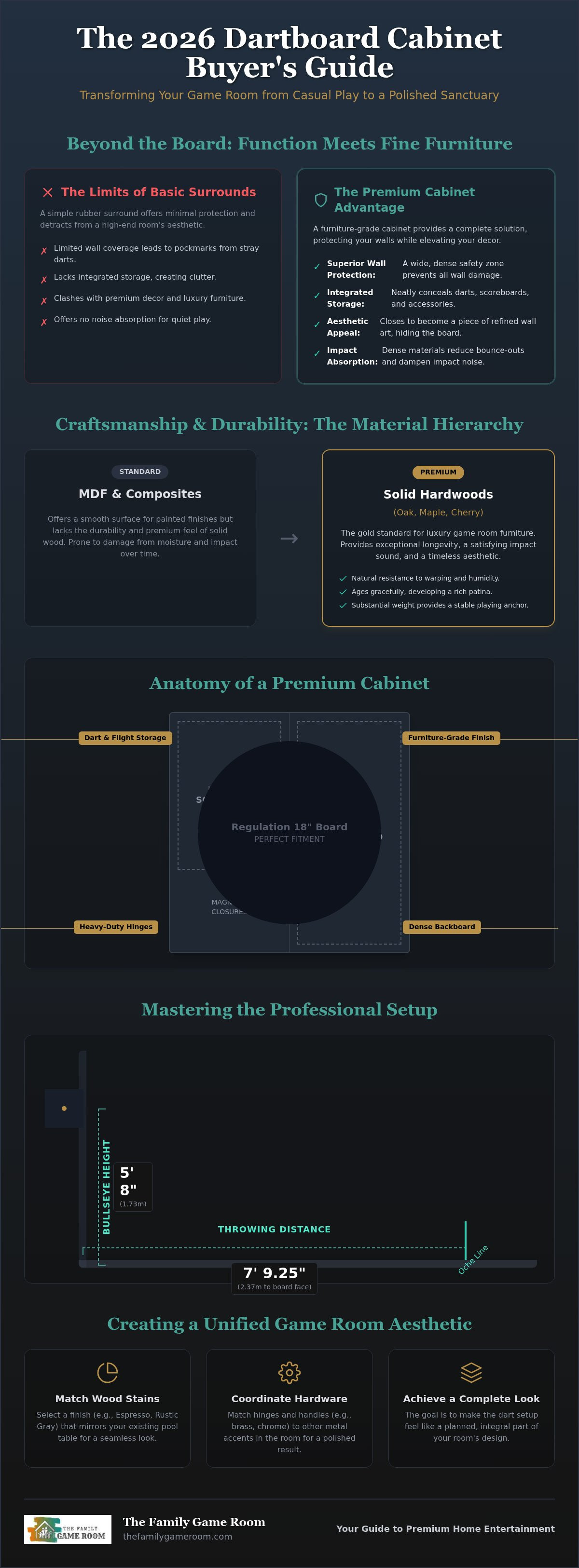
Creating a professional throwing lane is the final step in choosing a dartboard cabinet that truly elevates your home. The "Golden Rule" of setup is non-negotiable; the center of the bullseye must sit exactly 5 feet 8 inches from the floor. This measurement ensures your practice sessions translate to league-standard play. Beyond the height, you must calculate your oche, or throw line, distance based on your preferred game style. For steel-tip play, the horizontal distance from the face of the board to the front of the throw line is 7 feet 9 1/4 inches. If you prefer soft-tip electronic boards, extend that distance to exactly 8 feet.
Protecting your flooring is just as critical as shielding your walls. Even with a high-end cabinet, bounce-outs can happen, and heavy steel-tip darts will quickly mar hardwood or crack tiles. Pair your setup with a professional-grade dart mat. These mats often include pre-marked throw lines, ensuring your distance is always accurate without needing to apply permanent tape to your floor. This creates a dedicated "zone" that complements the upscale feel of your game room.
Mounting Safety and Wall Types
Standard drywall requires you to anchor your cabinet directly into wooden studs to support the weight of the furniture and the force of dart impacts. For modern game rooms with industrial brick or masonry walls, use heavy-duty sleeve anchors to prevent the cabinet from shifting. Precision is vital here; if the cabinet isn't perfectly level, the doors may swing open on their own or sit unevenly, ruining the aesthetic. Always use a spirit level during installation to ensure your throwing lane remains a professional-grade anchor for the room.
Illumination and Visibility
Proper lighting transforms a dark corner into a high-stakes arena. Standard overhead lighting often creates distracting shadows on the board, making it difficult to track your scores. Integrating specialized Billiard Light Fixtures into your room's design can help provide ambient warmth, but you may also need cabinet-mounted spotlights or an LED light ring for the board itself. These solutions eliminate shadows in the segments and reduce glare on your scoreboards, allowing for clear game-night tracking. If you are ready to complete your professional setup, browse our premium dartboard cabinets to find the perfect match for your home.
Coordinating with Your Luxury Game Room Furniture
Achieving a "Unified Room" requires more than just buying high-end pieces; it demands a strategic alignment of textures, tones, and styles. When you are choosing a dartboard cabinet, consider it the final brushstroke on your game room's canvas. A mismatched cabinet can disrupt the flow of a sophisticated space, making a professional setup feel like an afterthought. By matching wood stains across your game tables and cabinets, you create a seamless environment that feels both intentional and welcoming. This cohesive approach is what distinguishes a standard basement from a curated home sanctuary.
Hardware selection is another vital element of coordination. Select finishes like brushed brass, polished chrome, or matte black that mirror the accents on your Billiard Light Fixtures or the ferrules of your pool cues. These small details anchor the cabinet within the room's broader design language. Position the unit as a sophisticated focal point, but ensure its open doors don't encroach upon the primary walk-path around your pool table. A well-placed cabinet completes the "Trusted Curator" look, signaling a commitment to quality that guests will notice immediately.
Matching the American Heritage Aesthetic
To further enhance this sanctuary, many collectors integrate inspirational or motivational wall art from American Luxury Gifts to echo the sophisticated and personal tone of their game room.
Classic silhouettes with ornate crown molding and rich cherry or espresso finishes perfectly complement traditional American Heritage Billiards Pool Tables. These designs evoke the feel of a private social club, providing a timeless backdrop for family competitions. Conversely, if your space leans toward the contemporary, sleek minimalist cabinets with clean lines and wire-brushed finishes are the ideal partner for Nixon Billiards setups. Investing in a matching furniture set isn't just about current enjoyment; it significantly bolsters home resale value by presenting a professional, fully integrated entertainment suite to future buyers.
The Final Checklist for Your Purchase
Before finalizing your decision, run through a quick checklist to ensure long-term satisfaction. Verify the material density for sound absorption, confirm the internal depth for your specific board, and ensure your wall type supports the total weight of a solid wood unit. Choosing a dartboard cabinet from a family-owned specialist provides a level of product expertise and personalized support that big-box retailers simply cannot match. You deserve equipment that arrives in perfect condition and fits your lifestyle exactly. Ready to complete your sanctuary? Explore our collection of premium dartboard cabinets and find the piece that brings your vision to life.
Elevate Your Home Entertainment Sanctuary
Transforming a spare wall into a professional-grade arena requires a careful balance of technical precision and aesthetic harmony. By prioritizing furniture-grade materials and adhering to regulation spatial planning, you ensure your game room remains a polished space for both competition and relaxation. Remember that choosing a dartboard cabinet is the definitive step in protecting your premium wall finishes while creating a unified look that complements your existing luxury game tables.
As an authorized American Heritage Billiards retailer, The Family Game Room provides the expert guidance your home deserves. We combine the reliability of a premier retailer with the personalized touch of family-owned service. With nationwide shipping across the USA, we make it effortless to bring high-end craftsmanship directly to your door. Our commitment to quality ensures your game room isn't just a place to play; it's a timeless hub for making memories with family and friends.
Complete your home entertainment space with our premium Dartboard Cabinets and experience the difference of approachable excellence today. Your perfect game room setup is just one choice away.
Frequently Asked Questions
How high should I hang my dartboard cabinet?
Hang your cabinet so the center of the bullseye sits exactly 5 feet 8 inches from the floor. This height is the universal regulation standard for both home and professional play. When you are installing the unit, measure from the floor to the board's center bracket rather than the top of the cabinet itself. This precision ensures your practice sessions prepare you for league play and keeps your game room looking professional.
Will a standard sisal dartboard fit in any cabinet?
Most regulation 18-inch sisal boards fit standard cabinets, but you must verify the internal depth. When choosing a dartboard cabinet, ensure it provides at least 3 to 4 inches of interior clearance. This space accommodates the board's thickness and the mounting bracket while allowing the doors to close flush. Some professional-grade boards are deeper than entry-level models, so measuring your specific board before purchasing is a vital step for a perfect fit.
Is a dartboard cabinet better than a foam surround for wall protection?
A cabinet provides superior wall protection because it shields a much wider radius than a simple foam surround. While surrounds only protect the immediate area around the board, cabinet doors open to create a broad safety zone for stray darts. Additionally, cabinets offer integrated storage for your accessories and conceal the equipment when the game is over. This dual-purpose design makes them the preferred choice for luxury spaces with fine wall finishes.
What is the best type of wood for a dartboard cabinet?
Solid hardwoods like pine, oak, and maple are the premier choices for high-end cabinetry. These dense materials are excellent at absorbing the kinetic energy and sound of a dart impact, preventing the hollow noise common with cheaper composites. When you are selecting a unit, look for furniture-grade finishes that match your existing pool table. These premium woods resist warping and provide a tactile quality that budget plastic or thin MDF alternatives cannot replicate.
Do I need to mount my dartboard cabinet into a wall stud?
Yes, you should always mount a heavy solid wood cabinet directly into wall studs for maximum security. A cabinet filled with a sisal board and darts can weigh over 25 pounds, which is too much for standard drywall anchors to hold during repeated impacts. If you are mounting on brick or masonry, use heavy-duty sleeve anchors. Ensuring a rock-solid connection prevents the cabinet from shifting or sagging, which keeps your doors aligned and your bullseye height accurate.
How do I protect my floor from falling darts?
A professional dart mat is the most effective way to protect your flooring from the inevitable bounce-out. These mats are made from high-density rubber or carpet and provide a cushioned barrier for hardwood, tile, or laminate surfaces. Many mats come with pre-marked throw lines for steel-tip and soft-tip play, ensuring your setup remains regulation-accurate. This simple addition prevents unsightly pockmarks and helps maintain the pristine condition of your luxury game room for years to come.
Can I use an electronic dartboard in a wooden cabinet?
You can use an electronic board in a wooden cabinet if the internal dimensions and depth allow for the extra width of digital displays. Many players prefer the aesthetic of a classic wood cabinet to hide the plastic look of electronic boards. Look for cabinets with pre-drilled access holes for power cords to maintain a clean, wire-free appearance. This setup combines the modern convenience of automatic scoring with the timeless furniture appeal of high-quality cabinetry.
How much horizontal space do I need for the cabinet doors to open?
You typically need approximately 40 inches of horizontal wall space to allow the cabinet doors to swing fully open. Always measure your intended location with the doors in the open position to ensure they don't strike nearby light fixtures, window frames, or other game room furniture. Proper spatial planning prevents accidental damage to the cabinet hinges and ensures players have an unobstructed view of the scoreboards mounted on the inside of the doors during a match.