


A billiard light should look at home in your room and illuminate the table evenly, without creating distracting glare. When choosing a style for your billiard light, start with the room’s furnishings and finishes, then consider how the fixture’s shape and shades direct light onto the playing surface. A fixture is typically 40 to 60 inches long, depending on the table size.
It’s natural to focus first on a fixture’s appearance. The right choice can bring a room together, but it should also support comfortable play with soft, balanced light and clear sightlines. This guide explains how to match traditional, modern, rustic, or decorative designs to your furnishings, and how materials, finishes, and shades shape the room’s look and feel. You’ll also learn what to consider about fixture proportions and placement, so your billiard light feels like an intentional part of the space, not an afterthought.
Key Takeaways
- Use the table and room proportions to narrow down fixture shapes that feel balanced overhead.
- Consider how shade direction and finish influence the light’s look and where it falls.
- Coordinate the billiard fixture with other room lighting to keep reflections and distractions in check.
- Compare traditional, modern, rustic, and decorative designs to find a style that suits your furnishings.
1. Integrating a fixture with room architecture and furnishings
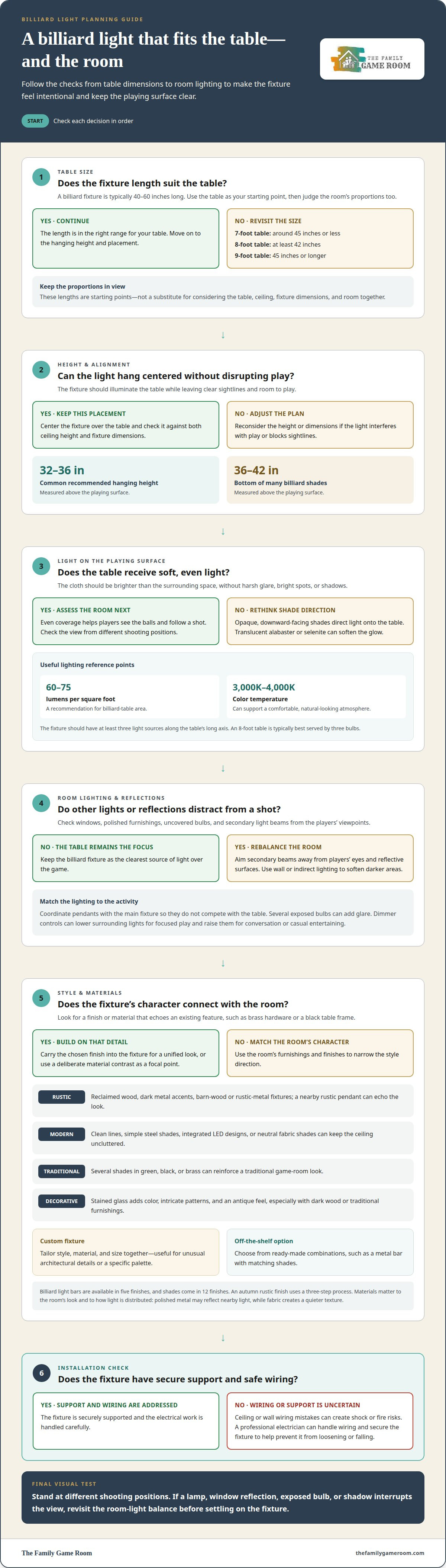
Start with the pool table, then consider the room’s ceiling, furnishings, and architectural details. A billiard light is typically 40 to 60 inches long, depending on table size. For an 8-foot table, choose a fixture at least 42 inches long; for a 9-foot table, consider one 45 inches or longer. A 7-foot table can suit a fixture around 45 inches or less. These are starting points, not substitutes for considering the room’s proportions.
Match the fixture’s character to the furnishings around it. A rustic room with reclaimed wood and dark metal accents can suit a barn-wood or rustic-metal fixture. In a modern space with clean lines, a simple steel shade or integrated LED design may feel more at home. Stained glass adds color and detail, while brass, black, or green shades can reinforce a traditional game-room look.
Height affects both the appearance and the playing surface. A billiard fixture is commonly recommended to hang 32 to 36 inches above the playing surface. For most billiard shades, the bottom may sit 36 to 42 inches above the surface. Center the fixture over the table, and consider the ceiling height and fixture dimensions together. The light should provide bright, even illumination without interfering with play or sightlines.
Installation requires secure support and careful electrical work. Pool table lights may need wiring through ceilings or walls, where mistakes can create shock or fire risks. A professional electrician can handle the wiring and secure the fixture to help prevent it from loosening or falling.
How much do billiard lights cost? The price depends on the fixture’s materials, design, and dimensions, so compare those features when choosing a style. How many lights should the fixture have? It should have at least three light sources along the table’s long axis; an 8-foot table is typically best served by three bulbs. Custom fixtures allow buyers to tailor style, material, and size, while off-the-shelf options offer ready-made designs.
2. Avoiding distracting room lighting and reflections
Keep the playing surface visually clear by balancing table lighting with other light sources in the game room. The fixture should illuminate the cloth more brightly than the surrounding space while producing soft, even light. Harsh glare, bright spots, and shadows can make it harder to judge the balls and see clearly along a shot. Reflections from windows, polished furnishings, or uncovered bulbs can also distract players as they line up.
Coordinate pendant lights with the main fixture rather than treating each fitting as a separate design choice. A rustic pendant near a seating area can echo a rustic billiard fixture, but its light should not compete with the table. In a modern game room, ceiling-mounted track lighting can be aimed at the playing surface. Keep secondary beams out of players’ eyes and away from reflective surfaces. The billiard fixture should remain the clearest source of light over the game.
Choose other room lighting to complement the fixture’s shape, finish, and brightness. Decorative pendants can create visual rhythm, but several exposed bulbs may add glare. Wall or indirect lighting can soften darker areas without shining across the table. Dimmer controls offer another useful adjustment: lower surrounding lights for focused play, then raise them when the room shifts to conversation or casual entertaining.
For table lighting, aim for even coverage rather than a concentrated pool of brightness. A recommendation for billiard tables is 60 to 75 lumens per square foot of table area. A color temperature of 3,000K to 4,000K can support a comfortable, natural-looking game-room atmosphere. These details matter alongside fixture length and selection, but the final test is practical: stand at different shooting positions and notice whether a lamp, window reflection, or shadow interrupts the view. A thoughtful installation coordinates task lighting with the room’s decorative fixtures, keeping the table easy to see without making the rest of the space feel harsh.
3. Materials, finishes, and shade choices
Materials shape a fixture’s character and its relationship with the room. A dark metal bar suits industrial details, while warm wood can echo rustic beams or furniture. Contemporary designs often pair steel with clean lines; cotton shades add softer texture. Traditional fixtures commonly use several shades in green, black, or brass. When choosing a style for your billiard light, pick a finish that connects with an existing detail, such as brass hardware or a black table frame.
Shade direction matters as much as color. Opaque, downward-facing shades direct light onto the pool table, focusing illumination on the playing surface. Translucent alabaster or selenite can soften the glow and make the fixture feel less visually bold. Consider how materials look with the room lights on and off: polished metal may reflect nearby light, while fabric creates a quieter texture. Choose a look that also supports useful light distribution.
Colorful glass makes a more decorative statement. Stained glass brings intricate patterns and an antique feel, especially alongside dark wood or traditional furnishings. In a restrained contemporary room, simple steel or neutral fabric shades can keep the ceiling uncluttered. Choosing a style for your billiard light also means considering how its finish relates to nearby details. For example, brass shades can echo brass accents around a bar or game table.
Custom fixtures allow buyers to tailor style, material, and size together, which can suit unusual architectural details or a specific palette. Off-the-shelf options offer established combinations, such as a metal bar with matching shades. Billiard light bars are available in five finishes, while shades come in 12 finishes. An autumn rustic finish uses a three-step process. Compare the bar and shades as one composition: consistent finishes create a unified look, while contrasting materials can form a deliberate focal point without overwhelming the room.
4. Billiard light styles and materials
Choose a fixture that makes a deliberate statement while keeping the playing surface clear. Traditional designs often pair a bar with three to four shades. Polished metal shades can give this format a refined finish, while rustic fixtures may use stagecoach lanterns, antlers, or wagon-wheel forms. These distinctive materials suit rooms with visible wood beams, leather seating, or other rugged details.
For a contemporary game room, consider sleek metal, a minimalist bar, or a fixture with integrated or concealed LED sources. Pool table chandeliers offer another option, combining an artistic silhouette with traditional or modern details. Tiffany-style lighting brings colored glass and decorative patterns into the room, with designs inspired by a favorite team, sport, or hobby. Let the existing furnishings guide how bold the fixture should be.
Bulb selection affects both brightness and the character of the light. LED bulbs provide bright, consistent illumination, last longer, and generate minimal heat; halogen bulbs produce a warmer, natural-looking light but can be less energy-efficient. For a 9-foot pool table, the suggested total output is 2,000 to 4,000 lumens across the playing surface. A color temperature of 3,000K to 4,000K supports a comfortable, clear appearance. Dimmer controls let you adjust brightness for focused play or a more relaxed room mood.
Center the fixture over the table and position it to illuminate the full playing surface without blocking sightlines. Ceiling height and fixture shape affect how it hangs, while adjustable suspension can help accommodate unusually high or low ceilings. Style shouldn’t come at the expense of useful light.
Where can you buy billiard lights in the United States? Specialty game-room retailers sell billiard light fixtures, including options suited to traditional, rustic, and contemporary rooms. Compare the shade design, material, and light source as one complete composition before choosing.
The Family Game Room: Billiard Light Fixtures
The Family Game Room offers billiard light fixtures for homeowners choosing a style to suit their game room and pool table. Consider the room’s finishes, fixture proportions, shade design, and the kind of light you want over the playing surface. A cohesive choice can bring the table into the room’s overall design rather than making the fixture feel like an afterthought.
If you’re furnishing a complete game room, consider American Heritage Billiards Pool Tables and Nixon Billiards Pool Tables alongside the lighting. Pool Table Dining Tops can also suit a room where the pool table needs to serve another purpose between games. Keep the table and light in view as you weigh style, materials, and function.
For help with your selection, contact The Family Game Room.
Choose a Light That Completes Your Game Room
Choosing a style for your billiard light is a chance to give the room a personal finish. Think beyond the fixture: consider how the table, furnishings, and lighting work together, and whether the space should feel classic, contemporary, or comfortably rustic. A light that suits your taste can help make the game room feel like part of your home.
If you’re planning the room around a new table, The Family Game Room offers American Heritage Billiards Pool Tables and Nixon Billiards Pool Tables, along with Pool Table Dining Tops. These options help you consider the table’s place in the room as you settle on a lighting style.
Bring your ideas and preferences to the next step. Talk with The Family Game Room about finding billiard lighting that feels right at home. Make the space your own, then let the games begin.
Frequently Asked Questions
What billiard light styles are available?
Options include traditional multi-shade fixtures, minimalist contemporary bars, rustic designs, chandeliers, and Tiffany-style lights. Some pendant fixtures use one long body with multiple bulbs, while decorative designs may feature wagon-wheel forms or stagecoach lantern shapes. For a distinctive centerpiece, consider stained glass or an artistic chandelier. Decide whether you want the fixture to blend into the room or become one of its defining features.
How do you choose a billiard light style to match your room decor?
Choose one existing room detail as your starting point, such as a metal finish, wood tone, or furniture shape. A fixture with a dark metal bar, for example, can echo metal furniture accents without matching every item exactly. If your room already has intricate decor, a simpler light can provide balance. In a sparsely furnished space, a sculptural fixture can add visual interest above the table.
What materials and finishes are best for billiard lights?
The best choice depends on the room’s palette and the effect you want. Metal bars and shades suit rooms with crisp, structured details, while wood can reinforce a warmer, rustic interior. Cotton fabric offers a softer visual texture, and stained glass adds color and pattern. Treat the bar and shades as a coordinated pair: a consistent finish looks composed, while deliberate contrast creates a focal point.
What is the difference between traditional, modern, and industrial billiard lights?
Traditional fixtures often use a bar with several shades and classic finishes such as brass, black, or green. Modern designs favor minimal shapes, metallic finishes, and sometimes concealed or integrated LED sources. Industrial styles lean into rugged materials and utilitarian forms, such as rustic metal or reclaimed wood. These categories can overlap, so judge the whole fixture’s silhouette and finish rather than relying on its label alone.