


Is that "billiards" table you're eyeing actually a pool table in disguise, or are you about to buy a professional carom setup that doesn't even have pockets? Many homeowners feel overwhelmed when trying to distinguish between these classic games. It's easy to get lost in the terminology, but the technical differences in a billiards vs pool table are vital for your playing experience. You don't want to realize your table lacks pockets or requires a much larger room after it's already been delivered. Rare is the buyer who enjoys a surprise delivery of a pocketless table when they expected a game of eight-ball.
We understand that a high quality table is more than just equipment; it's a centerpiece for family memories and social gatherings. This guide provides the clarity you need to choose between pool, snooker, and billiards with total confidence. You'll discover the specific dimensions required for each game and how to blend premium craftsmanship into your existing decor. We will explore everything from official WPA specifications to the latest trends in multi functional dining tops, ensuring your new investment brings long term satisfaction to your home entertainment space.
Key Takeaways
- Master the terminology trap by learning how "billiards" serves as an umbrella term for both pocketed pool and pocketless carom games.
- Invest in long-term satisfaction by choosing a 1-inch slate bed, the non-negotiable standard for professional-grade play and durability.
- Navigate the technical differences in a billiards vs pool table to select the specific dimensions and pocket shapes required for your favorite game.
- Calculate your ideal room layout using the "Golden Rule" of dimensions to ensure every shot has enough clearance for a standard 58-inch cue.
- Discover how to transform your game room into a social hub with premium multi-functional tables and dining tops that blend luxury with domestic utility.
The Terminology Trap: Defining Billiards vs. Pool Table
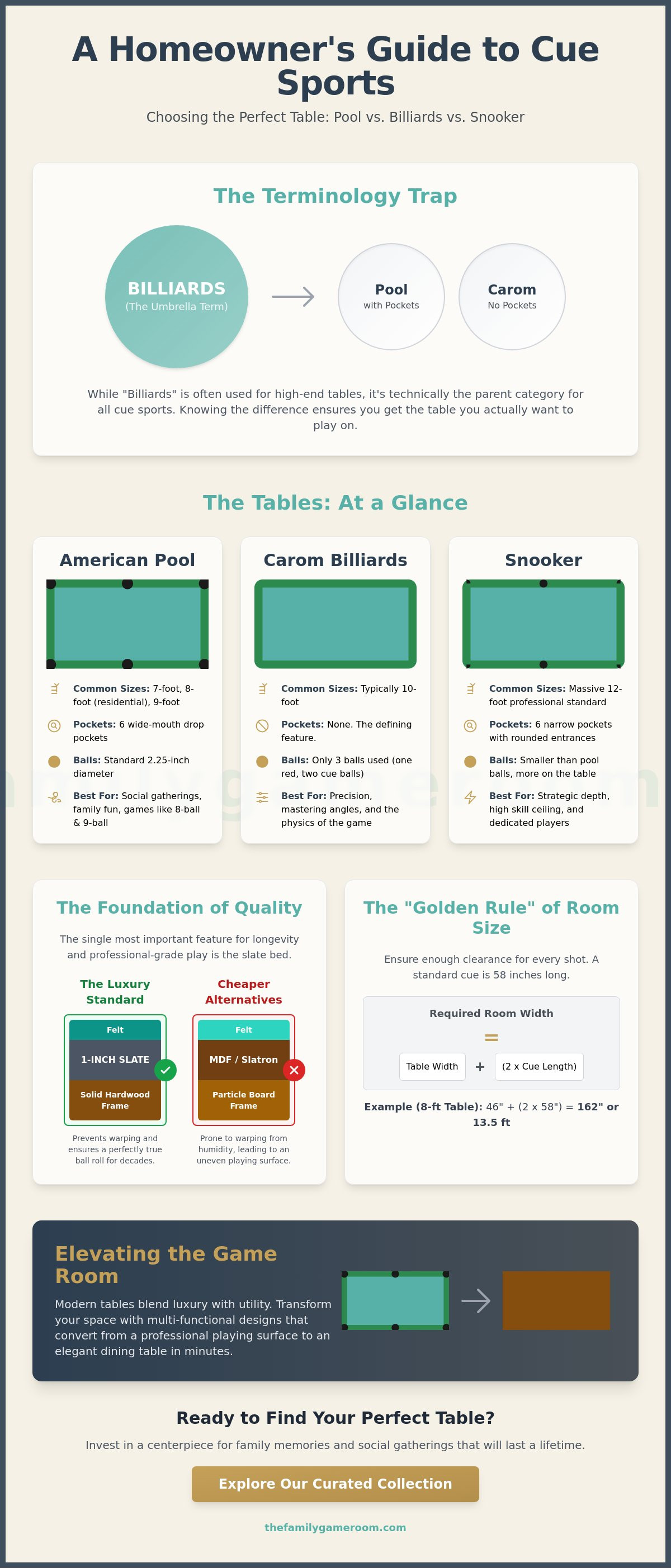
Confusion often begins the moment you step into a showroom or browse an online collection. In 2026, the distinction between a billiards vs pool table is frequently a matter of branding rather than just physics. While the terms are used interchangeably in casual conversation, they represent two very different paths for your home entertainment space. Technically, billiards is the parent category for all cue sports. Pool is merely a specific subset of that category. When you ask for a "pool table," you're specifically requesting a table with six pockets. When you ask for "billiards," you might be asking for the umbrella category or the specific, pocketless game of carom.
For a deep dive into the historical evolution of these surfaces, this Billiard Table Overview provides excellent context on how regional variations shaped the equipment we use today. Understanding this terminology trap prevents the expensive mistake of ordering a professional carom setup when your family actually wants to play eight-ball. It's about matching the equipment to your lifestyle and the games you intend to master.
Billiards as a General Category
Luxury manufacturers like Nixon Billiards and American Heritage Billiards favor the word "billiards" because it evokes a sense of timeless elegance. This linguistic choice has sparked a shift in modern home design. We've moved away from the "pool halls" of the past toward sophisticated "billiard rooms" that function as high-end social hubs. In this context, the term encompasses everything from standard pool to snooker and carom. Using the word "billiards" signals a commitment to superior craftsmanship and professional standards. It transforms a simple recreational area into a curated space for "approachable excellence" that fits perfectly within a luxury home layout. When evaluating a billiards vs pool table, remember that the former often implies a higher grade of materials, such as solid hardwoods and premium slate beds.
The Specifics of Carom (Pocketless) Tables
Carom billiards is the purest form of the sport, focusing on the physics of angles and speed. These tables are distinct because they lack pockets entirely. A standard carom table is typically 10 feet long, making it larger than the 7-foot or 8-foot tables found in most American basements. Players use only three balls: a red object ball, a white cue ball, and a yellow cue ball. The objective is to strike your cue ball so it hits both object balls while contacting a specific number of cushions. While carom tables are rare in modern U.S. residential game rooms, they remain the ultimate choice for players who value mathematical precision over the social simplicity of pocketing balls. They require significant floor space and a dedicated player who appreciates the historical roots of cue sports.
Technical Specifications: Size, Pockets, and Playing Surfaces
Choosing between a billiards vs pool table requires looking beneath the surface at the engineering that dictates gameplay. The World Confederation of Billiards Sports establishes the rigorous standards that separate professional equipment from recreational toys. While a standard American pool table typically comes in 7-foot, 8-foot, or 9-foot lengths, carom tables usually measure 10 feet, and professional snooker tables reach a massive 12 feet. For most residential layouts, an 8-foot table with a 92" x 46" playing surface offers the ideal balance of challenge and space efficiency.
Slate thickness is the defining factor in table longevity and accuracy. A 1-inch slate bed is the non-negotiable luxury standard for high-end brands like Nixon Billiards. This heavy, natural stone prevents the warping common in cheaper MDF alternatives, ensuring your table remains perfectly level for decades. Because slate is honed to within a fraction of a millimeter, it provides the consistent, flat surface necessary for true ball roll. If you are ready to elevate your home with professional-grade equipment, you can browse our curated collection of slate tables to find your perfect match.
Pocket Design and Rail Geometry
American pool tables feature wide-mouth drop pockets designed to accommodate 2.25-inch balls. The rail height is precisely calibrated to strike the ball just above its center point to prevent it from jumping off the table. The K-66 cushion is the industry standard for consistent bounce. This specific rubber profile ensures that the energy transfer remains predictable across thousands of games. Unlike the rounded cushions found on snooker tables, the pointed profile of pool cushions allows for the aggressive bank shots and high-speed play typical of eight-ball and nine-ball.
Felt and Cloth: Speed vs. Control
The "baize" or cloth you choose significantly impacts the speed of your game. Professional players prefer worsted wool, often called "speed cloth," because it lacks the fuzzy nap of traditional woolen blends. This allows the balls to travel faster and more accurately. In contrast, heavy woolen blends offer more control and durability for casual family play. Keeping your premium slate bed level requires periodic checks, especially if your home experiences seasonal humidity shifts. Brushing the cloth in one direction after every session prevents dust buildup and maintains the integrity of the weave. This attention to detail ensures that your investment in a billiards vs pool table continues to deliver "approachable excellence" for every guest who picks up a cue.
The Snooker Table Distinction: Why Size and Pocket Shape Matter
While the choice between a billiards vs pool table usually centers on style and social play, the snooker table stands as the "Ultimate Challenge" for those seeking true precision. It's often dismissed as a professional-only relic, but a snooker setup brings an unparalleled level of sophistication to a home game room. Professional tournament tables measure a staggering 12ft x 6ft, though 10-foot versions are common for residential layouts. This massive footprint demands a spacious environment, but the reward is a game that tests the limits of your skill. You'll need to account for the extra room required to maneuver a full-length cue around such a large frame.
The most striking difference lies in the pocket geometry. American pool tables feature wide, angular pocket mouths that allow for a degree of error. Snooker pockets utilize curved "throats" that narrow significantly as the ball enters. You won't find much forgiveness here. Successful shots require a center-ball hit; anything slightly off-center will rattle against the rounded cushions and stay on the table. This unforgiving design dictates the defensive nature of snooker, where strategy often involves leaving the opponent in a difficult position rather than just clearing the table.
Equipment specifications further distinguish this discipline. Snooker utilizes a set of 22 balls that are smaller than standard pool balls, measuring just 2 1/16 inches in diameter. The set includes 15 red balls and six colors, plus the cue ball. This higher ball count requires more meticulous rack alignment and a different approach to table management. It's a game of patience and long-term planning that appeals to the strategic player.
Pocket Entry: Rounded vs. Angular
Visualizing the difference is key for any prospective buyer. A standard pool pocket is like a funnel, guiding balls toward the drop. The snooker pocket is like a narrow gate. This shape prevents players from "banking" balls in with the same ease found in eight-ball. It forces you to master long-distance accuracy and subtle spin. Because the pockets are so tight, every shot must be deliberate. You can't rely on luck to carry a poorly aimed ball into the corner.
The Napped Cloth Factor
Snooker tables use a napped cloth, which is a thick, directional wool. This nap creates a grain, much like the grass on a golf green. Brushing the table with the grain ensures a faster, smoother roll, while playing against the grain adds resistance. This directional factor means players must account for the cloth's texture when planning their shots. Because the table is so sensitive, it requires specific pool balls that match the weight and size requirements of the game. Don't underestimate the engineering required for a 12-foot bed. These tables typically use five pieces of heavy slate. Achieving a perfectly level surface across such a large span is a technical feat that defines the luxury experience.
Selection Criteria: Which Table Fits Your Lifestyle and Space?
Determining whether a billiards vs pool table suits your home involves more than just picking a felt color. You must respect the physical geometry of your room to ensure a fluid playing experience. The "Golden Rule" for any installation is simple: take the length and width of the playing surface and add twice the length of your cue. Since a standard cue measures 58 inches, you need nearly five feet of clearance on every side of the table. Failing to account for this leads to the frustration of hitting walls during a crucial break. If you're tight on space, consider using 48-inch or 52-inch cues for those specific trouble spots near pillars or furniture.
Beyond the math, consider the social atmosphere you want to create. Pool tables are the undisputed kings of the social gathering. Their faster gameplay and forgiving pockets encourage rotation among guests, making them perfect for parties and casual family nights. Snooker tables, by contrast, are designed for the focused technician. They reward solo mastery and long-term strategic development. Your room's aesthetic should also guide your choice. High-end finishes in mahogany, oak, or modern matte black allow your table to serve as a sophisticated architectural element rather than just a piece of sports equipment.
Calculating Your Minimum Room Size
Precision planning prevents installation headaches. For a standard 7-foot table, your room should measure at least 16' x 13'. An 8-foot table requires a space of roughly 17' x 14', while a professional 9-foot table demands a generous 18' x 14' area. These measurements assume you are using full-size cues for every shot. You can find more detailed breakdowns in our pool table dimensions guide. Remember that furniture like bar stools or poker tables will require additional clearance beyond these minimums. Measure twice to ensure your centerpiece doesn't crowd the room.
Durability and Heirloom Quality
Investing in a table from brands like American Heritage Billiards ensures your purchase becomes a multi-generational heirloom. Solid wood construction is essential for long-term leveling; cheaper MDF frames eventually sag under the weight of heavy slate. We also recommend a professional billiard table setup to protect your warranty and ensure the slate is joined with zero-tolerance precision. A properly installed table remains a joy to play on for decades. Don't forget to budget for the total package, including billiard light fixtures and cue racks, to create a fully realized entertainment suite. If you are ready to find the perfect addition to your home, explore our premium selection at The Family Game Room today.
Elevating the Game: Premium Multi-Functional Tables for 2026
The modern luxury home requires versatility without sacrificing the professional standards discussed in previous sections. When deciding on a billiards vs pool table, many families now opt for convertible designs that serve as both a high-stakes arena and a sophisticated dining surface. Brands like Nixon Billiards lead this movement by merging industrial aesthetics with the heavy slate beds required for serious play. These tables eliminate the need for a dedicated game room, allowing you to integrate high-end entertainment into your primary living or dining areas. It's a seamless way to bring "approachable excellence" into your daily life.
Completing your entertainment suite involves more than just the table itself. Coordinating bar stools and premium pool cue racks ensure your equipment is stored with the same elegance it displays during a match. This holistic approach to design transforms a simple hobby into a lifestyle statement. By selecting accessories that match the finish and craftsmanship of your table, you create a curated environment that feels both professional and welcoming to guests.
The Pool Table Dining Top Solution
A pool table dining top is the ultimate space-saving innovation for 2026. These tops are engineered to fit securely over the rails, protecting the cloth and cushions while providing a perfectly flat surface for hosting banquets. Unlike flimsy covers, premium dining tops use high-quality wood veneers or tempered glass to match your home's architecture. Success in this design depends on precise engineering; the table must provide enough leg room for seated guests while maintaining the standard playing height for cue sports. This dual-purpose functionality is the top choice for our clients who value domestic warmth alongside professional polish. It allows a 400lb slate masterpiece to hide in plain sight until the dinner plates are cleared and the game begins.
American Heritage Billiards: A Legacy of Craftsmanship
For those seeking timeless appeal, American Heritage Billiards offers a level of detail that defines heirloom quality. Our luxury buyer’s guide highlights how these tables utilize solid wood construction and specialized leg carvings to create a visual masterpiece. Customization is at the heart of their offering. You can select felt colors that complement your interior palette or choose specific finishes that coordinate with your existing cabinetry. This level of personalization ensures that your choice in the billiards vs pool table debate is a perfect reflection of your personal style. Whether you prefer the sleek lines of modern steel or the rich textures of traditional oak, the right table serves as a durable anchor for family memories. Browse our curated collection of professional tables and accessories to find the perfect centerpiece for your home today.
Choose Your Heirloom Centerpiece for 2026
You now possess the technical and historical clarity to navigate the billiards vs pool table landscape with total confidence. From the precision requirements of snooker to the social flexibility of a standard pool table, your choice defines the social rhythm of your home. Always prioritize 1-inch slate beds for a perfectly level playing surface and remember the "Golden Rule" of room dimensions to ensure every shot is comfortable. Whether you prefer a dedicated professional setup or a multi-functional dining table, focusing on superior craftsmanship guarantees your investment remains a source of pride for decades.
The Family Game Room has been family-owned and operated since 2022, serving as a trusted curator for high-end home entertainment. We are proud authorized dealers for industry leaders like Nixon Billiards and American Heritage Billiards, specializing in solid-slate, heirloom-quality equipment. Our team is dedicated to helping you find a centerpiece that blends professional performance with domestic warmth. Ready to elevate your living space? Explore our 2026 Collection of Professional Billiard and Pool Tables and discover the perfect match for your lifestyle. We look forward to helping you create a space where memories are made for generations.
Frequently Asked Questions
Can you play snooker on a standard pool table?
You can play a modified version of the game, but a standard pool table lacks the correct dimensions and pocket shapes for regulation snooker. The pockets on a pool table are wider and angular, while snooker requires rounded pocket throats and a much larger playing surface. Using smaller snooker balls on a pool table also changes the physics of the cushions, making the experience less than ideal for serious players.
How much space do I really need for an 8ft pool table?
You need a minimum room size of 17' x 14' to comfortably house an 8-foot table with a standard 58-inch cue. This calculation accounts for the 92" x 46" playing surface plus the necessary clearance for a full backswing on every side. If your room has tight spots, using a shorter 48-inch cue for specific shots can help you navigate architectural obstacles without sacrificing the table's ideal placement.
Is a billiards table more expensive than a pool table?
High-end billiards or carom tables often carry a higher price point due to their larger 10-foot dimensions and specialized heated slate systems. However, when comparing a luxury billiards vs pool table from premium brands like Nixon Billiards, the cost is primarily determined by the quality of the solid wood and the thickness of the slate. Both styles represent a significant investment in heirloom quality craftsmanship for your home.
What is the difference between a snooker table and a pool table?
The primary differences are table size, pocket geometry, and ball count. Snooker tables are significantly larger, with professional versions measuring 12' x 6', and they feature rounded pocket throats that make scoring much more difficult. Pool tables use larger 2.25-inch balls and have wider, angular pockets. Additionally, snooker cloth has a directional nap, whereas most modern pool tables utilize a napless worsted wool for faster play.
What size balls are used on a billiards table vs. a pool table?
Regulation pool balls measure 2.25 inches in diameter and weigh between 5.5 and 6 ounces. In contrast, carom billiards balls are slightly larger at approximately 2.42 inches. These are designed for a pocketless game focused on precise cushion contact. Using the correct ball size is essential for the rail height of your specific table to ensure consistent and predictable bounces during every match.
Do I need a special cue for a snooker table?
You should use a snooker specific cue, which features a smaller tip, usually 9mm to 10mm, compared to the 13mm tips found on pool cues. This smaller tip is necessary to provide better control over the smaller 2 1/16-inch snooker balls. While you can use a pool cue in a pinch, the lack of precision will make it difficult to navigate the tight, rounded pockets found on a snooker table.
Can a pool table with a dining top actually be used for professional play?
A convertible table provides professional grade play as long as it features a 1-inch slate bed and a solid wood frame. Many Nixon Billiards models are engineered to provide the exact same ball response as a standalone tournament table. The dining top is simply a protective, aesthetic addition that doesn't interfere with the technical specifications of the playing surface once it's removed for a game.
Why are snooker pockets rounded while pool pockets are angular?
Snooker pockets are rounded to increase the difficulty and emphasize strategic, defensive play. This design requires a center ball hit to successfully pocket a ball, as off-center shots will rattle against the curved cushions and stay on the table. In contrast, pool pockets are angular and wider to facilitate a faster, more aggressive game that is generally more forgiving for social players and beginners.