


What if the biggest threat to your pool table's pristine felt isn't a spilled soda, but the very equipment you use to play? It's a common frustration for homeowners who invest in a high-end table only to find mysterious white "burn spots" appearing within weeks. These marks often stem from using low-grade pool balls that generate excessive friction heat during impact. You want your game room to be a sanctuary for high-level play, not a source of technical confusion over terms like "phenolic resin" or regulation weight.
We'll help you cut through the jargon to understand how premium materials can increase your table's lifespan by up to five times. This guide reveals the science behind professional equipment and shows you how to select a set that protects your investment while sharpening your bank shots. We'll break down why 85% of professionals choose Aramith and compare $35 polyester sets to $510 tournament-grade options. You'll also learn the current WPA standards for the 2.25-inch diameter and 5.5 to 6 oz weight requirements. By the end of this guide, you'll be empowered to make a choice that not only protects your investment but also elevates every shot you take. The Family Game Room is dedicated to helping you achieve a game that feels as professional as it looks.
Key Takeaways
- Learn the exact specifications for a regulation American set and why the 2.25-inch diameter is the standard for consistent performance.
- Compare the durability of polyester, epoxy, and phenolic resin to select pool balls that protect your table felt from premature wear.
- Identify how perfect roundness and uniform balance eliminate ball wobble to ensure every shot follows a true, predictable path.
- Master maintenance routines and cleaning tips that remove abrasive debris without using harsh chemicals that could damage the ball's finish.
- Choose the ideal set for your home based on your table material and the skill level of your players to maximize your investment.
Anatomy of a Standard Pool Ball Set
A standard pool ball set for American games isn't just a random collection of colorful spheres; it's a precision-engineered toolkit designed for the specific mechanics of eight-ball and nine-ball. Unlike snooker or carom sets, a complete American set consists of exactly 16 balls. This includes seven solid-colored balls numbered 1 through 7, seven striped balls numbered 9 through 15, the black 8-ball, and the all-important white cue ball. This 16-ball configuration was established to ensure the triangle rack is perfectly filled with 15 object balls, creating the tight, symmetrical "break" necessary for high-level play. When you invest in a premium set, you're ensuring that every ball reacts identically to the last, keeping your game fair and your skills sharp.
Regulation Size and Weight Standards
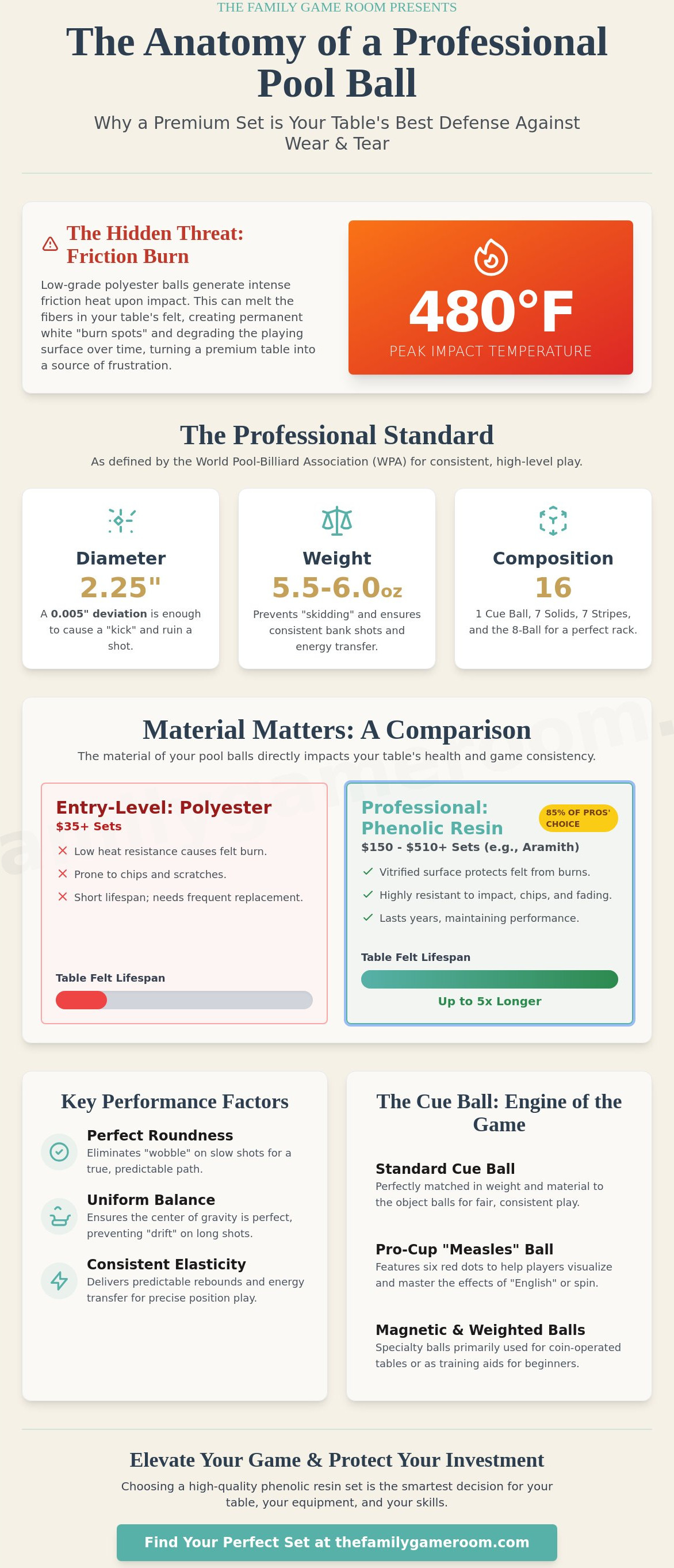
Professional standards for pool balls are incredibly strict to maintain the integrity of the sport. The World Pool-Billiard Association (WPA) mandates in their official equipment specifications that every ball measures exactly 2.25 inches (57.15 mm) in diameter. Even a tiny deviation of 0.005 inches can cause a shot to veer off course or result in a "kick" that ruins a perfect run. Weight is equally vital, staying between 5.5 and 6 ounces (156 to 170 grams). When balls vary in weight, they exhibit "skidding" or "cling," where the physics of the impact causes the balls to slide rather than roll. Regulation weight is the critical factor for consistent bank shots. By adhering to these 2001 WPA standards, manufacturers ensure that a ball hit in a home game room behaves exactly like one hit on a televised tournament table.
The Role of the Cue Ball
Think of the cue ball as the engine of your game. It's the only ball you strike directly, meaning it endures the most friction and impact during every single rack. High-quality cue balls allow for better "English" or spin, giving you the control to park the ball exactly where you want it for the next shot. You'll encounter three main types in the wild:
- Weighted Cue Balls: Often slightly heavier to help beginners generate more power.
- Magnetic Cue Balls: Used in coin-operated tables to trigger the return mechanism after a scratch.
- Pro-Cup (Measles) Balls: These feature six red dots to help players and spectators visualize the spin and speed of the ball.
You should never mix a cheap, lightweight cue ball with a premium set of object pool balls. The imbalance will ruin your table's felt and lead to unpredictable rebounds that frustrate everyone at the table. A high-quality cue ball is essential for mastering advanced techniques like draw shots and follow shots. Invest in a top-quality cue ball to ensure your equipment matches your ambition. Satisfied you shall be with the results on the felt.
Performance Factors: What Makes a Great Ball?
High-performance play relies on physics, not just luck. A premium set of pool balls must possess perfect roundness to ensure the ball travels in a straight line without "wobbling" at low speeds. When a ball is out of round by even a fraction of a millimeter, it develops a mind of its own on slow-rolling safety shots. Beyond shape, elasticity dictates how much energy transfers from your cue tip to the ball. Professional-grade sets utilize materials that rebound consistently, allowing you to predict exactly where the object ball will land after a collision. Hardness is the final pillar; a harder surface resists the microscopic scratches that cause "clumping" or "kick" during impact.
Balance and Center of Gravity
True balance requires the center of gravity to stay exactly in the geometric center of the ball. During the manufacturing process, tiny air bubbles or inconsistent resin density can create "heavy" spots. You can understand how pool balls are made to avoid these defects by using a homogeneous liquid resin that cures uniformly. If you suspect your current set is off-balance, try the salt-water test. Fill a glass with water and add enough salt until a ball floats. Spin the ball; if it always settles with the same side up, it's unbalanced. On a long-distance shot across the table, even a minor imbalance causes the ball to drift off its target line, turning a guaranteed pot into a frustrating miss.
Friction and Heat Resistance
The moment of impact is more violent than it looks. When a cue ball strikes an object ball, the friction can cause temperatures to spike to 480°F at the point of contact with the cloth. Lower-quality pool balls act like sandpaper at these temperatures, leaving behind the white "burn spots" that permanently damage your table's felt. High-quality phenolic resin is engineered to withstand this thermal shock, protecting your investment and ensuring a smoother roll. Smooth, heat-resistant surfaces also reduce "cling," a phenomenon where two balls momentarily stick together, ruining the intended angle of the shot. If you've recently upgraded to one of our premium billiard tables, using high-performance balls is the best way to keep that felt looking brand new for years. Satisfied you shall be with a table that stays pristine and a game that remains predictable.
Comparing Materials: Polyester vs. Resin vs. Phenolic
Choosing the right set of pool balls often comes down to a choice between immediate savings and long-term performance. While entry-level sets typically cost between $35 and $70, professional-grade phenolic sets can range from $128 to over $510 as of May 2026. The difference isn't just cosmetic; it's chemical. Most budget sets use polyester, which is a softer plastic that's prone to chipping and generates significant friction. Epoxy resin serves as a solid mid-range choice for casual family rooms, offering better durability than polyester without the professional price tag. However, if you want the same equipment used in 85% of professional tournaments, phenolic resin is the only option.
The Phenolic Advantage
Phenolic resin is the industry gold standard for impact resistance and longevity. Aramith, the primary manufacturer of these balls, uses a specialized phenolic resin manufacturing process that creates a high-density molecular structure. This material is engineered to withstand over 85,000 impacts, ensuring the balls stay perfectly round for years. Beyond durability, phenolic balls are the only material that truly protects high-end wool felt. Because they're extremely heat-resistant, they don't melt or "burn" the cloth during high-velocity impacts. While the upfront investment is higher, these balls last five times longer than polyester sets, making them the most cost-effective choice for a permanent home setup. Satisfied you shall be with a set that retains its luster through thousands of games.
Polyester and Acrylic: When to Use Them
Budget-friendly materials like polyester and acrylic have a specific place in the market. They're ideal for children’s tables, temporary setups, or MDF-based tables where professional play isn't the goal. However, these materials carry a hidden cost for owners of premium slate tables. Polyester is susceptible to "pitting," a process where the ball develops microscopic craters over time. These craters act like sandpaper on your felt, causing premature wear and tear that can lead to expensive repairs. You can usually identify these sets by their visual cues:
- Printed Numbers: Budget balls often have numbers printed on the surface rather than inlaid.
- Weight Variance: Lower-quality sets often lack the strict 5.5 to 6 oz weight consistency of professional sets.
- Surface Dullness: Polyester loses its shine quickly, signaling that the material is breaking down.
If you're teaching young kids the basics, a $40 set of pool balls is a practical starting point. But for anyone looking to elevate their game or protect a high-quality table, the jump to resin or phenolic is essential. High-quality materials ensure that your equipment works with you, not against you.
Maintenance and Longevity: Caring for Your Investment
Your premium set of pool balls represents a significant investment in your home entertainment experience. While phenolic resin is incredibly durable, it isn't invincible. Over time, skin oils, hand chalk, and microscopic dust particles accumulate on the surface. This buildup doesn't just dull the shine; it increases friction between the ball and the cloth, leading to the "burn spots" we discussed earlier. Proper care ensures your equipment maintains its regulation weight and perfect balance for decades. Satisfied you shall be with a set that looks as vibrant in ten years as it does today.
Cleaning Routine for Home Players
Consistency is more important than intensity when it comes to cleaning. You don't need a deep clean once a year; you need a quick wipe-down every few sessions. Blue chalk dust is the primary enemy. Because chalk is designed to create friction, it acts like a mild abrasive if left on the balls. During a high-velocity impact, that dust can grind into the surface, creating microscopic pits. Follow this simple routine to keep your set in professional condition:
- Use the Right Tools: Always use a clean microfiber cloth. Paper towels are too abrasive and can leave behind lint.
- Select Safe Cleaners: Avoid window cleaners, bleach, or any product containing ammonia. These harsh chemicals strip the protective finish. Stick to specialized billiard ball cleaners or a mixture of warm water and a drop of mild dish soap.
- Spray, Wipe, and Buff: Lightly mist the cloth, not the ball. Wipe the entire surface, then use a dry section of the microfiber to buff the ball back to a high-gloss shine.
Storing Your Ball Set
Where you keep your pool balls when they aren't in use is just as vital as how you clean them. Leaving balls in the pockets or scattered on the table exposes them to dust and accidental spills. A dedicated storage solution protects the spheres from environmental damage. Temperature control is another critical factor. If your game room is in a basement that drops below 55°F, the resin can contract, potentially leading to surface cracking or loss of elasticity. Always store your set in a climate-controlled environment to prevent these issues.
Organizing Your Equipment with Pool Cue Racks is the best way to keep your game room tidy and your accessories safe. Beyond aesthetics, a rack keeps your balls off the floor and away from pets or foot traffic. If you don't have a rack, keep them in their original padded carrying case. This prevents "flat spots" that can occur if balls are left under heavy pressure for long periods. Explore our premium billiard accessories to find the perfect storage solution for your home sanctuary.
Choosing the Right Set for Your Family Game Room
Selecting a set of pool balls is the final step in curating your home sanctuary. Your choice should align with the quality of your table and your specific goals for the game room. If you own a premium slate table, such as those crafted by American Heritage or Nixon Billiards, you must choose equipment that matches that caliber. Phenolic resin remains the top-tier choice for these surfaces because it preserves the wool felt and ensures professional-grade rebounds. Conversely, if you're using a lighter MDF table for casual family play, a high-quality epoxy resin set provides the right balance of performance and value without the professional price tag.
Training and Specialty Balls
Beginners often struggle with the invisible physics of spin and cue ball control. Specialty training balls, like the Jim Rempe set, feature visual guides etched directly onto the surface to teach aim and cue tip placement. These tools are invaluable for kids and adults who want to move beyond basic potting. The "measles" cue ball, with its six distinctive red dots, is arguably the best tool for learning how to control "English." It allows you to see exactly how much spin you've applied in real-time. While themed or glow-in-the-dark sets add a playful element to social gatherings, they often sacrifice the perfect balance found in professional sets. Use them for novelty nights, but keep a regulation set on hand for serious matches.
Final Checklist Before Buying
Before you finalize your purchase, run through this quick checklist to ensure your new pool balls meet the highest standards. First, verify the set meets the WPA regulation size of 2.25 inches and the weight standard of 5.5 to 6 ounces. Second, look closely at the numbers. Premium sets have numbers inlaid deep into the material; budget sets simply print them on the surface, where they eventually wear off. Finally, trust established names. Brands like Aramith and Brunswick Centennial dominate the 2026 market because their manufacturing tolerances are the tightest in the industry. Investing in a trusted brand ensures your equipment works with you, not against you.
Ready to upgrade your game? Explore our premium billiard accessories to complete your setup. Satisfied you shall be with equipment that elevates every break and protects your investment for years to come.
Elevate Your Game Room Experience
Selecting the right equipment transforms a casual hobby into a professional home entertainment experience. You now understand how regulation size and phenolic resin materials protect your investment from heat damage and premature wear. Choosing pool balls that meet WPA standards isn't just about following rules; it's about ensuring every bank shot and break feels exactly as the game intended. High-quality gear creates a frictionless environment where skill is the only variable.
As an authorized dealer for industry leaders like American Heritage and Nixon Billiards, The Family Game Room has provided expert guidance since 2022. We back every purchase with a Price Match Guarantee to ensure you receive the best value for your premium gaming furniture. Whether you're a seasoned player or a parent teaching the next generation, we're here to help you curate the perfect space. Shop Premium Billiard Accessories and Pool Tables today to start your next session with confidence. Satisfied you shall be with a game room that brings the family together.
Frequently Asked Questions
Why are some pool balls so much more expensive than others?
Material quality and manufacturing precision are the primary drivers of cost. Phenolic resin sets are more expensive because the material is five times more durable than polyester. High-end manufacturers also utilize rigorous quality control to ensure each ball is within 0.127 mm of the regulation size. This precision prevents skidding and ensures the balls roll true for decades rather than months.
How often should I replace my pool balls?
You should replace your set when you notice visible pitting, surface dullness, or a change in roll accuracy. For casual players using polyester, this often happens every 2 to 3 years. Professional-grade phenolic sets can last up to 40 years with proper maintenance. Check for "burn spots" on your table felt; these are a clear signal that your balls are losing their heat resistance.
Can I use a different size cue ball on my table?
You should always stick to the 2.25-inch standard for regulation play. While some older coin-operated tables used a 2 3/8-inch cue ball to trigger the return mechanism, it significantly alters the physics of the game. Using a non-standard cue ball will change your bank angles and throw off your aim. Stick to the WPA standard to ensure your practice translates to any professional table.
Do pool balls wear out the felt on the table?
Low-quality pool balls are the leading cause of premature felt wear. At the moment of impact, friction can generate temperatures up to 480°F, which literally melts the fibers of high-wool cloth. Premium phenolic resin balls are engineered to withstand this heat. Using high-quality equipment can extend your cloth's lifespan by up to 500% compared to budget polyester alternatives.
What is the best way to clean pool balls at home?
Use a clean microfiber cloth and a specialized billiard ball cleaner for the best results. If you don't have a professional cleaner, a mixture of warm water and a drop of mild dish soap works well. Avoid any household chemicals containing ammonia or bleach. These harsh liquids strip the protective finish and make the material more susceptible to cracking and friction heat.
Are Aramith pool balls worth the extra money?
Aramith sets are widely considered the industry standard and are used by 85% of professionals worldwide. Their unique Duramith technology creates a high-density molecular structure that resists scratches and impacts better than any other brand. While the initial investment is higher, the longevity and the protection they offer your table felt make them the most economical choice for long-term owners.
What happens if a pool ball gets chipped?
A chipped ball must be removed from play immediately to prevent permanent damage to your table. The sharp edges of a chip act like a blade, slicing through the cloth fibers every time the ball rolls. Since professional sets are balanced as a group, you should ideally replace the entire set. If you only replace one, ensure the new ball matches the exact 5.5 to 6 oz weight of your current set.
How do I know if my pool balls are regulation weight?
Use a digital kitchen scale to verify that each ball weighs between 5.5 and 6 ounces (156 to 170 grams). Regulation pool balls must also measure exactly 2.25 inches in diameter. If you find significant weight variances between balls in your set, they are likely budget-grade polyester. These inconsistencies lead to unpredictable rebounds and will frustrate players during serious matches. Satisfied you shall be with a perfectly balanced set.