


A 14-foot shuffleboard table works for two players in singles or four players split into two teams. So, how many people can play on a 14 foot shuffleboard? Four can share a doubles game, taking turns to slide weights down the playfield.
A longer shuffleboard table can look like a serious commitment, but the turn-taking format makes it easy for family members to join in. Players can cheer, learn the aim of each shot, and enjoy friendly competition together.
This guide explains how a 14-foot table feels to play, how doubles works and what the extra length offers compared with a 12-foot table. You’ll also see how shuffleboard can bring a larger family gathering into the game, so you can decide whether this size suits your home and the way your family likes to play.
Key Takeaways
- Plan the room around the table and the space players need at each end for comfortable shots.
- Four players can team up, alternate turns and bring a little friendly strategy to doubles.
- Compare the longer glide path of a 14-foot table with the more approachable feel of a 12-foot option.
- Discover ways to keep a family gathering involved, even when more people want to join the fun.
1. 14-Foot shuffleboard table size and playing feel
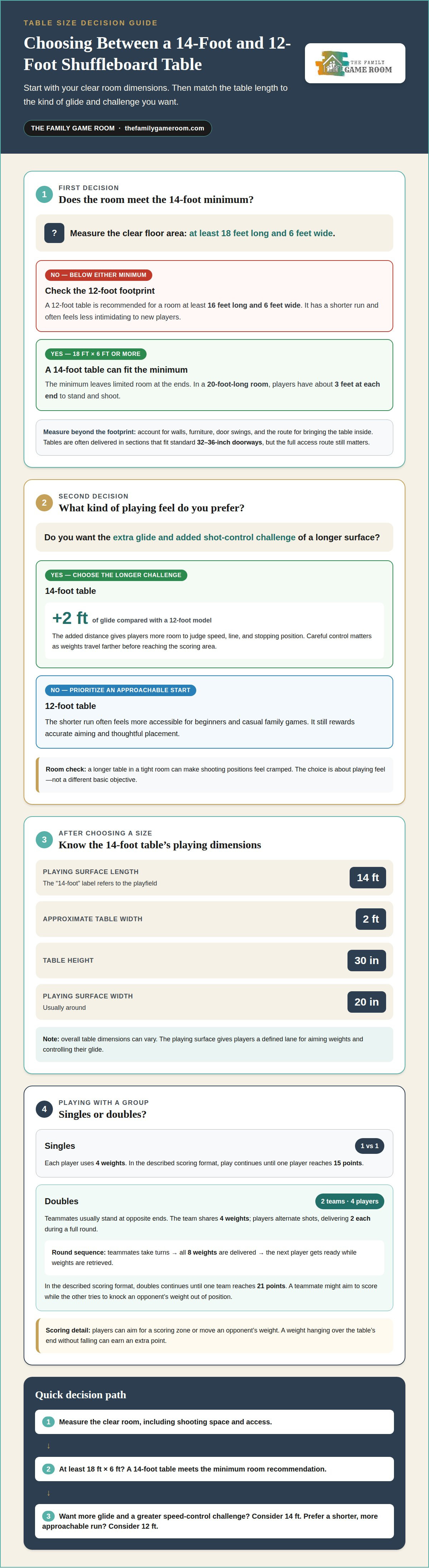
A 14-foot shuffleboard table sits between compact and mid-size options, with a long enough playfield for deliberate shots. Its hard maple playing surface measures 14 feet in length; the table itself is approximately 2 feet wide and 30 inches high. The playing surface is usually around 20 inches wide, giving players a defined lane for aiming weights and controlling their glide.
For room planning, allow at least 18 feet of length and 6 feet of width. That minimum leaves limited room at the ends, so a 20-foot room gives players about 3 feet at each end to stand and shoot. Measure the clear floor area, then account for walls, furniture, door swings, and the path used to bring the table inside. Tables are often delivered in sections that fit standard 32-36-inch doorways, but access routes still matter.
Length changes the feel of playing. A 14-foot table offers a longer glide than shorter shuffleboard tables, while tables under 14 feet are generally easier to play on. A 14-foot length can suit a dedicated home game room or a smaller commercial space, provided players have room to move around both ends. Check out the room’s usable dimensions before choosing a table length.
Installation starts with planning the final position and clearances before bringing the table into the room. Once assembled, keep the playing surface clean and maintain its wax so weights can travel smoothly. Slow wax is recommended for tables 9 to 14 feet long; medium-fast wax is used on tables 14 through 18 feet long. Follow the table’s care guidance to choose the appropriate routine.
Are there different 14-foot table sizes or playing-surface lengths? The 14-foot label refers to the playfield length; overall table dimensions can vary, and the playing surface is usually around 20 inches wide. What is the average price of a 14-foot shuffleboard table? There isn’t one universal average; materials, construction, finish, and features affect the price, so an average alone may not reflect the table you’re considering.
2. Playing shuffleboard with four people
A 14-foot table can host singles or doubles. Singles puts one player against one opponent, with each player using four weights. In doubles, four players form two teams, usually with teammates standing at opposite ends of the playing surface. This setup keeps everyone involved without crowding one side of the table.
In doubles, players alternate shots until all eight weights have been delivered. Teammates share their team’s four weights, taking turns so each player contributes. For example, one player can aim to score while their partner tries to knock an opponent’s weight out of position. This mix of individual shot choices and team strategy gives each turn a clear purpose.
How many shuffleboard pucks does each player use? In singles, each player uses four weights. In doubles, the team uses eight weights altogether, and teammates alternate shots, so each player delivers two during a full round. The weights are sometimes called pucks, but “weights” is the common term in table shuffleboard.
In the described scoring formats, singles play continues until one player reaches 15 points, while doubles continues until one team reaches 21. Players can aim for a scoring zone or use a shot to move an opponent’s weight. A weight that hangs over the table’s end without falling can earn an extra point. For a smaller group or new players, singles offers a straightforward start; doubles makes room for family teamwork.
Before the first round, choose teams and agree on a scoring target. Keep turns moving by having the next player get ready while weights are retrieved. On a long playing surface, discuss shot choices between turns, not during another player’s delivery. These simple habits help four players share the game smoothly and keep the friendly competition focused on the next shot.
3. 14-Foot versus 12-foot gameplay
A 14-foot table adds 2 feet of glide compared with a 12-foot model. That extra distance gives players more room to judge speed, line, and stopping position. A shot can travel farther before reaching the scoring area, rewarding careful weight control. The 12-foot surface is shorter and often feels less intimidating to new players. Both lengths still reward accurate aiming and thoughtful placement.
Room dimensions can help determine which length fits. A 12-foot table is recommended for a room at least 16 feet long and 6 feet wide. A 14-foot table needs at least 18 feet of length and 6 feet of width. These are minimum room recommendations, so consider how much open space players need at the ends. A longer table in a tight room can make shooting positions feel cramped.
For competitive play, the 14-foot distance adds space for strategic shots. A player can try to place a weight beyond an opponent’s, block a scoring line, or knock an opposing weight away. The longer glide path makes speed control more noticeable. On a 12-foot table, the shorter run can feel more accessible for beginners and casual family games. The choice is about playing feel, not a change to the basic objective.
Use the room’s clear dimensions and the players’ experience to make the call. For example, a household with new players and limited floor space may prefer the more approachable 12-foot option. If the room fits the 14-foot footprint and players want a longer shot to manage, that extra 2 feet offers a different challenge. Consider how often the table will host relaxed family turns versus competitive games. Either length can support both, but the shorter surface lowers the initial challenge, while the longer one asks for more precise control.
4. Family-friendly shuffleboard
Shuffleboard can keep a family gathering involved even when more people want a turn than the table holds at once. Groups of 25 or more can play table shuffleboard with games such as Horse Collar, Crazy Eights, and Shuffleboard Bowling. That gives hosts choices beyond a standard singles or doubles match, and lets the gathering take turns around the same playing surface.
For a mixed-age group, choose a game with an easy-to-understand goal. Scoring gives each player something clear to aim for, while sliding a weight offers a hands-on turn without a long explanation. A family might start with a simpler format for newcomers, then try Crazy Eights or Horse Collar as players get familiar with the table. Keep the focus on taking turns and celebrating a well-placed shot.
A regulation table is 22 feet long, but family play doesn’t depend on owning regulation equipment. A 14-foot table offers a home-friendly way to enjoy the game, while a group can rotate players between turns. Assign someone to keep score, invite the next player to get ready, and let others watch from a safe spot away from the shooting ends. That simple rhythm helps a larger gathering stay involved without crowding the player at the table.
For a family night, select a game before play begins and explain its scoring in plain language. Let younger or new players take time aiming, and keep the next weight ready only when the surface is clear. Switch teams or opponents between rounds to make each game feel fresh. Shuffleboard’s mix of skill, anticipation, and shared scoring turns a single table into a group activity. Make shuffleboard part of your family game room and give your next gathering a new way to play.
The Family Game Room: Indoor Shuffleboard Tables
The Family Game Room offers Indoor Shuffleboard Tables for households choosing a table that can bring family play into the home. After comparing a 14-foot table’s longer glide with a 12-foot option’s more approachable feel, consider which length suits your available room and the way your family likes to play.
Think about who will use the table, how often you’ll host games, and whether you want other activities alongside shuffleboard. Pool Table Dining Tops, Air Hockey Tables, and Foosball Tables offer more ways to create a welcoming game room. Start by matching the table to your space and your family’s plans. The Family Game Room offers Indoor Shuffleboard Tables to bring more fun and shared memories to your home.
Make Space for the Game Room You’ll Use
Think beyond the first game. A shuffleboard table can become a natural gathering point, while the room’s other furnishings help it serve everyday family life. If you’re deciding how many people can play on a 14-foot shuffleboard, consider how your family will take turns, welcome guests, and use the space between game nights.
The Family Game Room also offers American Heritage Billiards Pool Tables, Nixon Billiards Pool Tables, and Pool Table Dining Tops. These options can help you plan a room around your household’s interests, whether you’re building around shuffleboard or bringing several kinds of home entertainment together. Start with the space you have and the games your family enjoys most.
Ready to take the next step? Contact The Family Game Room to discuss your game room plans. A welcoming place to play starts with a layout that feels right for your home, and your family can make it their own.
Frequently Asked Questions
Why is Table Shuffleboard Such a Great Family Game?
Table shuffleboard gives family members a simple way to take turns, compete, and enjoy an activity together. Pair experienced players with beginners so teammates can share ideas and encouragement. Different game formats also let a group change the pace without changing tables. The appeal is the mix of aiming, anticipation, and shared moments around each shot.
How many players can play shuffleboard on a 14-foot table?
If you're asking how many people can play on a 14 foot shuffleboard, a standard game accommodates two players in singles or four in doubles. A larger gathering can join by rotating players between games rather than crowding around the shooting ends. For instance, two people can play while others keep score and choose the next teams. The table length doesn’t set a fixed limit on participation over a gathering.
How many players are recommended for a 14-foot shuffleboard table?
To decide how many people can play on a 14 foot shuffleboard in one round, plan for two in singles or four in doubles. Singles suits a quick head-to-head match, while doubles gives teammates a shared goal and alternating shots. If more relatives or friends are present, set up a rotation between rounds. That lets everyone participate while keeping the active playing area clear for shooters.
Can a 14-foot shuffleboard table be played with teams?
Yes. Four players can form two teams and alternate shots, with teammates working toward the same score. In the described doubles format, play continues until one team reaches 21 points. A useful team approach is to decide whether a shot should target scoring or change an opponent’s position, then let the next teammate respond with their turn.
How does player capacity on a 14-foot shuffleboard table compare with longer tables?
Longer tables don’t automatically mean more players in a standard game: singles still uses two players, and doubles uses four. Extra length changes the glide path and the room needed for play, not the basic player count. For larger gatherings, use a rotation so people can take turns regardless of table length, and keep the playing area clear.