


Maple hardwood is a leading choice for a shuffleboard playing surface, but the wood is only part of the story. A protective finish helps create the smooth glide players want, while the surface material also affects upkeep and durability.
It’s easy to focus on the playfield’s wood and overlook its finish. The best material for a shuffleboard playing surface depends on whether you prefer the feel of traditional hardwood or the protection and care needs of a coating or laminate.
This guide compares hardwood, polymer resin, laminate, polyurethane, and lacquer to show how each affects play and care. You’ll also learn how the playfield and finish work together, making it easier to choose a table that suits your home and how you plan to play.
Key Takeaways
- Compare hardwood, polymer resin, and laminate by how they balance surface feel, durability, and maintenance.
- Learn why maple is a popular playfield wood and what to consider when weighing other hardwood options.
- See how polyurethane and lacquer protect wood and contribute to a smooth playing surface.
- Use the material trade-offs to narrow your choice, then explore Indoor Shuffleboard Tables from The Family Game Room for your home game room.
1. Hardwood, polymer resin, and laminate playing surfaces
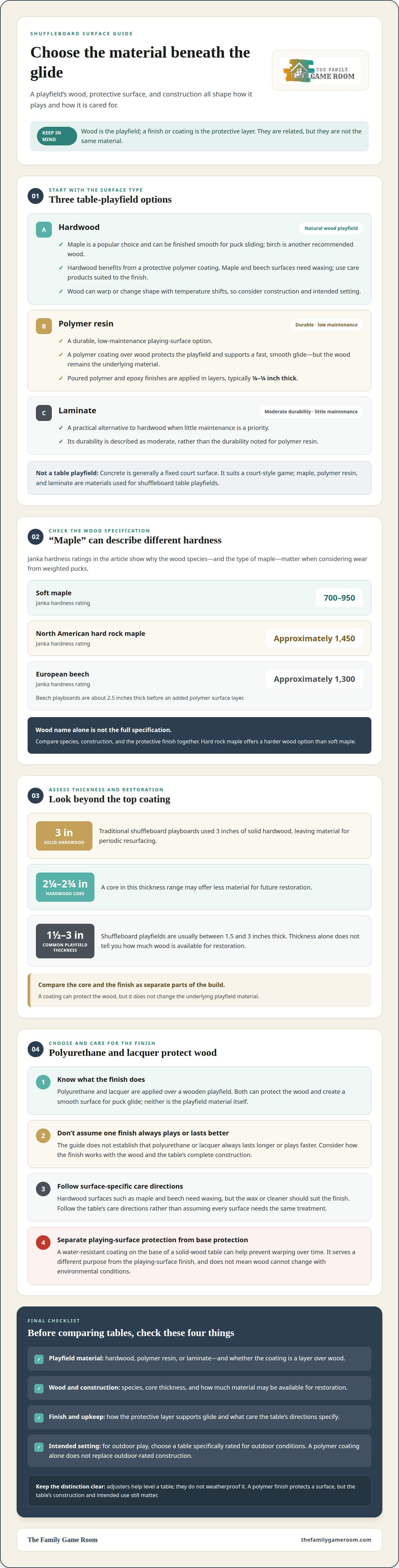
The best material for a shuffleboard playing surface depends on whether you prioritize natural wood, easy care, or protection. Maple provides a hardwood playfield that can be finished smooth for puck glide. Polymer resin offers a durable, low-maintenance surface. Laminate is another practical alternative to hardwood, with moderate durability and little maintenance.
For a direct comparison, maple is the wood beneath the finish, polymer resin is a protective playing surface, and concrete is generally a fixed court surface rather than a table playfield. These materials aren’t interchangeable: concrete suits a court-style game, while a shuffleboard table has a manufactured playfield designed for sliding pucks.
Wood benefits from a protective polymer coating. A pre-applied polymer coat helps seal and protect the wooden playfield, while the finished surface supports a fast, smooth glide. Poured polymer and epoxy finishes are applied in layers, typically 1/8" to 1/4" thick. That coating protects the wood, but it doesn’t change the underlying playfield material.
Hardwood construction also affects restoration. Traditional shuffleboard playboards used 3 inches of solid hardwood, leaving material for periodic resurfacing. A hardwood core measuring 2 1/4" to 2 3/4" may offer less material for future restoration. Consider the core as well as the finish when assessing a quality shuffleboard table.
Weather resistance depends on construction and intended use. Wood can warp or change shape with temperature shifts, while polymer resin is known for durability and low upkeep. Laminate also requires little maintenance, though its durability is moderate. For outdoor play, choose a table specifically rated for outdoor conditions. Polymer coatings protect a surface, but they don’t replace outdoor-rated construction; adjusters help level a table, not weatherproof it.
Concrete suits a tournament court because it is generally used as a fixed court surface. Maple, polymer resin, and laminate are materials for shuffleboard table playfields.
2. What Materials Are Shuffleboard Tables Made Of?
Maple is a popular choice for shuffleboard table playfields because it can be finished smooth for puck sliding. Birch is another recommended wood for a quality shuffleboard surface. In an American home game room, consider the playfield wood and its finish together. A polymer finish protects the wood and supports a slick playing surface, while the species determines the wood beneath it.
Maple hardness varies by type. Soft maple has a Janka hardness rating of 700-950, while North American hard rock maple rates approximately 1450. That difference matters when considering resistance to wear from weighted pucks. Hard rock maple offers a harder wood option; soft maple is less hard, so “maple” alone doesn’t describe every playfield’s characteristics.
Beech offers another comparison point: European beech has a Janka hardness rating of approximately 1300. Its playboards are about 2.5 inches thick before an added polymer surface layer. Maple and beech are both hardwood choices, while maple and birch are commonly recommended for quality playfields. Look at species and construction together rather than treating the wood name as the full specification.
A tournament court and a shuffleboard table have different playing surfaces. Maple is a recommended table-playfield material, but that doesn’t establish it as the best material for a tournament court. The stated tournament playfield standard is 20 inches wide; that dimension doesn’t prescribe a wood species. Official play dimensions and a table’s material selection are separate considerations.
Shuffleboard playfields are usually between 1.5 and 3 inches thick. That range helps frame a table comparison, but thickness alone doesn’t show how much wood is available for future restoration. For a home table, weigh wood species, playfield construction, and the protective finish together. Even a suitable hardwood surface needs a smooth finish for pucks to travel cleanly, so consider how the polymer coating complements the wood. A pool table may anchor a game room, but its materials don’t determine the right shuffleboard playfield.
3. Polyurethane and lacquer finishes
Polyurethane and lacquer are finishes applied over a wooden shuffleboard playing surface. Both can protect the wood and create a smooth surface for puck glide. They are not the playfield material itself: maple or another wood forms the board, while the finish is the protective layer players see and play on. Compare the finish with the underlying construction.
For solid-wood tables, a water-resistant coating on the base can help prevent warping over time. This base protection serves a different purpose from the playing-surface finish. The finish supports gameplay, while the coating on the base helps protect the wood structure. Neither means the wood cannot change with environmental conditions.
Weighted pucks make the finish a functional part of the table, not just a visual detail. A smooth, consistent surface helps pucks slide, while a protective layer shields the wood from everyday play. Polyurethane and lacquer both serve these purposes, but the available information doesn’t establish that one always lasts longer or plays faster. Don’t choose by finish name alone.
Instead, consider the finish as part of the complete table specification. Find out how it works with the playfield wood, what care it requires, and whether the table is intended for indoor or outdoor use. For example, an indoor maple playfield with a polyurethane finish remains a wood surface, not a polymer-resin playfield. The finish alone doesn’t establish outdoor suitability.
Care depends on the surface system. Hardwood surfaces such as maple and beech need waxing, but the wax or cleaner should suit the finish. Follow the table’s care directions rather than assuming every lacquered or polyurethane surface needs the same treatment. Room clearance affects movement around the table, not the finish choice. Prioritize a smooth, protective coating suited to the playfield and its intended setting.
The guide recommends a polymer finish to protect the shuffleboard playing surface and provide a fast, smooth puck glide, complementing the wood beneath it.
4. Playing-surface materials
Material affects puck speed and control through the smoothness of the finished surface. Maple can be finished slick for sliding, while a protective polymer surface also supports a fast glide. Players need a surface that lets pucks travel cleanly while rewarding careful weight and placement. Consistent movement matters more for scoring than choosing a material by name alone.
Wood choices also differ in durability and feel. Poplar and mango are more affordable playfield alternatives, but both are softer than average hardwood. Maple is popular because it can be finished smooth, while a polymer surface offers a different construction approach. Compare the wood beneath the finish with the playing layer above it; they are separate parts of the table.
Outdoor use calls for a different material decision. Choose a shuffleboard table specifically rated for outdoor conditions to help prevent warping and damage. Some outdoor models pair weather-resistant frames with polymer surfaces. This construction is designed for outdoor exposure, unlike an indoor wooden playfield whose finish alone doesn’t establish outdoor suitability. Match the full construction to where you’ll play.
Installation and table dimensions affect how much room players have to control shots. The playfield is typically slightly shorter than the table’s overall length, so compare the usable playing area with your room layout. Leg levelers on some quality tables can compensate for uneven floors, helping create a more consistent playing surface. Leveling supports predictable puck travel, but it doesn’t change material durability or weather resistance.
For a home game room, focus on the surface that fits your setting: finished hardwood for indoor play, or an outdoor-rated construction for exterior use. Keep the material, finish, and maintenance needs in view as one system. Ready to compare options for your space? Explore indoor shuffleboard tables and find a fit for your game room.
Shuffleboard bases can also use stainless steel or aluminum, and some metal models have scratch-resistant coatings. These base materials are distinct from the playing surface and its finish.
The Family Game Room: Indoor Shuffleboard Tables
The Family Game Room offers Indoor Shuffleboard Tables for choosing a table that suits your home and playing preferences. After comparing hardwood, polymer, laminate, polyurethane, and lacquer, use those distinctions to narrow what matters most: the playfield material, surface finish, maintenance, and whether the table is intended for indoor use.
When you’re ready to move from material research to choosing an indoor shuffleboard table, explore The Family Game Room’s game-room offerings. You can also bring together other home entertainment options, including Pool Table Dining Tops, Air Hockey Tables, and Foosball Tables.
Contact The Family Game Room to discuss your indoor shuffleboard table.
Make Your Game Room Work for You
Choosing the best material for a shuffleboard playing surface is one part of planning a room you’ll enjoy. Consider how you want the space to work between games, too. A table can anchor a dedicated entertainment area, while flexible furnishings can help a shared room support more than one activity. Connect your surface preferences with how you plan to use the room.
The Family Game Room offers American Heritage Billiards Pool Tables, Nixon Billiards Pool Tables, and Pool Table Dining Tops. These options can help shape a room for play, gathering, or dining alongside your shuffleboard plans. Consider which activities belong in your space, then explore the options that suit it.
Contact The Family Game Room to discuss your game room plans. Bring your ideas, and take the next step toward a welcoming space for time together.
Frequently Asked Questions
What Materials Are Shuffleboard Tables Made Of?
Shuffleboard tables can combine solid wood, manufactured wood, and metal, depending on the component. The playfield is commonly solid wood, while some designs combine solid and manufactured wood. Bases may use stainless steel or aluminum. A table’s wood playfield, supporting frame, and base can each use different materials, so consider the complete construction rather than assuming one material describes the whole table.
What materials are used for shuffleboard playing surfaces?
Playing surfaces may use hardwood, laminate, or a polymer surface over a wood playfield. Maple, birch, and beech are wood options; polyurethane and lacquer are protective finishes, not playfield materials. If you prefer low maintenance, laminate or polymer may appeal, while wood requires care suited to its surface. Hardwood surfaces such as maple and beech are waxed, so factor upkeep into your choice.
What materials are used for indoor table shuffleboard playing surfaces?
Indoor table playfields can be made from hardwood, including maple, birch, or beech, and may have a protective polymer coating. Laminate is another option. Keep the layers distinct: the wood or manufactured core provides the underlying board, while a coating or finish protects the playing surface. Compare the surface’s playing feel and care needs with how often you expect to play.