


The most famous foosball brand might not be the best fit for your game room. If you’re asking “what are the best foosball table brands,” start with how you want to play, who’ll be playing, and how much space you have. A competition-focused table can feel different from one chosen for relaxed family games, and a respected name alone won’t tell you which model belongs at home.
Brand recognition can help you build a shortlist, but the useful comparisons are more specific: playing style, table construction, stability, and whether the model suits your household. A practical comparison looks at each table’s specifications and intended use, rather than ranking names without explaining what sets them apart.
This 2026 guide compares leading brands by their typical positioning and playing styles, then explains what to consider beyond reputation when choosing a table for home use. You’ll also learn how tournament recognition differs from casual play and which practical factors can help narrow your options. The Family Game Room sells foosball tables alongside other game-room equipment, so you can explore different ways to build a home entertainment space.
Key Takeaways
- Use “what are the best foosball table brands” as a starting point, then compare the specific table’s design and intended use.
- Learn how Tornado, Garlando, Dynamo, Bonzini, and Leonhart differ in positioning and playing style.
- Match your shortlist to who’ll play and how often, rather than choosing by reputation alone.
- Use a buying checklist to compare models and confirm that your room has space for comfortable play.
- Keep the distinction clear: manufacturers make tables, while The Family Game Room sells foosball tables and other game-room equipment.
What Makes a Foosball Table Brand Worth Considering?
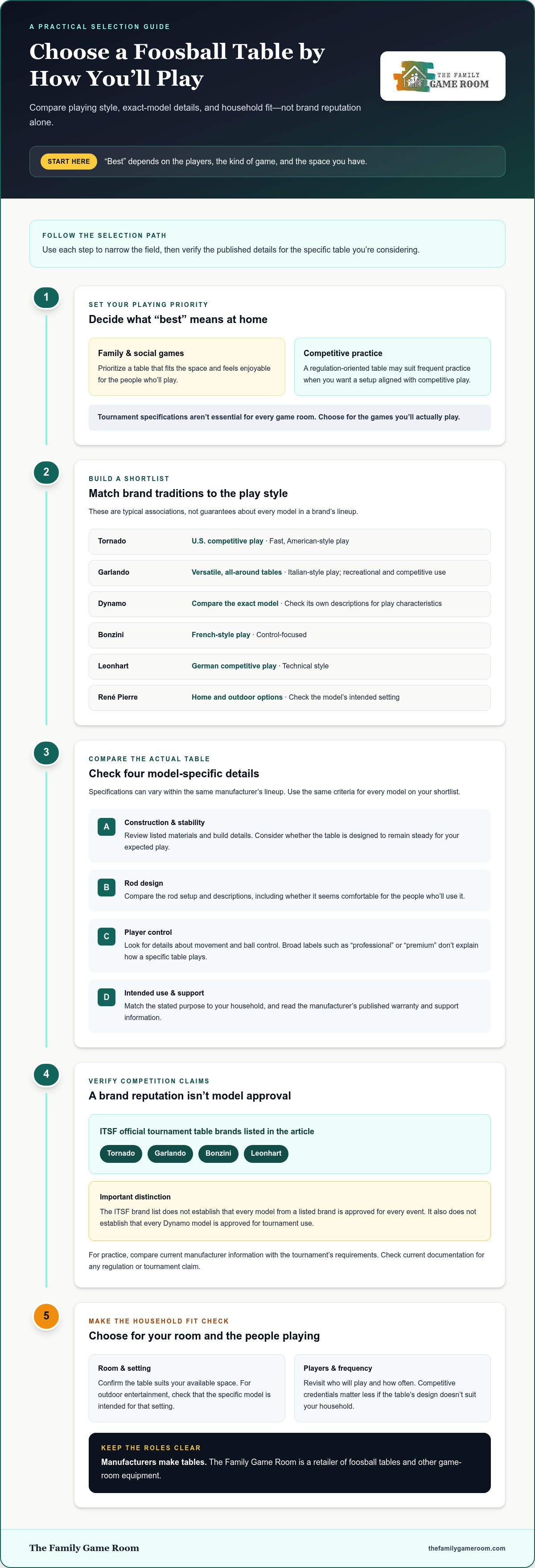
A worthwhile foosball brand makes tables that suit the people, space, and kind of play you have in mind. A family looking for lively social games may want a different playing feel from someone practicing for tournaments. Reputation can point you toward a few names, but it can’t tell you whether a particular model feels stable, is comfortable to use, or fits your household.
Treat the brand as a starting point, not a verdict. Manufacturers may offer different designs and features across their lineups, so compare the exact model rather than assuming every table shares the qualities associated with its name. If you’re asking what are the best foosball table brands, first decide what “best” means for the people who’ll play.
What should shoppers compare across foosball table brands?
Use the same criteria for every model on your shortlist. That makes a brand comparison more useful than a ranking based on reputation alone.
- Construction and stability: Review the listed materials and build details. Consider whether the table is designed to remain steady during the kind of play you expect.
- Rod design: Compare the rod setup and descriptions, and think about whether it will feel comfortable for the players who’ll use the table.
- Player control: Look for model details that explain movement and ball control. Broad terms such as “professional” or “premium” don’t tell you how a specific table plays.
- Intended use and support: Match the model’s stated purpose to your household. Read the manufacturer’s published warranty and support information as part of the ownership decision.
Specifications can differ within a manufacturer’s lineup. One model may be designed for home recreation while another emphasizes competitive play, so don’t transfer a feature or claim from one table to another. Check the current information for the exact model, especially its construction, rod design, intended use, and any regulation or tournament claims. For background on how formats and rules differ, see this overview of the history and rules of table football.
Does a regulation table make sense for home play?
A regulation-oriented table may suit you if you practice often and want a setup aligned with competitive play. Consistent dimensions, layout, and playing characteristics can help players get used to the type of table they expect to encounter. If that matters to you, review the applicable tournament standards and make sure the specific model’s current documentation supports any regulation claim.
Tournament specifications aren’t essential for every game room. For family matches or social play, prioritize a table that fits the space and feels enjoyable for the people using it. Competitive credentials matter less if the design doesn’t suit your household. Choose for the games you’ll actually play, using the model’s published details rather than the brand name alone.
Best Foosball Table Brands: How the Leading Names Compare
There isn’t one winner for every game room. Tornado, Garlando, Dynamo, Bonzini, and Leonhart are associated with different playing traditions and buyer priorities, while individual models within each brand can vary. Use the comparison to make a shortlist, then match the exact table to your players and intended setting.
| Brand | Typical positioning | Play style | Shopper fit |
|---|---|---|---|
| Tornado | U.S. competitive play | Fast, American-style play | Players seeking a familiar competitive setup |
| Garlando | Versatile, all-around tables | Italian-style play | Households comparing recreational and competitive use |
| Dynamo | Compare by specific model | Check model information for play characteristics | Shoppers with a particular Dynamo table in mind |
| Bonzini | French-style play | Control-focused | Players drawn to French table soccer |
| Leonhart | German competitive play | Technical style | Players interested in German-style competition |
| René Pierre | Home and outdoor options | Review the model’s intended setting | Shoppers considering a table for outdoor entertainment |
| The Family Game Room | Retailer of foosball tables | Depends on the table selected | Homeowners exploring game-room options through a retailer |
Which brands are associated with competitive or regulation-focused play?
The International Table Soccer Federation (ITSF) lists Tornado, Garlando, Bonzini, and Leonhart among its official tournament table brands. Tornado is associated with fast American-style play, Bonzini with French-style control, and Leonhart with German technical play. Garlando is recognized for versatility. The ITSF’s Tornado foosball tables and ITSF recognition page provides a reference for its competitive standing.
Dynamo may come up in a brand search, but the ITSF official-brand list does not establish that every Dynamo model is approved for tournament use. Competitive credentials can depend on the model and event. If you’re buying a table for practice, compare current manufacturer information with the tournament’s requirements. A brand’s reputation may suggest a playing style, but it doesn’t replace the details for the exact model.
Which brands may suit casual or style-conscious home game rooms?
Garlando’s range of play styles and René Pierre’s outdoor offerings may appeal to households looking beyond tournament practice. The setting matters: a table designed for outdoor use may suit an outdoor entertainment area, while another model may be intended for indoor play. Check the manufacturer’s current catalog for the specific table’s intended use and construction. Don’t assume a finish, material, or performance feature based on the brand name alone.
For a home shortlist, compare each model’s stated purpose with how your household will use it. The Family Game Room sells foosball tables as part of its game-room selection. Browse the foosball table selection alongside other retailer options, comparing specific models and their published details.
How to Choose Between Foosball Brands for Your Playing Style
Start with the people around the table, not the manufacturer’s reputation. Who’ll play most often? Are you planning quick, social games, or will someone use the table to practice competitively? Then consider how much room you can dedicate to play and whether the table needs to work for children, adults, and visitors with different experience levels.
Your answers help narrow the field to relevant table types and models. A brand’s visibility can provide useful context, but it doesn’t tell you whether a particular table suits your household. Even broad foosball table market trends and analysis won’t replace a close look at the table’s intended use and specifications. For some households, the question isn’t only which brand to choose, but which game belongs in the room. This guide to air hockey versus foosball can help clarify that choice.
Which brand priorities fit family and casual play?
For shared family use, look for a model designed for everyday play and comfortable for the people who’ll gather around it. Review the intended use, construction details, and player-access design. A competition-focused table isn’t automatically more enjoyable for casual matches. The best fit is the one that welcomes players with different experience levels and suits how your household likes to spend time together.
For example, a household that plays occasional weekend games with children and visiting friends may value a versatile table more than a competition-focused setup. If one adult practices regularly while everyone else joins in now and then, compare models that can suit both kinds of play instead of choosing only for the most serious player. The current manufacturer information can help you understand what each model is designed to deliver.
What should competitive players prioritize?
Frequent players should focus on consistent playing characteristics and model-level evidence of tournament suitability. Compare the exact table’s current specifications with any relevant regulation or approval information. Don’t assume every table from a competition-associated brand is built or approved for the same purpose. Comparing a shortlist of specific models is more useful than comparing famous manufacturers in the abstract.
Room planning matters, too. Make sure players can move around the table and operate the rods comfortably, and account for the ages and reach of the people who’ll use it. A smaller room or a table shared across age groups may change your shortlist, even if one player is committed to competition.
If your game-room plans include more than one activity, consider the space and play habits each option requires. A guide to an air hockey table for home offers another perspective on game-room priorities. The Family Game Room sells foosball tables and other game-room equipment. Explore its foosball table options as you plan a space around the games your household will enjoy.
What to Check Before Buying a Foosball Table
A good shortlist can still lead to the wrong purchase if the table won’t fit the room or the delivery plan doesn’t meet your needs. Before choosing a model, work through this checklist. It connects your intended use to the details that shape everyday ownership, helping you compare options and plan ahead.
- Set the intended use. Decide who’ll play, how often, and whether the table is for casual home games or regular competitive practice. Use that purpose to filter the models you consider.
- Measure the room and route. Measure the play area and leave space around every side for players to move and operate the rods. Also measure the route into the room, including doorways and turns.
- Compare the exact dimensions. Check the manufacturer’s listed length, width, and height for the specific model. Don’t estimate fit from a brand name or assume similarly named models have the same dimensions.
- Review construction and components. Read the current product information for materials, stability-related design details, rod configuration, and included components. Compare those details model by model rather than relying on broad brand descriptions.
- Check warranty terms. Read the manufacturer’s warranty scope and duration, and distinguish it from separate retailer policies. Check which components and circumstances the written terms cover.
- Review purchase, delivery, and setup details. Check the selected option’s delivery terms, included components, and setup information. Delivery language can differ by retailer and option, so don’t assume delivery includes assembly.
How do room size and table construction affect the choice?
Measure the room before settling on a brand. The table’s footprint is only part of the plan: players need room along the long sides and space to operate the rods without crowding walls, furniture, or one another. Measure the full play area and compare it with the exact model dimensions. Review construction details in the manufacturer’s current information, and avoid generic room-size rules that don’t account for your layout or how people will move around the table.
How should shoppers assess warranty, delivery, and setup?
Read the terms, not just the headline. Manufacturer coverage and retailer policies may address different things. The Family Game Room offers a one-year manufacturer warranty on game-room furniture components. Review the selected product’s written warranty terms to understand what applies to that item. White-glove delivery is delivery only; professional assembly and leveling aren’t included. Check the product’s purchase and delivery details so you can plan for the table’s arrival and setup.
Ready to compare options for your game room? Explore foosball tables from The Family Game Room and use the checklist to narrow your choice.
Explore Foosball Tables at The Family Game Room
Brand comparisons help explain how manufacturers differ, but the right choice still comes down to the exact table and how it will be used at home. The Family Game Room is a retailer, not a manufacturer. Manufacturers design and make tables; The Family Game Room sells foosball tables and other game-room equipment, giving you a place to explore options for your home.
If you’ve been weighing what are the best foosball table brands, use the comparisons to identify the playing style and features you want, then evaluate the specific table you’re considering. The manufacturer’s product information can help you compare intended use, construction, and other model details.
How does a curated game-room retailer help complete the comparison?
A game-room retailer lets you consider a foosball table alongside other options for home entertainment. The Family Game Room offers new game-room equipment, including foosball tables, pool tables, shuffleboards, arcade games, and furniture. Nationwide shipping options include protected freight, economy curbside, and express freight. Review the selected product’s delivery details when planning your order.
Keep the comparison grounded in the manufacturers and models discussed earlier. The product’s published details should guide your decision. Looking across game-room categories can also help you plan a space that fits your household, whether foosball is the main event or one part of a shared entertainment room.
What support details should shoppers understand before ordering?
Read warranty and delivery terms carefully. The Family Game Room offers a one-year manufacturer warranty on game-room furniture components. Review the warranty terms for the specific product to understand the coverage that applies.
Delivery and setup are separate considerations. White-glove delivery is delivery only; professional assembly and leveling aren’t included. Read the purchase and delivery details for the selected table so you know what the chosen option covers and can plan for setup. A clear plan helps the table fit smoothly into your home entertainment space.
Bring your shortlist, intended use, and room measurements together before deciding. Then explore The Family Game Room’s game-room selection to browse foosball tables and other equipment for home entertainment.
Make Room for More Game-Night Memories
The best choice is the table that makes people want to gather around it. Before deciding, picture an ordinary evening at home: who’s playing, where the game fits, and what would make the space welcoming for everyone. That vision can turn a long list of brands into a confident, personal choice. “What are the best foosball table brands” has a useful answer when it leads you to a table your household will enjoy.
The Family Game Room is a family-owned retailer focused on bringing home entertainment into everyday life. Use your preferred playing style and room plans to identify the options that suit the atmosphere you want to create. A thoughtful game-room choice can become the backdrop for friendly rivalries, spontaneous rematches, and time together.
Explore game-room tables and bring family fun home. Your next favorite gathering place could start with one great game.
Frequently Asked Questions
Is Tornado the best foosball table brand?
Tornado is a prominent brand, but it isn’t automatically the best choice for every buyer. A competitive player may value a table that aligns with their practice goals, while a household hosting occasional game nights may prefer a model suited to relaxed shared play. Compare the specific tables side by side and use current manufacturer information to check the details that matter for your intended use.
What are the most popular foosball table brands?
Names shoppers often encounter include Tornado, Garlando, Dynamo, Bonzini, Leonhart, Roberto Sport, and Shelti. If you’re asking what are the best foosball table brands, popularity can help you discover options, but it isn’t a substitute for comparing them. Shortlist brands based on your preferred style of play, then compare current models, intended use, and published specifications to see which ones suit your game room.
Are all foosball table brands regulation size?
No. Dimensions and regulation-related details can differ between models, including tables from the same manufacturer. If a particular competition standard matters, identify the event or rules you want to follow before shopping. Then compare the exact table’s current documentation with the requirements for that competition. A familiar brand name or a general “tournament” description alone doesn’t establish that a specific model qualifies.
Can a home foosball table be used for competitive practice?
Yes, if the specific model’s playing characteristics suit the player’s goals. Someone preparing for competition should identify the table format or requirements they expect to encounter, then compare candidate models against those details. A player practicing regularly may have different priorities from a household that mainly plays casually. Check the model information rather than assuming every table from a competition-associated brand is suitable.
How much should I spend on a foosball table?
There’s no single budget that fits every shopper. First decide how often the table will be used, who’ll play, and whether competitive practice matters. Then compare the full product details for models that fit those needs, including construction, included components, and purchase terms. That helps you weigh value for your household instead of choosing by price alone.
What should I look for in a foosball table brand for family use?
Choose a model that works for the ages, experience levels, and routines of the people who’ll share it. If children and adults take turns during family gatherings, consider whether the table’s design and features suit a mixed group. Check the product information for the exact model and think about how often it will be played. A highly competitive setup isn’t necessary if casual family games are your main goal.