


Did you know that over 40% of households have now adopted air hockey tables as a preferred leisure activity? It is easy to see why. There is nothing quite like the rush of a high-speed match in your own game room. However, that excitement fades fast when your puck starts dragging or dust begins to clog the very air holes meant to keep the game alive. You want a surface that remains pristine, not one marred by scratches or slowed by the residue of the wrong cleaning chemicals.
Mastering proper air hockey table care is the only way to protect your investment and keep that professional-grade, lightning-fast gameplay intact. We understand that your game room is a center for family connection and high-end entertainment. You deserve equipment that performs at its peak every time you pick up a mallet. This guide provides the exact maintenance techniques you need to preserve the physics of frictionless play. We will walk you through safe cleaning methods, airflow management, and the simple steps to avoid expensive repairs while keeping your table looking like a showroom centerpiece.
Key Takeaways
- Protect your table's internal mechanics by learning why you should always clean the surface with the motor running.
- Eliminate surface scratches and puck drag by inspecting your accessories for burrs, chips, or warping.
- Shield your investment from structural damage caused by high humidity and direct UV exposure.
- Master professional air hockey table care to maintain lightning-fast speeds and prevent premature blower motor burnout.
- Troubleshoot performance drops by identifying the difference between simple voltage issues and mechanical failures.
The Fundamentals of Air Hockey Table Care
Effective air hockey table care is a two-part discipline. It requires keeping the polycarbonate surface hygienic while ensuring the mechanical blower system operates without obstruction. Think of your table as a high-performance machine. If you treat it like a standard piece of furniture, you risk degrading the very physics that make the game exciting. Professional-grade preservation goes beyond a quick wipe; it involves a proactive strategy to prevent friction and mechanical strain.
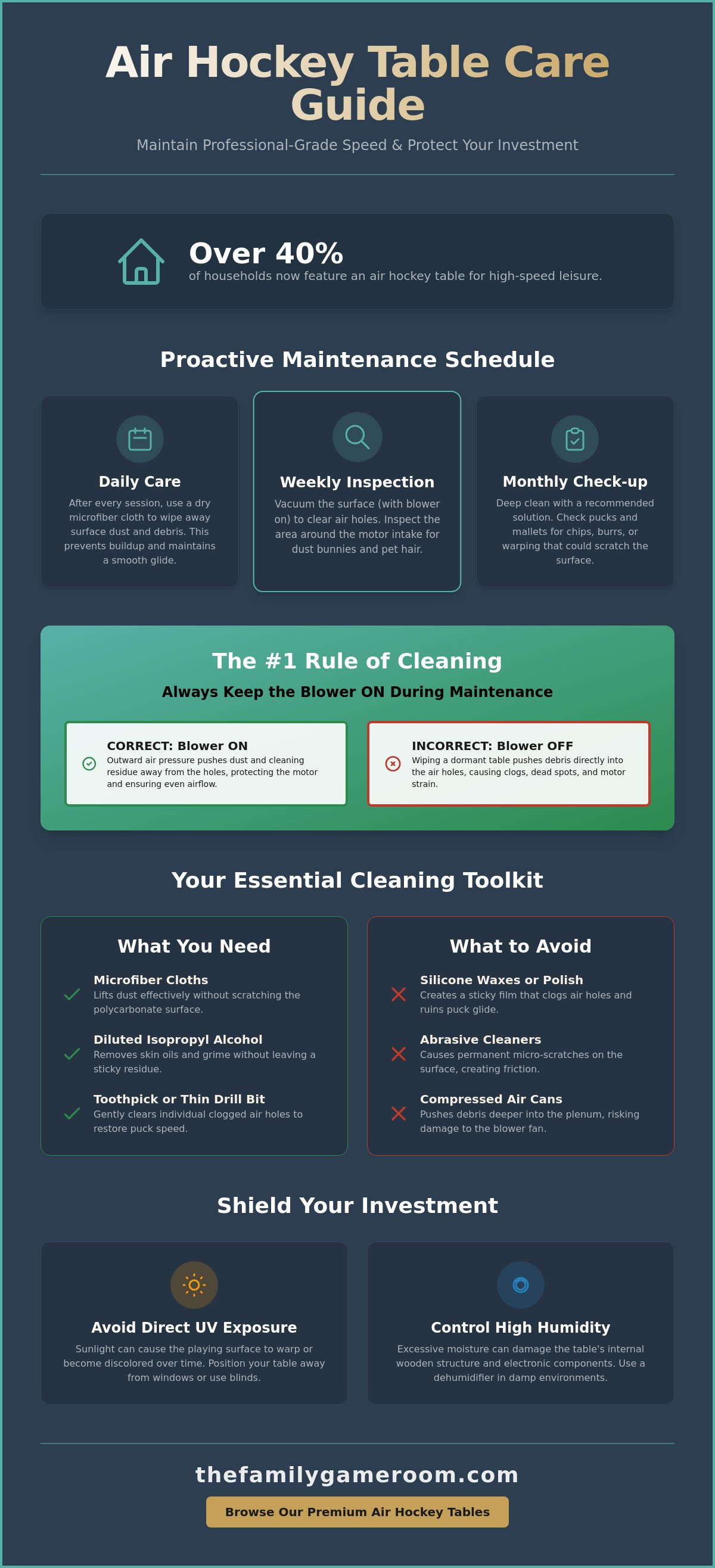
Maintain a consistent schedule to avoid the gradual decline of your equipment's performance. A clean table reduces friction, which directly prevents blower motor burnout. When air holes are clear, the motor breathes easily. When they are clogged, the motor strains, overheats, and eventually fails. Follow this simple cadence for optimal results:
- Daily: Clear the surface of visible dust with a dry microfiber cloth after every session.
- Weekly: Inspect the air holes for blockages and vacuum the surface with the motor running.
- Monthly: Clean the top with a professional-grade solution and check the pucks for physical damage.
Why Regular Maintenance is Non-Negotiable
The magic of Air hockey lies in its "hovercraft" mechanics. A high-output blower forces air through thousands of tiny perforations, creating a near-frictionless cushion. When dust particles settle on the surface, they act like microscopic anchors. They create drag on the puck, slowing the game and forcing the blower motor to work harder against backpressure. Neglecting your air hockey table care leads to more than just slow play. It causes permanent surface scarring and eventual motor failure. Protect your investment by respecting the physics of the game.
Essential Cleaning Supplies for Premium Tables
Keep your toolkit simple but specific. Use high-quality microfiber cloths to lift dust without scratching the polycarbonate top. Diluted isopropyl alcohol is excellent for removing skin oils and grime without leaving a residue. Avoid silicone-based waxes or abrasive cleaners at all costs. These substances might look shiny initially, but they eventually clog the air holes and create a sticky film that ruins puck glide. For the holes themselves, keep a thin drill bit or a specialized cleaning pick on hand. Clearing blockages manually ensures consistent airflow across the entire playing field. Use these professional tools to maintain the sleek, high-end finish of your game room centerpiece.
Maintaining the Playing Surface and Airflow System
The secret to professional-grade air hockey table care lies in one non-negotiable rule: always keep the blower running while you clean. This simple step creates outward air pressure, which prevents dust, skin oils, and cleaning residue from falling into the perforations. If you wipe down a dormant table, you're essentially packing debris into the very holes that provide the puck's lift. This leads to uneven play and increased motor strain over time. By maintaining active airflow during maintenance, you ensure that every particle wiped away stays on the surface where it can be safely removed.
Deep Cleaning the Tabletop Without Damage
Daily maintenance should involve a "dry-wipe" method. Use a clean microfiber cloth to sweep away surface dust between games. For deeper cleaning to remove oils left by hands, use a damp cloth. Move the cloth in small, circular motions across the polycarbonate top to lift grime without scratching the finish. The cloth should be barely moist to the touch, ensuring no liquid can seep through the air holes and damage the motor or the internal wooden supports. If you're looking for a new centerpiece for your home, consider browsing our premium air hockey tables designed for longevity and superior airflow.
Clearing Clogged Air Holes for Peak Puck Speed
Even with careful cleaning, atmospheric dust can occasionally bridge an air hole. To restore peak puck speed, you must clear these obstructions safely. Use a thin toothpick or a small drill bit to gently poke through the debris. Be careful not to enlarge the hole, as this will create uneven air distribution across the surface. Never use cans of compressed air. While it seems convenient, the high-pressure blast actually pushes contaminants deeper into the air plenum, where they can eventually reach the blower fan. For more technical insights, you can review this guide on Valley-Dynamo air hockey table care to see how the pros handle surface friction and hardware longevity.
Don't ignore the area beneath the table. Dust bunnies and pet hair often accumulate around the blower's intake. Periodically use a vacuum with a brush attachment to clean the underside and the motor housing. This ensures the air being pushed through the table is as clean as possible. If you notice a change in the pitch of the motor or a significant drop in puck lift despite clear holes, it may indicate a failing blower rather than a simple clog. Regular attention to these mechanical details preserves the lightning-fast gameplay you expect from a high-end table.
Tuning Your Pucks, Pushers, and Leveling
While surface hygiene is vital, your accessories and the table's physical stance dictate the quality of every shot. Pucks and pushers are the only components that make direct contact with your playing field. If they aren't maintained, they become the primary source of unsightly surface scratches. Integrating accessory maintenance into your air hockey table care routine is essential for professional-grade performance. Even the most powerful blower cannot compensate for a damaged puck or a table that leans to one side.
Inspect your pucks weekly for physical defects. Run your finger along the edges to feel for burrs or chips. These tiny imperfections act like sandpaper on your table's finish. Check for warping by placing the puck on a flat surface to see if it wobbles. A warped puck loses its aerodynamic lift, leading to "chattering" and unpredictable flight paths. If you find damage, don't throw the puck away immediately. Most minor issues can be solved with a few minutes of careful tuning.
Resurfacing Pucks and Felt Pads
You can restore a rough puck using fine-grit sandpaper, specifically 400-grit or higher. Lay the sandpaper flat on a hard surface and move the puck in a smooth figure-eight motion. This technique removes burrs without creating flat spots. Once the edges feel silk-smooth, wipe the puck with a dry cloth to remove any plastic dust. Next, turn your attention to the pushers. The felt pads on the bottom protect the table and provide the necessary cushion for high-speed impacts. Perform the "Felt Test" by sliding the mallet across the table with the air off. If you hear a grinding sound or feel any resistance, the felt is worn thin. Peel off the old pads, clean the plastic base with a touch of isopropyl alcohol, and apply fresh, self-adhesive felt to ensure a frictionless glide.
Ensuring a Perfectly Level Playing Field
A table that isn't level ruins the competitive integrity of the game. Gravity should never be a factor in your scoring. Use a carpenter's level or a high-precision smartphone app to check the balance of the table. Place your leveling tool in the center, then near each goal. If the bubble isn't perfectly centered, your table needs an adjustment. You can also perform the "Slow Puck Test" by sliding a puck very gently across the surface. If the puck consistently drifts toward one corner or side, you've identified a dead spot caused by a tilt. Most high-end furniture-style tables feature adjustable leg levelers. Turn these in small, quarter-turn increments. This gradual approach prevents unnecessary stress on the frame and ensures the internal air plenum remains sealed and efficient.
Protecting Your Investment from Environmental Factors
Superior craftsmanship deserves a stable environment. While previous sections focused on the internal mechanics of play, holistic air hockey table care requires you to look beyond the polycarbonate top. Your table's cabinet and frame, often constructed from premium hardwoods by industry leaders like Nixon Billiards, are susceptible to the atmosphere of your home. Dramatic shifts in humidity or temperature can compromise the structural integrity of the air plenum, leading to air leaks that diminish puck lift and ruin the game's physics.
UV rays are a silent enemy of high-end game room furniture. Direct sunlight through a window will eventually yellow a polycarbonate surface and fade the rich stain of a luxury wood cabinet. Position your table in a climate-controlled area away from large windows and HVAC vents. This placement also protects your electronic scoreboards. Since approximately 45% of modern tables now feature digital enhancements like LED lighting and automated scoring, maintaining temperature stability is essential for preventing circuit board failure and screen glitches. Avoid high-traffic spill zones where drinks might be placed on the rails, as moisture is the primary cause of wood swelling and delamination.
Humidity and Temperature Control for Wood Frames
Maintain a Relative Humidity (RH) range between 40% and 55% in your game room. This consistency prevents the wood from expanding and contracting, which can loosen the seals around the air motor. To preserve the visual appeal of your cabinet, use a premium, non-silicone furniture polish on the exterior wood surfaces only. Never let this polish touch the playing field. Watch for signs of frame stress, such as hairline fractures in the finish or a change in the sound of the blower, which might indicate that the internal air chamber is warping. If you value heirloom-quality construction, you can learn more about these standards in our American Heritage Billiards Pool Tables: The 2026 Luxury Buyer’s Guide.
The Role of High-Quality Table Covers
A fitted cover is your first line of defense against "passive" dust buildup. When the table is not in use, atmospheric dust settles into the air holes and the motor intake. A heavy-duty vinyl cover provides excellent spill protection, while a breathable fabric cover is ideal for preventing moisture trapped under the surface in humid climates. Using a cover reduces the frequency of deep cleanings and ensures your table plays like new every time you uncover it. Maintain the professional polish of your entertainment space by investing in the right accessories. Explore our curated selection of premium air hockey tables to find a model built for lifelong durability and style.
Advanced Troubleshooting and Longevity Tips
Mastering the art of air hockey table care involves knowing when to intervene and when to observe. If you notice a sudden drop in puck lift, don't assume the motor has failed. Start by diagnosing the power source. A weak blower often stems from simple voltage fluctuations or a loose electrical connection. Plug the table into a dedicated outlet to ensure it receives consistent power. If the motor produces a grinding noise or a burning smell despite a steady power supply, you're likely facing a mechanical bearing failure. In these instances, hardware replacement is the only reliable path forward.
Surface scratches require a discerning eye. Minor scuffs are a natural part of competitive play and rarely affect the puck's trajectory. If a scratch is deep enough to catch a fingernail, you might consider a specialized polycarbonate polish. Use extreme caution here. Over-polishing creates "slick spots" that behave differently than the rest of the table, leading to inconsistent gameplay. Often, the best course of action for minor cosmetic wear is to leave it alone. Prioritize electrical safety by inspecting the power cord monthly for fraying or kinks. A damaged cord isn't just a performance issue; it's a significant safety hazard in your home entertainment space.
When to Call a Professional vs. DIY
Maintain a clear boundary between routine maintenance and technical repair. DIY efforts should be limited to surface cleaning, accessory tuning, and leveling. Attempting to open the blower unit or rewire the electronic scoreboard can void the warranty on premium tables from brands like Nixon Billiards. These components are precision-engineered and require specialized tools for calibration. If you encounter persistent electronic glitches or total motor failure, contact a certified game room technician. These professionals ensure that your high-end equipment is restored to factory specifications without compromising its long-term value.
Upgrading Your Game Room Experience
The quality of your play is often dictated by the environment you create. Proper overhead lighting is essential for more than just aesthetics. High-quality billiard light fixtures eliminate shadows on the playing field, allowing you to spot microscopic debris and track the puck with precision. A well-maintained air hockey table serves as the centerpiece of a sophisticated home, especially when paired with other expertly crafted furniture like Poker Tables. Creating a cohesive, curated space reflects your commitment to quality and long-term satisfaction.
If you plan to leave your table unused for several months, follow a strict storage checklist. Perform a deep clean, clear all air holes, and apply a fitted cover. Unplug the unit to protect the sensitive electronics from power surges. By following these advanced air hockey table care techniques, you ensure that your investment remains a source of excitement for years to come. A pristine table is more than a game; it's a testament to a well-curated lifestyle.
Master the Game: Your Table's Future Starts Today
Maintaining a high-end game room is an investment in your home's social life. By prioritizing consistent air hockey table care, you ensure that every match remains fast, fair, and exciting. The combination of surface hygiene and environmental control is what separates a fading table from a lifelong heirloom. Focus on keeping the motor running during cleaning and shielding the wooden frame from humidity. These simple steps pay dividends in performance and longevity.
At The Family Game Room, we've shared our expertise as a family-owned business since 2022. We are proud authorized dealers for industry leaders like American Heritage and Nixon Billiards. Our team understands the superior craftsmanship required for premium play. We offer free shipping on all luxury game tables to help you build the ultimate entertainment space without friction. Ready for your home is a table that plays like new every time. If you're looking to elevate your experience, explore our collection of premium Air Hockey Tables for your home. Transform your game room into a sanctuary of quality today.
Frequently Asked Questions
Can I use Windex or glass cleaner on my air hockey table?
You should avoid ammonia-based glass cleaners like Windex on your polycarbonate playing field. These harsh chemicals can cause the surface to cloud, become brittle, or develop fine cracks over time. Instead, use a solution of diluted isopropyl alcohol and a clean microfiber cloth to lift skin oils and grime safely without damaging the high-end finish.
How often should I clean the air holes in my table?
Perform a visual inspection of the air holes every week to ensure optimal airflow. If you notice a specific area where the puck loses speed or "grounds out," clear those individual obstructions immediately using a toothpick or a small drill bit. Regular air hockey table care prevents atmospheric dust from becoming a permanent blockage in the air plenum.
What is the best way to fix a slow air hockey puck?
Resurfacing the puck with fine-grit sandpaper is the most effective solution for restoring speed. Use 400-grit or higher to smooth out any burrs or chips on the puck's edges that create friction against the table. Ensure the table surface is also free of oily residue, as even a perfectly tuned puck will drag on a dirty playing field.
Is it safe to leave my air hockey table blower running all day?
You should only run the blower while the table is in active use or during a cleaning session. Leaving the motor running for extended periods causes unnecessary wear on the bearings and can lead to overheating. Switch the power off after every game session to preserve the mechanical integrity and longevity of your premium entertainment investment.
How do I remove deep scratches from the air hockey surface?
You generally shouldn't attempt to buff out deep scratches that have breached the top polycarbonate layer. While minor surface scuffs can be treated with specialized polishes, deep gouges usually require a professional technician to assess the damage. If the scratch doesn't catch the puck or affect flight paths, it's often safer to leave it alone to avoid creating uneven slick spots.
Why is my air hockey table louder than it used to be?
A noisier table typically indicates that the blower motor bearings are starting to fail or that debris has entered the fan housing. Check the underside of the table for any loose screws or components that might be vibrating against the frame during operation. If the sound is a persistent high-pitched whine, the motor likely requires professional inspection or replacement.
Can I use car wax to make my air hockey table faster?
Avoid using car wax or any silicone-based lubricants on your table surface. While these products might provide a temporary speed boost, the wax eventually migrates into the air holes, causing clogs and creating a gummy residue that is extremely difficult to remove. Effective air hockey table care focuses on maintaining a clean, dry surface rather than applying artificial lubricants.
How do I know if my air hockey table motor is failing?
A failing motor often produces a distinct burning odor or a noticeable change in its operating pitch during a match. You may also observe a significant, widespread drop in air pressure, causing the puck to move sluggishly even when the holes are clear. If these symptoms persist after checking your electrical connections, it's a clear sign the motor needs technical attention.