


That budget-friendly pool table might actually be the most expensive mistake in your game room. While an MDF surface looks identical to slate on a showroom floor, the reality of ownership changes the moment humidity hits your home. You want a centerpiece that brings the family together, not a piece of furniture that warps after a few seasons. It's natural to feel uncertain about floor load requirements or the technical needs of professional leveling when you're curating a luxury entertainment space.
This guide breaks down the slate vs mdf pool table pros and cons to ensure your investment provides professional-grade play for a lifetime. You'll learn why premium craftsmanship matters for maintaining a perfectly level surface and how to match high-end aesthetics with your existing decor. We'll explore the critical differences in weight, the 30-year durability of slate compared to the 3 to 5-year lifespan of fiberboard, and the total cost of ownership for your new game room anchor.
Key Takeaways
- Master the essential slate vs mdf pool table pros and cons to choose a surface that matches your skill level and home entertainment goals.
- Learn why natural stone offers unrivaled leveling precision that lasts decades, unlike the temporary nature of composite fiberboard.
- Assess how the weight of a slate table stabilizes your game room cabinet for consistent, vibration-free play.
- Evaluate the total cost of ownership by comparing the permanence of professional stone with the shorter lifespan of wood-based alternatives.
- Decide between a permanent furniture-grade investment and a portable, entry-level option based on your family’s space.
Understanding the Playing Surface: Slate vs. MDF Basics
The heart of any table isn't the wood finish or the felt color. It's the bed. This hidden layer determines if your shots roll true or drift into frustration, serving as the literal foundation for every game you play. Understanding the pool table playing surface is the first step in creating a professional-grade retreat. In 2026, homeowners increasingly demand commercial specifications for their private residences. They want the same precision found in tournament halls. This shift makes the slate vs mdf pool table pros and cons a vital comparison for any serious buyer.
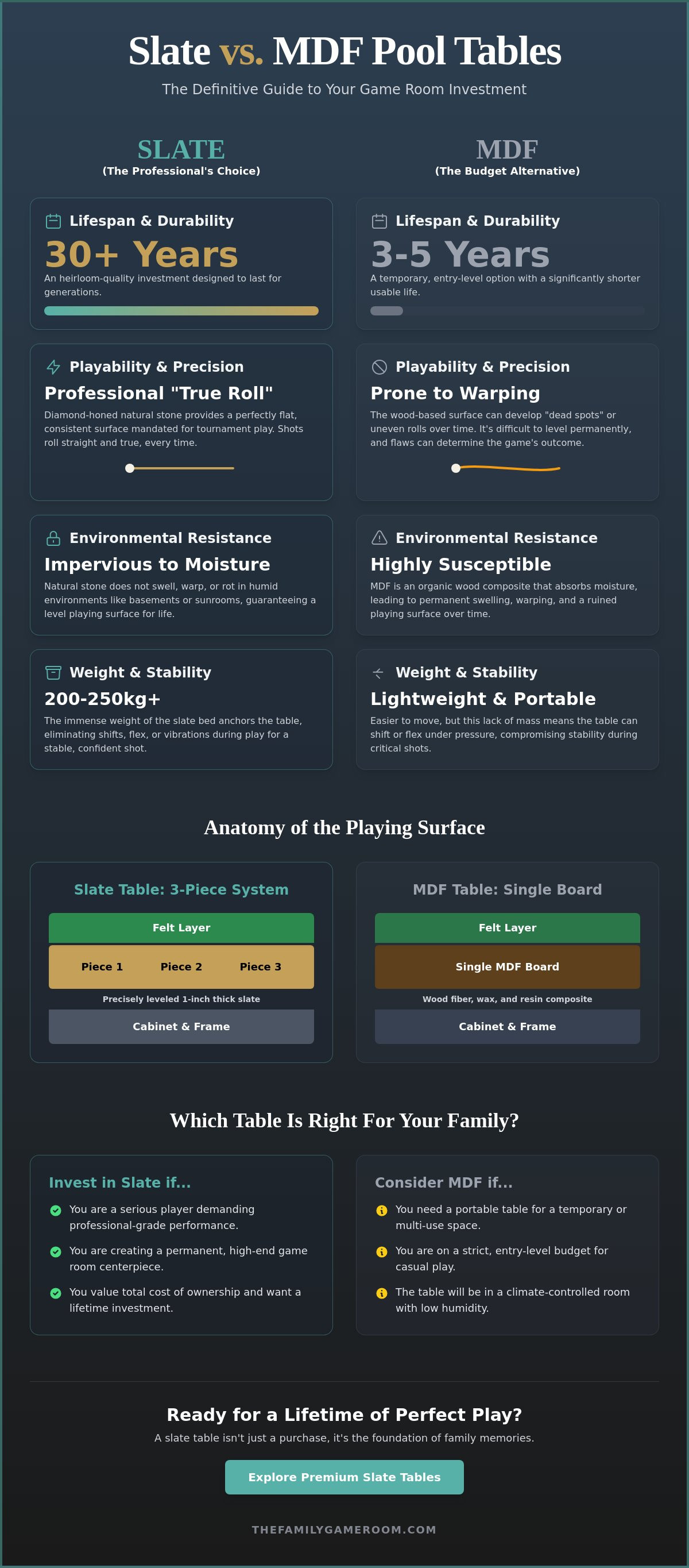
Slate is a natural metamorphic rock. It's heavy, dense, and naturally splits into flat layers. For billiards, manufacturers hone these slabs to a specific thickness, usually one inch. In contrast, MDF stands for Medium-Density Fiberboard. It's a wood-based composite made by breaking down hardwoods or softwoods into fibers, combining them with wax and resin, and applying heat and pressure. It's a popular choice for budget-friendly, lightweight tables that prioritize mobility over longevity.
The bed is the most critical component because it dictates ball speed and consistency. If the bed isn't perfectly flat, gravity takes over. Your ball will curve toward the lowest point. Analyzing the slate vs mdf pool table pros and cons reveals why high-end game rooms almost exclusively feature stone. A quality bed ensures that the skill of the player, not the flaws of the furniture, determines the winner.
The Anatomy of a Slate Bed
Premium tables rely on slate sourced from Italy or Brazil. These regions produce stone with high density and minimal impurities. Once extracted, the stone undergoes a diamond-honing process. This ensures the surface is perfectly flat within thousands of an inch. Most American Heritage Billiards Pool Tables feature a 1-inch thick slate bed. This thickness provides the mass needed to absorb ball impact and prevent the table from shifting during play. It's a permanent solution for those who value accuracy.
How MDF Tables are Manufactured
MDF tables prioritize portability and lower entry costs. Manufacturers compress wood fibers with resin to create a uniform board. To improve performance, some brands add a PVC or "Slatron" coating to mimic the smoothness of stone. However, wood is organic. It reacts to its environment. MDF is highly susceptible to humidity and temperature changes. Even a slight swell in the fibers can cause permanent warping. This creates "dead spots" or uneven rolls that ruin a competitive game. While it's easier to move, it doesn't offer the same resilience as stone.
The Case for Slate: Why Professional Tables Use Stone
Slate is the gold standard for a reason. While weight might seem like a drawback during delivery, that mass is actually your best friend. A 7-foot slate bed weighs approximately 200 to 250kg, which anchors the entire frame to the floor. This prevents the table from shifting or vibrating when a player leans in for a shot. When weighing the slate vs mdf pool table pros and cons, consider how that stability translates to confidence. You can't achieve a professional "true roll" on a surface that moves or flexes under pressure.
The physical properties of slate allow it to remain perfectly flat regardless of age. Unlike wood-based materials, stone doesn't have a grain. It doesn't expand or contract in a way that affects playability. This reliability is why the Billiard Congress of America (BCA) mandates a 1-inch minimum thickness for professional tournament play. It’s an investment in physics that pays dividends in every game.
Precision Leveling and Playability
Most high-end tables utilize a three-piece slate system. This design allows a professional installer to level each section independently using shims. They create a seamless, perfectly horizontal plane that compensates for even the slightest floor imperfections. Leveling is the foundation of consistent bank shots and predictable ball behavior. Professional players refuse to compete on anything else because they need to trust that a straight shot stays straight. If you're looking for that level of precision in your home, choosing premium pool tables ensures you’re starting with a world-class foundation.
Durability and Resistance to Environmental Factors
Basements and sunrooms often face fluctuating humidity levels. While MDF might swell or rot in these conditions, slate remains indifferent to moisture. This durability makes it the only viable option for a table intended to be an heirloom. You can re-felt a slate table dozens of times over decades without damaging the playing surface. An MDF table typically has a realistic playing life of only 3 to 5 years before flatness issues emerge. Choosing stone means your game room investment lasts thirty years or more, rather than needing a replacement before the decade ends.
Exploring MDF Pool Tables: Portability and Budget Considerations
MDF tables serve a specific niche in the home entertainment market. If you're looking for a temporary addition to a playroom or a starter table for children, the lower entry price is undeniably attractive. These tables aren't meant to be heirlooms. They provide a gateway into the sport without the commitment of a heavy stone foundation. However, when evaluating the slate vs mdf pool table pros and cons, you must recognize that the lower cost comes at the expense of professional-grade physics.
Consider the energy transfer during a high-speed break. Experts in Pool Table Physics explain how the mass and smoothness of the bed dictate ball energy. MDF lacks the density of slate, which means the ball loses momentum faster and may not react predictably off the rails. For a casual family game, this might not matter. For anyone looking to develop real skill, the difference is noticeable within the first few racks.
The Advantages of Lightweight Construction
An MDF table typically weighs between 80 to 120kg. This makes them a viable option for upstairs bonus rooms where floor load might be a concern, although modern construction usually handles slate without issue. The lightweight nature allows for a "DIY" assembly experience. You don't always need a team of professional installers to get the game started. Shipping is also simpler because you aren't transporting a literal crate of rock across the country. It's a frictionless way to bring home entertainment to your family quickly.
The Trade-offs: Warping and Limited Lifespan
The biggest drawback is the "sag" effect. Because MDF is a wood-based composite, gravity and humidity are its natural enemies. Over 2 to 3 years, the center of the table can begin to dip. This creates "dead spots" where the ball slows down unexpectedly or rolls toward the middle. Research indicates an MDF table has a realistic playing life of only 3 to 5 years before these flatness issues become impossible to ignore. Humidity in a basement or garage accelerates this degradation, leading to permanent warping that no amount of leveling can fix.
Repairing these tables is often cost-prohibitive. The cloth is frequently glued directly to the fiberboard during manufacturing. Removing it can peel away the top layer of the MDF, making the table unplayable. You aren't just buying a table; you're buying a product with a built-in expiration date. While the upfront savings are tempting, the lack of serviceability is a major factor in the slate vs mdf pool table pros and cons debate. You'll likely be shopping for a replacement much sooner than you anticipated.
Head-to-Head Comparison: Playability, Durability, and Value
Ball speed and consistency are the two most noticeable differences when you step up to the table. Slate tables offer a faster, more predictable roll because the stone is diamond-honed to extreme flatness. MDF tables, while smooth when new, create more friction between the ball and the surface. This friction slows the game down. Over time, the fiberboard develops microscopic inconsistencies that cause the ball to "drift" or wobble. When you analyze the slate vs mdf pool table pros and cons, it's clear that only one material offers the precision required for a true competitive feel.
The frame of the table plays a silent but vital role in this comparison. A slate bed requires a heavy-duty, reinforced cabinet to support several hundred pounds of stone. This structural integrity improves the overall feel of the game, providing a solid "thud" rather than a hollow vibration when balls strike the cushions. MDF tables often use lighter, thinner frames to keep costs down. This results in a less stable playing experience that can shift if a player leans too heavily on the rail during a difficult shot.
Long-term maintenance costs reveal the true value of your investment. You'll pay more upfront for a stone surface, but it's a one-time purchase. Using the "buy once, cry once" philosophy, a slate table remains a permanent fixture in your home for decades. Research shows that while an MDF table might cost less initially, its 3 to 5-year lifespan means you'll likely buy a replacement twice within a decade. A slate table lasting 30 years costs significantly less per year than a "budget" wood-based alternative that ends up in a landfill.
Multi-Functional Use: Pool Table Dining Tops
If you plan to use Pool Table Dining Tops, slate isn't just a preference; it's a requirement. A dining top adds significant weight to the table cabinet. An MDF bed will eventually bow or sag under this constant pressure, ruining the level for good. Slate provides the rigid stability needed to support a full dinner service for ten without compromising the playing surface. This versatility transforms your room into a high-end, multi-use social hub that bridges the gap between luxury and daily utility.
Resale Value and Long-Term Investment
Think about the future of your game room. A well-maintained slate table from a reputable brand retains a high percentage of its value on the secondary market. Used slate tables often sell for $800 to $1,500, whereas MDF tables have almost zero resale value once they're a few years old. Investing in a permanent, stone-bed fixture increases the perceived value of your home entertainment space. It signals a commitment to quality that guests and future home buyers notice immediately. You can find a piece that matches your long-term vision by exploring our luxury game room collections.
Choosing the Right Table for Your Family Game Room
Deciding on a table requires an honest look at your lifestyle and your long-term goals for the home. If you're building a "forever home" designed for hosting and legacy, slate is the undeniable winner. It provides the permanence and prestige that fiberboard simply cannot match. While we've weighed the slate vs mdf pool table pros and cons in earlier sections, the final choice often comes down to your vision for the space. Are you looking for a temporary diversion for a playroom, or a sophisticated social anchor for your residence?
Think about the long-term visual impact of your purchase. A premium table serves as the centerpiece of your entertainment wing. It should complement your existing Game Table Sets to create a unified, high-end aesthetic. Whether you prefer the sleek, minimalist lines of modern design or the ornate carvings of a traditional build, the stability of stone allows for a level of craftsmanship that wood composites can't support. Slate remains the gold standard because it respects the game and the home it inhabits. It's a statement of quality that guests notice the moment they enter the room.
Curating Your Luxury Entertainment Space
A true game room is more than just a table; it's an atmosphere. To complete the look, pair your selection with professional-grade Billiard Light Fixtures that highlight the texture of the cloth and eliminate distracting shadows on the rails. If your home features contemporary architecture, Nixon Billiards offers the clean, industrial profiles you need. For a more classic, heirloom feel, American Heritage Billiards provides timeless wood finishes that anchor a room with domestic warmth. A level, stone-bed table becomes the social heart of the house, inviting guests to linger and play long after dinner is over.
Professional Installation: The Slate Secret
Many homeowners worry about the logistical demands of heavy equipment. This is where professional installation becomes a non-negotiable asset for your peace of mind. Unlike DIY MDF models, a slate table requires expert precision to reach its full potential. The process involves more than just lifting heavy slabs. It includes shimming the three-piece slate to a thousandth of an inch, sealing the seams with beeswax for a seamless roll, and stretching the cloth with exactly the right tension. This meticulous setup ensures your investment provides tournament-quality play from the very first break. If you're ready to elevate your home with a piece that lasts a lifetime, browse our curated collection of luxury pool tables for sale and find the perfect match for your game room.
Invest in a Lifetime of Home Entertainment
Choosing between stone and fiberboard is the most significant decision you'll make for your game room. While MDF offers a lighter entry point, slate provides the unrivaled precision and durability that turn a simple game into a professional experience. Understanding the slate vs mdf pool table pros and cons ensures you select a centerpiece that won't warp or sag as the seasons change. A quality slate table isn't just furniture; it's a permanent social anchor for your family.
At The Family Game Room, we've shared our family-owned expertise since 2022 to help you curate the perfect space. As an authorized dealer for industry leaders like American Heritage and Nixon Billiards, we prioritize craftsmanship that lasts for generations. Our nationwide white-glove delivery ensures your new table arrives safely and is leveled to perfection by professionals. Don't settle for temporary solutions when you can have a tournament-grade foundation in your own home.
Browse Our Premium Collection of Slate Pool Tables and start building your legacy of play today. We look forward to helping you find the perfect match for your home.
Frequently Asked Questions
Do MDF pool tables warp over time?
Yes, MDF tables are highly susceptible to warping due to their wood-based composition. Because they're made of compressed fibers and resin, they react to changes in humidity and temperature. In a basement or non-climate-controlled room, the board can swell or sag within 3 to 5 years. This warping is permanent and eventually creates "dead spots" that ruin the accuracy of your game.
Can you put a slate pool table on a second floor?
Most modern homes can easily support the weight of a slate table on a second floor. While these tables can weigh between 700 and 1,000 pounds, the load is distributed across several legs. This pressure is comparable to a large piece of furniture or a group of adults standing in one area. If you have concerns about an older build, checking your floor joists is a simple precaution.
Is it possible to re-felt an MDF pool table?
Re-felting an MDF table is usually impossible or cost-prohibitive. Manufacturers often glue the cloth directly to the fiberboard surface during the assembly process. Attempting to strip the old felt can tear the top layer of the MDF, leaving the bed uneven and unplayable. Slate tables are designed to be re-felted dozens of times, making them a much better long-term investment for your home.
How much heavier is a slate pool table than an MDF one?
Slate tables are significantly heavier, often weighing three to four times more than MDF models. An 8-foot slate bed alone weighs roughly 300 to 350kg, whereas an entire MDF table of the same size might only weigh 100kg. This weight is a primary factor in the slate vs mdf pool table pros and cons debate, as the extra mass provides the stability required for professional-level play.
Does slate thickness matter for professional play?
Thickness is critical for maintaining a true roll and absorbing ball impact. The Billiard Congress of America (BCA) mandates a minimum thickness of 1 inch for professional tournament play. Thicker slate provides more mass, which ensures the table stays perfectly level and doesn't vibrate when balls strike the rails. Choosing a 1-inch slate bed guarantees that your home games meet professional equipment standards.
Is 1-piece slate better than 3-piece slate?
3-piece slate is generally superior for home installations. It allows professional installers to level each section independently using shims, compensating for any slight imperfections in your floor. 1-piece slate is extremely difficult to transport and cannot be adjusted with the same precision. Most luxury brands utilize 3-piece systems to ensure a perfectly seamless and horizontal playing surface in any room.
How do I know if a pool table is slate or MDF?
Look underneath the table to inspect the playing bed directly. Slate appears as a dark, grey solid rock, while MDF looks like compressed wood, particle board, or thick cardboard. You can also perform a "tap test" on the surface. Slate produces a solid, dull thud because of its density, while MDF often sounds hollow. Finally, if the table is light enough for two people to slide easily, it's likely MDF.
Which material is better for a pool table with a dining top?
Slate is the only reliable material for tables that utilize heavy dining tops. The constant weight of a wood or glass dining surface will eventually cause an MDF bed to bow or sag in the center. Slate's natural rigidity allows it to support the extra load of a dining top and a full dinner service without losing its level. This makes stone the essential choice for multi-functional furniture.