


Could a few stray grains of the wrong "sand" actually be stripping the value from your heirloom game table? Owning a premium board is about more than just the game; it's about preserving a centerpiece of family entertainment. We understand the hesitation that comes with cleaning such a high-end surface. You don't want to scratch the finish or end up with inconsistent puck speeds that ruin the competitive spirit. Proper shuffleboard table maintenance is the only way to protect that mirror-like maple playfield and ensure every slide is as smooth as the first day you brought it home.
You're going to learn the exact techniques used by professionals to keep boards in tournament-ready condition. We'll clear up the confusion between liquids, waxes, and powders so you can choose the right products with confidence. This guide covers everything from the physics of leveling your table to establishing a simple weekly cleaning routine that preserves the wood's integrity. By the end, you'll have a clear roadmap to keep your investment fast, level, and beautiful for generations of play.
Key Takeaways
- Learn how proper shuffleboard table maintenance prevents warping and finish degradation in high-end hardwood boards.
- Identify your table's specific finish to avoid using harsh household cleaners that can strip or cloud the playfield.
- Master the "silicone secret" to prevent powder clumping and ensure professional-grade puck speed every time.
- Use the "Straightedge Test" to diagnose playfield flatness and adjust climate adjusters for a perfectly level game.
- Implement a simple weekly deep-cleaning routine to remove old silicone and maintain the table's furniture-grade aesthetics.
The Essentials of Shuffleboard Table Maintenance: Protecting Your Investment
A premium indoor shuffleboard table is far more than a simple piece of game room equipment. It's a centerpiece of master craftsmanship and a significant home investment. Most high-end models, such as those from American Heritage Billiards, feature playfields constructed from solid North American Maple. This specific hardwood is prized for its incredible density and natural beauty; however, it remains an organic material that reacts to its surroundings. Proper shuffleboard table maintenance isn't just about ensuring a fast puck; it's about preserving the structural integrity of the wood for decades to come.
The playfield finish acts as a vital protective barrier. It seals the wood fibers against moisture and provides the slick surface necessary for competitive play. While the History of Shuffleboard reveals a game that has survived for centuries in various forms, the modern precision of a polymer or lacquer finish requires specific care. Neglecting this surface leads to more than just slow games. It can result in "pitting," where the finish wears thin, or even deep cracks that reach the wood itself. Consistent care is always more affordable than the alternative. Professional resurfacing is a costly, labor-intensive process that can often be avoided entirely with a simple, disciplined routine.
The Impact of Environment on Playfield Integrity
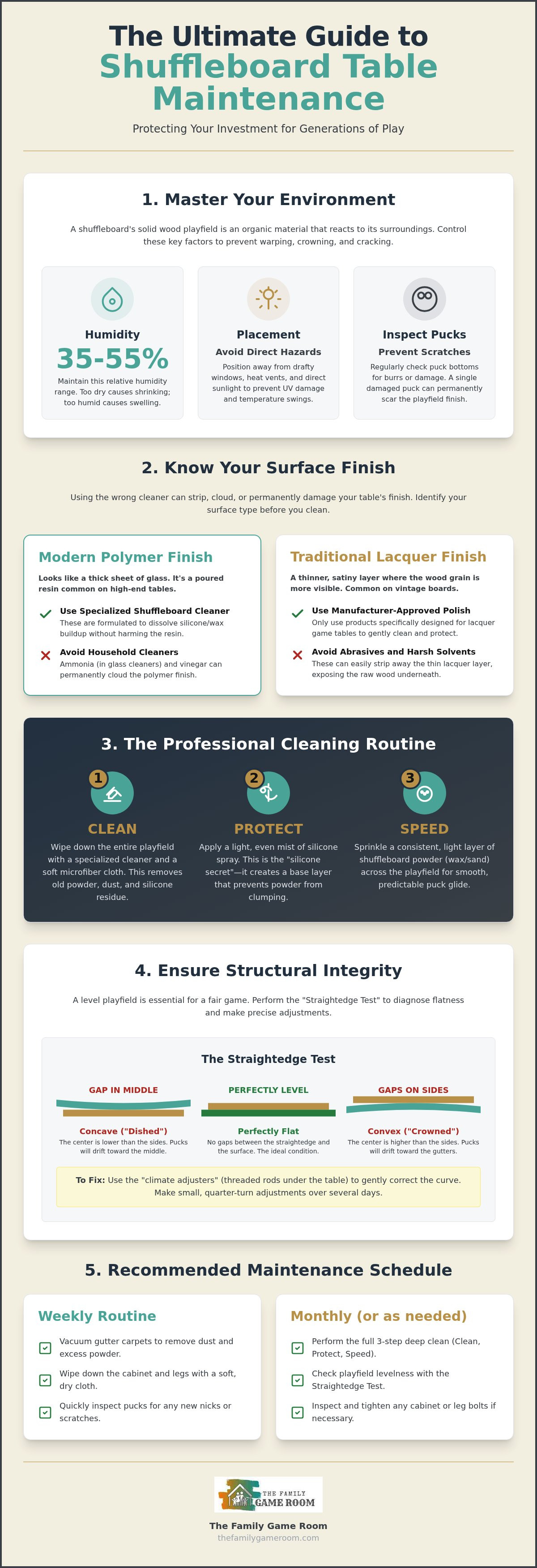
Wood breathes. To keep your playfield from warping or "crowning," you must control the air around it. Aim to maintain a relative humidity (RH) level between 35% and 55% in your game room. If the air becomes too dry, the maple can shrink and develop stress fractures. If it's too humid, the board may swell and lose its level. Placement is your first line of defense. Position your table away from drafty windows, heat vents, and direct sunlight. UV rays are notorious for degrading high-end finishes and causing rapid temperature fluctuations that stress the hardwood's internal structure.
Key Components You Need to Monitor
Effective maintenance requires a holistic approach to the entire table. You should regularly inspect your weights, also known as pucks, for any signs of damage. Check the stainless steel or chrome bottoms for burrs or deep scratches. A single damaged weight can act like a glass cutter, leaving permanent scars on your finish. Additionally, pay close attention to the gutter carpets. These liners are designed to catch dust and excess powder. If they become clogged with debris, that grit will inevitably migrate back onto the playfield. Vacuum the gutters weekly and wipe down the outer cabinet with a soft cloth to keep the entire unit looking like the gallery-quality furniture it is.
Surface Care: Cleaning and Polishing Different Table Finishes
Before you reach for the spray bottle, you must know exactly what you're cleaning. Identification is the first step in protecting your investment. Traditional lacquer finishes are common on vintage or entry-level boards, appearing as a thin, satiny layer that follows the wood grain. Modern polymer coatings, however, are the gold standard for luxury play. These poured resin surfaces look like a thick sheet of glass resting atop the maple. Effective shuffleboard table maintenance requires treating these two surfaces with distinct chemical care. Never use household glass cleaners or vinegar solutions. Ammonia can cloud a polymer surface, while the acidity in vinegar may eventually strip a lacquer finish.
Cleaning the playfield is mandatory before you apply any new wax or powder. If you sprinkle "sand" over old grime, you're essentially creating sandpaper that will grind into your finish during play. Minor surface scuffs are a natural part of the game's life. You can often buff these out using a clean, dry microfiber cloth and a gentle, circular motion. If a scuff persists, only use a manufacturer-approved liquid glaze. While the Official Table Shuffleboard Rules focus on the mechanics of the game, your maintenance routine ensures those rules are played on a fair, fast, and consistent surface.
Caring for Modern Polymer Finishes
Most premium Indoor Shuffleboard Tables utilize poured resin because it's virtually indestructible under normal play. Even so, silicone sprays and powder eventually create a sticky residue known as "wax buildup." Use a specialized shuffleboard cleaner to dissolve this film without damaging the resin. Always use a soft, non-abrasive microfiber cloth for every wipe-down. This prevents the micro-scratches that can dull the mirror-like shine of your table over time.
Maintenance for Traditional Lacquer and Wood Finishes
Lacquer is beautiful but significantly more sensitive to the environment. Excessive moisture is the primary enemy here; it can seep into the wood fibers and cause "blushing," which appears as white, cloudy patches under the finish. To maintain the protective barrier, you'll need to apply a high-quality paste wax every few months. This restores the slickness and depth of the wood, ensuring the puck slides effortlessly. Traditional finishes require more frequent polishing than polymer, but the reward is a classic aesthetic that ages gracefully with your home.
Mastering Speed: The Role of Silicone Sprays and Shuffleboard Wax
Understanding the terminology is the first step toward high-level play. In the gaming community, "wax" is almost always a reference to the dry, silicone-coated powder that looks like fine sand. Conversely, "polish" refers to the liquid or paste products used for deep surface cleaning. This distinction is vital for proper shuffleboard table maintenance; applying a liquid polish when you need a speed powder will stop your pucks in their tracks. For those following the standards of the Table Shuffleboard Association, the interaction between these materials is what creates a professional-grade sliding surface.
The secret to a consistent game is the base layer of silicone spray. Without it, the powder tends to clump together or migrate to the gutters after just a few frames. To apply your powder, you can use the "Shaker" method for a quick, casual game. However, the "S-pattern" technique is superior for serious play. This involves moving the canister in a steady, serpentine motion from one end to the other. This ensures an even blanket of speed across the entire width of the board, preventing "tracking" where pucks follow the same worn paths.
The Silicone Spray Protocol
Never apply silicone to a surface that hasn't been thoroughly cleaned. Any dust or old powder trapped under the spray will create a gritty texture that can damage the finish. Once you've wiped the table down, spray a light, even coat and observe the "wait time" rule. Let the silicone set for 5 to 10 minutes. This allows the solvents to evaporate, leaving behind a slick, dry film. Silicone acts as a friction-reducing primer for the sand, allowing the grains to roll freely rather than sticking to the playfield.
Selecting and Managing Shuffleboard Powder
Powder is rated on a scale from 1 to 9, with 1 being the fastest. Choosing the right speed depends largely on the size of your board. Pro-length tables typically require faster powders to ensure the puck reaches the scoring zone. For Indoor Shuffleboard Tables in the 9 to 12-foot range, a slower powder (often rated 5 through 7) provides better control for family play. During a long session, you'll notice "dead zones" where the powder has been pushed aside. Use a dedicated shuffleboard brush to redistribute the grains toward the center to maintain consistent speed across every square inch.
Structural Integrity: Adjusting Climate Adjusters and Leveling
While surface speed is exciting, the true foundation of shuffleboard table maintenance lies beneath the playfield. Climate adjusters are the heavy-duty metal brackets bolted to the underside of the maple board. Their purpose is simple yet critical: they allow you to manually counteract the natural expansion and contraction of the wood. Because solid hardwood reacts to seasonal changes, these adjusters ensure your table remains a precision instrument rather than a curved piece of lumber. Before you make any changes, remember that new tables require a "break-in" period. Allow your table to acclimate to your home’s environment for at least two to four weeks before touching the hardware.
To diagnose your board, perform the "Straightedge Test." Place a high-quality metal straightedge or a carpenter's level across the width of the playfield at several points along its length. If you see light peeking through the center, the board is concave. If the straightedge rocks on a high point in the middle, the board is crowned. A perfectly flat playfield is the goal, but many professionals prefer a very slight concave "cup" to keep pucks from falling into the gutters too easily. If you're looking to upgrade to a board with professional-grade hardware, explore our selection of Indoor Shuffleboard Tables designed for lifelong stability.
How to Tune Your Climate Adjusters
Adjustment is a slow, deliberate process. First, identify the drift. If pucks consistently slide toward the edges, your board is crowned and needs the center pulled down. If they drift to the middle, it's concave and needs the center pushed up. Follow the "quarter-turn" rule: never turn the adjustment nuts more than 90 degrees at a time. Tightening the nuts on the outer bolts usually increases the tension on the wood, while loosening them allows the fibers to relax. Always wait 24 hours between sessions. Wood is a slow-moving medium; it needs time to react to the new mechanical pressure before you assess the results.
Ensuring a Perfectly Level Playfield
Stability begins at the floor. Leveling is a two-step process that starts with the legs. Use a digital level for maximum precision, adjusting the threaded feet until the cabinet is perfectly horizontal. Be mindful of your flooring; carpeted rooms may see the table "settle" over the first few months, requiring a follow-up check. Once the cabinet is set, focus on the playfield itself. If the board remains tilted despite the cabinet being level, or if you notice structural twisting that the adjusters can't fix, it may be time to consult a professional installer. Proper leveling prevents uneven wear on your finish and ensures every game is won by skill, not by a slanted floor.
The Professional Maintenance Schedule for Your Home Game Room
Consistency is the secret to a table that plays like a professional tournament board for decades. Effective shuffleboard table maintenance isn't a one-time event; it's a series of small, disciplined actions. By separating your pre-game rituals from your long-term preservation protocols, you ensure the playfield remains fast while the cabinet stays pristine. This structured approach prevents the common "wax buildup" that plagues neglected tables and keeps your game room looking like a curated gallery.
Every game should start with a clean slate. Before you play, use a dedicated shuffleboard brush to clear away dust or stray powder from the previous session. Apply a fresh, even layer of speed powder using the S-pattern technique. This ritual takes less than three minutes but protects the finish from the abrasive friction of the pucks. For the weekly deep clean, strip the old silicone and powder using a specialized cleaner. Once the board is dry, apply a fresh coat of polish. This weekly reset is the most effective way to prevent "dead zones" and maintain that mirror-like shine.
Long-term care follows the rhythm of the seasons. As your HVAC system switches from heating to cooling, your home's humidity levels will inevitably shift. Check your climate adjusters at the start of spring and autumn. Use the straightedge test to see if the wood has moved and make quarter-turn adjustments as needed. Finally, perform an annual inspection of the playfield. Look for "burn marks" or thinning areas in the finish, especially in the scoring zones where pucks impact most frequently. If you notice the wood grain feels slightly raised, a professional touch-up can seal the fibers before damage occurs.
The Essential Maintenance Tool Kit
Every owner needs a reliable kit to keep the game moving. Start with several high-quality microfiber cloths and a bottle of specialized cleaner. You'll also need your preferred silicone spray and a canister of speed powder. For those managing a complete entertainment space, our guide on Air Hockey Table Care offers similar professional insights for your other high-end investments. A protective table cover is also highly recommended to block UV rays and household dust when the table isn't in use.
Preserving the Furniture: Cabinet and Gutter Care
The cabinet is fine furniture and deserves the same respect as the playfield. Use a high-end wood polish to keep the exterior matching your home's decor and to prevent the wood from drying out. Vacuum the gutters weekly to remove debris and old powder. If grit stays in the gutters, it will eventually scratch your weights or find its way back onto the playfield during a game. Ready to upgrade your home entertainment? Explore our premium shuffleboard collection to find your next heirloom-quality centerpiece.
Preserve Your Home Entertainment Legacy
Your shuffleboard table is a masterpiece of domestic entertainment and a significant investment in your home’s social life. By mastering the "Straightedge Test" for structural integrity and adopting the "S-pattern" for consistent speed, you've transitioned from a casual owner into a knowledgeable curator of your game room. A disciplined routine of shuffleboard table maintenance is the only way to ensure your solid maple playfield remains a high-performance surface for decades of competitive fun. We're here to help you every step of the way.
When you're ready to expand your collection or upgrade to a professional-grade board, our team is standing by. We're an authorized dealer for industry leaders like American Heritage Billiards and Nixon Billiards; we take pride in offering only the finest craftsmanship. As a family-owned business, we provide the personal support you won't find at big-box retailers, paired with the convenience of nationwide shipping on all premium furniture. Our commitment to your long-term satisfaction is what defines us as a trusted partner for your home.
Browse Luxury Shuffleboard Tables for Your Home
Keep your table fast, your aim true, and your family traditions alive. Your investment is officially protected; now it's time to let the pucks fly.
Frequently Asked Questions
How often should I wax my shuffleboard table?
You should apply speed powder before every game session. This ensures a consistent slide and protects the finish from puck friction. For a deeper reset, perform a full cleaning and silicone re-application once a week if you play frequently. This prevents the powder from clumping and creates a professional-grade surface. If the table sits unused for a long period, always wipe it down before adding fresh powder to remove settled dust.
Can I use regular glass cleaner like Windex on the playfield?
No, you should never use glass cleaners like Windex on your playfield. These products often contain ammonia or alcohol, which can cloud a modern polymer finish or strip the protective oils from a traditional lacquer board. Stick to pH-balanced, specialized shuffleboard cleaners that are designed to dissolve silicone buildup without damaging the wood fibers or the resin coating. Using the wrong chemical can void your manufacturer's warranty.
What is the difference between shuffleboard wax and sand?
There is no difference; they are the same product. "Wax" is the official industry term, while "sand" or "cheese" are common nicknames used by players. The product is actually made of tiny silicone-coated beads, not real sand or candle wax. This powder acts like ball bearings under your puck. Just be sure don't confuse dry speed wax with liquid shuffleboard polish, which is a cleaning agent used for deep surface care.
Why do the pucks on my shuffleboard table drift to the sides?
Pucks drifting to the sides indicates that your table is "crowned," meaning the center of the board is higher than the edges. This is a common result of seasonal humidity changes affecting the solid maple. You can correct this by using the climate adjusters located underneath the playfield. Small, incremental turns will pull the center down, restoring a flat or slightly concave surface that keeps your pucks in play and prevents unfair drift.
How do I fix a scratch on my shuffleboard table finish?
You can fix most minor surface scuffs by buffing the area with a clean microfiber cloth and a tiny amount of approved liquid glaze. If the scratch is deep enough to reach the wood, you may need a professional touch-up kit from the manufacturer. Don't attempt to sand a polymer finish yourself, as this can create permanent dull spots. Regular shuffleboard table maintenance prevents most scratches by keeping the surface free of abrasive grit.
Do I really need a table cover for an indoor shuffleboard?
A table cover is essential for any high-end indoor board. It acts as a shield against UV rays that can yellow the finish and prevents household dust from settling into the grain. Spills or pet hair can also compromise the playfield if it's left exposed. Investing in a fitted cover is one of the simplest ways to reduce the time you spend on shuffleboard table maintenance while extending the life of the wood.
How long does a shuffleboard playfield finish typically last?
A professionally maintained polymer finish can easily last 20 years or more under normal home use. Traditional lacquer finishes are slightly more delicate and may require a refresh every 10 to 15 years depending on how often you play. The key to longevity is avoiding the use of abrasive cleaners and ensuring you always have a layer of silicone and powder between the puck and the board. Consistent care prevents the finish from thinning.
Can I use a vacuum to clean the shuffleboard powder?
You can use a vacuum to clear powder from the gutters, but keep the nozzle away from the playfield. The plastic or metal attachments on a vacuum can easily scratch the resin or lacquer finish. For the main playing surface, always use a dedicated shuffleboard brush with soft bristles. This allows you to safely move the powder into the gutters where it can then be vacuumed up without risking the structural integrity of the board's finish.