


Could the cleaner that leaves your shuffleboard table looking spotless also be the wrong choice for its playfield? Shuffleboard table care can feel uncertain when cleaners and treatments vary by finish, and even small changes to the surface can affect how pucks glide. Start by identifying your table’s finish and checking its care instructions, then build a routine around that guidance.
You’re right to want more than a quick wipe-down. A consistent, finish-appropriate routine helps protect the table and keeps play feeling predictable without guesswork. This guide explains how to clean the playfield, decide whether a treatment is appropriate, and limit exposure to sunlight and humidity. You’ll also learn what to look for when puck movement changes, so you can avoid making adjustments at random.
Whether your game room features an American Heritage table such as the Quest Shuffleboard Table in Glacier Finish or another indoor model, thoughtful care helps preserve its place at the center of play. Start with the finish, keep the routine simple, and let the pucks fly.
Key Takeaways
- Build shuffleboard table care around the manufacturer’s guidance and the playfield finish, not a one-size-fits-all cleaning routine.
- Remove dust gently and use a cleaner only if the table’s instructions permit it.
- Wax, polish, speed powder, and silicone-based treatments have different purposes. Use them only when appropriate for your table.
- Keep the room environment steady and watch for changes that could affect the wood or the way pucks travel.
- Use a simple after-play and periodic care routine to keep upkeep manageable and spot concerns before adjusting the table.
Why Shuffleboard Table Care Starts with the Playfield Finish
Shuffleboard table care means cleaning the playing surface appropriately, protecting its finish, and keeping room conditions steady. The playfield needs particular attention because pucks travel across it directly. Dust, residue, scratches, or an unsuitable treatment can change how they glide, making movement feel slower or less consistent from one game to the next.
A smooth playing experience depends on a clean, undamaged surface prepared in a way that suits its finish. Table construction and surface treatments vary. The overview of Table shuffleboard describes common playfield materials and helps explain why care should be specific to your table, not borrowed from a different model. A product that works on one surface may not be appropriate for another.
What parts of a shuffleboard table need different care?
Distinguish the playfield from the rest of the table before you clean. The cabinet and gutters are part of the furniture structure, while climatic adjusters are components used to influence the playfield’s shape. Pucks and other accessories have their own surfaces, too. These parts may collect dust during regular use, but they don’t all call for the same cleaning method or treatment.
Check the table’s care instructions for guidance on each area. Keep playfield products off surrounding components unless the manufacturer says they’re suitable there. Treating the table as several connected parts, rather than one large surface, helps prevent a furniture cleaner from ending up where pucks glide.
Why finish-specific instructions matter
An incompatible cleaner or treatment may leave residue, alter the feel of a finish, or affect the surface. Start with gentle dust removal, which is different from applying polish, liquid wax, silicone-based treatments, or speed powder. Those products have distinct roles and aren’t automatic steps for every table. The care guide explains which, if any, are appropriate.
Choose care products only when they match the manufacturer’s guidance for your table’s finish. That rule matters whether the table is a family centerpiece or a premium model such as the Quest Shuffleboard Table by American Heritage in Glacier Finish. A finish name alone doesn’t establish which cleaner or playfield treatment to use, so follow the specific instructions supplied with the table.
Room conditions matter, too. Direct, prolonged sunlight and changing humidity or temperature can affect the playing environment and may contribute to wood movement. Keep the table in a stable indoor setting where possible, and notice whether its surroundings change with the seasons. If puck travel shifts, consider dust, residue, and recent room changes before applying more product.
Think of the finish as the starting point, not a detail to address after cleaning. Once you know what the surface allows, you can separate everyday dusting from occasional treatments and protect the playfield without guessing. A finish-first approach gives each part of the table the attention it needs while keeping upkeep practical.
How to Clean a Shuffleboard Table Without Damaging Its Surface
A careful cleaning routine removes dust and play residue without adding an unapproved product to the playfield. Start with the table’s own care instructions. They take priority over generic advice because finishes and cleaning requirements can differ. If the manual gives a specific method, follow it rather than adapting steps designed for another table.
A safe surface-cleaning sequence
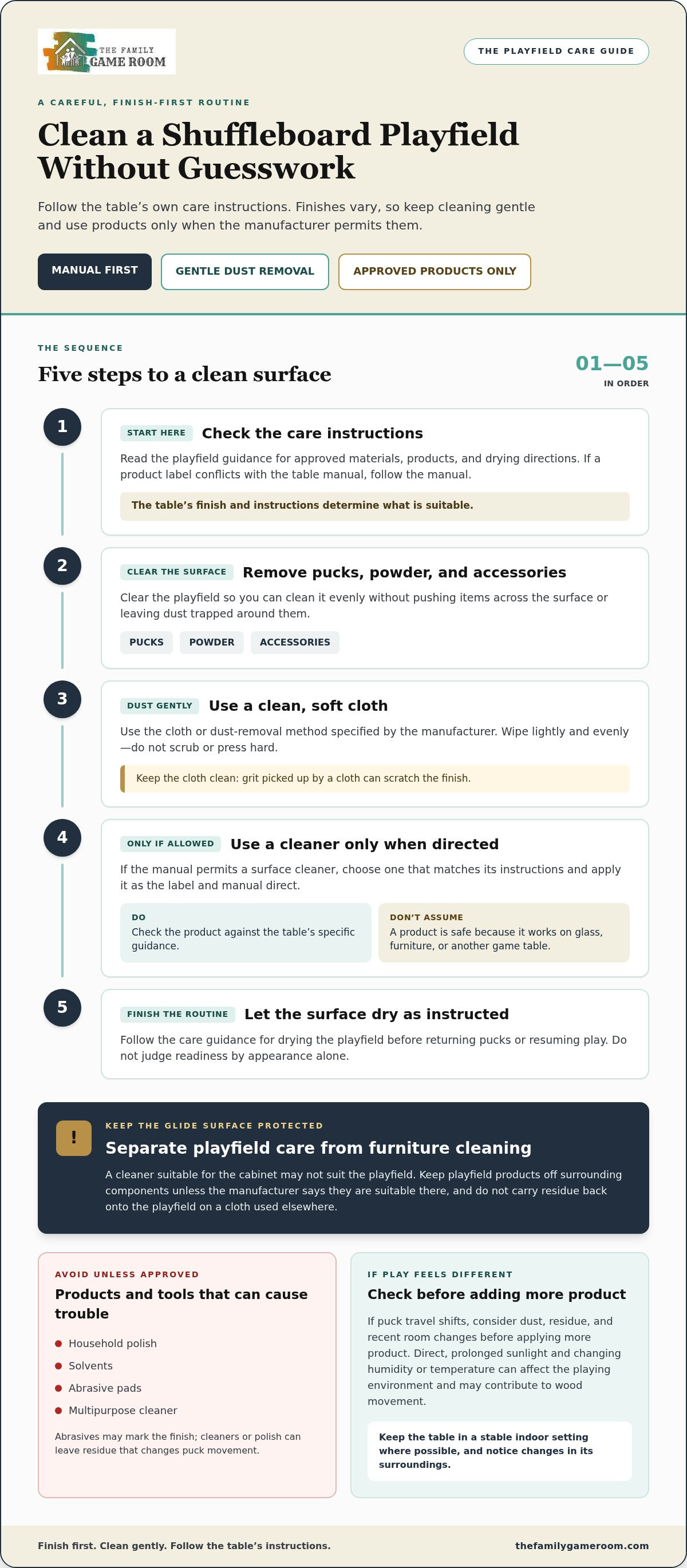
Use this sequence as a starting point, adjusting each step to match the manufacturer’s directions. Keep the routine gentle, and don’t add moisture or cleaner unless the instructions allow it.
- Check the care instructions. Read the guidance for the playfield, including approved cleaning materials, products, and drying directions. If a product label conflicts with the table manual, follow the manual.
- Clear the playfield. Remove pucks, powder, and accessories so you can clean the surface evenly without pushing items across it or leaving dust trapped around them.
- Remove loose dust gently. Use a clean, soft cloth or the dust-removal method specified by the manufacturer. Wipe lightly and evenly without scrubbing or pressing hard. A cloth that has picked up grit can scratch a finish, so keep it clean.
- Use a cleaner only if directed. If the manual permits a surface cleaner, choose one that matches its instructions and apply it as the label and manual direct. Don’t assume a product is safe just because it works on glass, wood furniture, or another game table.
- Let the surface dry as instructed. Follow the care guidance for drying the playfield before returning pucks or resuming play. Don’t assume the surface is ready based only on how it looks.
Keep playfield cleaning separate from wiping the cabinet or other furniture areas. A cleaner suitable for a cabinet finish may not be suitable for the surface where pucks glide. Don’t carry residue back onto the playfield on a cloth used elsewhere.
Which cleaners and tools should you avoid?
Don’t apply household polish, solvents, abrasive pads, or a multipurpose cleaner unless the table’s instructions approve them. Abrasive materials may mark the finish, while cleaners or polish can leave residue that changes puck movement or interacts poorly with the surface. Avoid experimenting with a small amount in an inconspicuous spot unless the manufacturer specifically recommends that approach.
Use a treatment only when the table’s instructions allow it. That applies to cleaners as well as polish, wax, silicone, and powder. If you can’t tell whether a product is approved, pause before applying it and consult the table manual. For homeowners considering a premium centerpiece, browsing indoor shuffleboard tables can make finish and care guidance part of the selection process. Thoughtful shuffleboard table care starts with a clean cloth and clear instructions, not a cabinet full of products.
Shuffleboard Wax, Powder, and Silicone: What Each Treatment Does
Shuffleboard treatments can sound interchangeable, but they serve different purposes. Some are intended for surface care, while others affect how pucks glide. Even products with similar names may be used differently, so don’t add a treatment just because it appears in a general care routine. The table’s finish and manufacturer guidance determine what belongs on its playfield.
Table-specific instructions determine which treatments are appropriate for a shuffleboard playfield. Use the comparison below to understand their general roles, then follow the table’s own directions before applying anything.
| Treatment | General role | Key distinction |
|---|---|---|
| Wax or polish | May be used to maintain or treat certain finishes. | Surface-care product; suitability depends on the table. |
| Speed powder | Reduces friction so pucks can glide across a prepared playfield. | Playing aid, not a cleaner or a substitute for cleaning. |
| Silicone-based treatment | Some table-care instructions include a silicone spray as part of playfield preparation. | Not universal; use only when the manufacturer allows it. |
Wax and polish versus shuffleboard speed powder
Wax or polish may be intended to maintain the surface on certain finishes, but these products aren’t automatically suitable for every playfield. Speed powder has a different job: it’s applied for play to reduce friction and influence puck glide. Shuffleboard powder is also called wax in casual use, which can create confusion. Check the product’s purpose and the table instructions rather than relying on the name alone.
Powder doesn’t remove dust or residue. Applying it over a dirty surface can leave buildup, while too much powder or an unsuitable polish may change the way pucks move. If play feels inconsistent, adding more treatment isn’t always the answer. Consider whether the surface needs cleaning, and review the manufacturer’s recommended preparation before changing products or amounts.
When silicone spray may or may not be appropriate
Some care guides recommend silicone spray as part of playfield preparation, but that isn’t a rule for every table. A spray designed for shuffleboard use may still be unsuitable for a particular finish or model. Follow the table manufacturer’s instructions ahead of generic schedules and product promotions. Don’t combine silicone spray with wax, polish, or powder unless the instructions specify that the treatments are compatible.
Use shuffleboard table care as a sequence of informed choices, not a checklist of products to apply automatically. First identify the role of a treatment, then confirm it’s allowed for your table and follow its application directions. If the manual doesn’t support a product, leave it off the playfield. A restrained approach helps avoid confusing surface maintenance with adjustments intended to change puck speed or glide.
Protect a Shuffleboard Table from Humidity, Sunlight, and Uneven Play
A shuffleboard table’s surroundings matter. Wood can respond to changes in humidity and temperature, while direct sunlight may affect the table and its playing conditions. These shifts can make puck travel feel different over time. Good shuffleboard table care includes watching the room as well as the surface, so changes in play aren’t automatically blamed on cleaning or treatment.
Choose a stable location and monitor room conditions
Place the table away from direct, prolonged sunlight where possible, and avoid locations subject to sharp swings in temperature or humidity. Consistent indoor conditions are a sensible precaution, but there isn’t one ideal number that applies to every table. Follow the manufacturer’s guidance for your model, and note whether changes in puck travel coincide with seasonal shifts or changes to the room.
Observe play consistently. Use the same puck and lane for comparison, and look for a repeated change rather than drawing conclusions from one unusual shot. Note whether movement differs across the playfield or only in one area. Dust, residue, or a recent change in room conditions may affect what you notice, so avoid making several adjustments at once.
Climate adjusters and uneven play: know the limits
Some shuffleboard tables have climate adjusters designed for model-specific adjustments; others don’t. Their presence isn’t an invitation to turn them whenever puck travel changes. Read the table instructions first and follow the specified adjustment process. If the surface appears damaged, visibly uneven, or continues to play unevenly after permitted adjustments, stop experimenting and refer to the manufacturer’s guidance for next steps.
Climate adjusters are for adjustments allowed by the model’s instructions, not a fix for structural damage or persistent uneven play. Repeated turning without understanding the table’s design can make it harder to identify the cause of a problem. If the instructions don’t explain an adjustment, leave it alone.
Before touching an adjuster, check for signs of a larger issue. Look for a visible change in the playfield’s shape, damage, or a consistent pattern where pucks veer or slow in the same area. Confirm that the table is being used as intended and that the playfield is prepared according to its care instructions. If unevenness remains, pause play rather than trying to correct it with repeated adjustments or extra treatments.
Keep a brief record of what you observe and when it happens. A note that puck movement changed after a shift in room conditions, for example, is more useful than making several changes at once. For a home game room, choosing a thoughtfully placed indoor shuffleboard table is a natural first step toward creating a setting where the table can be enjoyed comfortably.
A Simple Shuffleboard Table Care Schedule for Home Play
A useful routine doesn’t mean applying a product every week or following a calendar made for a different table. Base shuffleboard table care on the manufacturer’s instructions, how often the table is played, and what you observe on the surface. Keep the steps simple, and make treatments conditional on the finish and care guidance.
After-play, regular, and seasonal care
Use this flexible sequence to keep routine upkeep manageable. The timing of cleaning and any playfield treatment should come from your table’s instructions, not a universal schedule.
- After play: Put away pucks and accessories, then remove loose debris with the finish-safe method recommended for your table. Avoid leaving powder or other residue to accumulate.
- During regular cleaning: Clean the playfield when use or visible dust calls for it, following the manufacturer’s method. Apply polish, wax, silicone, or powder only if the instructions permit that treatment, and use it at the stated frequency.
- At periodic checks: Look for residue, visible surface changes, and unexpected puck movement. Note where and when a change occurs, especially if it follows a shift in room conditions or a change in play.
A brief note can help you distinguish a one-off shot from a repeated change. Record whether pucks behave differently across the whole surface or in one particular area. Make one appropriate adjustment at a time, if the manual allows it, so you can tell whether it helped or made no difference.
When routine care is not enough
Loose dust and ordinary play residue are routine cleaning concerns. Deep damage, a finish that appears to be failing, or persistent unevenness is different. Stop applying treatments or making adjustments if the playfield looks damaged or puck movement remains uneven after you’ve followed the table’s instructions. Use the manufacturer’s guidance for the next step instead of trying to correct structural concerns through routine owner care.
Refinishing and structural correction go beyond regular cleaning. Don’t try to disguise deep damage with extra polish or powder, or compensate for an uneven surface with repeated adjustments. Keep the care instructions and note what you’ve observed so you have a clear record of the issue.
For a premium home game room, The Family Game Room offers indoor shuffleboards such as the Quest Shuffleboard Table by American Heritage in Glacier Finish. The same finish-first mindset applies: use the table’s own guidance for ongoing care rather than assuming a treatment is suitable based on appearance alone.
Ready to make an indoor shuffleboard part of your home game room? Explore indoor shuffleboard tables and choose a centerpiece for memorable play at home.
Make Your Game Room Ready for the Next Match
Let care become part of the way you enjoy your game room, not a project you put off until something feels wrong. Keep the table’s instructions somewhere easy to find, and make a brief note of any changes you notice during regular play. That small habit gives you a useful reference point and helps you make considered decisions about shuffleboard table care over time.
A new table can also set the tone for a welcoming space built around shared play. The Family Game Room offers premium game-room equipment to customers nationwide, including the Quest Shuffleboard Table by American Heritage in Glacier Finish. Choose a table that suits your home and the kind of game-room experience you want to create.
Explore shuffleboard tables for your game room and start planning a space that brings everyone together. The next great match can begin at home.
Frequently Asked Questions
Can I use furniture polish on a shuffleboard table?
Only use furniture polish if the table’s care instructions specifically allow it for the playfield finish. A polish intended for the cabinet may leave a film where pucks travel, even if it works well on surrounding furniture. Don’t spray polish directly onto the table. If you’ve already applied an unapproved product, avoid trying to remove it with solvents or abrasives; check the manual for the safest next step.
What should I do if liquid spills on a shuffleboard table?
Blot the spill promptly with a clean, soft, dry cloth, using light pressure rather than rubbing it across the finish. Keep liquid from spreading toward seams, gutters, or other table components. Don’t apply heat or add another cleaner to the spot unless the care instructions direct you to. Once the spill is absorbed, follow the manual’s guidance for drying and check for any change to the surface.
Why do shuffleboard pucks drift toward one side?
Pucks drifting repeatedly in the same direction may point to a change in the table’s level or playfield shape, but a single shot isn’t enough to diagnose the cause. Try the same puck from the same starting point several times and note whether the drift repeats. Also inspect the puck for dirt or damage. Don’t turn climate adjusters at random; follow the model’s instructions and pause adjustments if the cause remains unclear.
Can I repair a scratch on a shuffleboard table myself?
Avoid DIY repair unless the manufacturer provides a specific method for that finish. Sandpaper, filler, touch-up markers, or household polish can affect the surrounding surface and make the mark harder to address. First, remove loose dust using the approved method and inspect the scratch in good light. If it catches a fingernail, exposes underlying material, or affects puck travel, stop and follow the manufacturer’s guidance.
Does a shuffleboard table ever need professional refinishing?
It may, if the finish is deeply damaged, worn through, or no longer presents a suitable playing surface. Refinishing is different from ordinary cleaning or applying a play treatment, so don’t try to mask damage with extra powder or polish. The right next step depends on the table’s construction and finish. Follow the manufacturer’s guidance before attempting a surface repair.
How should shuffleboard pucks be stored between games?
Store pucks clean and dry in a designated accessory tray or container, rather than leaving them on the playfield where they can collect dust or interfere with cleaning. Keep them separate from loose hardware and other items that might scratch their playing surfaces. If the manufacturer gives storage guidance, use that method. Before the next game, check that pucks are free of grit or debris that could mark the table.