


The house everyone wants to visit isn’t necessarily the biggest or the most polished. It’s the one where people can settle in, find something fun to do, and enjoy one another’s company. If your rooms feel awkward for groups or hosting seems like too much effort, learning how to make your house the fun hangout spot starts with rethinking how people gather, not how much space you have.
You don’t need a picture-perfect party room or a packed schedule of activities. A few thoughtful changes can make your home more comfortable for guests while keeping it practical for everyday life. The right layout, inviting seating, and entertainment that suits your household can help a casual get-together feel easy to host and enjoyable to repeat.
In this guide, you’ll find practical ways to create welcoming activity zones, make the most of limited space, and choose pastimes that bring people together. From simple no-fuss hosting habits to optional game tables that give guests a shared activity, these ideas can help turn an ordinary room into a place where good company naturally lingers.
Key Takeaways
- Learn how to make your house the fun hangout spot by prioritizing how guests gather over how much square footage you have.
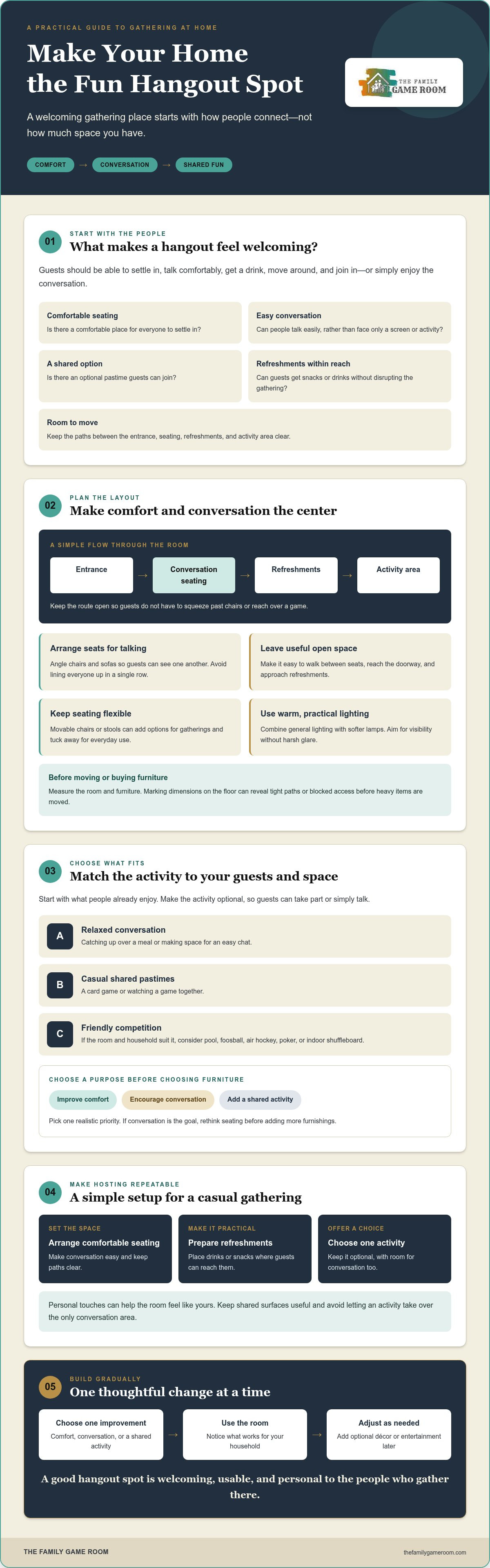
- Arrange seating for easy conversation and keep clear paths between the entrance, refreshments, and activity areas.
- Compare conversation-friendly, hands-on, and competitive activities to find options that suit your guests, space, and storage.
- Use a simple pre-gathering routine to make hosting easier to repeat, from setting up seating to choosing refreshments and an activity.
- Start with one practical improvement, then adjust based on how you use the room before adding optional décor or entertainment.
Start with the people: what makes a house a fun hangout spot?
A welcoming gathering place doesn’t require a large house or a dedicated entertainment room. It needs to work for the people who use it. If you’re thinking about how to make your house the fun hangout spot, begin with the everyday details: Can guests sit comfortably, talk without shouting across the room, find a drink, and join an activity without feeling in the way?
A fun hangout spot is comfortable, easy to use, and shaped around interests people already share. The idea connects with the concept of third places, social environments that give people a place to connect beyond home and work. Your home can offer that sense of welcome while still serving its usual routines.
Use this quick checklist to assess the space:
- Seating: Is there a comfortable place for everyone to settle in?
- Conversation: Can people talk easily, rather than face only a screen or activity?
- One activity: Is there an optional shared pastime, from a simple card game to a table game?
- Refreshments: Can guests reach drinks or snacks without disrupting the gathering?
- Room to move: Are paths clear between the entrance, seating, and activity area?
How do you want people to feel when they arrive?
Choose the feeling before choosing a look. Do you want the room to feel relaxed and low-key, lively and energetic, family-focused, or ready for friendly competition? Think about household members and regular guests, including different ages, mobility needs, and interests. A mix of seating and a choice between joining an activity or simply talking can help more people feel at ease. A successful hangout is welcoming, usable, and personal to the people who gather there.
Choose a purpose before choosing furniture
Write down what people already enjoy doing together: catching up over a meal, playing cards, watching a game, or competing at a table game. Then identify what gets in the way. Perhaps there’s nowhere to set refreshments, chairs are difficult to rearrange, or an activity takes over the only conversation area.
Pick one realistic priority first: improve comfort, encourage conversation, or add a shared activity. If conversation is the goal, rethink seating before buying more furnishings. If guests enjoy friendly competition and the room can accommodate it, a pool, foosball, air hockey, poker, or indoor shuffleboard table could provide a natural focal point. Let the household’s routines and guests’ needs guide the choice, so the room feels inviting on an ordinary day, too.
Plan a welcoming hangout layout around comfort and conversation
A room can look polished and still feel awkward if guests can’t talk comfortably or move around with ease. Start by arranging the space for people, not just for appearances. Conversation-friendly seating, clear pathways, gentle lighting, and easy-to-reach surfaces help guests settle in and interact naturally. These choices also reflect environmental psychology, which examines how surroundings can influence people’s feelings and interactions.
Arrange seating so guests can talk naturally
Position chairs and sofas so guests can see one another without lining everyone up in a single row. A sofa angled toward a pair of chairs, for example, creates an easy conversation area without making the room feel formal. Leave enough open space for people to walk between seats, reach the doorway, and approach refreshments.
Mix seating types only if each option is comfortable and suits the room. A few movable chairs or stools can offer flexibility when your gathering grows, then tuck away when the room returns to everyday use. Before rearranging or buying furniture, measure the room and the pieces you’re considering. Marking furniture dimensions on the floor can help you spot tight paths or blocked access before moving heavy items.
Make the room feel inviting without overfilling it
Use layered lighting to make the room feel warm and functional. Combine general room lighting with softer lamps, and choose adjustable options where possible so guests can see each other and any activity without harsh glare. Add a few personal touches, such as a favorite framed photo or a treasured game, but leave shared surfaces useful.
Keep commonly used refreshments and essentials within easy reach, perhaps on a side table that doesn’t interrupt the main walkway. Check the route from the entrance to the seating, refreshments, and activity area. Guests shouldn’t need to squeeze past chairs or reach over a game to get a drink.
- Clear the route: Keep entrances and paths between gathering zones open.
- Make essentials reachable: Set refreshments and useful surfaces near, but not in the way of, seating.
- Keep flexibility: Choose movable pieces when the room serves more than one purpose.
As you consider how to make your house the fun hangout spot, let the room’s real dimensions set the limits. If a shared game suits your group, explore game tables for home gatherings as one possible focal point, but make sure there’s room to move around it comfortably.
Choose activities that fit your space, guests, and everyday life
The best activity is one your guests will actually enjoy and your room can comfortably accommodate. Some gatherings call for conversation and simple card games; others suit hands-on projects or friendly competition. A well-chosen shared activity can give a room a natural focal point without making it serve only one purpose. For more ideas on shaping a space around connection, see this guide to how to design a sociable home.
Use this comparison to narrow your options. Space and storage needs depend on the specific activity and product, so treat the table as a starting point, not a substitute for checking specifications.
| Activity | Good fit for | Space needs | Storage considerations |
|---|---|---|---|
| Conversation and cards | Mixed interests, relaxed visits | Seating and a surface guests can gather around | Cards and small games can be put away easily |
| Hands-on projects | Guests who enjoy making or learning together | A clear, usable work surface | Consider where materials and finished projects will go |
| Foosball or air hockey | Guests who like quick, active competition | Room for the table and comfortable movement around it | Check where accessories can be stored between gatherings |
| Pool, poker, or shuffleboard | Households that enjoy focused, turn-based play | Confirm the model’s dimensions and required clearance | Plan a convenient place for game accessories |
Which game or activity suits your household?
Start with the people most likely to play. Think about who will join in, how often you host, and whether your group prefers a lively match or a slower-paced game. Pool, air hockey, foosball, poker, and indoor shuffleboard can each offer a shared activity, but only make sense if they suit your household’s interests and available room. If air hockey is on your shortlist, explore this guide to choosing an air hockey table for home.
Before choosing any game table, verify the specific product’s dimensions and clearance needs. Measure the room and account for movement around the table, not just the footprint it occupies. That practical check helps keep the activity enjoyable without crowding the rest of the gathering space.
Can a hangout room work for more than one purpose?
Yes. A room can support everyday routines and still make space for play. A pool table dining top is one option for households that want a playing surface and a dining surface. Check the actual product specifications and consider how the furniture will work in your layout before deciding.
Thinking through activities, guests, and room use is a practical step in how to make your house the fun hangout spot. Choose an activity that enhances the room, not one that dictates every use of it.
Make hosting easier with a simple, repeatable setup
Hosting feels more manageable when you follow the same basic routine each time. You don’t need an elaborate menu or a packed schedule. A few purposeful checks can help guests feel comfortable and let you enjoy the gathering, too. That’s a practical part of learning how to make your house the fun hangout spot: make the welcome easy to repeat.
What should you do before guests arrive?
Use this quick pre-gathering routine, adjusting it to suit your plans:
- Clear pathways. Check the entrance, routes to seating, and access to bathrooms and refreshments. Put away fragile or unnecessary items, but leave useful essentials within reach.
- Arrange seating. Make sure there’s a comfortable place to sit and that guests can join a conversation or move around without squeezing past furniture. Check the lighting and room temperature, too.
- Prepare refreshments. Choose simple food and drinks that fit the occasion and your guests’ needs. Set them out where people can help themselves without crowding the main gathering area.
- Select an optional activity. Put out a game or supplies if it suits the group, but leave enough room for guests who would rather talk, relax, or decide later.
A low-effort spread might be a few ready-to-serve snacks and a choice of drinks. For a planned meal or guests with particular dietary needs, check preferences ahead of time rather than guessing. The goal is to make refreshments easy to enjoy, not to turn hosting into a second job.
How can you help different guests feel included?
Offer more than one way to take part. Some guests may want an energetic game; others may prefer conversation or a quieter activity. Keep participation optional, and make instructions easy to find. If a game is new to someone, explain the basics in a friendly, low-pressure way or invite them to watch a round first.
For a gathering with specific accessibility or practical considerations, ask guests what would help them feel comfortable. A little advance planning can guide choices about seating, pathways, activity setup, and where refreshments go.
After guests leave, do a brief reset: return movable seating, clear food and game supplies, and put everyday essentials back where they belong. A quick tidy helps the room serve its usual purpose and makes the next invitation easier to say yes to. If a game table could suit your household’s gatherings, explore home game tables as one possible addition to your setup.
Build your fun hangout spot gradually, one thoughtful choice at a time
You don’t have to transform a room all at once. Start with the obstacle that most affects how your household gathers, then make one change and see how the space works in everyday life. A better seating arrangement may be more useful than new décor; clearer pathways may matter more than another activity. This measured approach keeps the room personal and functional rather than shaped around a trend or a styled photo.
What should you improve first?
Choose one priority: seating, flow, lighting, storage, or a shared activity. Focus first on essential comfort and usability. Decorative accents and entertainment purchases can wait until you know what the room needs.
After a gathering, notice what people actually used. Did guests pull chairs closer to talk, leave a walkway clear, or gravitate toward a particular activity? Those small observations can guide your next adjustment. If an activity area felt cramped, reconsider its placement before adding furnishings. If nobody used a decorative feature, it may not be worth making it a priority.
Let household routines lead. A room that needs to support meals, relaxing, or other regular activities shouldn’t be redesigned solely to resemble a game room. The aim is to make gathering feel natural while preserving the space’s everyday purpose.
When is a game table the right next step?
Consider a game table when it fits the room and gives your household and guests an activity they genuinely look forward to. It’s an option, not a requirement for a welcoming home. Before deciding, measure the intended space and review the specific table’s dimensions and clearance needs. Think about how often it’s likely to be used and whether it will leave enough room for other activities.
If pool is a regular interest, you can review American Heritage Billiards pool tables as one category to consider. Check product specifications and how a table would fit your household’s plans before making a choice. Matching furnishings may also contribute to a cohesive room, but they’re worthwhile only if they serve a clear purpose.
Ultimately, how to make your house the fun hangout spot comes down to noticing what helps people feel at ease, then building on it at your own pace. Once you’ve defined your space, priorities, and preferred activities, explore home game-room options for ideas that may suit your gathering space.
Make room for more good times
A memorable hangout doesn’t depend on a perfect room. It grows from choices that help people feel comfortable: seating that invites conversation, clear paths through the space, and activities that suit the people who gather there. To figure out how to make your house the fun hangout spot, start with one change, then notice what guests naturally enjoy before deciding what to adjust next.
Keep hosting simple with a repeatable setup for seating, refreshments, and an optional activity. Comfort and everyday function come first; décor and entertainment can build on those essentials when they make sense for your home. A game table can bring people together, but it’s only one way to create a welcoming place to spend time.
The Family Game Room is a family-owned and operated business founded in 2022, offering new game tables and complementary home-entertainment furnishings. Once you’ve identified what your gathering space needs, explore home game-room options for ideas to consider.
Make the space your own, one thoughtful choice at a time. The best gatherings start with feeling at home.
Frequently Asked Questions
How do I make my house a fun place to hang out?
Make it comfortable, easy to move through, and suited to activities your household and guests enjoy. Arrange seating so people can talk, keep refreshments accessible, and offer a shared activity without making participation feel required. To figure out how to make your house the fun hangout spot, look at how your guests naturally use the room, then adjust one thing at a time. A welcoming atmosphere matters more than a dedicated entertainment space.
How can I make my house a hangout spot without spending a lot?
Start by rearranging what you already have. Angle chairs toward one another, clear clutter from shared surfaces, and make a simple activity easy to join, such as cards, a board game, or a music playlist. Use snacks and drinks you already have rather than planning an elaborate spread. After guests leave, note what worked and what felt awkward. Small practical changes can make gatherings easier without requiring new furniture or décor.
What makes a house feel welcoming to guests?
Guests tend to feel more at ease when they know where to sit, can reach refreshments, and don’t have to navigate around clutter. Offer a comfortable place to gather and make it clear that joining an activity is optional. Consider practical needs in advance, such as varied seating or an uncluttered route through the room. A few personal touches can make the space feel like your home, rather than a room staged only for visitors.
How do I make a small living room fun for guests?
Give the room a clear focal area instead of trying to fit in multiple large activity zones. Use movable chairs or stools that can be repositioned, keep walkways open, and place refreshments on a compact, accessible surface. Choose activities that don’t require much setup or storage, such as conversation games or a deck of cards. If you’re considering larger furnishings, measure the room and check how they’ll affect movement before buying.
What activities can I add to a home hangout room?
Choose activities based on the people who gather and the room available. Conversation cards, board games, and hands-on projects can suit a relaxed visit, while pool, air hockey, foosball, poker, or indoor shuffleboard may appeal to guests who enjoy friendly competition. You don’t need several options: one shared activity can give people a reason to gather, while leaving space for conversation or other everyday uses.
How do I make hosting friends at home easier?
Use a short routine before each gathering: clear pathways, arrange seating, set out simple refreshments, and choose an optional activity. Keep the plan appropriate to your guests and the occasion rather than preparing more than you need. If you introduce a game, make its instructions easy to find and explain the basics in a relaxed way. Afterward, do a quick reset so the room is ready for everyday use again.
How much space do I need for a game table at home?
There isn’t one space requirement that applies to every game table. Dimensions and clearance needs depend on the table and how it’s played, so check the specifications for the exact model you’re considering. Measure the room, account for movement around the table, and consider doors, other furniture, and the routes guests need to use. If the layout feels crowded on paper, it may be uncomfortable during play.