


Imagine unboxing your dream furniture only to find your guests' knees pinned tightly against the bar apron. It's a frustrating mistake that transforms a premium entertaining space into a cramped, awkward corner. You deserve a setup that feels as good as it looks. Learning exactly how to choose bar stool height for home bar layouts is the first step toward achieving that professional-grade finish.
You've likely spent hours browsing designs, but without the right measurements, even the most beautiful stool won't provide the relaxation you're after. We're here to help you master the "Golden Rule" of the 10 to 12 inch gap. This simple calculation ensures professional-grade comfort and keeps your game room looking sharp. This 2026 guide covers everything from standard counter dimensions to the latest trends in performance fabrics and sustainable materials. You'll learn how to calculate the perfect clearance and space your seating for a flawless, high-end experience that your guests will love.
Key Takeaways
- Master the "Golden Rule" of clearance to ensure your guests enjoy professional-grade comfort without cramped legroom.
- Discover how to choose bar stool height for home bar setups by calculating the specific distance from your floor to the counter's underside.
- Identify the critical differences between counter height and bar height stools to avoid costly furniture returns.
- Account for seat compression and armrest height to ensure your premium seating tucks away seamlessly when not in use.
- Elevate your entertainment space by coordinating your stool finishes with investment-grade pieces like Nixon Billiards or American Heritage pool tables.
The Science of Seating: Why Bar Stool Height Dictates Your Home Bar Experience
Your home bar is more than a piece of furniture; it's a social hub where memories are made. Achieving the right atmosphere depends entirely on the relationship between your seating and your serving surface. If you want to know how to choose bar stool height for home bar environments, you must start with the ratio. A stool that is too high forces a hunched posture, while one that is too low leaves guests feeling like they're sitting at the children's table. Precision in these measurements ensures that every guest feels comfortable and engaged in the conversation.
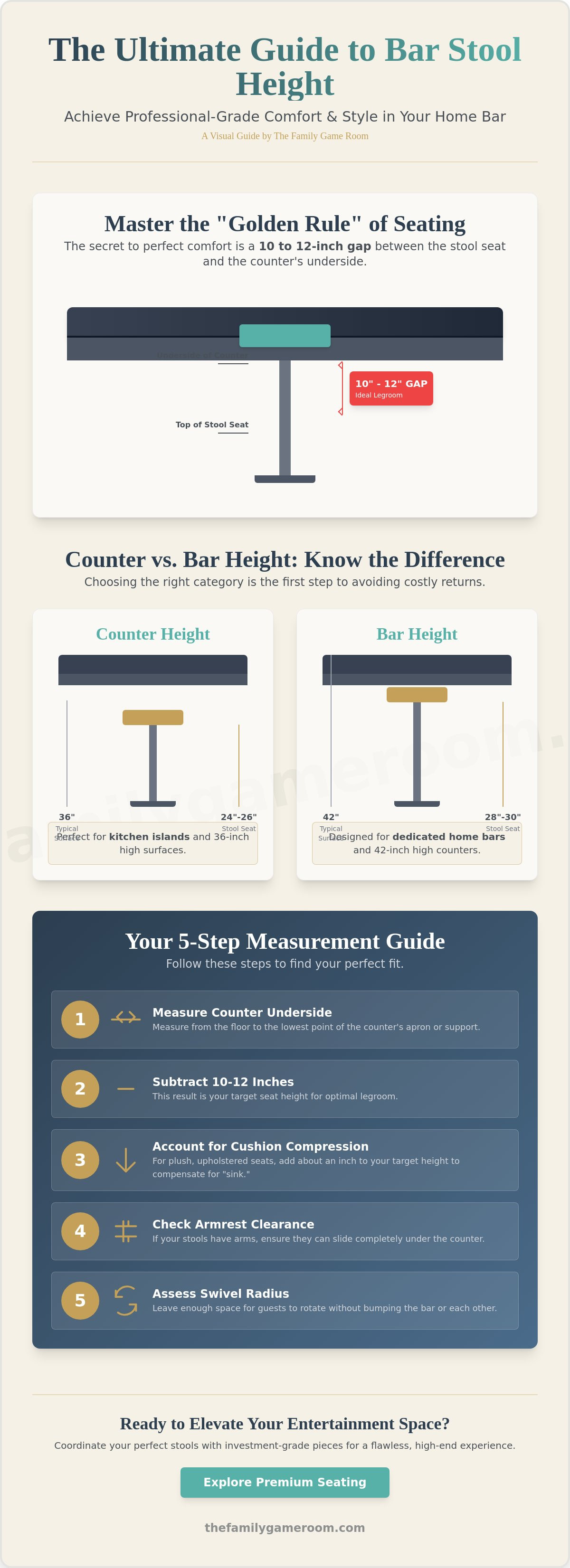
Social dynamics often rely on eye-level interaction. When your bar stools are correctly sized, guests can maintain easy eye contact with the host or others standing nearby. This creates a cohesive, welcoming environment rather than a disjointed one. To achieve this, industry experts rely on "The Golden Gap." This is the 10 to 12 inches of space between the top of the stool seat and the underside of the bar. This specific clearance provides ample legroom and allows for natural movement. Falling outside this range leads to immediate discomfort. Too little space results in knees hitting the apron, while too much space makes the bar feel awkwardly high and unusable for dining or leaning.
The Difference Between Seat Height and Overall Height
Clarity is essential when browsing premium collections. Always measure from the floor to the highest point of the seat cushion to determine the actual seat height. This is the number that matters for legroom. Standard bar stool heights are categorized by this measurement, not the top of the backrest. While the overall height impacts the visual silhouette of your game room, it doesn't affect how your legs fit under the counter. Keep in mind that high-end stools with plush, investment-grade upholstery may compress when someone sits down. Factor in an extra half-inch of "give" for these luxury finishes to maintain that perfect gap.
Identifying Your Surface Type
Before you commit to a style, identify your specific bar type. Most residential spaces feature one of two standards. Kitchen islands typically stand at 36 inches, requiring counter-height stools. Professional-grade home bars, like those paired with Nixon Billiards or American Heritage setups, usually reach 42 inches. Modern 2026 design trends often favor flush, single-level counters for a minimalist look, but traditional "stepped" bars remain popular for their classic pub feel. Always measure from the floor to the underside of the bar apron rather than the top of the counter. This ensures you account for the thickness of the wood or stone, preventing any unexpected clearance issues.
The 10-12 Inch Rule: Calculating the Ideal Clearance for Comfort
Precision measurement is the foundation of a luxurious home bar experience. To understand how to choose bar stool height for home bar setups, you must look past the counter surface and focus on the clearance below. Follow these five steps to find your perfect fit.
- Step 1: Measure from the floor to the lowest point of the counter's apron or support trim. This is the most critical distance for legroom.
- Step 2: Subtract 10 to 12 inches from that measurement. This range represents your target seat height.
- Step 3: Account for the "sink factor." Plush, high-end cushions may compress by an inch or more, so aim for the higher end of your range if you prefer deep padding.
- Step 4: Check armrest clearance. Ensure the arms can slide under the counter when the stool is tucked in to maintain a clean, organized look.
- Step 5: Assess the swivel radius. Leave enough room so guests don't bump the bar or their neighbors when rotating.
Measuring Your Bar or Game Table
Standard counters are straightforward, but multi-functional game rooms often feature unique surfaces. If you use Pool Table Dining Tops, measure from the floor to the bottom of the dining leaf's support structure. Don't assume your floor is perfectly level across the entire length of the bar. Take measurements at both ends and the middle. If there's a discrepancy, use the average to ensure your seating looks uniform. The "Apron Factor" is often overlooked; thick wooden trim can significantly reduce your legroom, so always measure to the lowest hanging piece of the bar's anatomy.
Testing the 'Knee Clearance' Zone
Comfort isn't just vertical; it's lateral. When choosing a bar stool, plan for 21 to 24 inches of lateral space per stool. This provides enough elbow room for dining and keeps the space from feeling cluttered. Psychological comfort is equally vital. Guests feel more relaxed when they have "breathing room" under the counter rather than feeling pinned against the wood. If you frequently host taller-than-average guests, lean toward the 12-inch gap to accommodate longer legs. You can explore a variety of premium bar stools designed with these ergonomic standards in mind to complete your curated look.
Standard vs. Spectator: A Comparison of Common Stool Height Categories
Selecting the right category is about more than just numbers; it's about the intended use of your space. While a casual breakfast nook might thrive with a standard stool, a professional game room demands a more nuanced approach. Knowing how to choose bar stool height for home bar environments involves matching the seat to the energy of the room and the specific furniture you've curated. Most premium stools fall into four distinct categories based on their seat height.
- Counter Height (24-26 inches): Tailored for 36-inch kitchen islands or low-profile gaming tables. These provide a relaxed, domestic feel.
- Bar Height (28-30 inches): The gold standard for 42-inch bars and professional pub setups. This is the most common choice for dedicated home bars.
- Spectator Height (34 inches): Often called "extra-tall," these are the premier choice for game rooms and billiards halls.
- Extra-Tall Stools (36+ inches): Specialized seating for commercial-style 48-inch counters or high-tier observation decks.
Why Spectator Height is the Game Room Secret
In a dedicated game room, standard seating often falls short of the mark. A 34-inch spectator stool provides a crucial vantage point that lower seats simply can't match. It allows guests to look over the rails of American Heritage Billiards Pool Tables without having to stand up. This "stadium seating" effect ensures everyone remains part of the action, whether they're playing a frame or observing from the sidelines. These taller heights are perfect for multi-tier rooms where you want to create clear sightlines from the back of the room to the game table or shuffleboard.
Counter vs. Bar Height: Avoiding the Most Common Mistake
The most frequent error in furniture selection is confusing counter height with bar height. Purchasing a 24-inch stool for a 42-inch bar leaves guests with their chins nearly touching the counter surface. This mistake often stems from the terminology used in big-box retail, where "bar stool" is used as a generic term for anything with long legs. Always double-check the technical specifications before you buy. If you don't have a tape measure handy, use your body as a guide. A standard kitchen counter usually hits at your navel, while a professional bar reaches your lower chest. If you're still uncertain, consider adjustable height stools. They offer a versatile safety net, allowing you to fine-tune the seating to your specific surface or the height of your guests.
Beyond the Tape Measure: Factoring in Swivels, Arms, and Upholstery
Static measurements provide a starting point, but comfort is a dynamic experience. When you explore how to choose bar stool height for home bar setups, you must consider how the stool's features interact with the user and the room. A luxury stool is an investment in your home's social life; its mechanics and materials should enhance that experience rather than hinder it. Factors like seat compression and swivel radius can change your clearance requirements by several inches.
Ergonomics extend beyond the seat itself. Footrest placement is a frequently overlooked detail that dictates long-term comfort. Ideally, the footrest should sit approximately 10 to 12 inches below the seat. This allows for a natural knee bend and prevents leg fatigue during extended social gatherings. If the footrest is too high, your knees will feel crowded; if it's too low, you'll find yourself sliding forward to find support. High-end brands prioritize this ratio to ensure their pieces offer professional-grade support.
- Upholstery Compression: A plush, 30-inch seat may compress to 28 inches when occupied. Factor this "sink-in" into your math.
- Armrest Clearance: Stools with arms require extra vertical space to tuck neatly under the bar apron.
- Swivel Mechanics: Memory-return swivels keep your room looking organized, while 360-degree versions offer maximum mobility.
- Footrest Stability: Ensure the footrest is reinforced to handle weight, especially on spectator-height stools.
The Impact of Premium Upholstery
Luxury seating often utilizes high-density foam or soft-fill cushions that provide a distinct "sink-in" factor. While these materials offer superior comfort, they also lower your actual sitting height. If you select a stool with deep, plush padding, you might need to choose a slightly taller frame to maintain your eye-level connection with the bar. Material choice also plays a role. Performance fabrics and faux leathers, popular in 2026 for their durability, offer a different tactile experience than traditional top-grain leather. Leather tends to be firmer and holds its shape longer, while softer fabrics may allow for more initial compression.
Space Planning for Swivel and Armrests
Space planning requires a "swing zone" analysis. A 360-degree swivel stool needs enough clearance so that a guest can rotate fully without hitting the bar, walls, or adjacent furniture. To keep your game room looking professional, perform the "Tuck Test." Ensure that armrests can slide completely under the counter when the stools aren't in use. This saves precious floor space and prevents a cluttered appearance. For a truly curated look, coordinate your seating with other high-end storage solutions like Pool Cue Racks. This ensures your room remains functional and organized even during large gatherings. Explore our full collection of designer bar stools to find the perfect match for your high-end game room.
Elevating Your Entertainment: Premium Seating for the Modern Game Room
Mastering the technical side of measurements is only half the battle. To create a truly immersive environment, your seating must harmonize with the high-end centerpieces of your room. By understanding how to choose bar stool height for home bar setups, you ensure your space is as functional as it is beautiful. A luxury game room thrives on consistency. Professional-grade furniture from names like American Heritage Billiards or Nixon Billiards isn't just about the name; it's about the integrity of the build. These investment-grade pieces are engineered to last decades, offering a level of stability that cheaper alternatives simply cannot match.
Wobble is the enemy of high-end entertainment. As stool height increases, the importance of heavy-duty construction becomes paramount. Premium stools feature reinforced joints and precision-weighted bases to remain rock-solid, even at spectator heights. This structural integrity prevents the swaying or "creaking" often found in mass-market furniture. When your guests sit down to watch a game of pool or shuffleboard, the furniture should feel like a natural, immovable extension of the room's architecture.
Matching Aesthetics with Functionality
Creating a cohesive "Luxury Lounge" feel requires a keen eye for detail. If your room features a dark walnut Nixon Billiards pool table, your bar stools should ideally reflect that same wood stain or a complementary metal finish. Mixed-material frames, such as powder-coated steel paired with distressed oak, are a major trend in 2026. These combinations add texture and visual interest without breaking the room's design language. Don't overlook the smaller details; matching the hardware on your stools to the fixtures on your billiard lights or dartboard cabinets creates a polished, curated look that defines approachable excellence.
The Final Selection Process
Finalizing how to choose bar stool height for home bar environments comes down to a few decisive checks. Before you commit to a purchase, visualize how the stools will interact with the flow of the room. Buying from a trusted curator ensures that you are receiving a product vetted for both style and durability. Use this final checklist to confirm your choice:
- The Apron Check: Did you measure from the floor to the lowest point of the counter trim?
- The Golden Gap: Does your chosen seat height leave 10 to 12 inches of legroom?
- The Compression Factor: Have you accounted for an extra inch of sink if the cushions are extra plush?
- The Swing Zone: Is there enough lateral space (21 to 24 inches) for swivels and armrests?
- The Finish Match: Do the wood stains or metals coordinate with your pool table or shuffleboard?
Your home bar is the heart of your social life. Taking the time to get these details right ensures that your investment provides comfort and style for years to come. Ready to complete your space? Explore our curated collection of premium bar stools to find the perfect match for your home.
Design Your Perfect Social Hub
Mastering the 10 to 12 inch gap is the definitive secret to professional-grade comfort. By now, you understand that selecting the right category, whether it's counter, bar, or spectator height, prevents the frustration of cramped legroom or knees hitting the bar apron. Factoring in seat compression and armrest clearance ensures your seating remains as functional as it is beautiful. Learning how to choose bar stool height for home bar layouts shouldn't be a guessing game; it is the foundation of a welcoming entertainment space.
We bring family-owned expertise to every luxury game room design. As an authorized dealer for American Heritage and Nixon Billiards, we provide a curated selection of high-durability, professional-grade furniture that stands the test of time. You deserve a setup that encourages long conversations and effortless hosting. Shop Premium Bar Stools for Your Home Bar and transform your vision into a reality. Your guests will thank you for the comfort, and you'll love the coordinated style of your new lounge. Start building the ultimate entertainment space today.
Frequently Asked Questions
What is the standard height of a bar stool for a 42-inch counter?
The standard seat height for a 42-inch counter is 28 to 30 inches. This range provides the ideal clearance for legroom while keeping guests at a comfortable dining level. Choosing a stool within these dimensions ensures that the "Golden Rule" of 10 to 12 inches of space is maintained. Always measure to the top of the seat cushion to verify accuracy before you finalize your purchase.
How much space should be between the seat of the stool and the bar?
You should maintain 10 to 12 inches of clearance between the top of the stool seat and the underside of the bar apron. This specific gap is the key to ensuring professional-grade comfort for guests of all sizes. If you select stools with extra-plush upholstery, aim for the 12-inch mark to account for seat compression. This prevents knees from hitting the counter and allows for a more relaxed, natural posture.
Can I use counter-height stools at a 42-inch bar?
You shouldn't use counter-height stools at a 42-inch bar because they sit too low for comfortable interaction. A 24-inch stool paired with a 42-inch surface leaves an 18-inch gap, which makes it difficult to reach drinks or food. This is the most common mistake homeowners make when learning how to choose bar stool height for home bar projects. Stick to bar-height stools to maintain the correct social eye-level and ergonomic support.
What is 'Spectator Height' and when should I use it?
Spectator height refers to stools with a seat height of approximately 34 inches, designed for 48-inch counters. Use these in game rooms to provide better sightlines over the rails of American Heritage Billiards pool tables or shuffleboard setups. They create a stadium seating effect that keeps observers engaged with the action. These taller stools are ideal for multi-tier rooms where visibility of the game floor is a priority.
How many bar stools can fit at an 8-foot home bar?
An 8-foot bar generally accommodates 3 to 4 stools depending on their width and swivel features. Plan for 26 to 30 inches of space from the center of one stool to the next to ensure adequate elbow room. If your stools have armrests or wide bases, you may need to stick to three seats to avoid a cluttered look. Proper spacing allows guests to rotate and move freely without bumping into their neighbors.
Do I need stools with arms for my home game room?
Stools with arms offer superior comfort for long social sessions but require more lateral space and careful vertical measurement. Ensure the armrests can slide completely under the bar apron to save floor space when the stools aren't in use. If your game room is compact, backless or armless designs often provide a cleaner, more minimalist silhouette. Many homeowners prefer arms for a formal "Luxury Lounge" feel that mimics high-end pub seating.
How do I measure the height of my bar if the floor is uneven?
Measure from the floor to the underside of the bar at three different points: both ends and the center. If your floor is uneven, use the average of these three numbers to determine your target stool height. This ensures that your seating looks uniform across the length of the bar. If the discrepancy is significant, consider stools with adjustable leveling feet to prevent any annoying wobbles during use.
What is the difference between a bar stool and a counter stool?
The primary difference lies in the seat height, with counter stools measuring 24 to 27 inches and bar stools measuring 28 to 30 inches. Counter stools are designed for standard 36-inch kitchen islands, while bar stools are built for 42-inch bar surfaces. Understanding this distinction is vital when researching how to choose bar stool height for home bar environments. Choosing the wrong category results in poor posture and an awkward dining experience for your guests.