


The best game room for resale may be the one that doesn’t look like a game room at first glance. A game room as a home resale value booster depends less on filling every corner with equipment and more on creating a polished space buyers can imagine using in different ways.
It’s understandable to wonder whether a dedicated entertainment room will feel like an asset or a limitation. A thoughtfully furnished room can add character and make everyday living more enjoyable, but no specialty upgrade guarantees a higher sale price. Flexibility matters: clear floor space, coordinated finishes, and furnishings that suit the home can help the room feel ready for more than one purpose.
This article explores what can shape buyer perception and how to plan a space that works for your household now and remains adaptable later. You’ll find practical guidance on layout, furnishing, and staging, including how options such as a pool table dining top can support everyday use. The goal is a welcoming entertainment space that feels considered, not so specialized that future owners struggle to picture their own plans.
Key Takeaways
- A game room as a home resale value booster depends on the property, local market, and buyer preferences, not on a guaranteed return.
- Thoughtful lighting, tidy organization, good condition, and comfortable circulation can help the room feel like a natural part of the home.
- Compare a dedicated game room with a flexible bonus space to see which better fits your household and may make sense to future buyers.
- Before listing, measure the room, edit furnishings, clarify its possible uses, and refresh the presentation.
- Choose game room furnishings for the enjoyment they bring now, while considering how options such as a pool table dining top can support everyday use.
Can a Game Room Boost Home Resale Value, or Just Buyer Appeal?
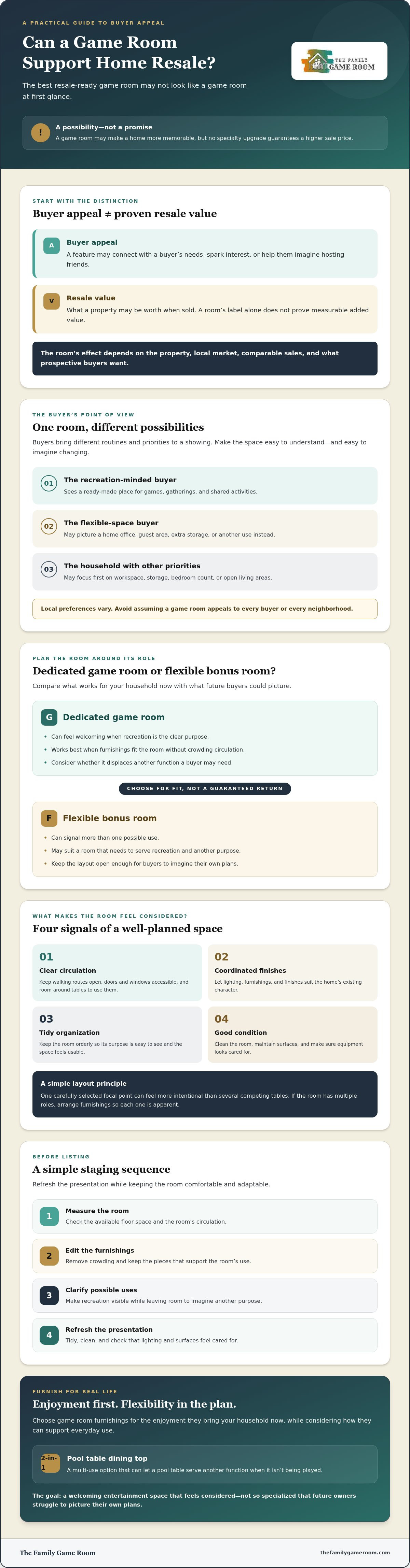
A game room can help a home make a memorable impression, but that doesn’t mean it automatically raises the sale price. The idea of a game room as a home resale value booster is best treated as a possibility, not a promise: its effect depends on the home, its market, and what prospective buyers are looking for.
What does “resale value booster” actually mean?
Resale value refers to what a property may be worth when it’s sold. Buyer appeal is different: it describes how well a feature connects with a buyer’s needs or makes a home stand out. A room may attract listing interest or help a buyer picture hosting friends, but those reactions don’t by themselves establish a higher appraised value or sale price.
Comparable sales and the home’s overall characteristics help inform value assessments. A room’s label alone doesn’t prove that it adds measurable value. As a general reference, Recreation room describes a space intended for leisure and shared activities within a home. That function may be appealing, but the room still needs to work within the property as a whole.
A game room can be an appealing feature without being proof of a higher appraised value. Without relevant local sales or appraisal evidence, avoid assigning it a universal percentage or guaranteed return.
Why might buyers respond differently to a game room?
Picture two prospective buyers viewing the same finished basement. One sees a ready-made place for games and gatherings. The other sees a room they’d rather use as a home office, guest area, or extra storage. Neither reaction is unusual; buyers bring different routines and priorities to a showing.
Some households may value a welcoming entertainment space, especially if it feels comfortable and easy to use. Others may focus first on bedroom count, workspace, storage, or open living areas. A game room’s usefulness can also depend on how it fits the home: a spacious bonus room may accommodate recreation without displacing another needed function, while a smaller room may need to serve more than one purpose.
Local preferences matter, too. Don’t assume a game room is a selling point in every neighborhood, or that buyers in a particular market will respond the same way. If you’re preparing to sell, look to local comparable listings and discuss market-specific questions with a real estate professional. The practical aim is to present a polished, functional room buyers can appreciate, while leaving them room to imagine how they’d make it their own.
What Makes a Game Room Feel Like a Valuable Part of the Home?
A room feels considered when its design supports both recreation and everyday comfort. Quality finishes, good lighting, tidy storage, and well-maintained surfaces can make a game room feel like it belongs in the home rather than being a collection of equipment placed wherever it fits. The goal isn’t to make every buyer want the same setup. It’s to make the room’s purpose easy to understand and its layout easy to live with.
How can layout and presentation shape buyer perception?
Start with the floor plan. Leave clear walking routes, keep doors and windows accessible, and avoid crowding the room with more tables than it can comfortably hold. A game table should have enough surrounding space for people to use it without blocking circulation. If the room also serves as a lounge or bonus space, arrange the furniture so both functions are apparent.
Then bring the presentation together. Coordinate lighting, furnishings, and finishes with the home’s existing character; no single palette or style suits every property. Check that the room is clean, surfaces are in good condition, and equipment looks cared for. For practical ideas, consult the site’s billiard lighting guide. The National Association of REALTORS® Remodeling Impact Report offers broader context on remodeling projects, though it doesn’t establish a resale return for a game room specifically.
Which game room features can support everyday use?
Choose furnishings to suit the available space and the household’s routines. A large game table may be a pleasure to use, but only if it leaves room to move around and doesn’t prevent the room from serving its other purpose. One carefully selected table can feel more intentional than several competing focal points.
A pool table dining top is one example of a multi-use furnishing: it can allow a pool table to serve another function when it isn’t being played. That added flexibility may be useful in daily life, but it isn’t a guarantee of added home value. For more design and function ideas, readers can look for the site’s pool table dining top guide.
Buyer appeal depends on the whole room’s usability, not one purchase alone. Before furnishing or staging, assess the room as a complete space: can people move comfortably, is the purpose clear, and does the finish feel consistent with the rest of the home? A thoughtful arrangement can make the room welcoming now and easier for a future owner to imagine using in their own way. To explore game room furnishings, consider options that fit your space and routines first.
Dedicated Game Room vs. Flexible Bonus Room: Which Better Supports Resale?
A dedicated game room makes recreation the clear priority. A flexible bonus room keeps other uses in view, such as working from home, hosting overnight guests, or creating a play area. Neither layout is right for every property or buyer. The better choice depends on the home’s overall room count, how your household uses the space, and whether the setup leaves future owners practical options.
The concern about a highly specialized room is valid: a prospective buyer who needs an office or guest room may see a fixed entertainment setup as a poor fit. Flexibility can reduce that friction, but it doesn’t guarantee stronger buyer interest. Use this comparison to assess what each arrangement offers:
| Consideration | Dedicated game room | Flexible bonus room |
|---|---|---|
| Daily use | Ready for regular play and hosting. | Can support recreation alongside another routine. |
| Adaptability | May need rearranging to serve another purpose. | Movable furnishings can make a change of use easier. |
| Visual clarity | A cohesive setup makes its entertainment purpose obvious. | Thoughtful zoning can show multiple uses without clutter. |
| Buyer considerations | May appeal to buyers who want recreation space, but not suit every household. | Offers options, though buyers may value different functions. |
When does a dedicated game room make sense?
Consider dedicating a room to games if the home has enough bedrooms, work areas, and storage to meet other needs. A well-maintained space with a clear layout may be a natural fit for a household that enjoys hosting and recreation. Still, stage it so its quality and function are evident without suggesting that the next owner must share your hobbies.
How can a game room stay easy to repurpose?
Keep secondary uses possible. Choose movable seating, avoid filling every open area, and arrange furnishings so the room can shift from game night to a workday or gathering. Multi-use pieces can help, too. A pool table dining top, for example, can let the table serve a dining function when it’s not being played. That’s a practical feature, not a resale-value guarantee.
Match game choices to the room and household rather than adding equipment for its own sake. If you’re considering air hockey, consult an air hockey table guide and assess how the table would fit the available floor space and the room’s other uses. A game room as a home resale value booster is more plausible as a well-planned, adaptable part of the home than as a room future buyers can use only one way.
How to Plan and Stage a Game Room Before Selling
Before listing, prepare the room to look cared for, easy to navigate, and simple to imagine using. A focused review can help show its current purpose without making the space feel locked into one household’s routines.
- Assess the room. Check its condition, lighting, surfaces, storage, and relationship to the rest of the home. Note anything that looks worn, distracting, or out of place.
- Edit the furnishings. Remove excess accessories, personal items, and equipment that crowd the room. Keep pieces that help communicate its function or make it feel welcoming.
- Clarify its uses. Decide whether to present the space primarily for entertainment or show how it could also accommodate another use. Avoid competing setups that make the room’s purpose unclear.
- Refresh the presentation. Clean thoroughly, tidy visible storage, and arrange furnishings to keep doors, windows, and pathways clear.
- Review the result. Walk through as a buyer would. Does the room feel maintained, consistent with the home, and easy to picture using?
What should homeowners review before listing?
Measure the room before adding or repositioning a large game table. Account for the table itself and the space people need to move around it; don’t assume a piece will fit comfortably just because it fits on the floor plan. Keep access to storage unobstructed, and avoid blocking windows or doors. If the layout feels uncertain, ask a real estate professional familiar with your property’s market for tailored staging guidance.
A game room should feel connected to the home, not like an unfinished project. Match its level of care to nearby living spaces, and put away personal clutter so buyers can focus on the room rather than its current owner’s belongings.
How can staging show more than one possible use?
Make the entertainment function clear at first glance, then preserve a sense of possibility. For example, arrange seating neatly around the game area while leaving a visible section of open floor that could support a desk or guest furnishings. The room should look intentionally staged, not emptied out or caught between uses.
Professional listing photography can help buyers understand the room’s size, natural light, and layout. Ask that images represent the space accurately, with angles that show its features without distorting proportions. A well-presented room may strengthen the impression of the game room as a home resale value booster, but staging can’t promise a specific sale outcome.
Ready to consider furnishings that suit your room and routines? Explore game room furnishings and plan around the space you have.
Choose Game Room Furnishings for Enjoyment First, and Resale Flexibility Second
A game room should earn its place in your home long before you list it. Choose furnishings that suit the room’s dimensions and your household’s routines, then consider whether the arrangement can still make sense to someone with different plans. That’s a more grounded approach than buying equipment on the assumption that it will increase resale value.
How should homeowners match a game table to the room?
Start with the room, not the product. Measure the available area, account for comfortable circulation, and consider how people will enter, move through, and use the space. Then ask what your household will enjoy most. A pool table may suit a room designed around regular play; shuffleboard, air hockey, foosball, and poker tables offer other ways to gather and play. The right choice is the one that fits without crowding out the room’s other needs.
If you’re considering a pool table, the American Heritage Billiards buyer’s guide can provide selection context. Use any guidance alongside your own measurements and intended use. Don’t rely on a table’s appeal alone to determine whether it belongs in your room.
What is a sensible next step for homeowners?
If a sale is on the horizon, ask a real estate professional familiar with your property and local market how to present the space. A table that your household loves may remain in the room, or you may decide to rearrange furnishings so the area feels more adaptable. Either way, prioritize a clear layout and a purpose buyers can understand.
For furnishing decisions, compare game table categories with the space and routines you have in mind. The Family Game Room sells new game room equipment and furnishings, including pool, shuffleboard, air hockey, foosball, and poker tables. Its products are furnishing options, not promised property-value outcomes. Choose for enjoyment first, and favor a setup that doesn’t prevent the room from serving everyday needs.
A game room as a home resale value booster isn’t something any table can guarantee. Thoughtful choices can make the space more enjoyable now and easier to imagine using in different ways later. If you’re ready to explore options, browse game room furnishings by category at your own pace.
Make a Game Room Work for Your Home
A game room can catch a buyer’s eye, but it isn’t a guaranteed resale-value upgrade. Think of the game room as a home resale value booster only when the space feels polished, comfortable to use, and adaptable to different needs. Your local market and buyers’ priorities still shape how the room is received.
Choose furnishings for the enjoyment they bring your household, then consider how the layout can remain useful if routines change. A family game night or a friendly gathering can be its own reward, even without a promise of financial return.
The Family Game Room is a family-owned and operated retailer with pool tables, pool table dining tops, and multiple game table categories. Explore options that suit your space and the way you like to play. Explore game room furnishings for your home, and make room for more enjoyment, one thoughtful choice at a time.
Frequently Asked Questions
Does a game room increase home resale value?
Not automatically. A game room may appeal to buyers who value entertainment space, but buyer interest doesn’t prove a higher appraised value or sale price. The effect of a game room as a home resale value booster depends on the property, its local market, and buyer preferences. Focus on a well-maintained, functional room, and avoid assuming a guaranteed return without relevant comparable sales or appraisal evidence.
Can a game room make a home harder to sell?
It can be a drawback if the setup makes a room feel difficult to use for anything else. For example, bulky furnishings that block access or leave little open space may limit buyers’ options. That doesn’t mean a game room will necessarily deter buyers. Keep the layout orderly, make the room’s purpose clear, and consider whether furnishings can be moved or rearranged to suggest other uses.
What game room features appeal to home buyers?
Features that make the room comfortable and easy to understand can help its presentation: clear walking paths, good lighting, tidy storage, and furnishings in good condition. Buyers may also appreciate a layout that feels consistent with the rest of the home. Preferences vary, so there’s no single game table or design that suits every buyer. Aim for a polished space that looks enjoyable without feeling overly customized.
Should I convert a spare bedroom into a game room before selling?
Usually, don’t convert a bedroom solely on the assumption that a game room will increase resale value. A spare bedroom may be useful to buyers as a guest room, office, or additional sleeping space. Consider your home’s other rooms and the needs of your household before changing its function. If you do stage it for recreation, keep the furnishings easy to move and discuss the presentation with a real estate professional.
Is a flexible bonus room better than a dedicated game room for resale?
A flexible bonus room can preserve options for buyers who may want an office, guest area, or entertainment space. A dedicated game room can be a strong fit when the home has enough space for other household needs and the room is well presented. Neither layout guarantees better resale results. Consider the property’s overall function and local buyer preferences, then choose an arrangement that works for your household too.
How should I stage a game room when selling a house?
Start by cleaning and assessing the room’s condition. Measure before moving large tables, then arrange furnishings to leave clear routes through the space and keep doors, windows, and storage accessible. Remove personal clutter and extra accessories, but retain enough furniture to make the entertainment purpose obvious. If the room can serve another use, show that possibility with a neat, intentional arrangement rather than leaving it empty or unfinished.
Do pool tables add value to a home?
A pool table may make a game room more enjoyable and appealing to buyers who want a ready-made recreation space, but it doesn’t automatically add measurable value to the property. Fit matters: consider room dimensions, comfortable circulation, and whether the table crowds out other uses. A pool table dining top can provide another function in daily life, but that convenience shouldn’t be treated as a guaranteed resale return.