


A party foosball tournament rarely gets derailed by the score. It gets derailed when players disagree about what counts. Set your foosball tournament rules for parties before the first serve, and you’ll spend less time settling disputes and more time cheering on the next goal.
Guests may bring different habits and skill levels to the table, so don’t assume everyone knows the same rules. Decide how teams serve, what happens when the ball stops, and whether spinning the rods or jarring the table is allowed. Keep the rules simple enough to remember mid-match.
This guide will help you choose a tournament format, set a winning score, and explain the essentials before play begins. You’ll also find ways to keep the bracket moving and give more guests a chance to compete. Clear rules, lively matches, and fewer game-night debates: that’s a winning start.
Key Takeaways
- Set simple foosball tournament rules for parties before play so guests know what to expect and matches stay friendly.
- Choose a tournament format that fits your guest list, table availability, and party schedule.
- Use a visible bracket or match list to help guests follow the tournament and keep games moving.
- Make room for different experience levels with a format that encourages broader participation.
- Close out the final match clearly, recognize players, and keep the agreed rules in place for rematches.
Foosball Tournament Rules for Parties: Agree on the Basics First
As host, your goal is simple: explain a short set of rules, then get everyone playing. A party tournament is a series of organized, casual matches. It can have a winner and a bracket without following every procedure used in formal competition. Keep the instructions easy to remember, especially when guests have different levels of experience.
Set the rules before anyone serves. A quick announcement or a note beside the table gives every player the same reference point. Decide who will settle disputes before they come up, too. Most disagreements are easier to prevent than to resolve mid-match.
What rules should everyone agree on before the first serve?
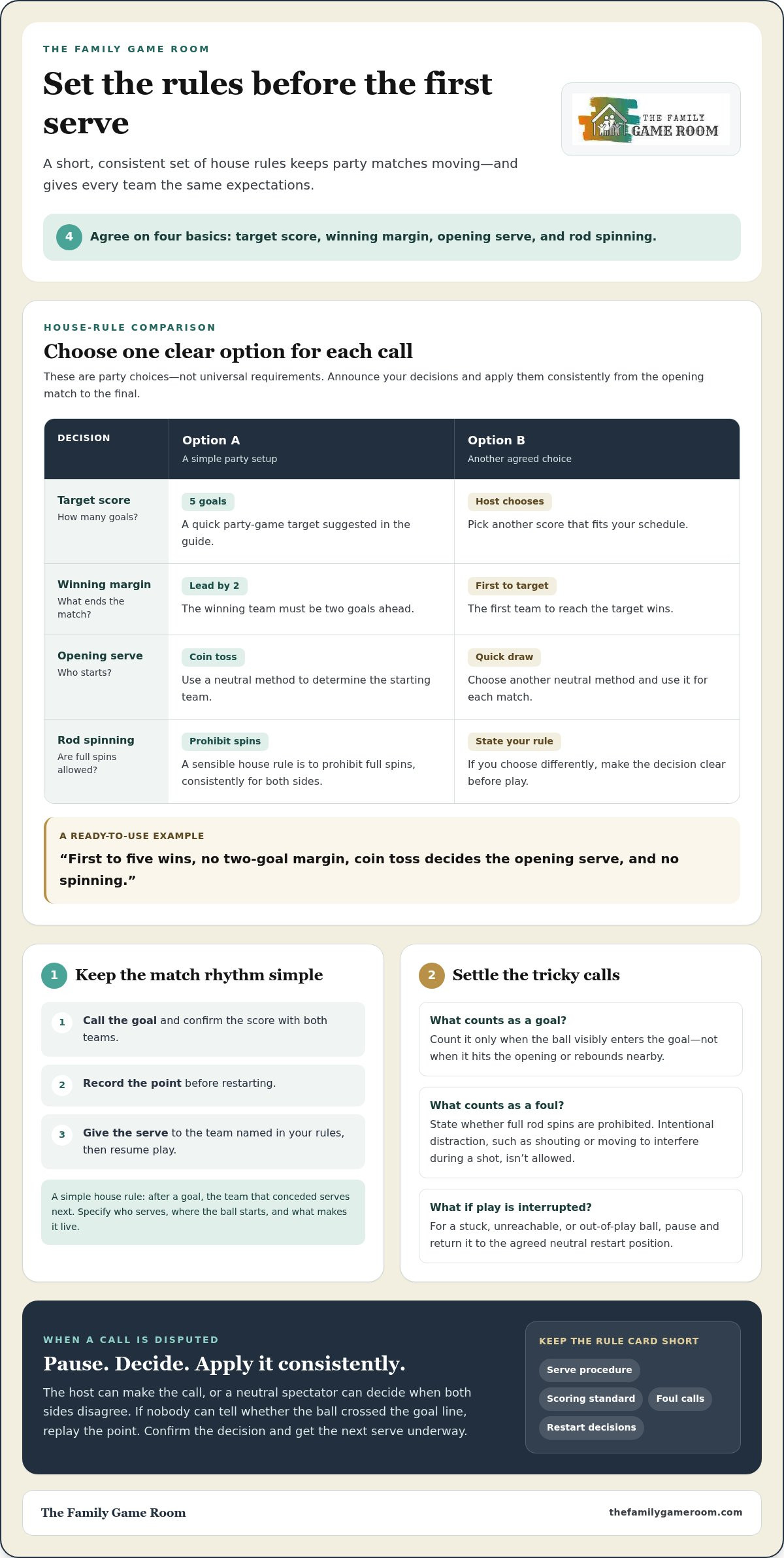
House rules are the rules players agree to follow before a game begins. Choose them together, announce one version, and apply it consistently from the opening match to the final. For a straightforward setup, settle these points first:
- Target score: Pick a score that fits your schedule. Five goals can work as a quick party-game target, but the host can choose another score.
- Winning margin: Decide whether a team must lead by two goals or whether the first team to reach the target wins. Either option works if everyone knows it beforehand.
- First serve: Use a coin toss or another neutral method, such as a quick draw. Keep the same approach for each match.
- Rod spinning: State clearly whether spinning is allowed. A sensible house rule is to prohibit full spins, then enforce that rule the same way for both sides.
Keep explanations brief. For example: “First to five wins, no two-goal margin, coin toss decides the opening serve, and no spinning.” A clear script beats a long debate at the table.
How do party house rules differ from formal foosball rules?
Casual rules can be simplified for a mixed-experience group. Hosts might shorten games, explain calls in everyday language, or use a neutral coin toss to settle the opening serve. Those are party choices, not universal requirements. Table football has a wider history and competitive context, summarized in Table football (Foosball) on Wikipedia.
For formal play, consult the current rules published by the International Table Soccer Federation (ITSF). Don’t describe a house preference as an official rule unless it matches the governing rules. That distinction lets beginners enjoy a relaxed game while giving competitive players a clear path to the formal standard.
Once play starts, resist changing a rule because one match is close or a call goes against a friend. If an edge case comes up, pause play, make a calm decision, and tell both teams. Apply that ruling for the rest of the tournament. Consistency keeps the focus where it belongs: on the game and the fun around it.
Serving, Scoring, and Fouls: Make Foosball Rules Easy to Follow
A smooth match needs a simple rhythm: serve, play, call the goal, then restart. For foosball tournament rules for parties, separate the essentials everyone needs to know from optional house-rule choices. Announce the essentials aloud before the first match, then post them beside the table so players and spectators can check them without interrupting play.
How should a party match handle serves and goals?
Choose one serve procedure and explain it before play begins. For example, the starting team can be determined by a coin toss, and the player serving can place the ball in play using the agreed method. After a goal, a simple house rule is for the team that conceded to serve next. Specify who serves, where the ball starts, and what signals that the ball is live.
Make the scoring call just as clear. Decide that a goal counts only when the ball visibly enters the goal, rather than when it hits the opening or rebounds nearby. Then use the same sequence after every score:
- Call the goal and confirm the score with both teams.
- Record the point before restarting.
- Give the serve to the team named in your rules and resume play.
Which foosball fouls and disputed situations need a house rule?
Some calls are best settled before they happen. State whether full rod spins are prohibited, and explain that intentional distraction, such as shouting or moving to interfere with an opponent during a shot, isn’t allowed. For a stuck ball or one that leaves the playing area, choose a neutral restart point and identify who gets possession. The Official USTSA Foosball Rules offer a reference for formal play; a party can adopt simpler procedures without presenting them as official rules.
Not every detail needs to be settled in advance. Keep the core calls consistent, then handle unusual moments with a quick pause. If nobody can tell whether the ball crossed the goal line, replay the point. If a ball becomes unreachable or is knocked off the table, pause play and return it to the agreed restart position. Don’t let either team take advantage of the interruption.
Settle disputed goals calmly and use the same ruling for every team. The host can make the call, or ask one neutral spectator to decide when both sides disagree. Don’t debate a close call for longer than the point is worth. Confirm the decision, update the score if needed, and get the next serve underway.
A printed or handwritten rule card helps everyone follow along, especially guests who join between matches. Keep it short: serve procedure, scoring standard, foul calls, and restart decisions. If your party inspires a lasting game-room upgrade, explore foosball tables for home play.
Choose a Party Foosball Tournament Format That Fits Your Guest List
The right format keeps guests playing without turning your party into a scheduling exercise. Choose based on how many people want to compete, how many tables are available, and how much of the party you want to devote to matches. A single table and a tight schedule call for a different plan than an open-ended gathering where everyone wants several turns.
Use a simple format guests can understand at a glance. The best choice is the one you can explain in a few sentences and track without stopping the fun. Here’s how the common options compare:
| Format | Setup | Strength | Trade-off |
|---|---|---|---|
| Single elimination | Pair teams in a bracket; winners advance. | Quick to organize and easy to follow. | A loss ends a team’s tournament run. |
| Round robin | Schedule each team to play every other team. | Everyone gets multiple matches. | More teams mean more games and tracking. |
| Rotating players | Rotate partners or opponents between short games. | Social and flexible for mixed experience. | Needs a host to manage turns and results. |
When does single elimination work best for a party?
Use single elimination when time is limited or guests want a clear path to a final. Place teams in a bracket, then advance each match’s winner until one team remains. It’s easy to see who plays next, but a first-round loss can leave guests waiting. Keep eliminated players involved with casual side games or let them join a rotating table while the bracket continues.
When should hosts choose round robin or rotating doubles?
Choose round robin when the group has time for several matches and wants every team to play each opposing team. For a more social option, rotate doubles partners after each short game, mixing experienced and newer players where possible. Both formats can take longer as the guest list grows, so keep match length brief and set a clear rotation order before play starts.
Think through the schedule before assigning teams. A single-elimination bracket is usually the simplest fit for a short tournament, while round robin suits a smaller group with room for repeat matches. Rotating doubles can keep a larger gathering engaged, particularly if guests are happy to move in and out between games. With one table, only one match can run at a time; additional tables can support simultaneous games, provided the host can keep results organized.
Keep foosball tournament rules for parties manageable by matching the format to the available playing time, not just the number of competitors. Decide whether guests value a quick winner or more chances to play, then write the order where everyone can see it. A clear plan makes each next match feel like part of the fun, not another round of instructions.
How to Run a Foosball Tournament at a Party, Step by Step
A little preparation lets you host the tournament without spending the party managing a crowd around the table. Write down the format, match order, and result-keeping plan before guests arrive. The foosball tournament rules for parties should be easy to find, and the host should be free to enjoy the games too.
- Choose the format. Pick a bracket for a quick winner, or use round robin or rotating doubles if participation matters more than a fast finish. Match your choice to the number of players, tables, and the time set aside.
- Make a visible match list. Write team names and pairings on a whiteboard or sheet of paper near the table. Leave space to record winners and scores so guests can see what’s next without asking the host.
- Share the game plan. Explain how players enter the tournament, how matches are decided, and what happens after each result. Keep the explanation short, then point out the posted list.
- Choose a scorekeeper. Ask a willing guest to record results and update the bracket. This person tracks the action, not every move, so the matches can stay relaxed.
- Call the next players. Before each match ends, let the next teams know they’re up. This gives them time to step over without hurrying the players at the table.
- Record the finish. Confirm the final result with both teams, mark the winner clearly, and thank everyone who joined in.
If you’re arranging more than one activity, a broader game-room plan can help balance table play with other ways to join in. For ideas on comparing two popular games at home, see Air Hockey vs. Foosball: Choosing the Perfect Game for Your Home in 2026.
How can hosts keep matches moving without rushing guests?
Set a consistent target score or match time that suits your group, then apply it across the tournament. Keep the order visible and have the scorekeeper update results as soon as each game finishes. A quick “you’re next” reminder helps teams get ready, while a clear list prevents confusion about who plays after them. The aim is a steady pace, not a race.
How can a tournament stay welcoming for mixed skill levels?
Offer optional practice turns before the bracket starts, especially for guests who haven’t played before. In doubles, pair experienced players with newer guests when it feels appropriate, or rotate partners between games. Keep casual side play available for people waiting or eliminated from the main bracket. For a lively home gathering, explore foosball tables for your game room.
Finish the Party Tournament on a High Note, and Bring the Game Home
The last goal isn’t the only moment that matters. Close the tournament clearly, thank the players, and keep the celebration bigger than the competition. A warm finish gives guests a reason to remember the fun, whether they won the bracket or joined for a single match.
What should the host do after the final match?
Before announcing the winner, confirm the final score with both players. This quick check catches recording mistakes and gives everyone a shared result. Then recognize the finalists and thank all participants, including guests who kept score, tried a first match, or cheered from the sidelines. Keep the tone light. A playful celebration works better than treating a party game like a high-stakes final.
Keep the agreed rules in place for any rematches that follow. Changing a rule after the tournament ends can still create confusion, especially if the rematch is close. Save possible adjustments for afterward, when guests can offer feedback without interrupting play. Ask a couple of simple questions:
- Which rule or format made the games most enjoyable?
- Would you keep the same match length next time?
- Did everyone feel they had a fair chance to join in?
Use the answers as ideas, not a vote that needs to be settled on the spot. You can fine-tune the next gathering while keeping the current tournament’s results intact.
How can a foosball table become part of regular game nights?
A successful party tournament can grow into a recurring tradition: a casual bracket at a family gathering, rotating doubles with friends, or a quick match before another game-room activity. Keep the format flexible. Some evenings may call for a friendly competition, while others are better suited to spontaneous play with no bracket at all.
A foosball table can give a home game room a natural gathering point, where guests can take turns, learn the game, and reconnect between matches. The appeal is shared entertainment, not a promise of tournament-level play. Keep a simple rule card nearby and let the group decide whether the next game is for fun or for a spot on the bracket.
The right foosball tournament rules for parties help everyone enjoy the game, but the best ending is often a room full of guests asking when they can play again. If you’d like to make foosball part of future get-togethers, explore foosball tables for your home game room.
Make Your Next Game Night One to Remember
A party tournament can become more than a one-night event. Let guests suggest a new team mix, a playful challenge, or a different kind of match for the next gathering. Small changes keep the tradition fresh, while familiar foosball tournament rules for parties make it easy for everyone to join in.
If you’d like to make those rematches part of everyday home entertainment, The Family Game Room offers foosball tables as part of its game-room equipment selection. Choose a table that fits the way you want to bring people together, whether that means friendly family matches or lively get-togethers with friends.
Explore foosball tables for your home game room, and start planning the next match. The best game nights are the ones everyone wants to play again.
Frequently Asked Questions
Is there one official set of foosball rules for every party?
No, party hosts can choose house rules that suit their guests. Keep foosball tournament rules for parties distinct from formal regulations: a shorter match or a relaxed serve procedure may work for a casual gathering, but it shouldn’t be presented as universal or official. If sanctioned competition matters, consult the current International Table Soccer Federation rules. For a party, tell every player the chosen rules before they join a match.
Can you spin the rods in a party foosball tournament?
That depends on the rules your group chooses. Many hosts prohibit uncontrolled spinning because it can make play unpredictable, while a casual group may prefer a looser approach. For example, you could allow free rod movement but prohibit a full 360-degree spin. Whatever you decide, state it before play and apply it equally to both teams. For formal competition, check the current governing rules instead of relying on party preferences.
How many points should a party foosball match be played to?
There’s no single target score that suits every party. Choose a short score for a quick bracket, or use a time limit if guests are waiting for their turn. For instance, a host might choose first to five, then decide in advance whether teams need a winning margin. Keep the same match length throughout the event. Changing the target after a match starts can leave players unsure which score counts.
What happens if the ball gets stuck during a foosball match?
Use a restart procedure the group has agreed on. Pause the game, return the ball to a neutral position, and resume with the usual serve method. If it’s unclear which team caused the ball to become stuck, don’t turn the moment into a blame contest. A neutral restart is simple and fair. Apply that same solution each time, including when the ball becomes unreachable near the side of the table.
Is single elimination or round robin better for a foosball party?
Single elimination is a practical choice when the party schedule is tight: winners advance, while a loss ends a team’s run. Round robin gives each team more chances to play, but the number of matches grows as the group gets larger. Rotating doubles can be more social if guests want to mix partners. Choose based on how much time you have and whether a quick finish or broader participation matters more.
Can guests play foosball doubles in a party tournament?
Yes, doubles work well for casual party play and can make it easier for newer players to join. Decide whether partners stay together or change after each game. With rotating partners, try pairing an experienced player with someone still learning, then switch combinations so no one is left out. Before serving, make sure teammates know which rods or side of the table each person controls.
What should a host do if players disagree about a foosball goal?
Pause the match and follow the group’s agreed procedure for unclear calls. If neither team can tell whether the ball entered the goal and no neutral observer saw it, replay the point rather than awarding it to the louder player. For example, let a designated scorekeeper or spectator make the call when they had a clear view. A calm, repeatable approach helps preserve trust and keeps the disagreement from overshadowing the party.