


What if the best cup holders for game night are the ones you barely notice during play? A foosball table with cup holders can keep drinks close, but awkward placement may invite spills or interfere with handles and player movement. The right design makes refreshments convenient without making the game harder to enjoy.
Before choosing a table, consider whether drink holders are built in or attached separately, and whether their position fits your room and playing style. Compare access and clearance around the rods, then assess the table’s stability, playability, and the space players need around it.
This guide covers what to weigh before choosing, from integrated, side-mounted, or separately attached holders to construction and room layout. You’ll also see when a nearby side table may be a more practical alternative. The goal is a foosball table that feels comfortable to play and belongs in your home entertainment space.
Key Takeaways
- Compare integrated, side-mounted, and separately attached cup holders by access, interference risk, and how permanent you want the setup to feel.
- Choose a foosball table with cup holders only after considering stable construction and comfortable rod movement, handle grip, and player balance.
- Use the table’s actual dimensions and manufacturer guidance to plan playing clearance and room circulation before purchase.
- Set refreshments where they’re convenient without crowding the playing area, and consider how complementary furnishings complete your game room.
- Follow a clear decision order: room fit, gameplay, holder placement, and construction, then explore foosball tables and game-room furnishings from The Family Game Room.
Why choose a foosball table with cup holders for game night?
The match is underway, the ball is moving fast, and someone has to step away for a drink. A foosball table with cup holders can keep refreshments within reach and reduce interruptions. Holders may be built into the table or attached to it. Either way, placement matters: a useful feature can organize a dedicated game space, but it can also affect reach, add clutter, or leave drinks vulnerable to spills.
Foosball’s quick exchanges and rod-controlled players make it easy for family and guests to join a casual game. If you’re curious about the game’s origins, mechanics, and variations, explore this overview of the history of foosball. When choosing a table, start with how people use the room. A handy feature should support the social atmosphere without getting in the way of comfortable play.
When built-in drink holders make game night easier
Nearby refreshments are useful when players settle in for several rounds or rotate between matches. A drink within reach can mean fewer pauses, while designated holders keep cups off the playing surface and give them a consistent place. In a dedicated entertainment space, that detail can make the setup feel more orderly and ready for guests.
Keep convenience in perspective. Cup holders don’t determine how smoothly rods move, how securely the table stands, or how enjoyable the game feels. Treat them as an amenity, then assess playability and construction separately. The right feature is the one that suits how your household hosts, not simply the one that adds another item to a product description.
The trade-offs to consider before choosing
Position matters. A holder near a rod or handle could crowd a player’s hand, restrict comfortable movement, or get in the way as someone steps around the table. Drinks can still spill, even when a holder keeps them off the playing field. Consider who plays, how animated the games get, and whether children or guests will be moving through the space.
- Convenience: Drinks stay close between turns, with less need to leave the game.
- Organization: A defined spot can keep refreshments off the playing surface.
- Possible drawbacks: Poor placement may interfere with reach, while extra holders can add visual or physical clutter.
A separate surface for drinks may suit a lively room better than holders attached to the table, especially if players often move around it. In a quieter family game area, integrated storage may feel tidy and easy to reach. Think about traffic, player habits, and where cups can sit safely before deciding.
Cup holders make the most sense when they keep refreshments handy without crowding the players or the play.
Which foosball table cup-holder design fits your playing style?
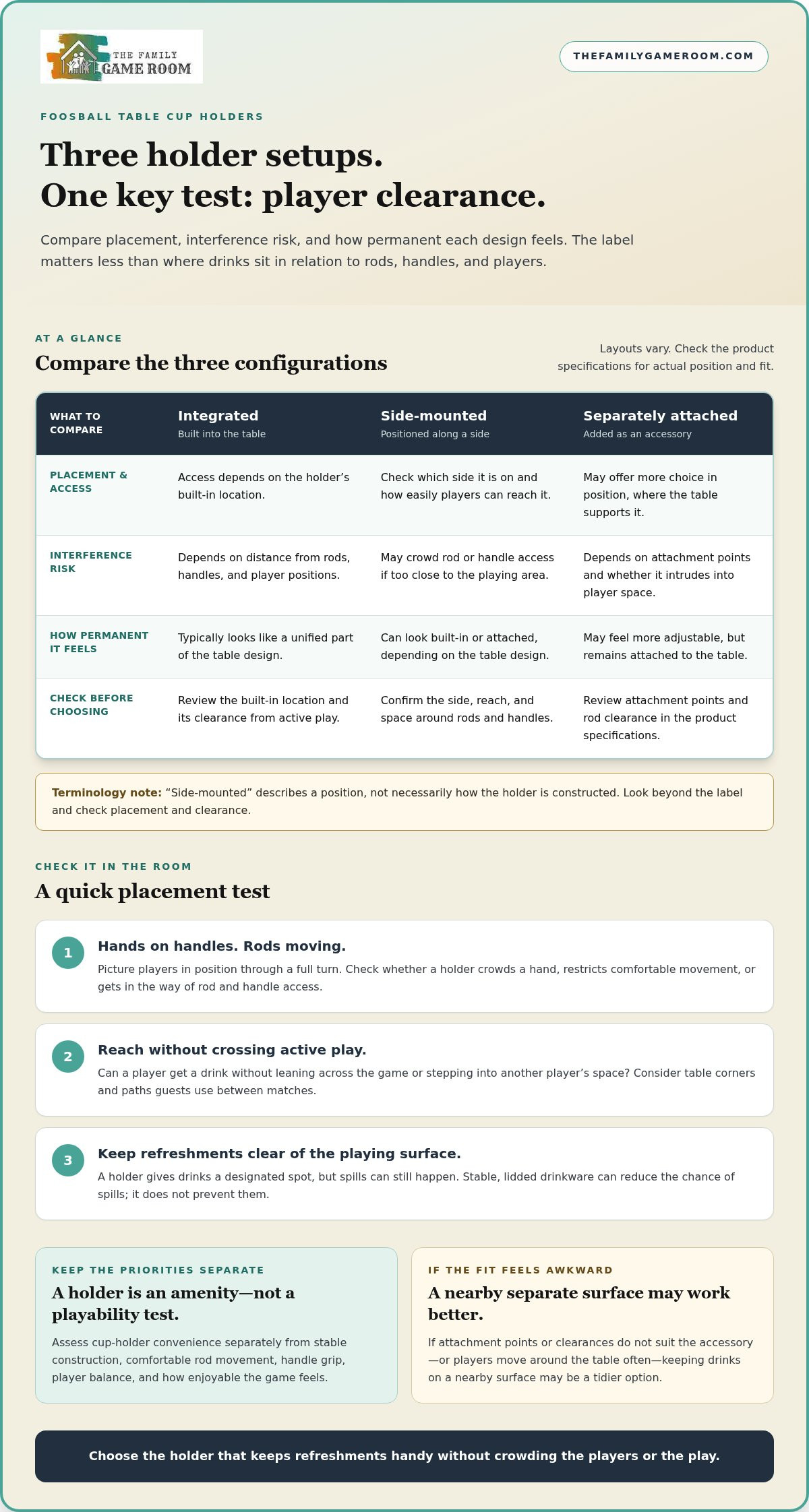
Cup holders can be built into a table or added as an accessory, and that distinction affects both appearance and flexibility. Integrated holders create a cohesive setup, while a separately attached holder may offer more choice about where drinks sit. Side-mounted describes a position, not necessarily a specific construction, so look beyond the label. Placement and clearance matter more than the name.
Use this comparison to identify what to examine when choosing a foosball table with cup holders. Layouts vary, so use the product’s specifications to understand the holder’s position and fit.
| Configuration | Placement and access | Interference risk | How permanent it feels |
|---|---|---|---|
| Integrated | Designed into the table, with access determined by its built-in location. | Depends on its distance from rods, handles, and player positions. | Typically looks like a unified part of the table design. |
| Side-mounted | Located along a side of the table; check which side and how easily players can reach it. | May crowd rod or handle access if positioned too close to the playing area. | Can appear built-in or attached, depending on the table design. |
| Separately attached | Mounted as an accessory, potentially allowing more choice in position. | Depends on attachment points and whether the holder intrudes into player space. | May feel more adjustable, but remains attached to the table. |
Integrated versus add-on cup holders
Integrated holders are part of the table’s design, which can give the setup a cohesive appearance. An add-on accessory offers a different kind of flexibility: its position may be selectable, but only where the table can support it. Review the product specifications for attachment points and rod clearance before choosing an accessory. Don’t assume it will fit just because it’s described as side-mounted.
Placement, reach, and spill-conscious use
Picture players in position, hands on the handles, and rods moving through a full turn. Can someone reach a drink without leaning across active play or stepping into another player’s space? Check the corners and paths around the table, especially if guests will move between matches. A holder that looks convenient on its own may feel awkward once the room is in use.
Stable, lidded drinkware is a practical way to reduce the chance of spills, not prevent them. Keep drinks away from the playing surface and avoid placing a holder where a passing player might bump it. If attachment points or clearances don’t suit your preferred accessory, a nearby separate surface may be a tidier option. Browse foosball tables for your game room with these placement questions in mind.
How to compare cup holders with foosball table quality
A long feature list can look impressive, but the table should feel comfortable and consistent to play before extra amenities influence your choice. Treat cup holders as one part of the comparison. Start with the playing experience, then review construction and practical ownership details. This order helps you judge whether a foosball table with cup holders suits regular household play, not just whether it includes a convenient extra.
Gameplay features worth evaluating
Read the product description for details about rod movement and handles. Rods should move without awkward resistance, and handles should feel comfortable to grip through a full game. If a listing mentions player balance or adjustable leg levelers, consider how those features may support steady play and a level setup. Treat the wording as a feature description, not proof of competitive performance or tournament suitability.
Use a simple test: can everyone who’ll play reach and control the handles comfortably? Features that support consistent movement matter throughout a match, while an accessory may be used only occasionally.
- Stability: Look for construction details that explain how the table is supported. A steady setup helps keep play comfortable.
- Rod movement and grip: Note any stated details about rods, bearings, or handle design, then consider how they match your household’s preferences.
- Player balance and leveling: Check whether the description addresses balanced players or leg levelers, and follow the manufacturer’s setup guidance.
Construction, durability, and included details
Compare the materials and construction named in each product description. Don’t assume a table is solid or durable based on a polished finish or furniture-style appearance alone. Look for clear information about the frame, legs, and playing surface, then consider those details alongside how often the table will be used and who will play.
Check the practical details, too. Listings may specify whether balls are included, what assembly entails, and how the table should be cared for. These details affect what game night requires once the table is ready to set up. Use the product’s specifications to compare options rather than applying assumptions from another table.
Convenience features make a table easier to enjoy, but core gameplay and construction should make it worth playing. Compare those priorities first, then decide whether the cup-holder design fits your routine. The Family Game Room offers foosball tables and complementary game-room furnishings, so you can consider the table as part of a welcoming home entertainment space.
Explore foosball tables for your game room with playability, construction, and useful extras in mind. A considered choice keeps the focus on the match, with refreshments close at hand.
How to make a foosball table with cup holders work in your room
A table can fit on paper and still feel cramped once players gather around it. Plan for the complete setup: the table footprint, rod movement, standing room, and a clear route through the space. Use the dimensions and placement guidance for the specific table you’re considering instead of assuming one standard measurement applies to every model.
Measure the table and its playing area
Start with the product’s actual dimensions, then map its footprint on the floor. Include fixed features in the room and note where players will stand on both long sides. Rods extend beyond the cabinet as players move them, so the table needs more than a close-fitting rectangle of open floor.
- Measure the table. Record its listed length, width, and any other dimensions the manufacturer provides. Check the path into the room as well, including doorways and tight turns along the route.
- Allow playing room. Mark space for players on both sides and for rods to move freely. Use manufacturer-provided clearance guidance when available. Don’t substitute a universal clearance estimate for the specific table’s instructions.
- Plan circulation. Consider how people will pass the table while a game is underway. Account for walkways, door swings, and access to nearby seating. Avoid placing players where they block the room’s main route.
- Place refreshments. Decide where drinks will go after mapping the table and movement zones. Keep cups reachable without asking players to lean across active play or step through a busy walkway.
Plan drink access and room flow
Now consider nearby furniture, walls, and seating. A holder that faces a wall may be awkward to reach, while one near a walkway could get bumped as guests move through the room. Check that side-mounted or attached holders don’t crowd the handles or the space players need to turn and reposition. If drinks would be easier to reach beyond the table, a separate surface can keep refreshments accessible without squeezing the playing area.
Try the layout before purchase: use painter’s tape to outline the table footprint, then stand where each player would and mimic the rod movements. Walk the usual routes through the room. This floor test can reveal a blocked passage or cramped corner that measurements alone might miss. Follow the table maker’s setup directions when positioning and leveling the table.
Choosing between games also affects how you plan a room and its entertainment zones. For a broader comparison, explore Air Hockey vs. Foosball: Choosing the Perfect Game for Your Home in 2026. Once you’ve mapped the fit, explore foosball tables for your game room and plan a setup that welcomes players and guests.
Choose your foosball table and complete the game-room setup
A successful choice starts with the room, not the drink holders. First confirm the table fits with enough space for players and rod movement. Then compare how it plays, where refreshments sit, and what the product description says about construction and assembly. This order keeps a convenient feature in perspective while helping you choose a table that feels at home in your entertainment space.
Use a final comparison checklist
Compare the complete setup instead of focusing on a single feature. Use the product information and manufacturer guidance to work through these points:
- Room fit: Compare the table’s listed dimensions with your planned space. Include clearance for players and moving rods, plus room to walk around the setup.
- Gameplay: Consider the listed details about stability, rod movement, handles, player balance, and leveling. Prioritize a comfortable play experience over a longer list of extras.
- Holder placement: Check where cups sit in relation to handles and player movement. Decide whether your household prefers drinks close by or on a separate surface outside the playing area.
- Construction: Review the materials and build details stated in the product description. Judge those specifics rather than assuming quality from appearance alone.
- Practical details: Read the assembly guidance and see which accessories, such as balls, are included. These details help you understand what’s involved in getting the table ready to play.
A foosball table with cup holders earns its place through the complete experience, not the holder alone. If a feature creates cramped movement or doesn’t suit the way your household uses the room, it may not be worth prioritizing. Compare each option against how often the table will be played, who’ll gather around it, and what makes game night easy.
Build a polished, welcoming game-room experience
Once the table choice is clear, consider how it fits with the rest of the room. Leave comfortable access to seating and walkways, and think about lighting that makes the playing surface easy to enjoy. Complementary furnishings, such as bar stools or other game-room pieces, can make the area feel considered without crowding it. Arrange seating and refreshments around the way people gather, with the table as the social centerpiece.
The Family Game Room is a family-owned retailer of foosball tables and home game-room equipment. Compare room fit, gameplay, holder placement, and construction, then explore foosball tables for your game room and plan a welcoming space for your next match.
Make room for your next great game night
The right foosball table should invite people to gather, play, and stay awhile. Picture how you want the room to feel when friends or family arrive, then choose a setup that supports that kind of evening. A foosball table with cup holders can be part of it, but the best fit feels natural in your space and keeps the fun at the center.
Take time to compare the options. Look for a table that suits the way you play and the atmosphere you want to create, then picture how it will work alongside the rest of your home entertainment space. A well-planned setup can turn an open corner or game room into a welcoming place for shared competition and easy conversation.
Ready to plan your game room? Explore foosball tables for your home game room and choose a centerpiece for your next gathering.
Frequently Asked Questions
Are cup holders on a foosball table worth having?
Yes, if players tend to keep drinks nearby during longer casual games. A foosball table with cup holders can make refreshments easier to organize, especially in a dedicated entertainment room where people gather for several rounds. They may be less useful if the table sits in a busy walkway or players prefer to keep drinks on a separate surface. Consider your household’s habits, not just the feature list.
Can you add cup holders to a foosball table?
Some tables may accommodate separately attached holders, but an accessory won’t necessarily fit every model. Look for product information about attachment points and how an add-on relates to the table’s cabinet and rods. A holder that requires drilling or an improvised mount could damage the finish or create an obstruction. If the table isn’t designed for an attachment, a nearby drink table is a simple alternative.
Where should cup holders go on a foosball table?
Choose a spot outside the path of hands, handles, and moving rods, where players can reach drinks without leaning over the playing surface. Placement also depends on the room: a holder facing a wall may be hard to use, while one beside a main walkway could get bumped. Stand in each player position and check whether reaching for a drink feels natural.
Will cup holders get in the way when playing foosball?
They can if they sit too close to a handle, rod, or player’s standing area. Check the space from both sides of the table, since a holder that clears one player may crowd the other. Move each rod through its normal range and change hands on the handles. If the holder interrupts a comfortable stance or movement, place drinks on a separate surface instead.
What size room do I need for a foosball table with cup holders?
As a preliminary planning guide, allow roughly 7-10 feet in length and 6-8 feet in width for a table and player movement. The actual space depends on the table, rod extension, and room layout, so compare the product’s dimensions and manufacturer clearance guidance before deciding. Include doorways, furniture, and walkways in your plan. A taped floor outline can help reveal tight spots before purchase.
Do foosball tables come with cup holders?
Some models have built-in drink holders, while others don’t include them or use separately attached accessories. Check the product description’s feature and included-accessory details to see which arrangement applies. A mention of cup holders doesn’t necessarily explain whether they’re integrated or add-ons. Review the holder’s position too, since that affects how practical the setup is in your room.
What should I look for in a foosball table besides cup holders?
Start with features that affect regular play: table stability, comfortable handles, smooth rod movement, and a level playing surface. Then review stated construction materials, player balance, and whether the legs can be adjusted for leveling. Product details about assembly, care, and included balls also help you understand what ownership involves. Match those features to how often the table will be used and who’ll be playing.