


What should you look for in an arcade style air hockey table? The label can suggest a lively game-room look, but it doesn’t guarantee a particular level of durability or performance. If you’re comparing tables for home, look beyond the name and compare the listed features, dimensions, and intended use.
You want exciting play, dependable construction, and a table that fits your game room without crowding it. This guide explains what arcade-style means in practical terms and how to compare features that shape the experience, including airflow, the playfield, rails, and scoring. You’ll also learn how to assess a table’s footprint alongside the space players need to move around it. With a clear framework, you can choose an air hockey table that suits your household, your room layout, and the kind of game-night atmosphere you want to create.
Key Takeaways
- “Arcade-style” can describe a table’s appearance, playing experience, or both. The label alone doesn’t guarantee commercial-grade construction.
- Compare airflow, the playfield, rails, and scoring by how each feature may shape the game you want.
- Choose an arcade style air hockey table by matching its listed dimensions to your room and allowing space for players to move.
- Compare arcade-style and standard home tables by intended use, play preferences, and fit rather than assuming one is best for every household.
- Plan table placement alongside seating and other game-room furnishings to support comfortable play and social flow.
What Makes an Arcade Style Air Hockey Table Different?
An arcade-style air hockey table brings some of the visual character or lively playing feel associated with arcade games into a home setting. The term can describe appearance, play experience, or both. One table may have bold graphics and lighting, while another may focus on a substantial feel during play. Treat the label as a starting point, not a complete description of construction or features.
Featured-snippet definition: An arcade style air hockey table is a home or commercial table designed to evoke the look, atmosphere, or play experience of arcade air hockey. The term alone doesn’t specify the table’s materials, performance, or durability.
Air hockey’s familiar action comes from a puck moving over a cushion of air through small openings in the playfield. For context on the game’s background and how it works, explore this overview of the history and mechanics of air hockey. An arcade-inspired design may aim to recreate the energy of a public game room, but the details vary from table to table.
Does arcade-style mean commercial-grade?
No. A table can look like an arcade attraction without being built for continuous use in a busy venue. Visual styling and construction are separate considerations. A dramatic cabinet or bright lighting can create a strong arcade atmosphere, but those details don’t establish the quality of the playfield, rails, frame, or blower.
Commercial machines are intended for a different setting and pattern of use than many home tables. An arcade-inspired model for a family game room may be designed around household recreation instead. Neither description alone tells you exactly how a table will hold up or play. Read the model’s stated specifications and intended use rather than treating “arcade-style” as a durability rating.
Keep the playing experience in view, too. The label doesn’t confirm how consistently the puck moves or how the rails respond. Those qualities depend on the table’s actual construction and features. Compare the listed information about the playing surface, airflow, and rails rather than relying on appearance to predict performance.
Which details create an arcade-inspired look?
Look for visible cues such as bold graphics, colorful lighting, a prominent cabinet, or a scoring display. These elements can make a table feel like the centerpiece of a game room, but no single feature is guaranteed by the arcade-style label. Some tables lean into bright, attention-grabbing details; others take a more restrained approach.
Picture the table in your room before choosing a look. A graphic-heavy cabinet may suit a dedicated entertainment space, while a simpler design can sit more comfortably among other furnishings. Consider how the table will relate to seating, lighting, and other game-room pieces. The right choice should bring arcade energy to the home while feeling intentional in the space, not visually out of place.
How Air Hockey Table Features Shape the Arcade-Style Playing Experience
The arcade feel comes from more than cabinet styling. It also depends on how the table supports puck movement, how players handle shots, and how easily everyone can follow the score. Looking at these features as parts of one playing system helps you separate useful gameplay details from extras that mainly add atmosphere.
How the blower, playfield, puck, and mallet work together
A blower sends air through small holes in the playfield, creating a cushion that helps the puck glide across the surface. The blower and perforated playfield work together: air must pass through the holes to create the air cushion under the puck.
Players use mallets to strike the puck toward the opposing goal and defend their own. The puck, mallets, surface, and airflow all contribute to the feel of a rally. For example, a player’s ability to return a shot depends not only on timing, but also on how the puck travels across the table. When comparing an arcade style air hockey table, look for the manufacturer’s stated information about its blower, playfield, puck, and included mallets. Designs and specifications differ, so don’t assume visual resemblance means the playing components are identical.
The game’s development also helps explain why the action is so recognizable. The DeKalb Public Library shares the history and invention of air hockey, including the people and ideas behind the game. For a home table, focus on how the listed features suit the way your household expects to play.
Which scoring and visual features matter at home?
Scoring is a convenience choice. An electronic display can show the score during play, which may help keep a lively match moving without pausing to count. Manual scorekeeping is simpler and may be enough for occasional games. Think about who will play most often: children and guests may appreciate a display that’s easy to read, while relaxed family matches may need little more than a way to keep track.
Lighting and sound, if included, can add a more theatrical arcade atmosphere. They don’t define how well the table plays, though. Put the core game first, then decide whether visual or audio effects would make play more enjoyable in your household. Consider whether they’ll be welcome during frequent games, or whether a more understated setup better suits the room.
- For quick, casual games: Prioritize easy-to-understand scoring and straightforward controls.
- For a spirited game-night centerpiece: Consider whether lighting or sound will add to the mood.
- For regular play: Give the stated playing components more attention than decorative extras.
Explore The Family Game Room’s air hockey table selection as you consider which features fit your home game room and the way your household likes to play.
Arcade Style vs. Standard Home Air Hockey Tables: What Should You Compare?
“Arcade-style” and “standard home” are useful descriptions, but they aren’t fixed performance categories. One arcade-inspired table may emphasize a striking cabinet, while another may prioritize playing features. A standard home table can also offer engaging play without a dramatic arcade look. Compare each table’s stated details and intended setting, then weigh them against your room and household’s habits.
How does an arcade-style table differ from a standard home table?
Arcade-style models often make a stronger visual statement, with a prominent cabinet or details designed to recall a public game room. A standard home table may have a simpler appearance intended to suit a multipurpose room. These are tendencies, not rules. Either category can vary in size, features, and construction, so the label alone can’t tell you how a particular table will play or hold up.
Use this comparison as a starting point, not a substitute for model-specific information:
| What to compare | Arcade-style emphasis | Standard home emphasis |
|---|---|---|
| Style | May have a bold, game-room presence or arcade-inspired details. | May use a more restrained look that blends into a shared space. |
| Intended setting | May suit a dedicated entertainment room or a space where the table is a focal point. | May suit household recreation in a multipurpose room. |
| Play features | May include features chosen to create a more arcade-like experience. | May focus on the features a household wants for casual home games. |
| Space considerations | A bold cabinet or larger footprint can influence the room layout. | A compact or simpler design may be easier to accommodate, depending on the model. |
These descriptions don’t establish universal specifications. Check each table’s listed dimensions, features, materials, and intended use. A dramatic appearance doesn’t prove commercial suitability or greater durability, just as a simple design doesn’t mean a table is less enjoyable for home play.
When is arcade-inspired styling worth prioritizing?
Give styling more weight if the table will anchor a dedicated game room or help create a lively setting for gatherings. If it’s one of several activities in a shared space, consider whether a quieter design will work better with the room’s other furnishings. Think about the table from across the room as well as up close. Its overall presence can shape the atmosphere even when no one is playing.
Then balance the look with practical preferences. A household that plays often may care more about the table’s specified play features and intended use than extra visual effects. A family that wants a centerpiece may value both. Compare the footprint with your available floor space, including room for players to move, before choosing a style.
Takeaway: A home-focused table may be the better fit when household recreation, a comfortable room layout, and a look that suits your decor matter more than recreating a commercial arcade setting. Choose by the details and use that match your home, not by the label alone.
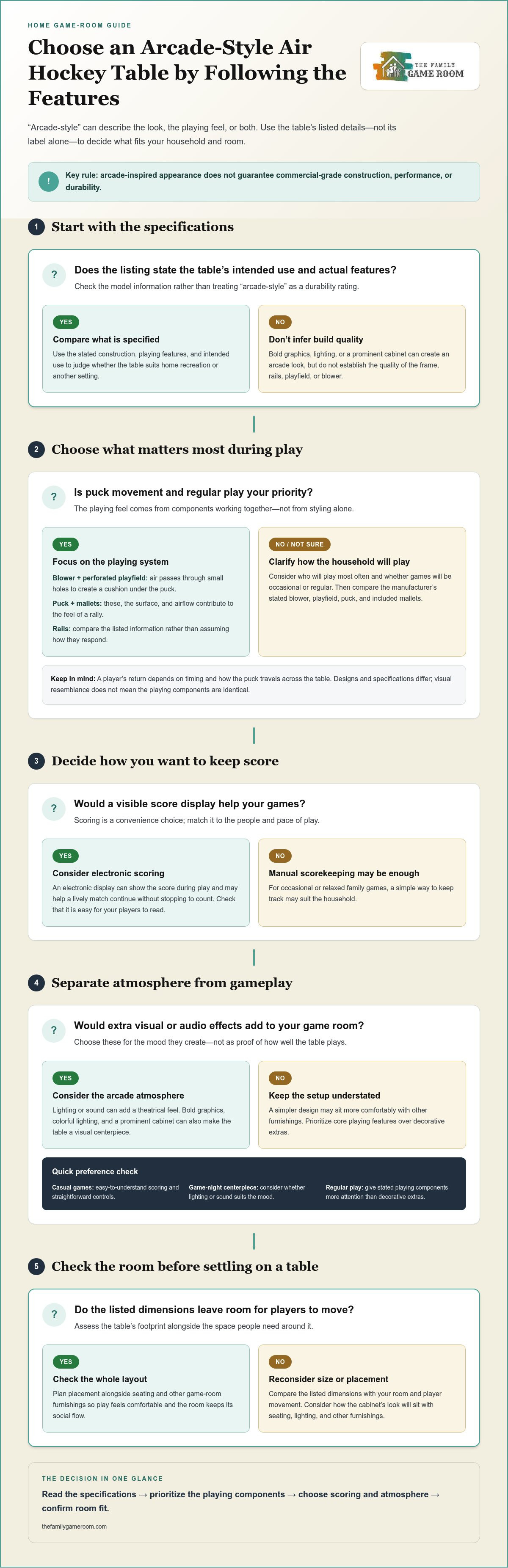
How to Choose an Arcade Style Air Hockey Table for Your Room
Start with the room, not the table’s appearance. An arcade style air hockey table needs space for its footprint and for people to play comfortably. Usable play space includes clearance around the table, not just the area it occupies. Account for player movement, seating, walkways, and nearby furnishings before settling on a location.
A homeowner-friendly selection checklist
Work through these steps in order. Measuring first helps you compare suitable options instead of choosing a design that won’t work in the room.
- Measure the intended area. Record the length and width of the floor space where the table could go. Include the open area around it, and note anything that can’t be moved, such as a wall, doorway, or built-in feature.
- Map the room’s circulation. Mark the routes people use to enter, leave, and cross the room. Consider where players will stand at both ends and whether someone seated nearby could block play or interrupt a walkway.
- Compare the layout with the table specifications. Use the selected table’s stated dimensions, then follow the manufacturer’s guidance for clearance. Don’t assume a table will fit based on a general size label. Compare the actual measurements with your floor plan.
- Consider who will play and how often. Think about the ages and number of regular players, whether games will be occasional or frequent, and whether your household prefers relaxed matches or more competitive play. Choose controls and features that suit the people who’ll use them.
- Check the room as a whole. Account for existing chairs, other game-room furnishings, and any space you’d like to preserve for additional activities. If the table is a visual centerpiece, make sure its placement feels intentional without taking over how the room functions.
A simple paper plan can help: draw the room, mark doors and walkways, then sketch the table at its listed dimensions. Leave space for players to move and test whether seating can stay in place during a game. Adjust the proposed position before purchase, not after the table arrives.
Match the table to your household
Room fit is only part of the decision. A household that expects quick, casual games may prefer easy-to-use controls and straightforward features. Players who enjoy longer or more competitive matches may care more about the listed playing specifications. Let actual routines guide the choice rather than selecting extras simply because they sound impressive.
For broader advice on matching a table to household needs, use this air hockey table for home guide. Then compare the dimensions and stated features of the options that suit your play style and room plan.
Use your measurements to guide your search through The Family Game Room’s air hockey tables.
Bring Arcade-Style Air Hockey into a Complete Home Game Room
An air hockey table can set the pace for a game room, but it shouldn’t make the rest of the room harder to enjoy. Plan for the way people will gather, move between activities, and take a break between matches. A cohesive space feels inviting whether the puck is in play or everyone has moved on to another game.
How can an air hockey table fit a multi-game room?
Start by thinking about how each activity will be used. Keep clear routes between the air hockey table, other games, seating, and the entrance. Avoid placing furniture where it interrupts a player’s approach or blocks access to another activity. In a shared room, arranging games along the edges and keeping an open central walkway can help the space feel connected rather than crowded.
Then consider the room’s visual balance. A bold arcade-style table may work as the focal point, with simpler seating and decor around it. If several pieces have a strong look, coordinate their finishes, colors, or lighting so the room feels considered instead of busy. Choose lighting that supports comfortable play and conversation, and position seating where guests can watch without standing in active play areas.
Air hockey and foosball offer different kinds of group play, so the choice can shape how people use the room. If you’re deciding which activity best fits your household, this air hockey versus foosball comparison can help you weigh the options.
What is the next step toward choosing your table?
Bring your priorities together before choosing: the look you want, the playing features that suit your household, the room you can dedicate, and how often people will play. Then picture a typical gathering. Can players move comfortably? Can guests reach the seating and other games? Does the table feel at home among the room’s furnishings? These questions help turn a purchase into a better-planned entertainment space.
The Family Game Room sells new air hockey tables alongside other game-room equipment, including pool tables, shuffleboards, foosball tables, and game-room furniture. If you’re furnishing a multi-game room, consider how the table will work with other activities and furnishings, not just how it looks on its own.
A well-chosen arcade style air hockey table can bring lively play and a distinctive focal point to your home. Keep the selection grounded in your space and the way your household likes to gather.
Make Your Game Room the Place to Gather
Picture the moments you want the room to make possible: a quick match after dinner, a friendly challenge when guests visit, or an easy way for different generations to play together. Let that vision shape your final choice. An arcade style air hockey table can be more than a game; it can become a reason to gather, laugh, and make the room part of your household’s regular routine.
Before deciding, imagine how the table will feel in the room on an ordinary day, not just during game night. Choose a look you’ll enjoy seeing and a setup that supports the way your family uses the space. Thoughtful choices now can help make the room welcoming for many kinds of gatherings.
The Family Game Room offers air hockey tables alongside premium game-room furniture and equipment. Explore air hockey tables for your game room and start planning a space your household will enjoy.
Frequently Asked Questions
What is an arcade-style air hockey table?
An arcade-style air hockey table is designed to bring some of the look or atmosphere of arcade play into a home or commercial setting. It might feature a bold cabinet, lighting, or other attention-grabbing details, but the term doesn’t promise any particular construction or performance. Treat it as a style description, then use the table’s stated specifications and intended use to understand what you’re considering.
Are arcade-style air hockey tables suitable for home use?
Yes, a home-focused arcade-style table can suit a household game room, provided its size and intended use fit your needs. Think about who’ll play and how the table will be used, such as occasional family matches or frequent game nights with guests. A commercial venue machine and a home table may be designed for different settings, so don’t assume the arcade-inspired appearance means they’re interchangeable.
What makes an air hockey table feel like an arcade game?
The arcade atmosphere can come from the table’s visual design and the way the game is presented. Bold graphics, a prominent cabinet, lighting, sound, or a visible score display can make play feel more like an attraction. These are optional design choices, not requirements for an enjoyable match. Consider which details your household will appreciate regularly, rather than choosing effects that look appealing but won’t add much to your game nights.
How does an air hockey table blower work?
A blower moves air beneath the playing surface and through its small openings. The resulting air cushion helps reduce contact between the puck and the surface, allowing the puck to glide during play. The blower is one part of the table’s playing system, not a guarantee of a particular game feel. When comparing models, read the stated blower and playfield details together rather than judging either feature in isolation.
How much room do you need for an arcade-style air hockey table?
There isn’t one room size that works for every table. Start with the specific model’s length and width, then account for the space players need at both ends and along the sides. Include nearby walkways, doors, chairs, and other furnishings in your plan. A table that fits on paper may still make a room awkward if people can’t move around it comfortably or reach other areas.
Can an arcade-style air hockey table fit in a family game room?
Yes, if the room layout supports both active play and the way your family uses the space. For example, you might place the table in a dedicated zone and keep a clear route to seating or other games. Consider whether the cabinet’s visual presence suits the room, too. A well-planned game room lets players enjoy a match without making everyday movement or shared activities feel restricted.
What should you compare when choosing an air hockey table?
Compare the table’s stated dimensions, intended use, playfield and blower details, included equipment, scoring options, and overall appearance. Then weigh those details against your household’s habits. For instance, a family that hosts casual gatherings may value easy-to-follow scoring and a design that suits the room, while frequent players may focus more on the listed playing features. A clear shortlist makes trade-offs easier to see.